Staying healthy and safe during air quality alerts
 Print
Print Email
EmailLearn more about air quality and what you need to know to stay safe and healthy.
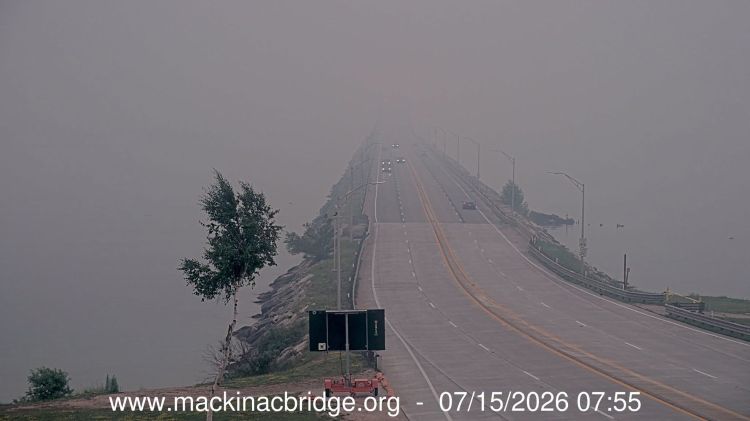
The Michigan Department of Environment, Great Lakes and Energy (EGLE) has issued a statewide Air Quality Alert for Wednesday, July 15, that is expected to continue through the weekend. This specific alert is a result of the smoke from Canadian wildfires that is moving across Michigan. At the same time, the National Weather Service is forecasting a major heat risk across most of the Lower Peninsula, creating a unique combination of hazards.
What is the Air Quality Index?
The United States Environmental Protection Agency (EPA) communicates about outdoor air quality through a tool called the Air Quality Index (AQI). The AQI includes six color-coded categories, corresponding to index values. The higher the value, the greater level of pollution and greater health concern. Conversely, the lower the value, the lower the risk.
- Green – AQI 0-50 (Good): Air quality is satisfactory and air pollution poses little or no risk.
- Yellow – AQI 50-100 (Moderate): Air quality is acceptable. However, there may be a risk for some people, particularly those who are unusually sensitive to air pollution.
- Orange – AQI 101–150 (Unhealthy for Sensitive Groups): Limit strenuous outdoor activity and closely monitor people with asthma or respiratory conditions. Members of sensitive groups may experience health effects. The general public is less likely to be affected.
- Red – AQI 151–200 (Unhealthy): Move activities indoors or postpone them. Some members of the general public may experience health effects; members of sensitive groups may experience more serious health effects.
- Purple – AQI 201 to 300 (Very Unhealthy): Cancel all outdoor activities. The risk of health effects is increased for everyone.
- Maroon – AQI 301+ (Hazardous): Health warning of emergency conditions: everyone is more likely to be affected.
How do you find the air quality index where you are located?
The EPA tracks the AQI on the AirNow website. Enter your zip code to receive detailed information about the AQI, including the primary pollutant and the forecasted AQI for the days ahead. Michigan also tracks air quality data on the EGLE’s MiAir website. For the time period of July 15 and the following days, Michigan is expecting to have unusually high AQI due to the combination of the smoke from the Canadian wildfires and the heat index.
What is the heat index?
Similar to the AQI, heat is tracked with the heat index. The Centers for Disease Control (CDC) provides the following recommendations regarding the heat index, which can be tracked at Heat.gov:
- 90–99° Fahrenheit: Modify outdoor plans. Increase water breaks, reduce physical activity, add shade and shorten outdoor sessions.
- 100–103° Fahrenheit: Significantly reduce outdoor activities or move activities indoors when possible.
- 104° Fahrenheit or higher: Postpone or cancel outdoor activities due to high risk of heat‑related illness.
Multi-day heatwaves present a larger risk to health. Extreme heat can cause people to suffer from heat-related illness, and even death. Older adults, young children and people with chronic medical conditions are at higher risk for heat-related illness and death. Every year in the U.S., more than 700 people die from extreme heat. As higher temperatures are being recorded, and for extended periods of time, these numbers are expected to increase.
What should parents, educators, summer camps and other youth programs know about the AQI?
Children are especially vulnerable to smoke and heat because they breathe more air in relation to their body size than adults. They are also more likely to spend time being active outdoors. EGLE and the CDC have the following recommendations for children:
When air quality reaches the Orange level:
- Limit outdoor play and recess to 30 minutes or less.
- Reduce strenuous activities and athletic practices.
- Monitor children for coughing, wheezing, difficulty breathing or unusual tiredness.
If conditions reach the Red level:
- Move physical education, sports and recess indoors whenever possible.
- Limit vigorous outdoor activity to 15 minutes or less if it cannot be avoided.
Schools and childcare facilities should also:
- Keep windows and exterior doors closed as much as possible.
- Use HVAC systems with MERV-13 filters or portable air cleaners when available.
- Reduce indoor heat by closing blinds or shades if air conditioning is limited.
Be sure to monitor the heat and air quality indexes as you’re making decisions regarding outdoor activities this summer. Do your best to keep your indoor air quality good by keeping windows and exterior doors closed as much as possible, using HVAC systems with MERV013 filters and/or portable air cleaners if possible. Reduce indoor heat by closing blinds/shades if air conditioning is limited.
In the absence of air conditioning, most communities offer cooling locations such as local public libraries, schools and community centers. Contact Michigan 211 for the location of cooling centers in your community. Michigan State University Extension encourages you to stay hydrated, apply sunscreen often, check up on friends and neighbors and stay safe this summer.