Strengthening global food safety: Reflections from MSU’s WorldTAP Program
 Print
Print Email
EmailA reflection on the 2025 MSU WorldTAP Food Safety Program, highlighting lessons in innovation, regulation and global collaboration, as told by Nur Annisa Rahmah.
Participating in the 2025 Michigan State University (MSU) Food Safety Program, held July 20 to 26, was an extraordinary opportunity to deepen my knowledge, broaden my perspective and strengthen my commitment to advancing food safety systems. The program introduced me to diverse stakeholders who play critical roles in ensuring food safety and quality, from research and innovation to regulation and industry implementation.
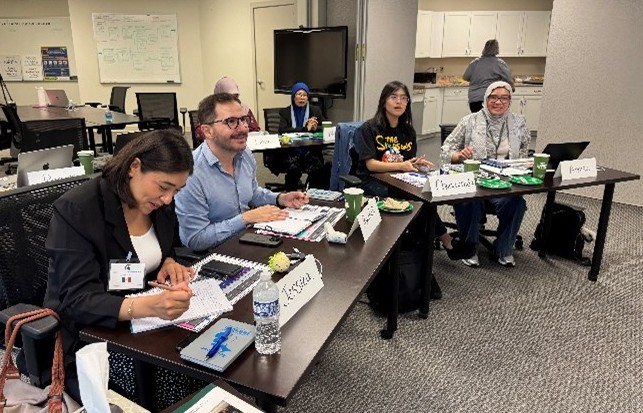 The sessions with MSU food safety and packaging experts were especially insightful. They highlighted how scientific research and advanced packaging technologies help mitigate food safety risks and extend product shelf life. Their research-based approach reinforced the importance of innovation and continuous improvement in maintaining consumer trust.
Engagement with officials from the Michigan Department of Agriculture and Rural Development (MDARD) strengthened my understanding of the U.S. regulatory framework and how robust surveillance, risk-based inspections and transparent communication protect public health. The discussion emphasized the value of multiagency collaboration and the critical role of evidence-based policies in addressing emerging challenges.
Our visit to the International Food Protection Training Institute (IFPTI) in Portage, Michigan, offered perspective on global professional development for food safety practitioners. Their structured, standardized training framework inspired me to consider how similar competency-based approaches could support workforce development in my own country.
The Neogen Laboratory for Food and Animal Safety in Lansing showcased new tools and rapid methods for detecting foodborne hazards. The visit demonstrated how technology plays a leading role in risk prevention and early detection.
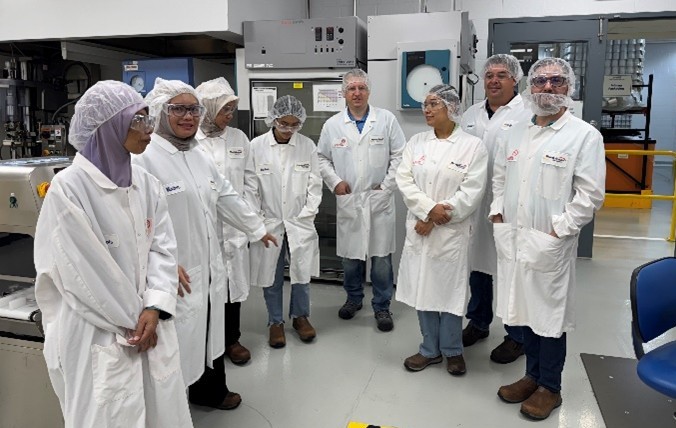
At the MSU Food Processing and Innovation Center, I saw firsthand how innovation drives product development, food entrepreneurship and safe processing techniques that meet consumer demands while supporting sustainability. Learning how extension programs benefit the local economy underscored the synergy among research, innovation and market readiness. The center’s integration of processing technologies, pilot-scale production and market-driven innovation demonstrated how academic expertise can directly support economic growth while ensuring food safety and quality.
Our visit to the National Sanitation Foundation (NSF) in Ann Arbor demonstrated how independent auditing and certification services help safeguard the global food supply chain. Understanding their processes for food-grade materials, sanitation validation and certification broadened my perspective on third-party verification and its role in strengthening trust and compliance.
The tour concluded with an immersive visit to Mead Johnson Nutrition in Evansville, Indiana, and its state-of-the-art Technology Center. Observing their production facility highlighted the rigorous implementation of good manufacturing practices, hygienic design and quality assurance systems essential for producing infant nutrition products. At the Technology Center, we gained insight into their research pipeline, innovation processes and analytical laboratories that support product formulation and safety. This visit reinforced the importance of integrating research, innovation and manufacturing excellence to ensure the highest standards for infants and young children.
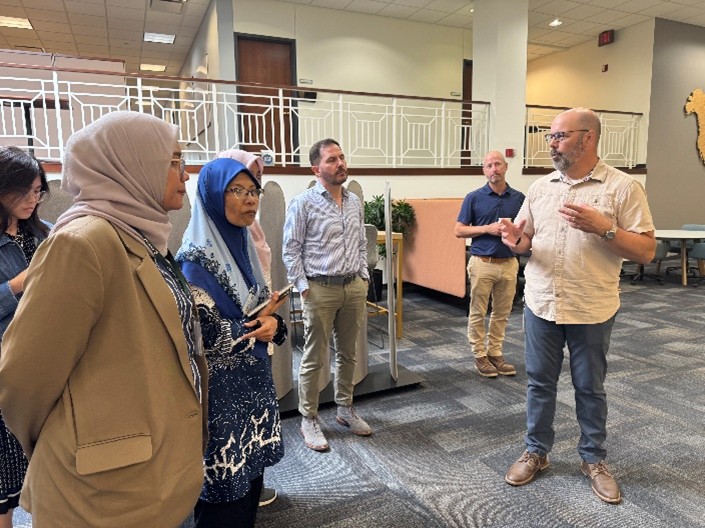 This entire experience has been both professionally enriching and personally inspiring. It offered valuable lessons on the importance of collaboration among academia, regulatory agencies, industry and professional training institutions. I am grateful to Michigan State University and all partners who made this program possible. The knowledge and perspectives gained will be instrumental in strengthening food safety systems, supporting innovation and protecting public health in my own country.
I would like to extend my deepest gratitude to the MSU College of Agriculture and Natural Resources, particularly to Dr. Karim Maredia and Dr. Ramjee Ghimire, for their remarkable dedication and unwavering support in making the MSU Food Safety Program a reality. Their thoughtful guidance throughout the program and their tireless efforts in curating such an impactful experience left a lasting impression on all participants.
Dr. Maredia’s wisdom and vision in connecting global perspectives on food safety helped participants view their work in a broader and more meaningful context. Dr. Ghimire’s exceptional coordination and hospitality ensured that every detail of the program was seamlessly executed, allowing us to fully immerse ourselves in this invaluable learning journey.
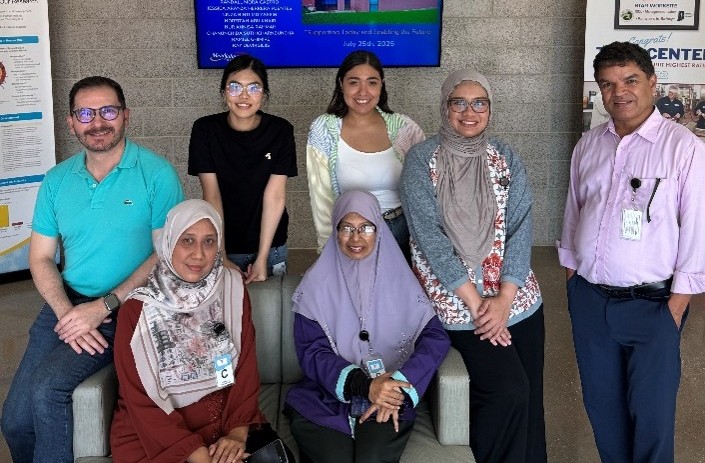
This program not only enhanced our technical understanding but also strengthened our appreciation of international collaboration and our shared responsibility in ensuring food safety. We are profoundly thankful for their mentorship, kindness and commitment to building bridges of knowledge and friendship across borders. We hope to continue this collaboration with MSU, expanding our shared vision for safer food systems and healthier communities for years to come.
Last but not least, beyond the technical knowledge and institutional visits, one of the most memorable aspects of this tour was the interaction with fellow participants from Malaysia, Thailand, Mexico and Costa Rica. These cross-cultural exchanges created an enriching learning environment where we could share experiences, discuss different food safety systems and build friendships that extend beyond borders. The spirit of collaboration made the program not only professionally rewarding but also personally meaningful.
Let us carry forward the spirit of this program with a renewed commitment: “Food safety is everyone’s business.”