


Sugarbeet root aphids plentiful in Michigan fields
 Print
Print Email
EmailSugarbeet root aphid populations are increasing across Michigan. Industry and producers are asking why and what should we do?
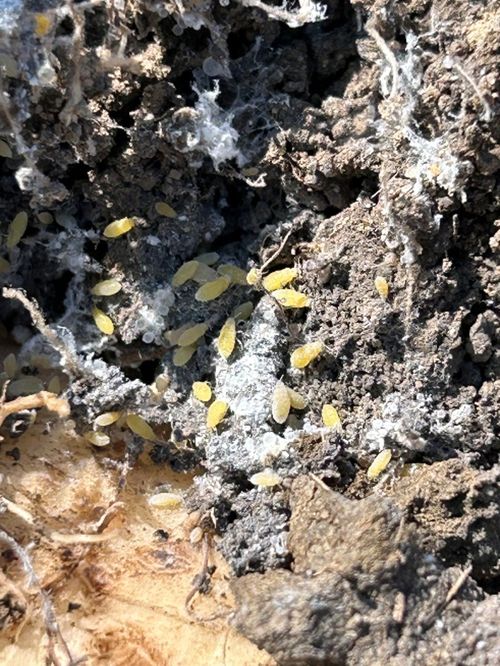
Sugarbeet root aphid populations have been increasing across the Michigan growing region. Root aphids primarily feed on secondary roots, inhibiting the plant’s ability to properly absorb water and nutrients. This results in direct loss in tonnage, sugar content, recoverable sugar and storability.
Several generations of sugarbeet root aphid occur on sugarbeets in a single season because they are all female, reproduce without mating, and give birth to live young. A heavy root aphid infestation often shows up as a wilted canopy in circular patches throughout the field. When roots are dug in one of these patches, white waxy secretions are visible (often remaining even after a rain event) along with the yellowish green aphids (Photo 1). Root aphids secrete this wax to repel water and protect themselves from physical damage in the soil.
After harvest in Michigan, sugarbeet root aphid overwinters on beets left in the ground or on roots of related weeds in the amaranth plant family, such as common lambsquarters or redroot pigweed. Good weed control across the entire crop rotation can reduce these alternate hosts and long-term root aphid survival.
Sugarbeet breeding programs screen varieties for genetic resistance to sugarbeet root aphid as a primary defense against this pest. In the absence of host plant resistance or during a root aphid outbreak, the systemic insecticide spirotetramat—the active ingredient in Boxadon 360 SC and Movento—may be an option for control.
During the 2026 growing season, Michigan State University established replicated strip trials (6-8 rows by at least 1,000 feet) comparing Cruiser 5FS seed treatment (thiamethoxam) with Cruiser 5FS plus spirotetramat applied later in the season. Researchers will evaluate both yield and sugar content at harvest. Additional research trials of similar design were established to evaluate the efficacy of spirotetramat as a rescue treatment in fields with infested areas later in the season.
Besides insecticides, several biological agents attack root aphids. Larvae of the chloropid fly Thaumatomyia glabra feed on aphids under ground. The oval pupal cases of this fly, which resemble grains of red rice, are common in Michigan at this time of the season in the soil around infested beets.
Beneficial insect-killing fungi also kill aphids later in the year. Infected aphids crawl out of the ground onto the stems above the beet root, die stuck on the plant, then shed spores into the soil (Photo 2). Under the right environmental conditions, these spores infect other aphids immediately or remain in the soil to infect next season.
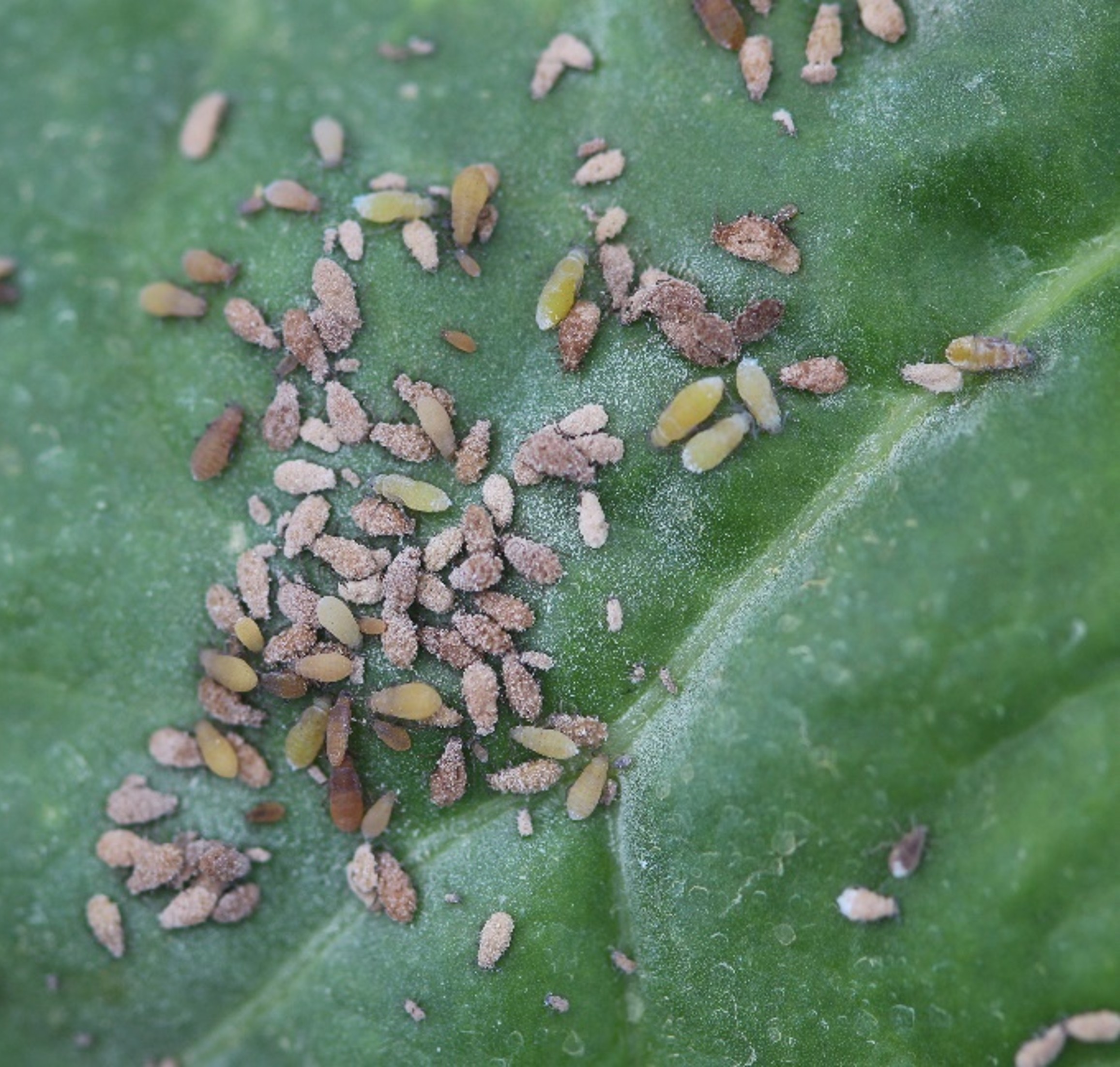
Biological control from predators and pathogens is always present in the background but can't keep up during an aphid outbreak.
In the last two growing seasons (2025 and 2026), root aphid infestations have been much more common than in previous decades. It is not clear why. Both years had prolonged periods of hot and dry weather in July and August, which is highly favorable for population growth. Other possible factors are an increase in the amount or species of weed hosts or a change in the efficacy of host plant resistance.
Sugarbeet seed breeding companies, Michigan Sugar Company, Michigan State University Extension and the USDA-East Lansing are conducting sampling and developing research trials to better understand what is happening and why.
For further information, visit www.canr.msu.edu and the “Pest Management Guide for Field Crops Insects” by Chris DiFonzo, MSU, and Kelly Tilmon, OSU.