Taste of the tropics: Coffee
 Print
Print Email
EmailCoffee is grown in countries surrounding the equator where there are warm temperatures and steady rainfall year-round.
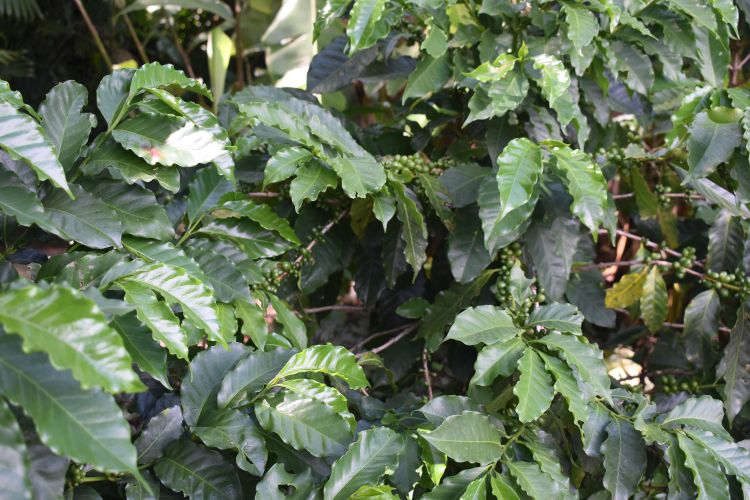
It’s no secret that Americans love coffee along with many other parts of the world. Northern European countries consume the most coffee per capita in the world. Do you know how coffee is grown or where? Coffee, primarily of the plants Coffea arabica (Photo 1) and Coffea robusta, is grown primarily in countries surrounding the equator with seasonally mild temperatures, rich soils and regular rainfall. In most of the world there is one harvest per year, but some places have two harvests per year, depending on the cultivar grown. Brazil is the world leader in coffee production by volume and produces a third of the world’s coffee.
To learn more about coffee production, Michigan State University’s study abroad course, “Tropical Horticulture of Costa Rica,” visited Café Rosa Blanca Estate in Costa Rica, providing a glimpse into the high-quality, hand-picked coffee in the country. Café Rosa Blanca Estate is a high altitude 30-acre organic, shade-grown coffee farm on the slopes of the Poás and Barva Volcanos. Costa Rica prides themselves on sustainable, shade-grown, organic production of Arabica coffee. These shade grown plantations include many other genera of plants including ginger, bananas, monstera and various other native trees. These areas are ultimately more sustainable as they use natural carbon cycling of a forest canopy as opposed to commercially applied fertilizers.
Coffee species and anatomy
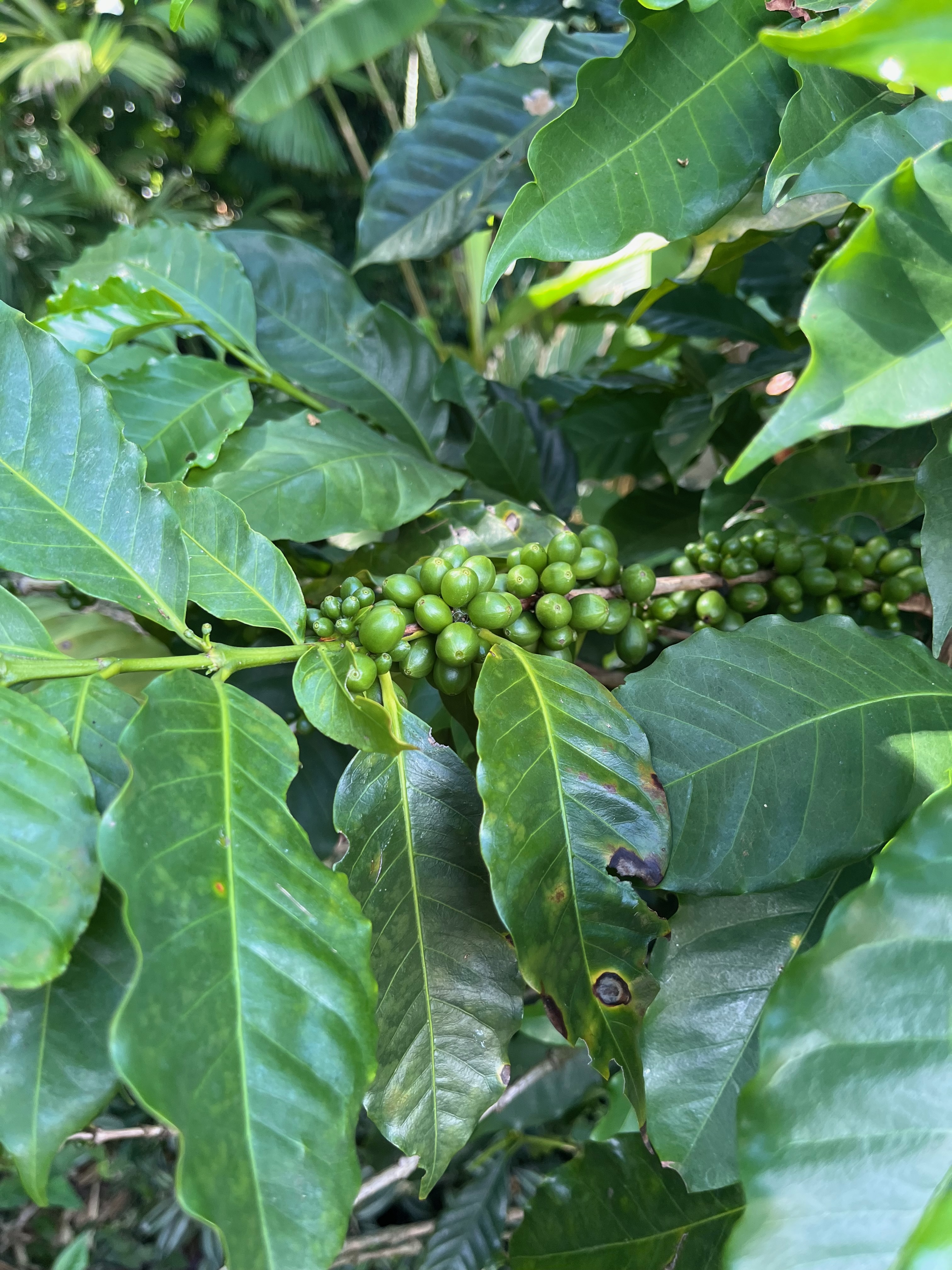
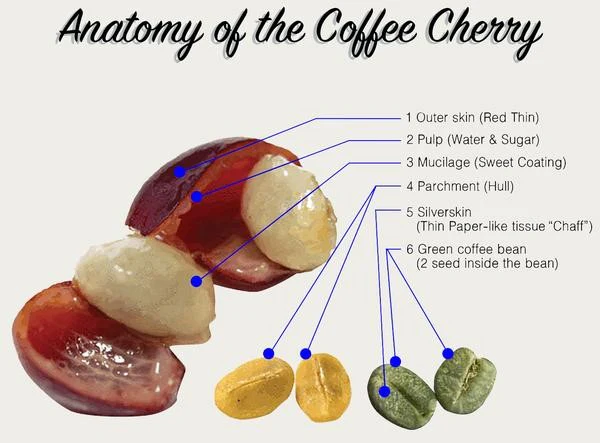
The coffee plant is a small tree that produces a stone fruit or “cherries” along the branches (Photo 2). These coffee cherries consist of several layers: red outer layer, pulp and mucilage, a hull and a silverskin that covers the green beans (seeds) (Photo 3). The bean isn’t the only valuable portion of the cherry; the outer layers of the coffee cherries are used for mulch or to produce gluten-free flour.
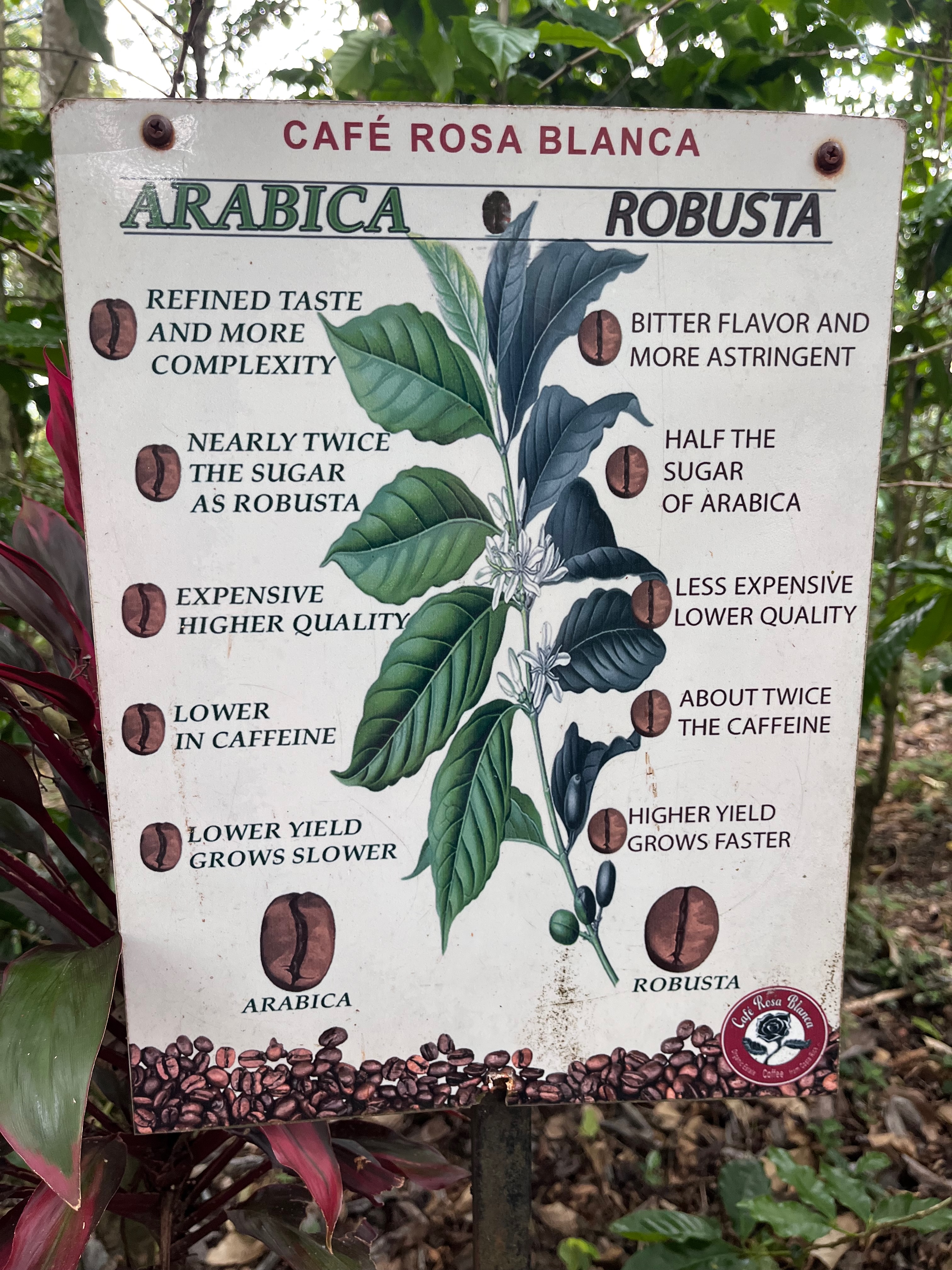
Of the two leading coffee species, what is the difference between Arabica and Robusta coffee? These two species of plants differ in time to produce, caffeine and sugar content, flavor profile, and yield (Photo 4). Of the two species, Arabica coffee has lower yields and grows slower but is considered higher quality. It is less bitter, more aromatic, has twice the sugar content and half the caffeine. Robusta coffees are used in lower quality, inexpensive coffees, some espressos, for instant coffees and for caffeine extraction for energy drinks.
Harvest and processing
In Costa Rica and most of the countries around the world, especially those with hilly or mountainous terrain, coffee is hand-picked. The fruits were traditionally picked into baskets, but they are now picked into plastic containers. In Brazil, where there are many flat plantations, they are harvested mechanically with shakers similar to how blueberries are harvested in Michigan and throughout the United States.
Coffee can be processed in three ways:
- Traditional dry method: The entire cherry is spread out on a large surface and allowed to dry naturally under a canopy.
- Washed method: The outer layers are removed by washing and the beans are dried in the sun on a large surface.
- Honey method: The pulp of the coffee cherry is removed but the mucilage layer (sweet coating) remains intact prior to the drying process.
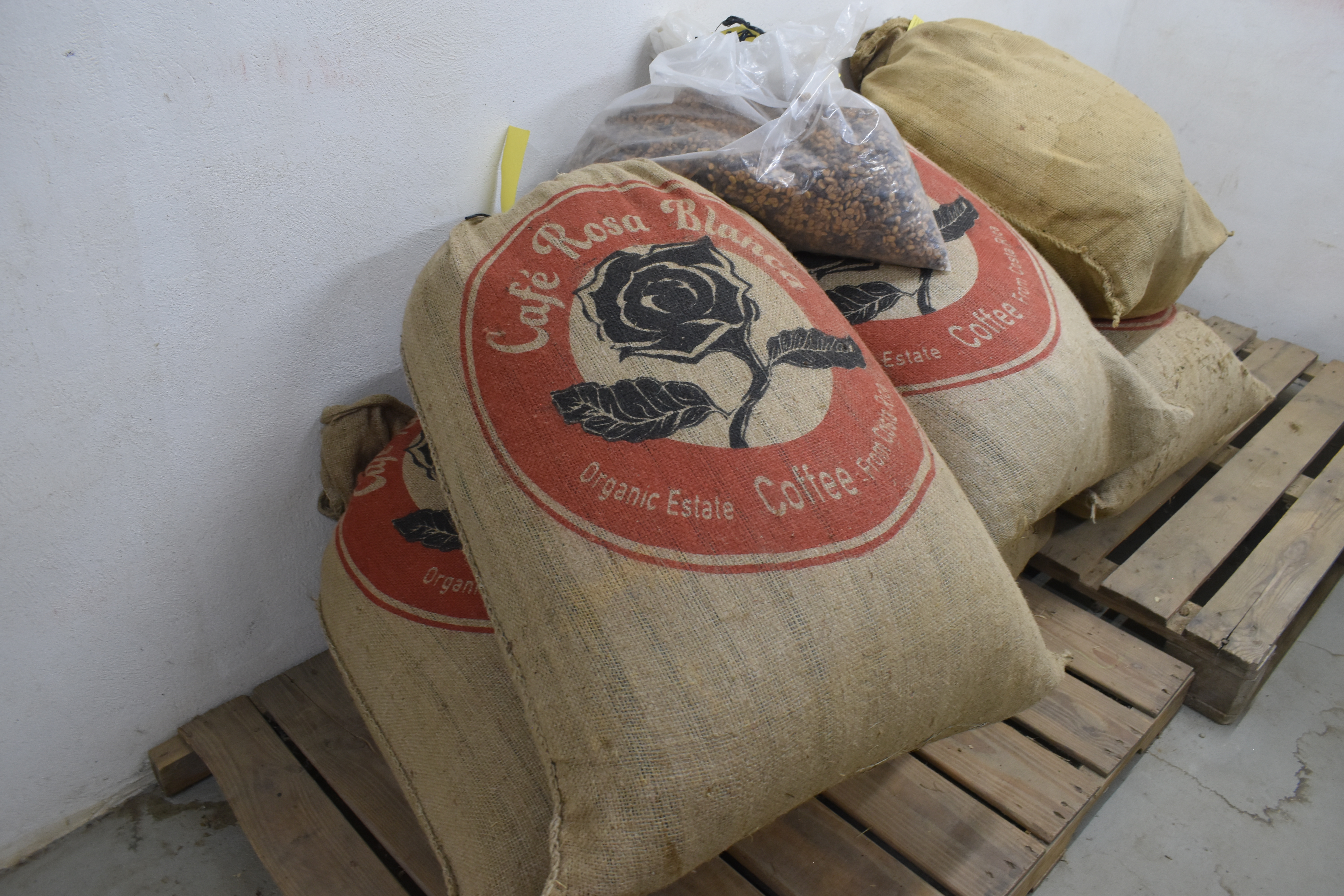
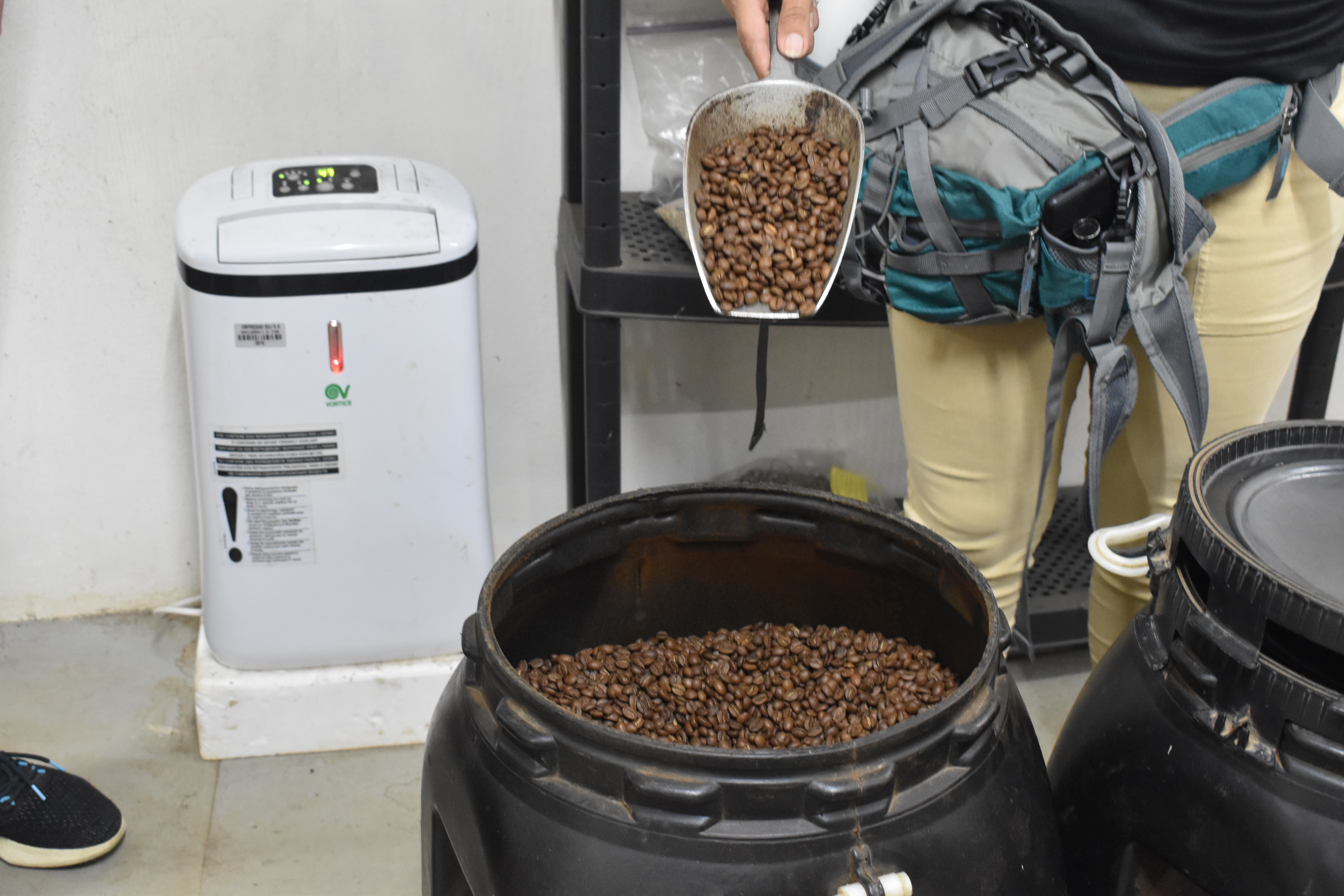
Most coffee is then exported as green beans because they will have a shelf life of up to one year, whereas pre-roasted coffee only has a shelf life of a couple of months (Photo 5).
Coffee roasting and tasting
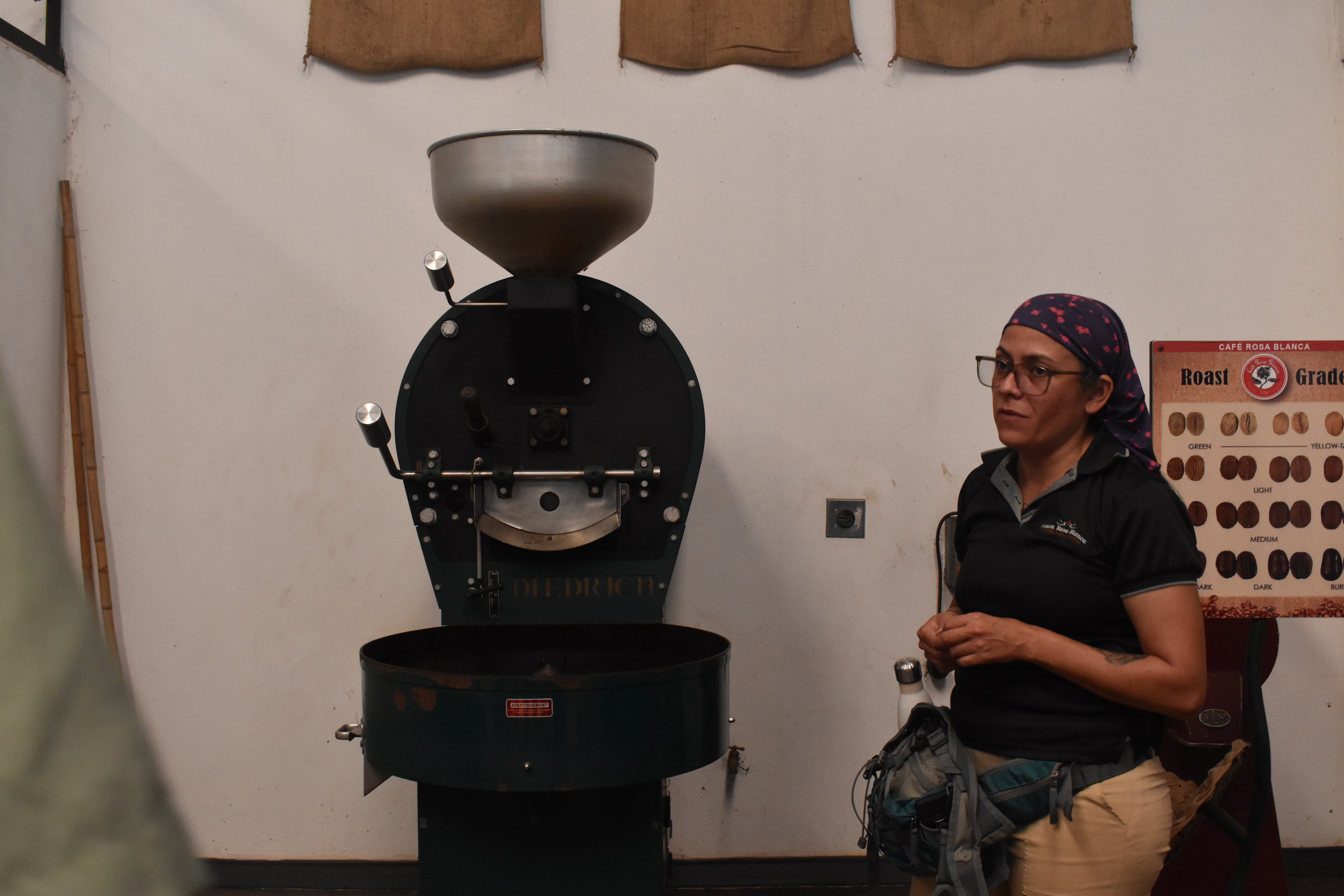
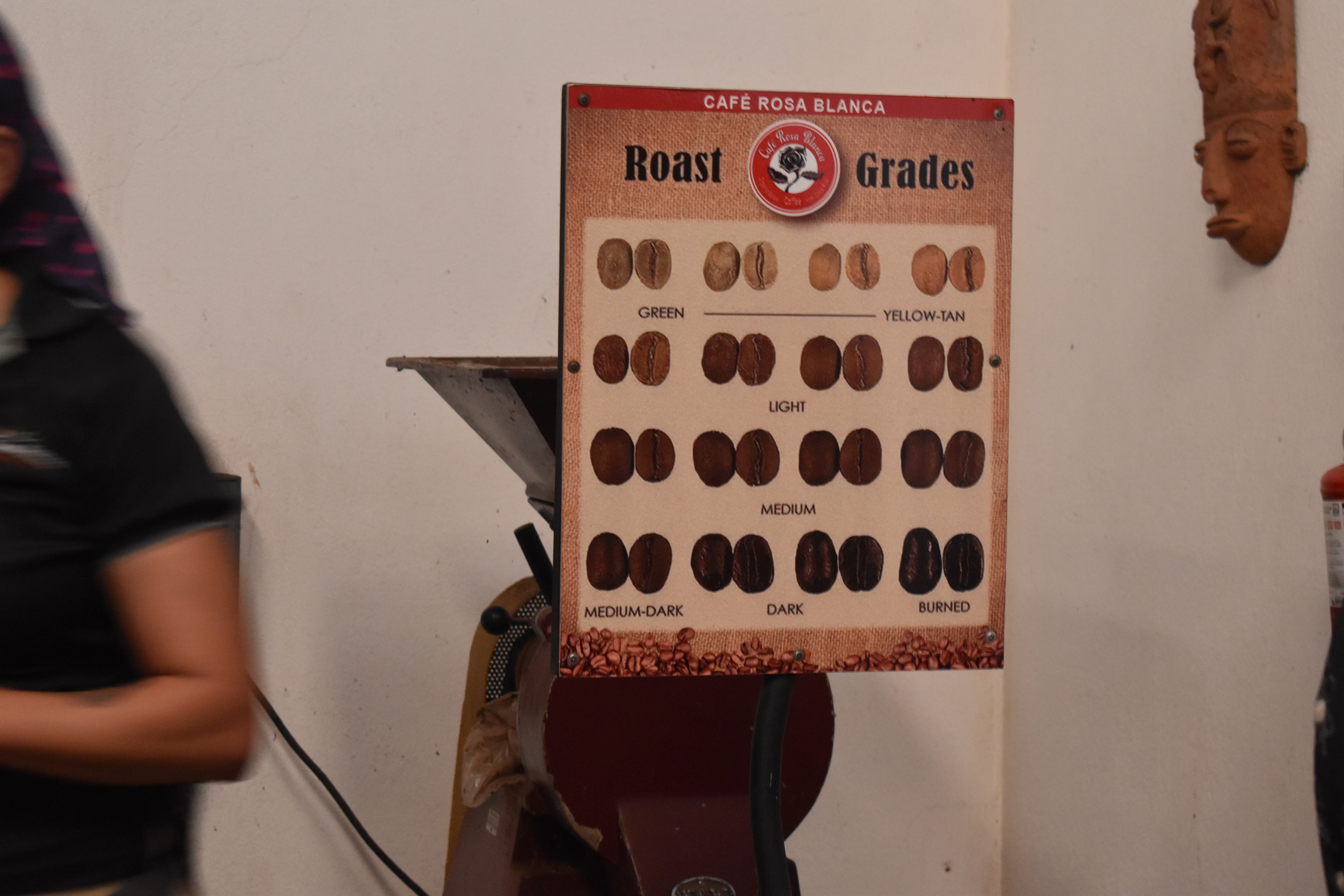
Green coffee beans are roasted in a roaster (Photo 6) that continually moves the beans to prevent burning. They are heated until temperatures reach around 400 degrees Fahrenheit, when the beans appear to be light brown (light roast coffee) (Photo 7) to dark brown (dark roasted coffees) (Photo 8).
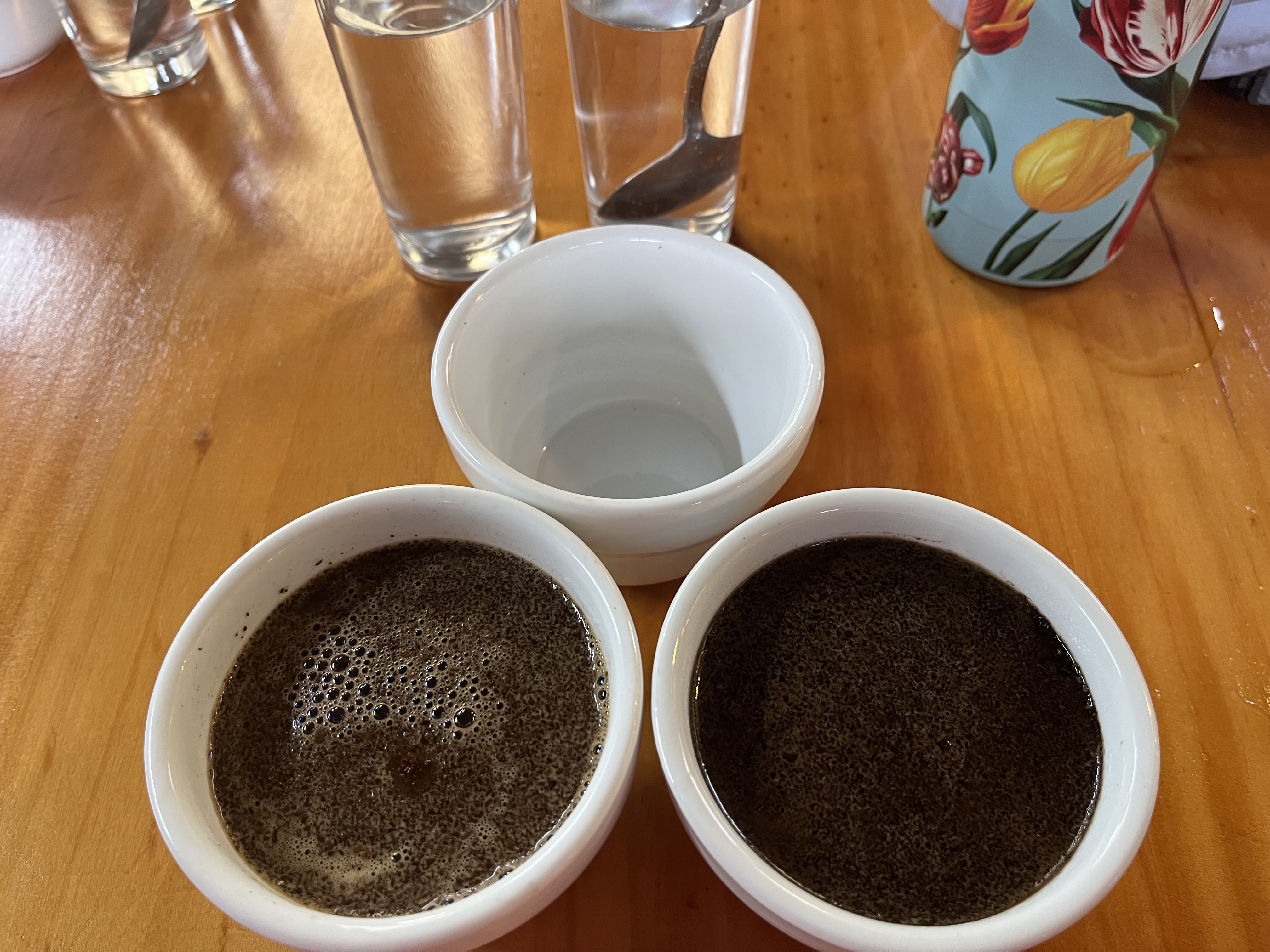
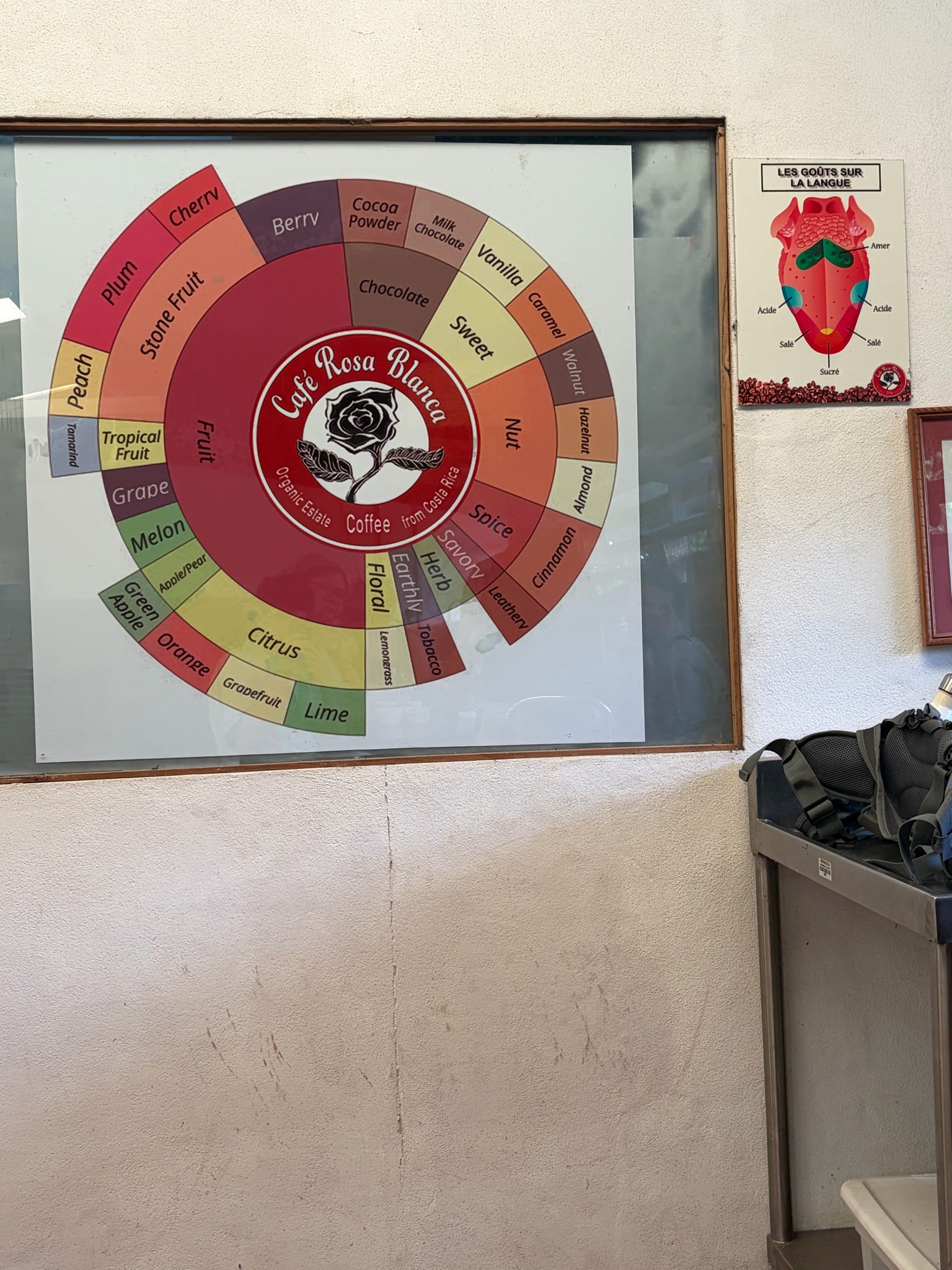
Coffee-tasting (Photo 9) is a sophisticated art and science similar to wine-tasting. When tasting coffees, first you pour in almost-boiling water, strain off the floating granules, smell the coffees, slurp with a spoon to add oxygen, taste spoonfuls, and finally sip the coffee. Through these methods, expert coffee-tasters can pick up notes such as fruity, chocolatey, nutty, savory, citrusy or herbal (Photo 10).
Ultimately, coffee is best enjoyed the way you like it. For me, a latte is best!