Thinking about managing risk when planting soybeans early?
 Print
Print Email
EmailResearch provides several recommendations to maximize yield potential and minimize risk when planting soybeans early.
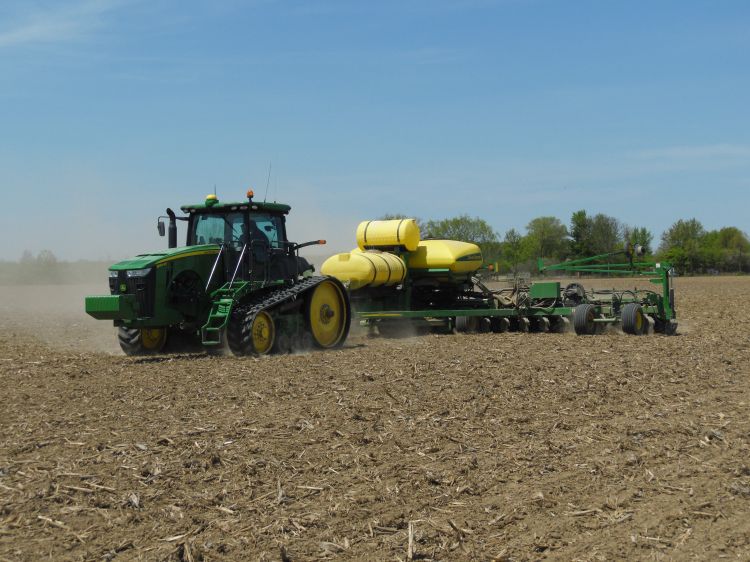
Over the past several decades, farmers across the Midwest have been planting soybeans earlier with the goal of getting soybeans in ahead of corn to maximize yields of both crops. The Great Lakes region has witnessed an increase of 18 annual frost-free days from 1951 to 2024, which has helped with this goal. Michigan soybean growers are currently planting almost half of the total area under soybean by mid-May, compared to early June in the 1980s.
Numerous university research trials have shown consistent yield increases when planting soybeans relatively early in a given region. Research in Michigan from 2018–2019 by Siler and Singh (2023) with five seeding rates and four planting dates with and without seed treatment found the maximum yield was achieved at the late April planting time with a final plant stand of 98,000 plants per acre. On-farm trials conducted from 2019–2023 at 25 locations in Michigan found a 1.5 bu/ac advantage on average of planting 2–3 weeks earlier than normal. A University of Nebraska-Lincoln study investigated the impact of planting dates (Apr 30, May 16, Jun 1, Jun 17) on yield and the length of time to reach various vegetative and reproductive stages. Though later planting in warmer soils decreased the time to V1 by two weeks, it did not allow the crop to catch up and delayed time to seed dry-down by about the same amount. They found planting early was critical to maximizing yield.
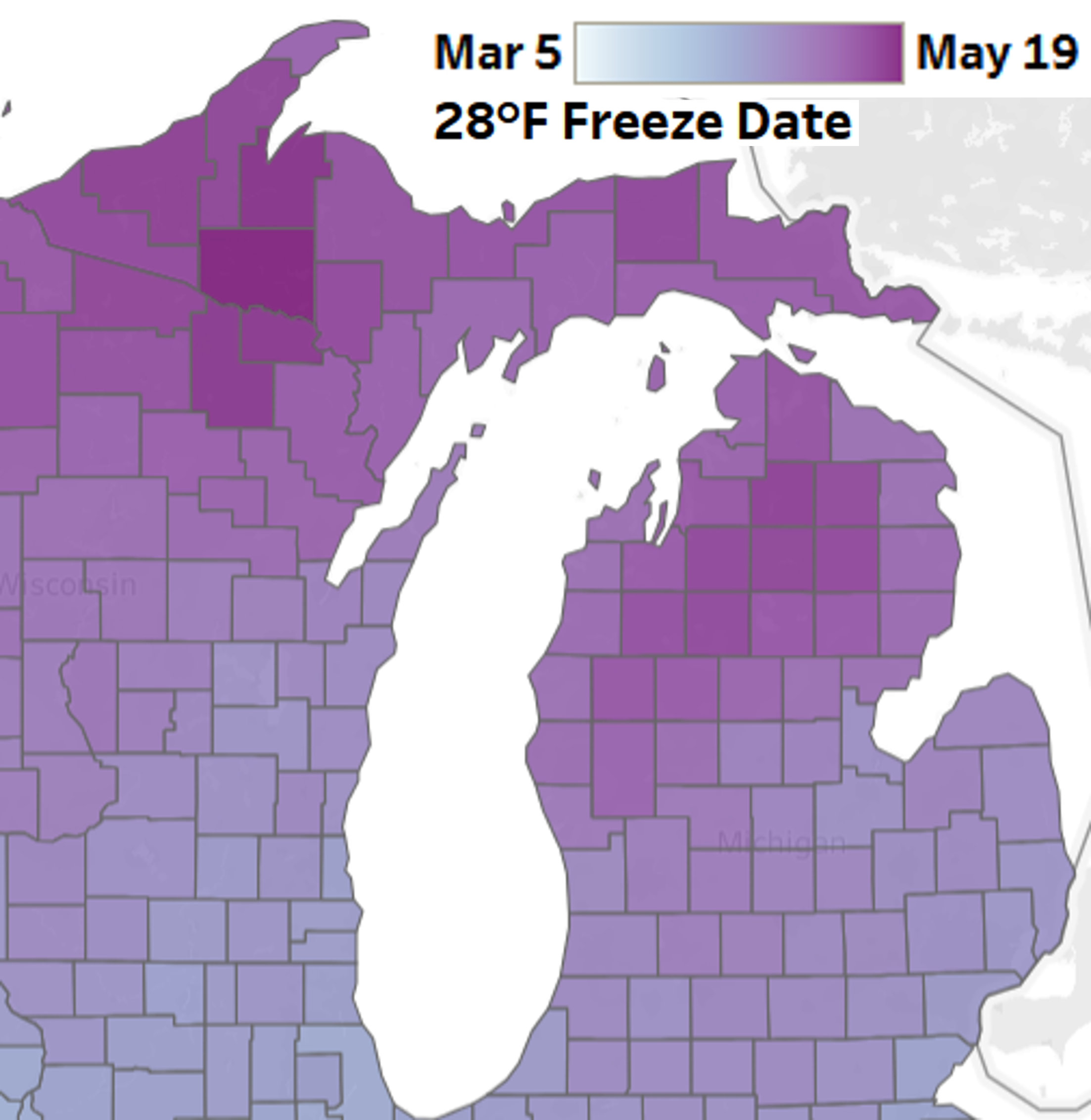
However, early planting is not without risk. Concerns when planting early include postemergence frost, compaction and sidewall smearing if soils are too wet, and longer time to emergence with higher risk associated with insect, pathogen and nematode damage. Check the average last freeze date for your county using the online Midwestern Regional Climate Center’s Freeze Date Tool (Fig. 1). If utilizing federal crop insurance, do not plant before the earliest allowable planting date for your county. If you do plan to plant early, here are a few management recommendations.
Maturity group
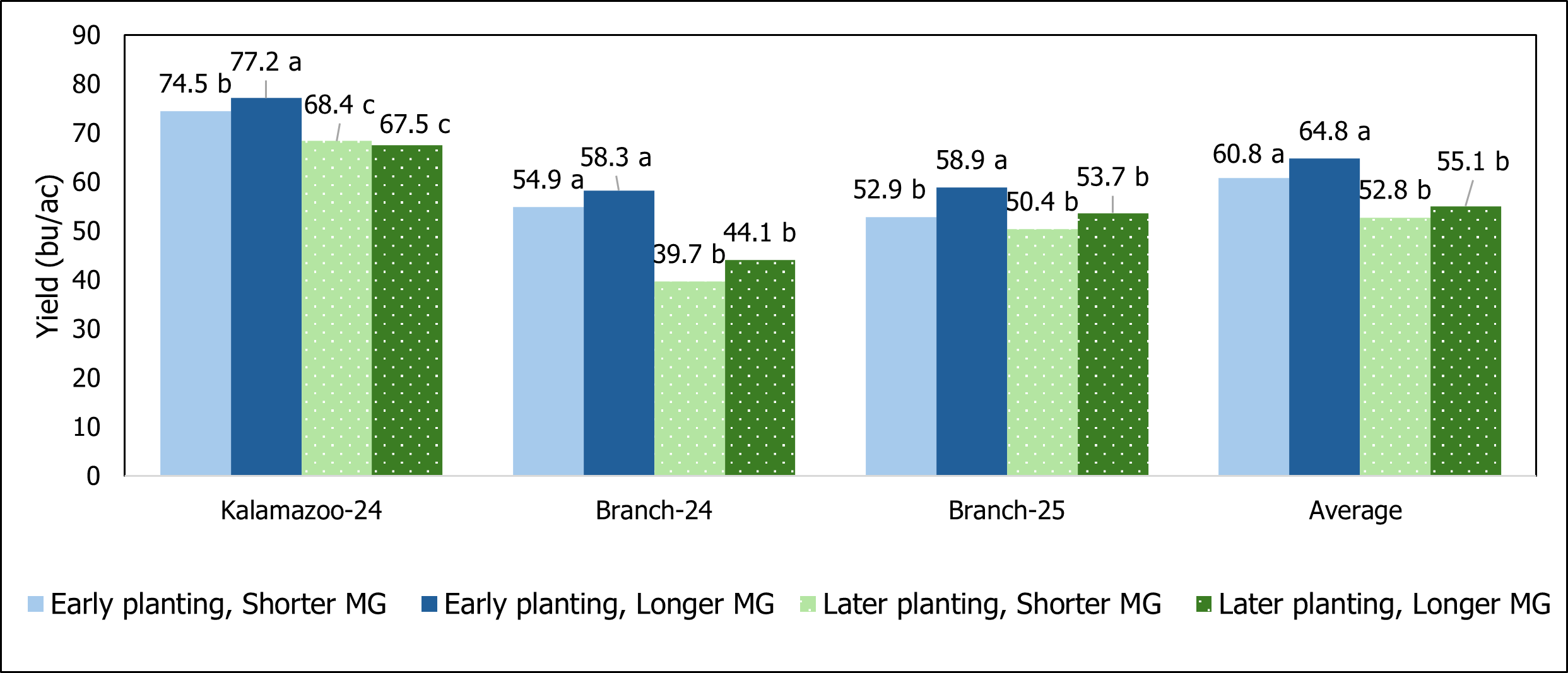
Conventional wisdom says to plant a longer maturity group (MG) variety when planting early to maximize sunlight capture and yield, and most research findings agree. Studies from Michigan State University Extension and UW-Madison show maximum yields were achieved with longer MGs and earlier planting, although yields were similar across a spread of one full MG. Data from on-farm trials in Michigan in 2024–2025 show a similar pattern of statistically higher yields with longer MG varieties when planting early at two of three locations (Fig. 2). However, the University of Nebraska-Lincoln researchers suggested choosing varieties with proven yield performance was a better predictor of yield than MG. Planting shorter MG varieties with proven yield may be a successful strategy when following soybean harvest with wheat planting to maximize combined profitability of both crops.
Seeding rate
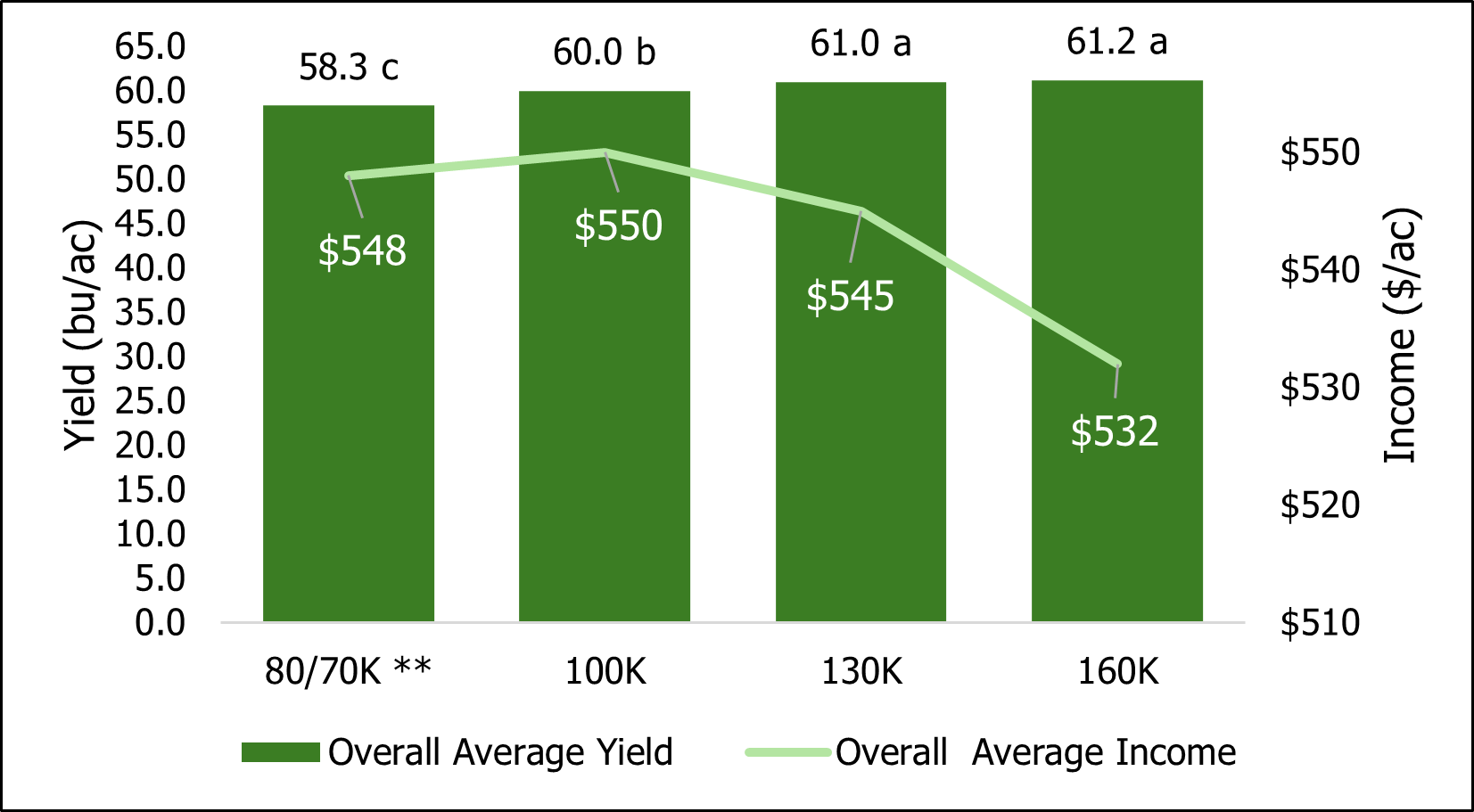
Research at MSU found the seeding rate that maximized yield was 124,000 seeds/ac when planting in late April, although profitability was maximized at 63–68% of that rate. On-farm trials in Michigan have consistently shown similar results with maximum yields achieved at 130,000 seeds/ac and maximum net income at 100,000 seeds/ac (Fig. 3). Other university research around the country has not consistently shown a benefit to increasing seeding rates when planting early. If planting into cold soils, consider having a cold germ test performed on your seed lots by the Michigan Crop Improvement Association or a similar lab to better estimate what seeding rate will be needed to achieve a given final stand.
Seed treatment
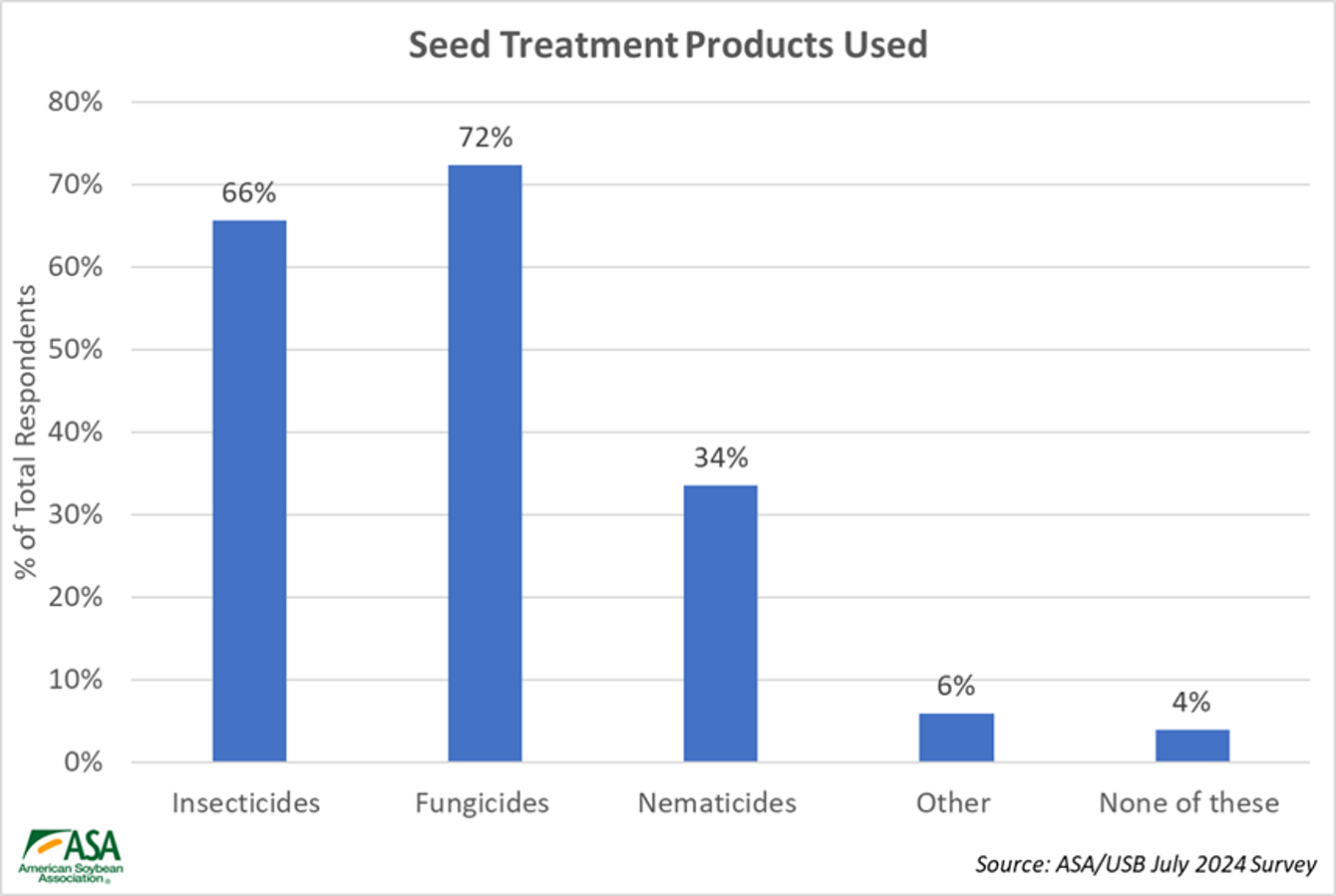
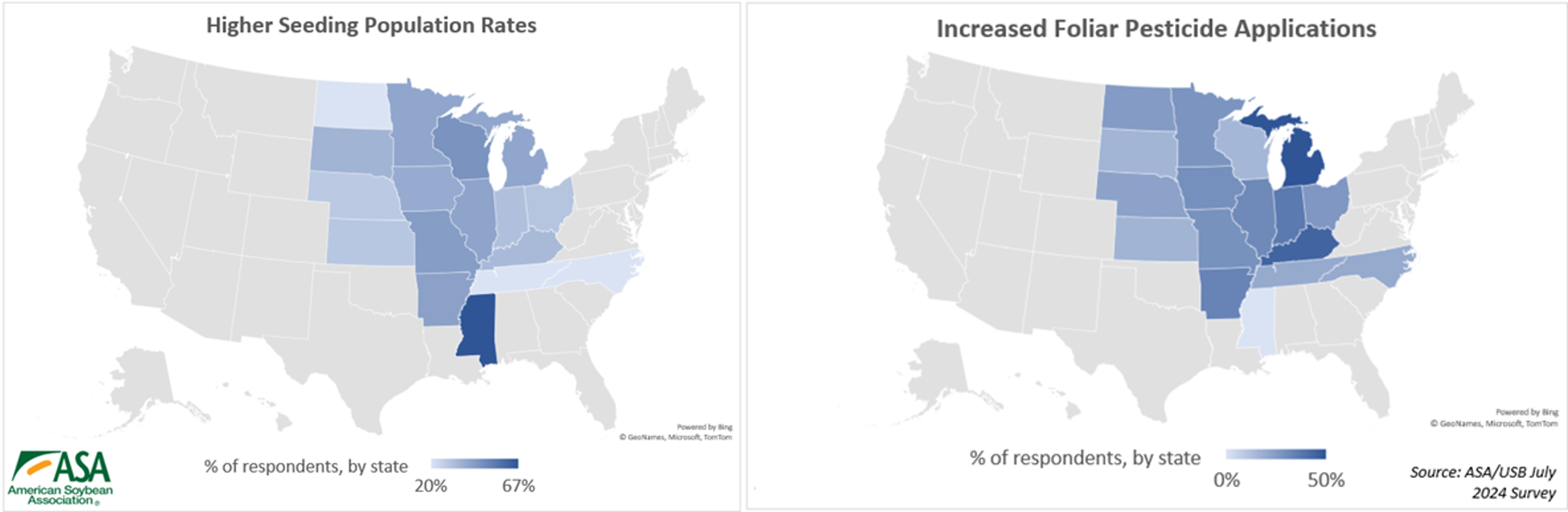
It is estimated that less than 10% of soybean seed was treated with a seed treatment (ST) prior to 2000. However, a 2024 survey by the American Soybean Association and the United Soybean Board found 90% of soybeans are currently being planted with a ST (Fig. 4). According to the survey, growers rely on their dealers (33%), seed companies (31%) or retailers (25%) to treat the bulk of their soybean seed. Over half of Michigan farmers who completed the survey anticipated losing 16–20% or more in soybean yield without the use of a ST. They also identified increased use of foliar pesticide applications and increased seeding rates as the two primary alternatives to ST (Fig. 5).
Soybean ST’s are more likely to provide a benefit in fields where pest pressure has been high in the past, if soils are cold and wet at planting, and if seed quality is less than ideal. However, university research has produced mixed results with regards to the efficacy of soybean ST including various fungicides, insecticides and nematicides in improving plant stand and protecting yield. Researchers in South Dakota and North Carolina found a significant response from soybean ST while studies in North Dakota (Bradley et al., 2008), Wisconsin (Gaspar et al., 2014) and Michigan (Schulz and Thelen, 2008) showed no benefit or mixed results on plant stands and yield. Siler and Singh (2023) found ST improved plant stand by 6.7% at one of four site-years in Michigan but did not improve yield or profit regardless of planting date. Esker and Conley (2012) at the University of Wisconsin-Madison conducted a three-year study that showed an inexpensive seed treatment (ApronMaxx) paid for itself 56–67% of the time while a more expensive product (CruiserMaxx) produced a break-even yield increase only 22–56% of the time. However, results varied markedly by variety and environment.
Planting soybeans early has the potential to maximize yields when soil conditions are optimal. Choosing varieties with proven yield, a relatively long maturity group and strong resistance to potential disease and nematode issues is critical. Including a seed treatment may improve yield and increase net income under certain environmental conditions.
This article was produced by a partnership between MSU Extension and the Michigan Soybean Committee. The article was first published in the Michigan Soybean News magazine.