Turf update: Brown patch is active
 Print
Print Email
EmailBrown patch has been observed across different turf systems this summer.
Michigan residents have experienced prolonged periods of high daytime temperatures with warm nights this summer. High humidity is a key factor for almost all turf diseases. The combination of high humidity and temperature creates ideal conditions for brown patch development. Weather data collected from the Hancock Turfgrass Research Center in East Lansing, Michigan, showed daily temperatures above 70 degrees Fahrenheit starting in June, and the average relative humidity has been above 70% since the beginning of August.
Brown patch, caused by the fungal pathogen Rhizoctonia solani, is the biggest challenge for growing cool-season turf in the transition zone of the U.S. Although it is typically not a major concern in Michigan, this summer's hot, humid weather has been highly favorable for brown patch.
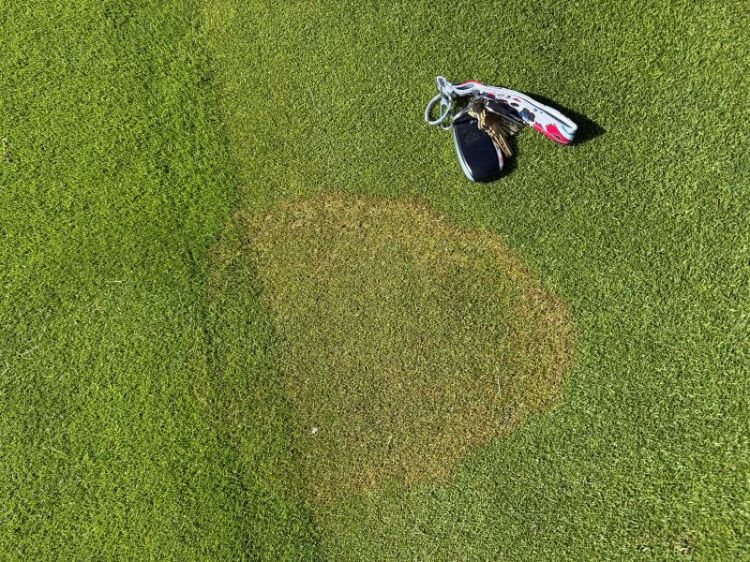
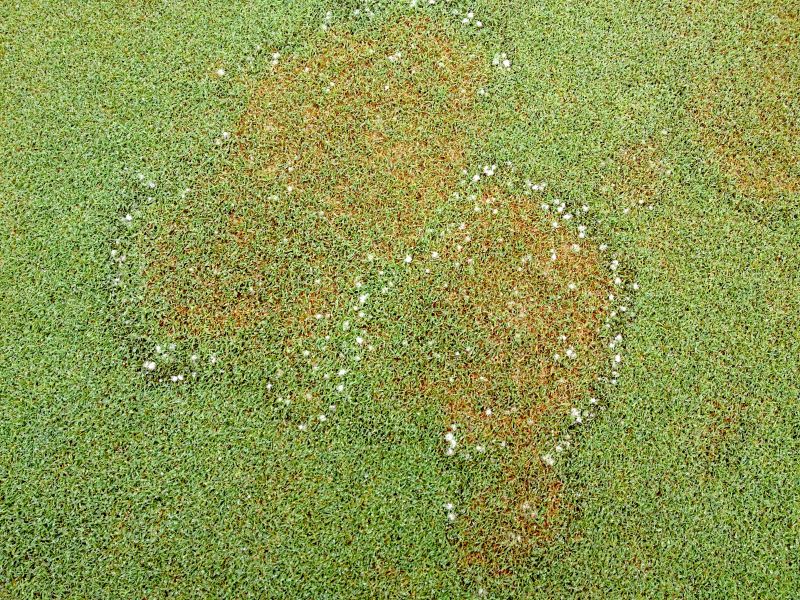
The optimal temperatures for infection and disease development range from 70 to 90 F under high humidity. High nighttime temperatures (above 68 F) can intensify disease symptoms and lead to severe outbreaks. Brown patch affects a wide range of turfgrass hosts used for golf courses, sports fields and home lawns. This year, we have observed brown patch across many turfgrass settings, including annual bluegrass putting greens (Photo 1), creeping bentgrass greens and fairways, Kentucky bluegrass sports turf (Photo 2), as well as tall fescue lawns (Photo 3).
.png?language_id=1)
How to identify brown patch
As its name suggests, the disease typically appears as circular brown patches in the turf. Many people also look for the classic dark ring on the outer edge of the patch, known as the "smoke ring,” with white, fuzzy mycelia (Photo 4). However, the smoke ring is not always present (Photo 2), and the patch can vary from brown, tan or yellow depending on the weather conditions and mowing height. The patches can coalesce, and the size can range from 6 inches to more than 3 feet in diameter.
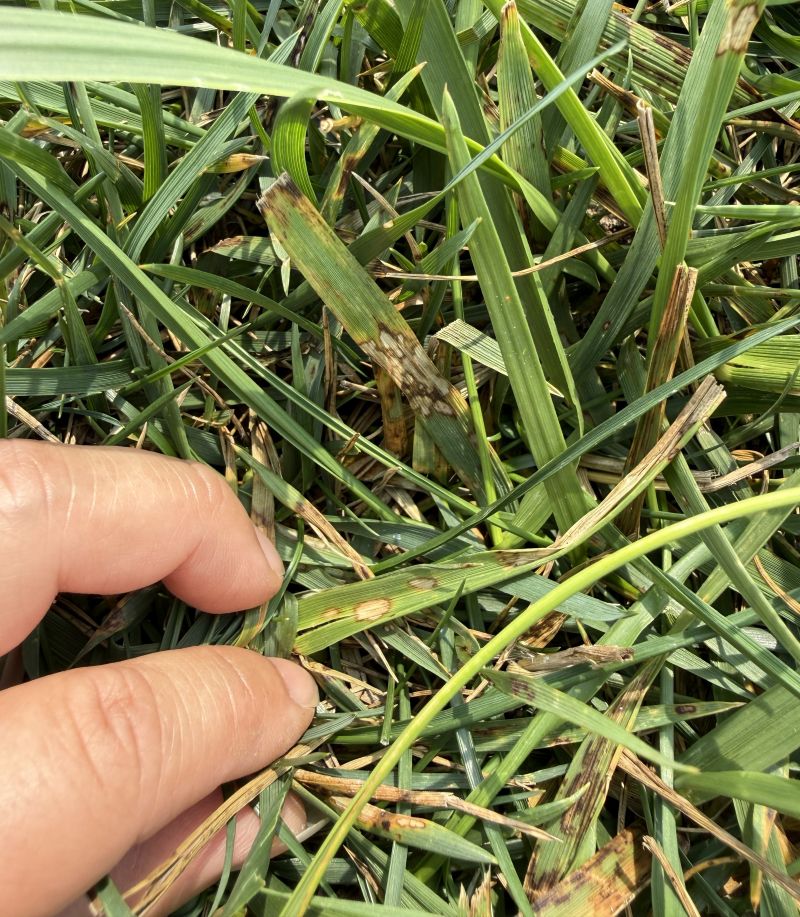
In lawns, brown patch may not always produce distinct patches. Instead, it may appear as thinning turf with irregularly shaped tan leaf lesions with dark brown borders (Photo 3).
Management strategies
Both chemical and cultural management strategies of brown patch are possible to reduce disease severity. Irrigation should be applied to avoid extending the leaf wetness period. In order to reduce the leaf wetness period and remove dew, irrigating in the early morning is preferable rather than in the evening. Additionally, surrounding trees and ornamentals can be pruned to improve air circulation and reduce localized humidity.
Applying high levels of quick-release nitrogen during hot, humid weather should be avoided, as these applications can intensify brown patch severity. Reducing fertilizing in the summer or switching to a slow-release fertilizer will also help reduce this disease.
Many effective fungicide options are available for brown patch control in professional turf settings (golf and sports turf), including flutolanil (an SDHI fungicide) and QoI fungicides (trifloxystrobin, pyraclostrobin, and azoxystrobin). Azoxystrobin products are available to homeowners at home improvement and garden retailers. It’s important to follow label instructions and water in granular products after home lawn applications when directed to do so.
Reference to commercial products or trade names does not imply endorsement by Michigan State University Extension or bias against those not mentioned.
This work is supported by the Crop Protection and Pest Management Program (grant no 2024-70006-43569) from the USDA National Institute of Food and Agriculture. Any opinions, findings, conclusions, or recommendations expressed in this publication are those of the author(s) and do not necessarily reflect the view of the U.S. Department of Agriculture.