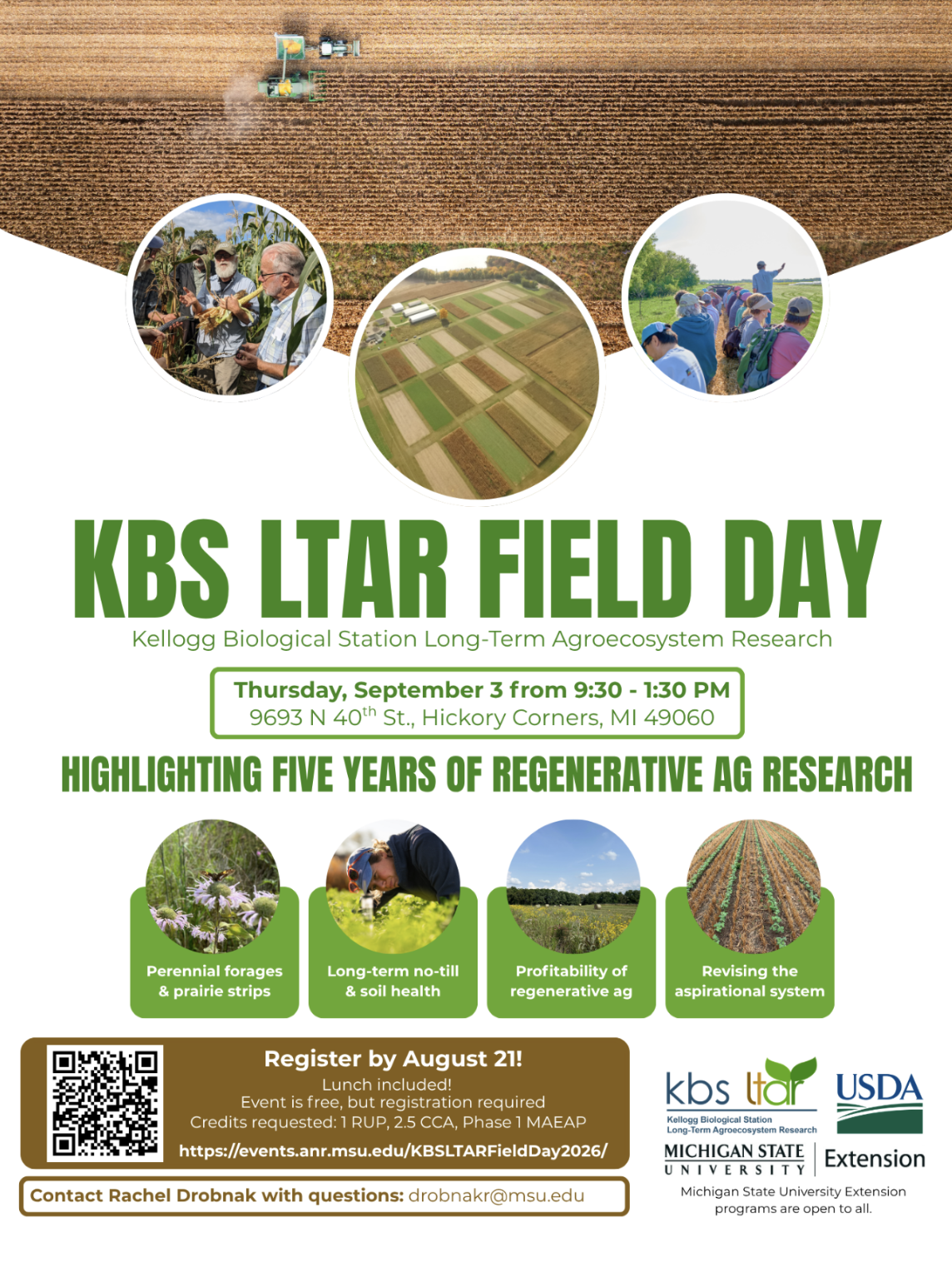
Upcoming LTAR Field Day to Highlight Five Years of Regenerative Agriculture Research
 Print
Print Email
EmailJoin us for the fourth annual Long-Term Agroecosystem Research (LTAR) field day on September 3, 2026, where we will highlight five years of regenerative agriculture research.
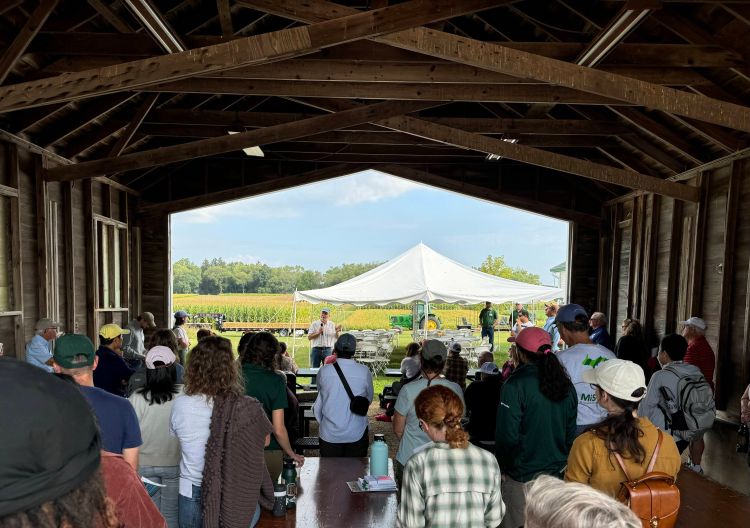
Transitioning to regenerative agriculture can be a slow and complicated process, whether farms adopt no-till, cover crops, precision nutrient management, new crops, or “everything but the kitchen sink.” Michigan State University’s Long-Term Agroecosystem Research (LTAR) site has taken the latter approach, and now, five years into a cropping systems experiment, scientists and stakeholders will share key results at our upcoming Fourth Annual LTAR Field Day on Thursday, Sept. 3 from 9:30 a.m. to 1:30 p.m.
Join Michigan State University Extension at the W. K. Kellogg Biological Station LTAR research site as they co-host the Sept. 3 Field Day, located at 9693 N 40th St, Hickory Corners, MI 49060. All agricultural and conservation professionals are welcome to attend.
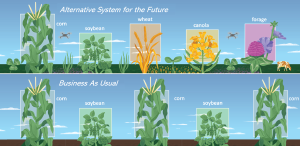
The LTAR research site features a cropping systems experiment that compares the short- and long-term trade-offs of conventional agriculture (Business-as-Usual) to an Aspirational system designed by leaders in Michigan agriculture to represent “what Michigan agriculture could look like in 30 years.” The Aspirational system seeks to maximize crop diversity, nutrient circularity & efficiency, animal integration, and soil health.
Registration for this free event is required. Morning refreshments, snacks, and lunch provided. Pending credits include 1 RUP credit; 2.5 CCA credits, and a Phase 1 MAEAP training credit.
Please register by August 21.
When and where?
Thursday, September 3, at the Kellogg Biological Station LTAR site
9693 N 40th St. Hickory Corners, MI 49060
9:30 a.m. - 1:30 p.m.
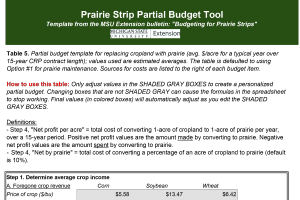
This year’s field day will showcase LTAR research on three practice-driven topics: incorporating perennials into row crop systems, adopting long-term conservation tillage, and balancing profit and innovations. Speakers will share how, when, and why to adopt perennial forages, prairie strips, strip and no-till, diversified cropping systems, and more.
The 2026 growing season marks the final year of the first five years of the Aspirational system, and the first of a revised, second five-year period. Attend this upcoming field day to hear how the KBS LTAR has altered the Aspirational system using research results and stakeholder input.
If you have questions about the event, please email Rachel Drobnak (drobnakr@msu.edu).