Using the Swiss cheese principle to increase farm biosecurity
 Print
Print Email
EmailA look in the deli section of your grocery store can teach us about biosecurity on the farm.
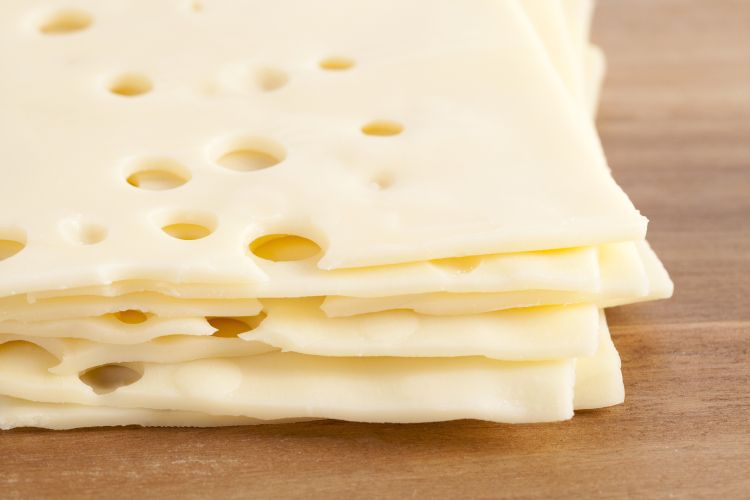
The Swiss cheese layer biosecurity concept was a new addition to the biosecurity talk in the Beef Quality Assurance curriculum. Though I’ve taught biosecurity many times, the graphic of Swiss cheese slices puzzled me initially. Slowly, I began to understand that each protection we provide livestock is like a slice of Swiss cheese; it has holes, or weaknesses, in it. That is, no one layer (slice) provides perfect protection. However, as we add more layers of protection, like more slices of Swiss cheese, each one has strengths in some areas and holes in others, but the cumulative effect is that more of the holes are covered, and protection is therefore stronger.
The importance of the point was driven home during a conversation with my son, a pilot with a major airline. We talked about a recent tragedy involving a passenger plane at an airport. It is the kind of conversation that I don’t like having with him because it reminds me of the risks he faces. In this case, I said that I understood there were several factors at play in the accident. He agreed, saying that a lot of things went wrong.
It was his next statement that made everything fall into place. He asked me, “Have you ever heard of the Swiss cheese principle?” Wow, in an instant, I saw the Swiss cheese illustration applied to security in many areas, from the safety of passengers on a plane to the health of cattle in the field.
The goal is the same. No matter what the threat, the principle of protection remains constant: any one action may or may not work all the time, but when we add layers, when we do more than one thing, the degree of security grows. The figure from the BQA program shows that principle in action for scours defense in the protection of the calf, but it could be used for anything that needs to be protected.
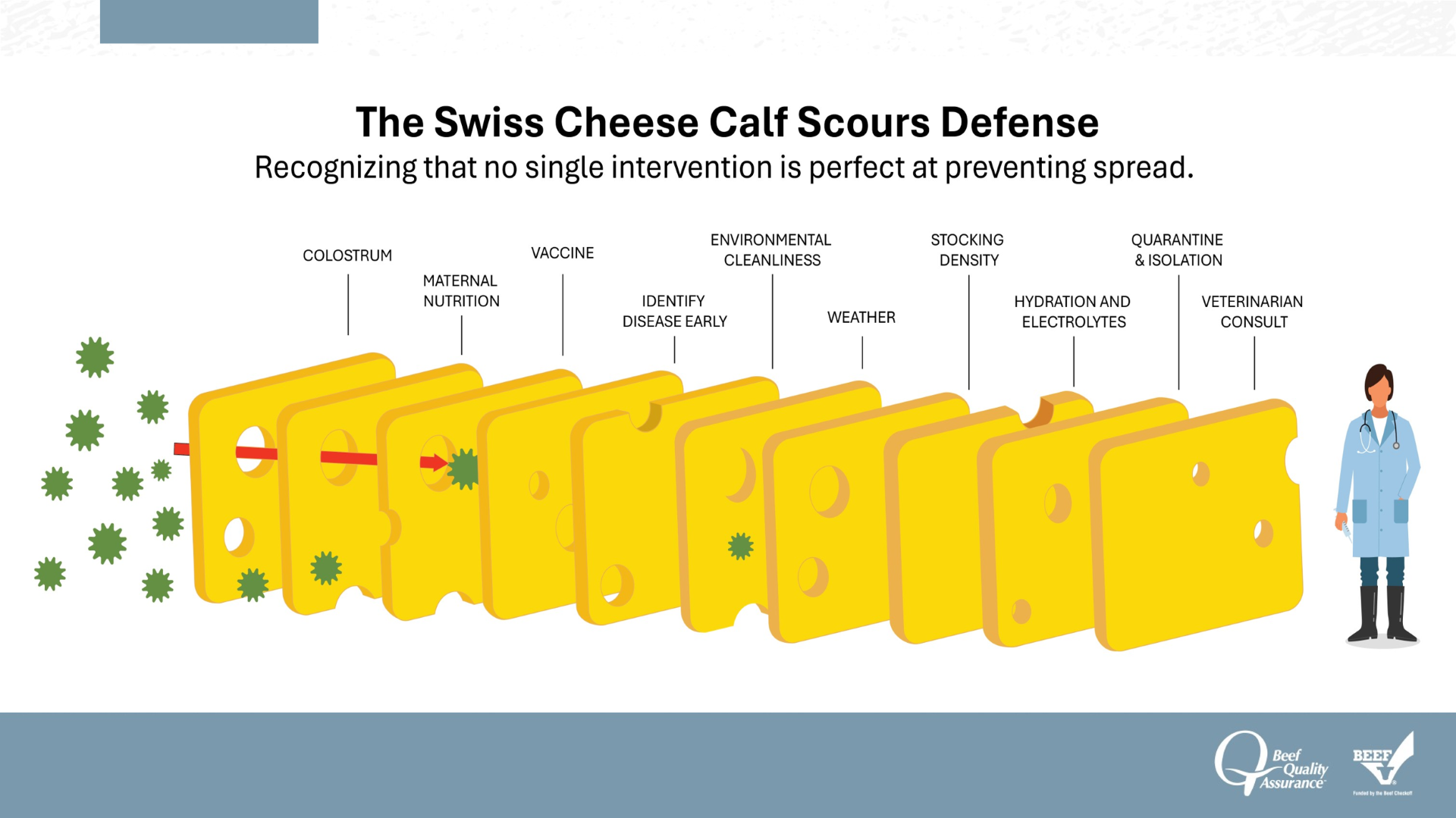
Some of the first defensive layers named in the illustration are colostrum intake, maternal nutrition and maternal vaccination. Those are interrelated; that is, the latter two impact colostrum quality and when a calf gets good colostrum intake, it has a major impact on protecting the calf’s health. However, since we don’t always know the colostrum quality or how much colostrum the calf received, we had better make sure we also have other layers of protection.
These layers of protection need to consider the potential for human error, communication failure, environmental changes, and other factors that may affect the situation. When we have more layers of defense, the failure of one layer is less likely to result in catastrophe.
I can’t imagine all the layers that go into airline safety, but now I can understand the concept much better. They, too, need to have layers of protection that cover different risks and risk types, and they build on redundancy of protection.
Few layers of defense might work if risks were static; however, risks, whether disease or collision, are ever-changing. In cattle herds, risks change with the season or from day to night. Risks may also change with population (cattle or wildlife) changes, or shift because of what happens on the neighbor’s farm.
Every layer of defense is an action that is part of your biosecurity plan that you can control or influence. In the calf scours figure, weather is shown as a layer. However, while weather and the stress it may cause are factors in reduced disease resistance, it is not something we can control or influence. Focus on what you can do.
The illustration of a stack of Swiss cheese is not perfect, but the principle is sound; more layers and levels of defense mean more protection because any one layer will not protect in all situations and times.
Some cattle producers might approach protection with heavy emphasis in one area, without adding complementary layers. For example, a producer might take comfort in their emphasis on vaccinations for disease prevention. Another may figure that having a “closed herd” is all the protection they need. The reality is that either of those approaches, by itself, is insufficient in the face of some threats.
Not all diseases can be vaccinated against, and while largely effective, vaccines may not fully protect every single individual in the herd. Therefore, while vaccines remain important, other layers of protection should be added to more fully protect the vulnerable ones. Similarly, while a closed herd is exposed to fewer pathogens, we know that infectious pathogens are also carried by wildlife, including birds and deer, as well as being carried by vehicles and the individuals in them coming from other farms. Again, more layers of protection are critical.
Ultimately, a biosecurity plan for cattle, or a security plan for airlines, will involve multiple steps. You should develop a plan for your herd with your veterinarian and key advisors and employees. All the steps need to be seen as practical, yet thorough. Some may require investment and others changes in how you do things. But the bottom line is how much do you want to protect your herd from losses due to disease? At the current value of cattle, you should have a high motivation to protect them. The greater the potential loss, the more steps one should be willing to take.
With an airline, one would assume that additional safety steps are readily added, given the potential loss if a layer of existing protection fails. However, my son closed the conversation with a rather chilling statement, “Regulations are often written in blood.” What he meant was that it usually takes a fatal accident to get any new regulations that would reduce risk.
Indeed, every layer involves a cost in money and/or time. You are the one in charge of your herd’s biosecurity. Taking additional steps to add layers of security would seem to be a wise thing to do.