What’s on your 4-H leader plate?
 Print
Print Email
EmailTake a moment to reflect on everything you are managing and what helps you stay energized and supported in your role.
Leading a 4-H club is both meaningful and complex. Club leaders play an essential role in creating positive youth development experiences, building relationships and fostering a sense of belonging. With so many responsibilities, it can be helpful for volunteers to pause and reflect on everything they are managing and what helps them stay energized and supported in their role.
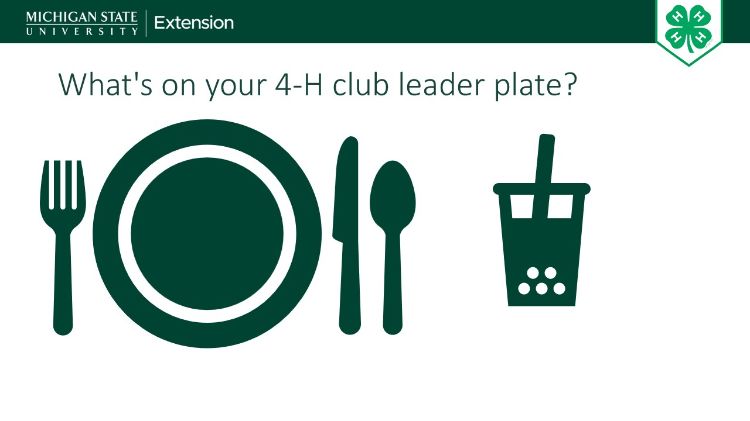
One way to do this reflection is to imagine your responsibilities through the metaphor of a place setting: a plate, cup, fork, knife and spoon. Each piece represents a different part of the leadership experience and offers a chance to think about balance, boundaries and personal well-being.
Plate: the responsibilities you hold
Every 4-H leader carries a unique set of responsibilities. The plate may include planning meetings, supporting youth projects, communicating with families, keeping records, resolving conflicts or coordinating events. Some tasks may take up more space than others, and that amount can change throughout the year. Taking time to name what is on your plate helps bring clarity to where your energy is going and whether anything feels too full or unexpectedly empty.
Cup: what fills and energizes you
The cup represents what motivates you and keeps you connected to the heart of 4-H. It might be seeing youth gain confidence, watching them discover their spark, celebrating project milestones or experiencing strong teamwork within your club. Understanding what fills your cup can help you see the bigger picture on why you are a 4-H volunteer.
Fork: what helps you get the job done
The fork symbolizes the tools, resources and processes that help you lead effectively. This might include meeting agendas, support from other leaders, youth officers, guidance from 4-H staff, useful materials from the club management website, or communication tools such as social media, club email, GroupMe, etc. Reflecting on the tools you rely on can reveal what tools you may still need and what additional support could make leadership easier.
Knife: what cuts into your energy
Every leader faces challenges. The knife represents the things that drain time or energy. These may include scheduling issues, difficult communication, limited volunteer help, youth engagement struggles or administrative tasks. Recognizing these challenges is an important step toward identifying where shared leadership, new strategies or additional support may be needed.
Spoon: what sustains you
The spoon represents what keeps you positive, patient and connected to your purpose as a volunteer. This may include encouragement from other leaders, celebrating small wins, youth enthusiasm, personal boundaries or taking time for yourself between events. These sources of nourishment help ensure that your volunteer experience is meaningful and sustainable.
Reflection
After thinking through each part of your place setting, take a moment to reflect on your overall balance as a leader. Consider the following questions:
- What areas of my leadership feel well supported right now?
- Where do I feel stretched too thin?
- What types of support, tools or resources would help lighten my plate?
- Who can I reach out to when I need guidance or encouragement?
- How can Michigan State University Extension staff, fellow 4-H volunteers or my local program help support me as a leader?
These reflective questions can lead to meaningful conversations with staff, club members and other volunteers, and they can highlight opportunities for shared solutions and stronger support networks.
Just like a balanced meal, effective club leadership depends on a healthy mix of responsibilities, support and inspiration. By reflecting on what is on your plate and what fills your cup, you can identify what you need to thrive as a volunteer. MSU Extension and Michigan 4-H are committed to supporting you and ensuring your volunteer experience remains purposeful, positive and connected to helping young people grow and succeed.
For additional helpful volunteer training content, check out the MSU Extension Michigan 4-H Volunteer Webinar Series webpage.
MSU Extension and Michigan 4-H Youth Development help to prepare young people for successful futures. To find out how to get involved as a youth participant or an adult volunteer, contact your county MSU Extension office.