


Wheat Watchers Week of May 11, 2026
 Print
Print Email
EmailSee how the wheat crop is progressing across the state this week.
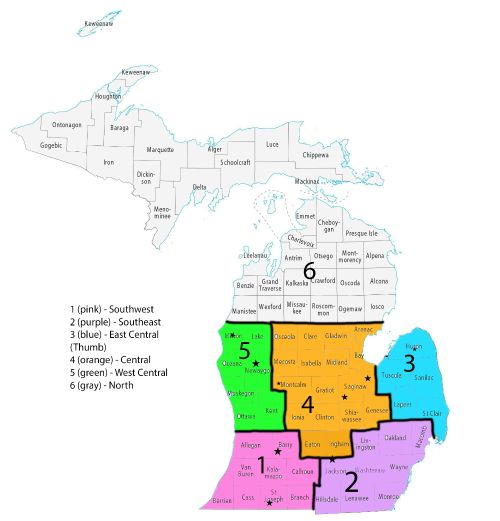
Welcome to the fifth edition of this season’s Wheat Watchers! This report will come out weekly until most of the state hits flower and then will switch to bi-weekly until most of the state has harvested. This report is only possible because of our agribusiness and farmers who participate as Wheat Watchers. If you are interested in being a wheat watcher, especially if you see your area isn’t represented, please reach out to Michigan State University Extension field crops educator Jenna Falor at falorjen@msu.edu.
Overall, reporters are seeing wheat ranging from Feekes 4–10. It has been cold across the state, with the northeast especially off to a slow start.
Southwest Michigan
We had one wheat watcher reporting from the southwest region in St. Joseph County near Centreville. Wheat in the area has reached Feekes 10.1–10.2. Herbicide and nitrogen passes have been completed with fungicide passes starting. Some powdery mildew had been found in lush stands. Overall cool temperatures have slowed growth, and there are reports of superficial frost damage.
Southeast Michigan
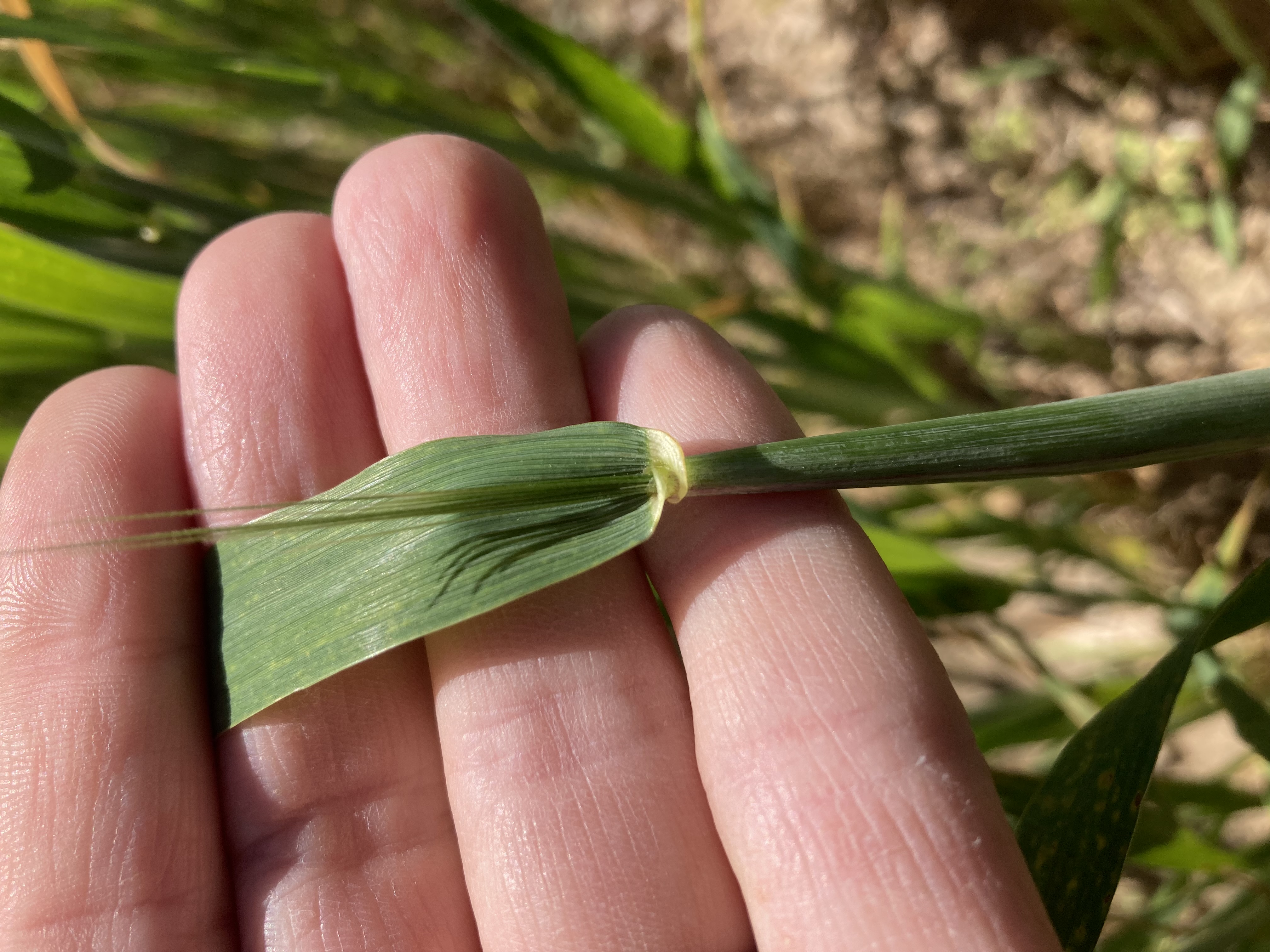
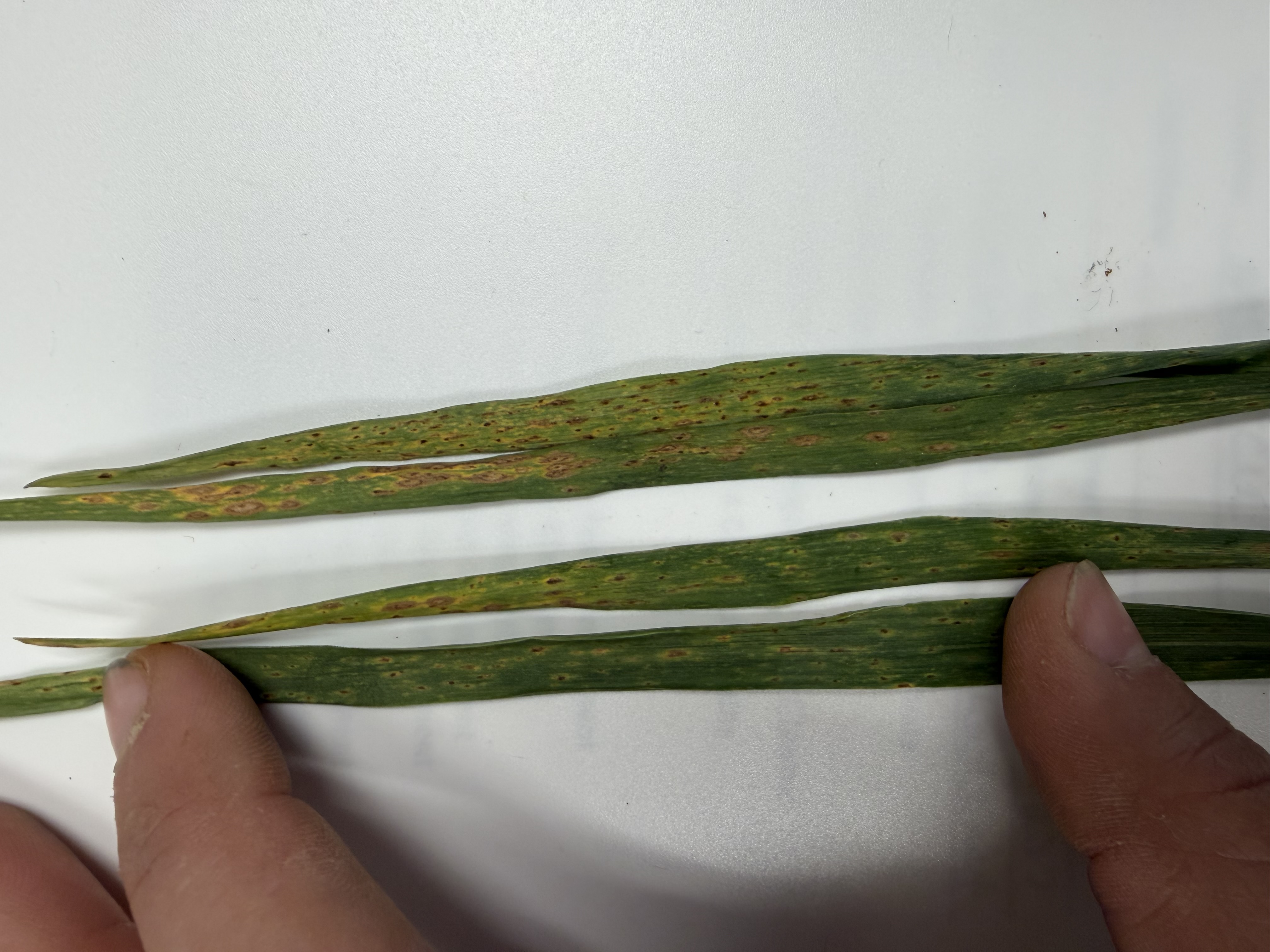
We had two wheat watchers reporting from the southeast region, one in Monroe County near Ida and the other in Jackson County near Jackson. Wheat is as Feekes 9 with nitrogen and herbicide application complete. Farmers are waiting for flowering to apply the next fungicide. The ground still has ample water. The watcher in Jackson County reports leaf blotch foliar diseases are progressing quickly.
East central (Thumb) Michigan
We had one wheat watcher reporting from the Thumb in Huron County near Ubly. Wheat is at Feekes 6–7. There has been a lot of activity with herbicide and nitrogen applications wrapping up by the end of the week.
Central Michigan
We had three wheat watchers reporting from the central region: one from Isabella County near Mt. Pleasant, one who scouted in Lapeer County near Mayville and Saginaw County near Richville, and one from Saginaw County near Chesaning. All three watchers report wheat is at Feekes 6, with some fields near Richville at Feekes 7. The herbicide application window has passed, and the second round of split applications is wrapping up.
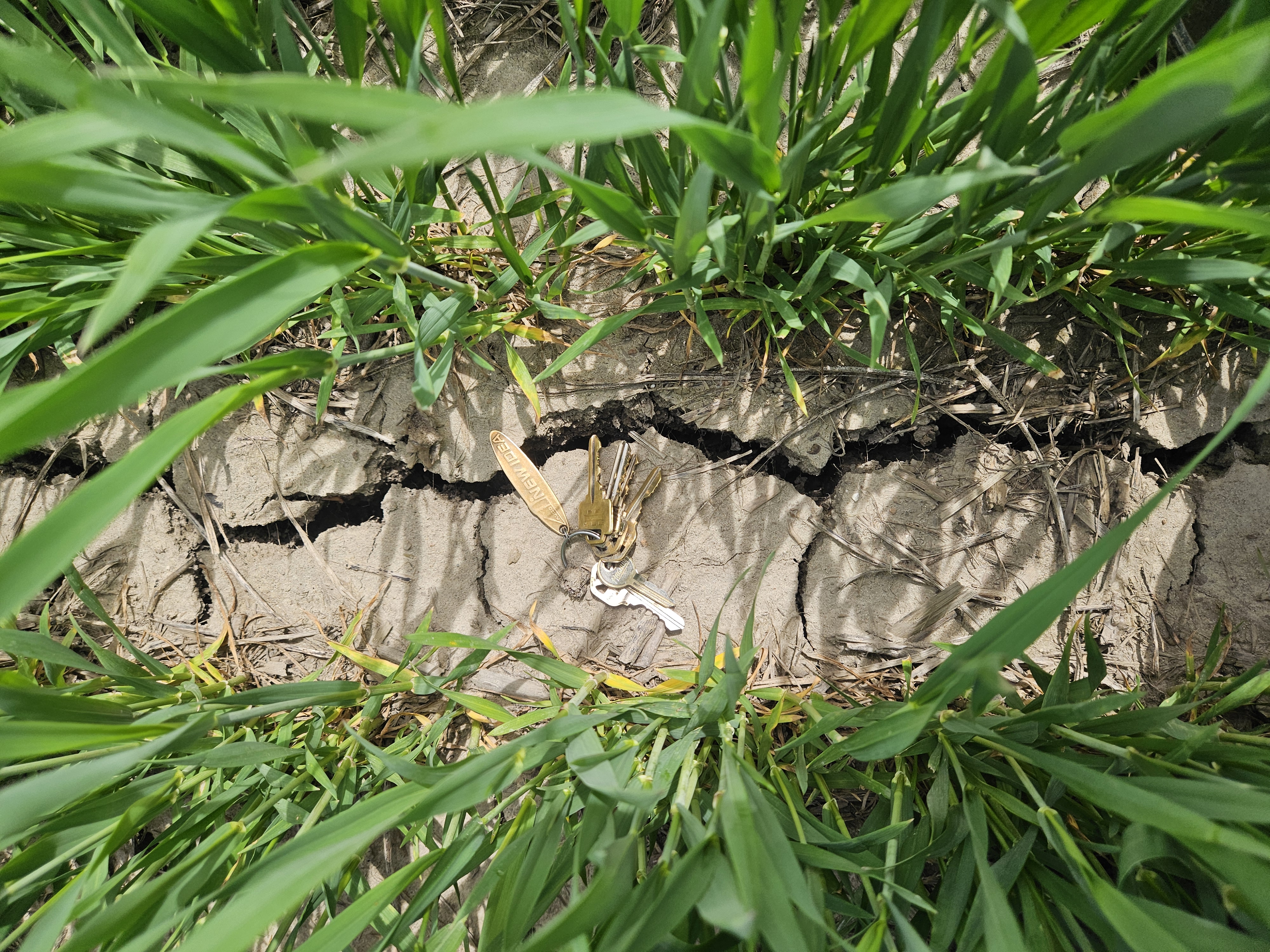
The watcher near Richville reports that overall wheat is looking good, though some uncontrolled weeds are breaking through. The watcher in Chesaning notes that the tiles are not running and cracks are starting to show in the soil; a half inch of rain is needed.
No watchers reported any disease or insect concerns. The watcher in Isabella County did have some high armyworm moth trap counts.
West central Michigan
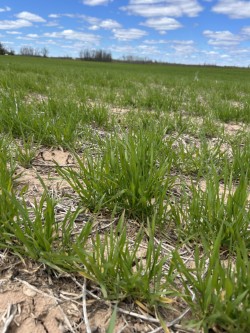
We had one wheat watcher reporting from the west central region this week from Mason County near Custer. Wheat has reached Feekes 5–6. Fertilization has been completed as well as herbicide applications. Cold temperatures (34 growing degree units) have caused slow growth and some fields with ponding are being replanted to corn.
Northeast Michigan
We had one wheat watcher reporting from the northeast region in Montmorency County near Hillman. It has been a slow start to the season with cold temperatures and plenty of late frosts. Fertilizer applications were made last week, and wheat is at Feekes 3–4.
This work is supported by the Crop Protection and Pest Management Program [grant no 2024-70006-43569] from the USDA National Institute of Food and Agriculture. Any opinions, findings, conclusions, or recommendations expressed in this publication are those of the author(s) and do not necessarily reflect the view of the U.S. Department of Agriculture.