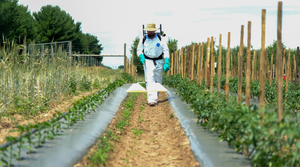
Why and how to read a pesticide label?
 Print
Print Email
EmailUnderstanding the importance of pesticide labels and how to read the label is extremely important to achieve effective pest management in crop production.
Why the pesticide label matters
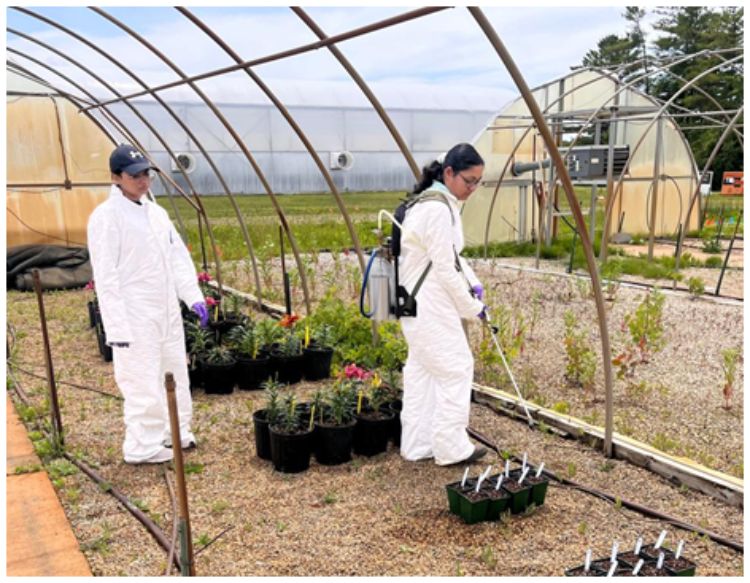
Every pesticide is required to have a label approved by the Environmental Protection Agency (EPA), and that label is more than just small print, it is the law. Neglecting to follow the label is not only risky for your crops, your workers and the environment, it’s illegal (Figure 1). Think of the label as your rulebook. Just like a driver studies the rules of the road before getting behind the wheel, growers must study the pesticide label before every application.
Labels can change overtime, so even if you’ve used the same product before, it still should be reviewed. Companies regularly update directions, add new uses or remove old ones. Reading the label every single time ensures that you know exactly how to apply the product safely and legally. Even if you have a product from the past, you can review the most recent label by looking it up online on the manufacturer’s website or on Greenbook Crop Protection Label Data or Crop Data Management Systems label database.
When to read the label
The short answer? Every time.
- Before you buy: Make sure the pesticide is effective for your pest problem and approved for your intended crop or site, also checking for any restrictions.
- Before you mix or spray: Confirm rates, timing, weather restrictions, suggested additives and protective equipment needs.
- During storage and disposal: Review storage instructions, fire safety precautions and legal requirements for container disposal.
- If there’s an emergency: Labels provide first aid instructions and emergency numbers.
What to look for on the label
Product identity
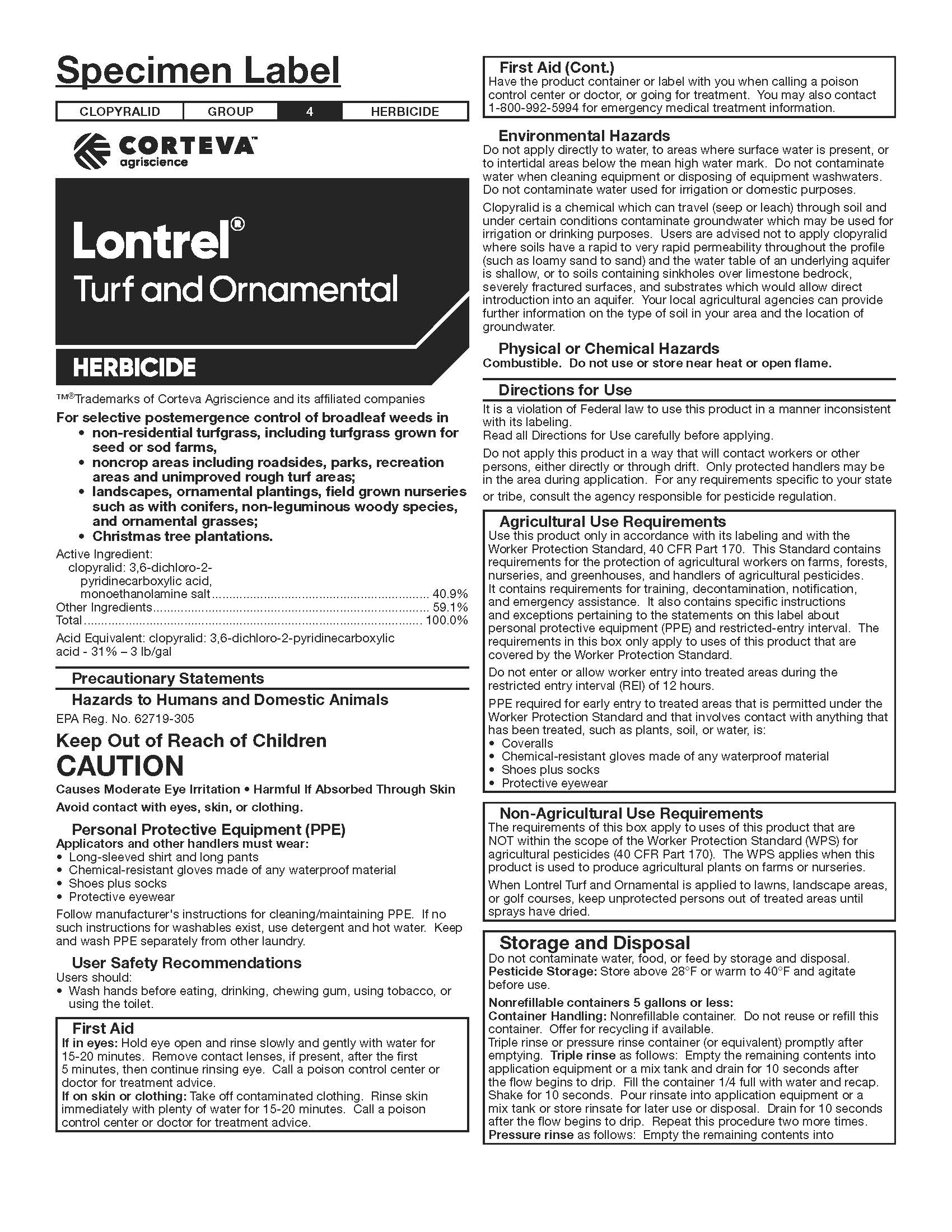
- Brand or trade name: The name you recognize on the shelf, often trademarked by the manufacturer. (In Figure 2, this is Lontrel.)
- Active ingredients: The chemical(s) that do the work. There can be different trade-named products with the same active ingredient. (In Figure 2, this is clopyralid.)
- Herbicide Group or mode of action number, which helps prevent resistance by rotating products with different modes/sites of action, according to Hartzler, R. 2010. (In Figure 2, this is Group 4, which is a synthetic auxin.)
- Classification statement: Some pesticides are labeled restricted use (RUP). These require a pesticide applicator certificate issued by the state in order to purchase and apply. Others are general use, available to the wider public. (In Figure 2, Lontrel is general use.)
- EPA registration and establishment numbers
- Each product has an EPA registration number that identifies the manufacturer and product.
- Example: EPA Reg. No. 62719-305 (Figure 2). EPA establishment number shows where the product was produced. Note, only labels on actual product packaging will have this number, not labels viewed online.
Note: The establishment number is important if you ever need to track product recalls, report an issue or confirm legality.
Signal words and symbols
As Hosni et al., 2024, explains in “Improving consumer understanding of pesticide toxicity labels: experimental evidence,” labels use clear warning words to indicate acute toxicity (i.e., immediate impacts):
- Danger/Poison (with skull and crossbones): Highly toxic. A few drops could be lethal.
- Danger: Severe eye or skin injury possible.
- Warning: Moderately toxic.
- Caution: Slightly toxic but still require careful handling (Figure 2).
Precautionary statements
- Routes of entry: How the pesticide could enter your body (skin, inhalation, ingestion, or eyes).
- Protective clothing and equipment (PPE): Glove, goggle, respirator and clothing requirements.
- Special toxicity warnings: Labels may highlight risks to bees, birds, fish or aquatic habitats.
First aid instructions
Every label includes emergency steps in case of exposure. Keep the pesticide label (or a copy) with you in case you need to call a doctor or poison control. Bookmarking label databases on smartphones can also be helpful.
Directions for use
- Target pests: Which weeds, insects/arthropods or diseases the product controls.
- Application timing: Preemergence vs. post-emergence and maximum weed heights, insect life stages or disease infection windows.
- Rates and frequency: How much to apply, how often and maximum seasonal limits.
- Re-entry intervals (REI): How long workers must wait before entering a treated area.
- Pre-harvest intervals (PHI): How many days must pass between application and harvest.
Agricultural and non-agricultural use requirements
Agricultural uses may have strict REIs and PPE requirements. Non-agricultural uses (lawns, golf courses, ornamentals) may not list specific re-entry times but still require common-sense safety.
Environmental and physical hazards
- Fire, explosion or drift hazards.
- Environmental risks, such as contamination of water or toxicity to pollinators.
This section will help you know where and which kind of items pesticide should be and should not be stored or placed.
Storage and disposal
- Instructions for safe storage to prevent accidents.
- Proper disposal steps for unused products and containers.
- Never pour leftover pesticides down the drain or dump containers in the field.
Beyond the label: Extra resources
- Safety Data Sheets (SDS): Available from manufacturers upon request; provide detailed chemical hazard information.
- Digital labels and apps: Many labels can be accessed online or via QR codes. These are especially useful for checking updates.
- Extension bulletins and training: Michigan State University Extension offers training and fact sheets to help growers interpret label requirements.
Final takeaway: Make the label your habit
Reading the pesticide label isn’t an optional step, it’s part of professional, responsible farming. By checking the label every time you buy, mix, apply or dispose of a product, you protect yourself, your workers, your crops and your land. Think of it as insurance: 5 minutes spent reading the label can prevent accidents, legal trouble and lost profits.
Reference to commercial products or trade names does not imply endorsement by MSU Extension or bias against those not mentioned.