Christmas Tree and Nursery Spongy Moth Treatment Options
DOWNLOADApril 17, 2026 - Bill Lindberg, Michigan State University Extension
 Print
Print Email
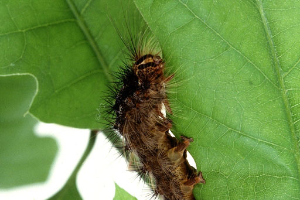
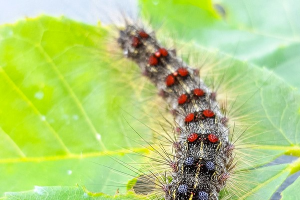
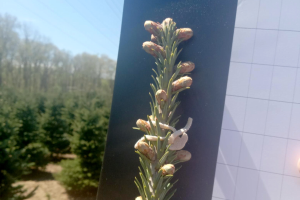
EmailSpongy moth (Lymantria dispar) is an invasive insect that can cause significant damage to a wide range of tree species. While conifers and Christmas trees are not preferred feeding sites and normally only incur minor needle defoliation, Christmas trees are suitable for spongy moth egg laying and could contribute to the spread of spongy moth. To prevent the spread of spongy moth to non-infected areas, a federal quarantine was created. To move trees out of the quarantine area (www.aphis.usda.gov/plant-pests-diseases/spongy-moth/spongy-moth-quarantine-map), which includes all counties in Michigan, tree growers must comply with the Michigan Department of Agriculture and Rural Development (MDARD) compliance program.
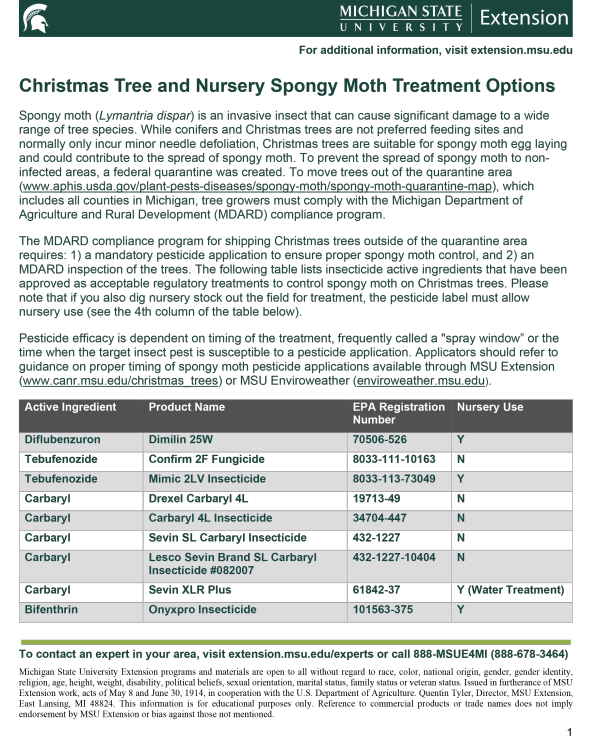
The MDARD compliance program for shipping Christmas trees outside of the quarantine area requires: 1) a mandatory pesticide application to ensure proper spongy moth control, and 2) an MDARD inspection of the trees. The following table lists insecticide active ingredients that have been approved as acceptable regulatory treatments to control spongy moth on Christmas trees. Please note that if you also dig nursery stock out the field for treatment, the pesticide label must allow nursery use (see the 4th column of the table below).
Pesticide efficacy is dependent on timing of the treatment, frequently called a "spray window” or the time when the target insect pest is susceptible to a pesticide application. Applicators should refer to guidance on proper timing of spongy moth pesticide applications available through MSU Extension (www.canr.msu.edu/christmas_trees) or MSU Enviroweather (enviroweather.msu.edu).
|
Active Ingredient |
Product Name |
EPA Registration Number |
Nursery Use |
|---|---|---|---|
|
Diflubenzuron |
Dimilin 25W |
70506-526 |
Y |
|
Tebufenozide |
Confirm 2F Fungicide |
8033-111-10163 |
N |
|
Tebufenozide |
Mimic 2LV Insecticide |
8033-113-73049 |
Y |
|
Carbaryl |
Drexel Carbaryl 4L |
19713-49 |
N |
|
Carbaryl |
Carbaryl 4L Insecticide |
34704-447 |
N |
|
Carbaryl |
Sevin SL Carbaryl Insecticide |
432-1227 |
N |
|
Carbaryl |
Lesco Sevin Brand SL Carbaryl Insecticide #082007 |
432-1227-10404 |
N |
|
Carbaryl |
Sevin XLR Plus |
61842-37 |
Y (Water Treatment) |
|
Bifenthrin |
Onyxpro Insecticide |
101563-375 |
Y |
|
Bifenthrin |
Aceto Bifenthrin 2 EC |
2749-556 |
N |
|
Bifenthrin |
Talstar Nursery Granular Insecticide |
279-3130 |
Y |
|
Bifenthrin |
Onyxpro Insecticide |
279-4269 |
Y |
|
Bifenthrin |
Sniper Insecticide /Miticide |
34704-858 |
N |
|
Bifenthrin |
Sniper Helios |
34704-858 |
N |
|
Bifenthrin |
Signature Bifenthrin |
34704-858 |
N |
|
Bifenthrin |
Bifen GN 2EC Select |
42750-394-89442 |
Y |
|
Bifenthrin |
Quali-Pro Bifenthrin Golf & Nursery 7.9F |
53883-366 |
Y |
|
Bifenthrin |
Discipline 2EC |
5481-517 |
N |
|
Bifenthrin |
Wisdom Nursery Granular Insecticide |
5481-522 |
Y |
|
Bifenthrin |
Xpedient Plus V |
5481-609 |
N |
|
Bifenthrin |
Wisdom G L/N |
5481-683 |
Y |
|
Bifenthrin |
Omni Brand Bifenthrin 2EC |
5905-626 |
Y |
|
Bifenthrin |
Fanfare ES |
66222-236 |
N |
|
Bifenthrin |
Fanfare EC |
66222-261 |
N |
|
Bifenthrin |
UP-Star SC Lawn and Nursery Insecticide/Miticide |
70506-23 |
Y |
|
Bifenthrin |
Bifenture EC Agricultural Insecticide |
70506-57 |
N |
|
Bifenthrin |
Bifenture EC |
70506-57 |
N |
|
Bifenthrin |
Bifen 2 AG Gold |
83222-1 |
Y |
|
Bifenthrin |
Bi-Dash 2E |
83529-48 |
N |
|
Bifenthrin |
Bifenthrin 2E |
85678-67 |
Y |
|
Bifenthrin |
Willowood Bifenthrin 2EC |
87290-54 |
N |
|
Bifenthrin |
Bifender FC Insecticide |
89118-2 |
Y |
|
Bifenthrin |
Reveal |
89168-19-89391 |
Y |
|
Bifenthrin |
Reveal Endurx |
89168-19-89391 |
Y |
|
Bifenthrin |
Batallion 2 EC |
91234-104 |
Y |
|
Bifenthrin |
Tigris Bifen 2 EC |
92647-17 |
Y |
|
Bifenthrin |
Tigris Bifenthrin LFC |
92647-27 |
Y |
|
Bifenthrin |
Bifen 2EC Select |
92647-32 |
N |
|
Bifenthrin |
GCS Bifenthrin 2EC |
94730-8 |
Y |
|
Methoxyfenozide |
Invertid 2F |
34704-1107 |
Y |
|
Methoxyfenozide |
Invicar 2SC |
83100-65 |
N |
|
Methoxyfenozide |
Inspirato 2F |
91234-62 |
Y |
|
Methoxyfenozide |
Vexer Insecticide |
91234-62-89391 |
Y |
|
Methoxyfenozide |
Acora Insecticide |
91234-62-92735 |
Y |
|
Phosmet |
Imidan 70-W Agricultural Insecticide |
10163-169 |
N |
|
Spinosad |
Entrust |
62719-282 |
Y |
|
Spinosad |
Lumiverd |
62719-282 |
Y |
|
Spinosad |
Conserve SC Turf and Ornamental Insect Control |
62719-291 |
Y |
|
Spinosad |
Conserve SC Turf and Ornamental |
62719-291 |
Y |
|
Spinosad |
Spintor 2SC Naturalyte Insect Control |
62719-294 |
N |
|
Spinosad |
Success Optim Naturalyte Insect Control |
62719-523 |
N |
|
Spinosad |
Blackhawk Naturalyte Insect Control |
62719-523 |
N |
|
Spinosad |
Matchpoint Insecticide |
62719-523 |
N |
|
Spinosad |
Seduce Insect Bait |
67702-25-70051 |
Y |
|
Spinosad |
Simpai |
91234-279 |
N |
|
Spinosad |
Falcondor SC |
91234-279 |
N |
|
Acephate |
Acephate 90 WDG Insecticide |
34704-1051 |
N |
|
Acephate |
Acephate 90 WSP Insecticide |
34704-862 |
Y |
|
Acephate |
Orthene Turf Tree and Ornamental WSP Insecticide |
5481-8971 |
Y |
|
Acephate |
Acephate 90 Prill Agricultural |
66222-123 |
Y |
|
Acephate |
Acenthrin Insecticide |
70506-339 |
Y |
|
Acephate |
Acephate 97UP Insecticide |
70506-8 |
Y |
|
Acephate |
Bracket 97 Insecticide |
70506-8-1381 |
Y |
|
Acephate |
ACE-Jet |
74578-2 |
N |
|
Acephate |
Tide Acephate 90 WDG |
84229-7 |
Y |
|
Acephate |
Acephate 90 Prill Select |
89442-40 |
Y |
|
Acephate |
Avatar PLX Insecticide |
94396-29 |
Y |
|
Cyfluthrin |
Baythroid XL |
264-840, SLN. No. MI-060003 |
N |
Using an insecticide not on the list or outside of the effective spray window for regulatory treatment will result in denial of certification.
All applications must be applied at the maximum labeled rate. The product must be a registered pesticide in Michigan. MDARD’s Pesticide and Plant Pest Management Division publishes a list of registered pesticides in Michigan. See the link for “Pesticides Registered in Michigan” at www.michigan.gov/pestreg.
DISCLAIMER: When using any pesticide, follow the pesticide label for directions, application rates, methods, pollinator protection guidelines, and appropriate protective equipment. Confirm that the application site is on the label prior to use (a tool for this can be found at www.npirs.org/state/). Remember, the label is the law. See if you are required to become a certified applicator at https://www.michigan.gov/mdard/-/media/Project/Websites/mdard/documents/pesticide-plant-pest/pesticide/Pesticide-Application-Flowchart.pdf.
This work is supported by the Crop Protection and Pest Management Program [grant no 2024-70006-43569] from the USDA National Institute of Food and Agriculture. Any opinions, findings, conclusions, or recommendations expressed in this publication are those of the author(s) and do not necessarily reflect the view of the U.S. Department of Agriculture.