Enchanter's nightshade - Circaea canadensis (L.) Hill
 Print
Print Email
EmailEnchanter’s Nightshade – Circaea lutetiana L. ssp. canadensis (L.) Hill
Onagraceae (Evening Primrose family)
MI Status
Native
Life Cycle
Perennial
Leaves
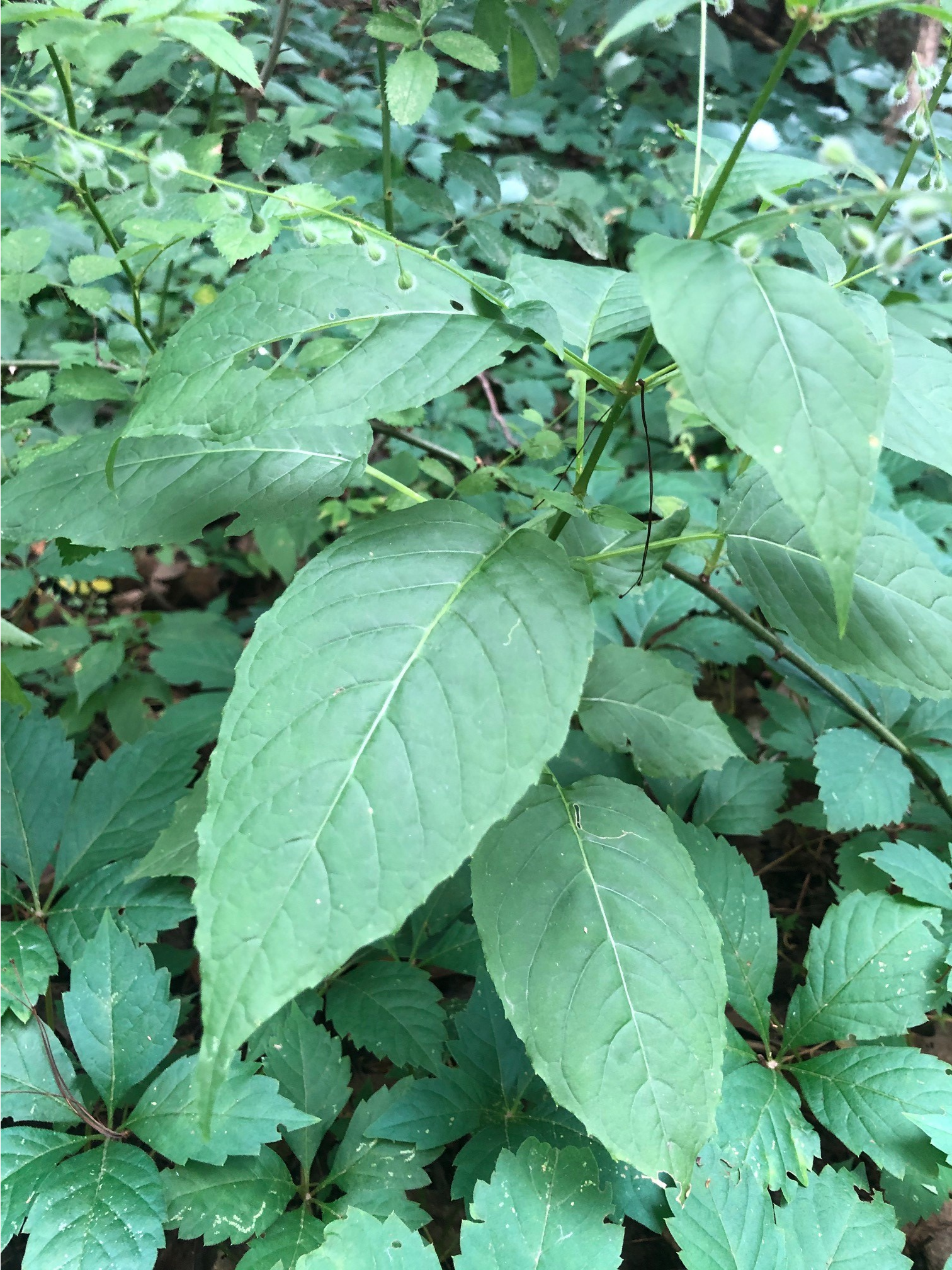
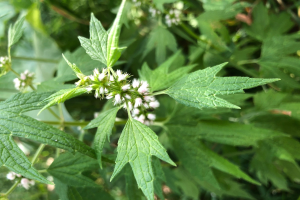
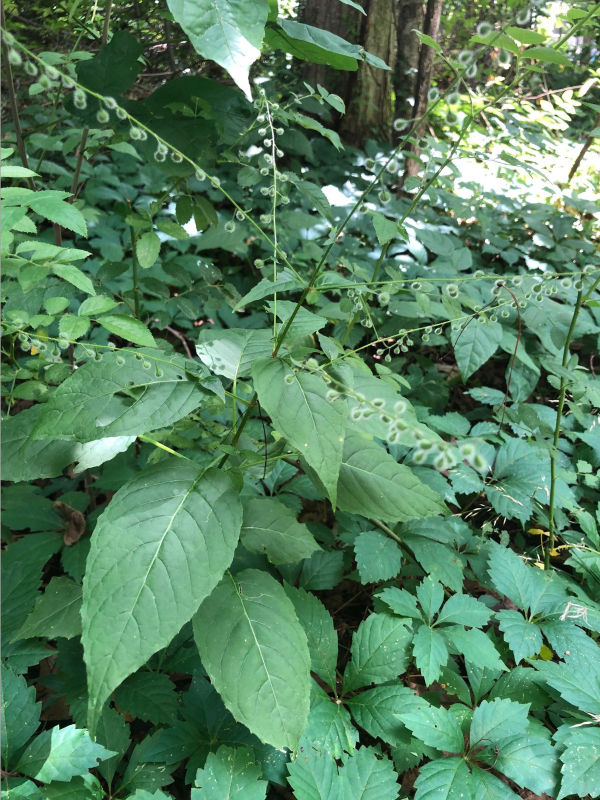
The leaves are opposite and are up to 5” long and 3” wide. They have toothed edges, egg-shaped to oblong, and taper to a point. The petioles are 1-2” long. Leaves tend to become smaller toward the top of the plant.
Stems
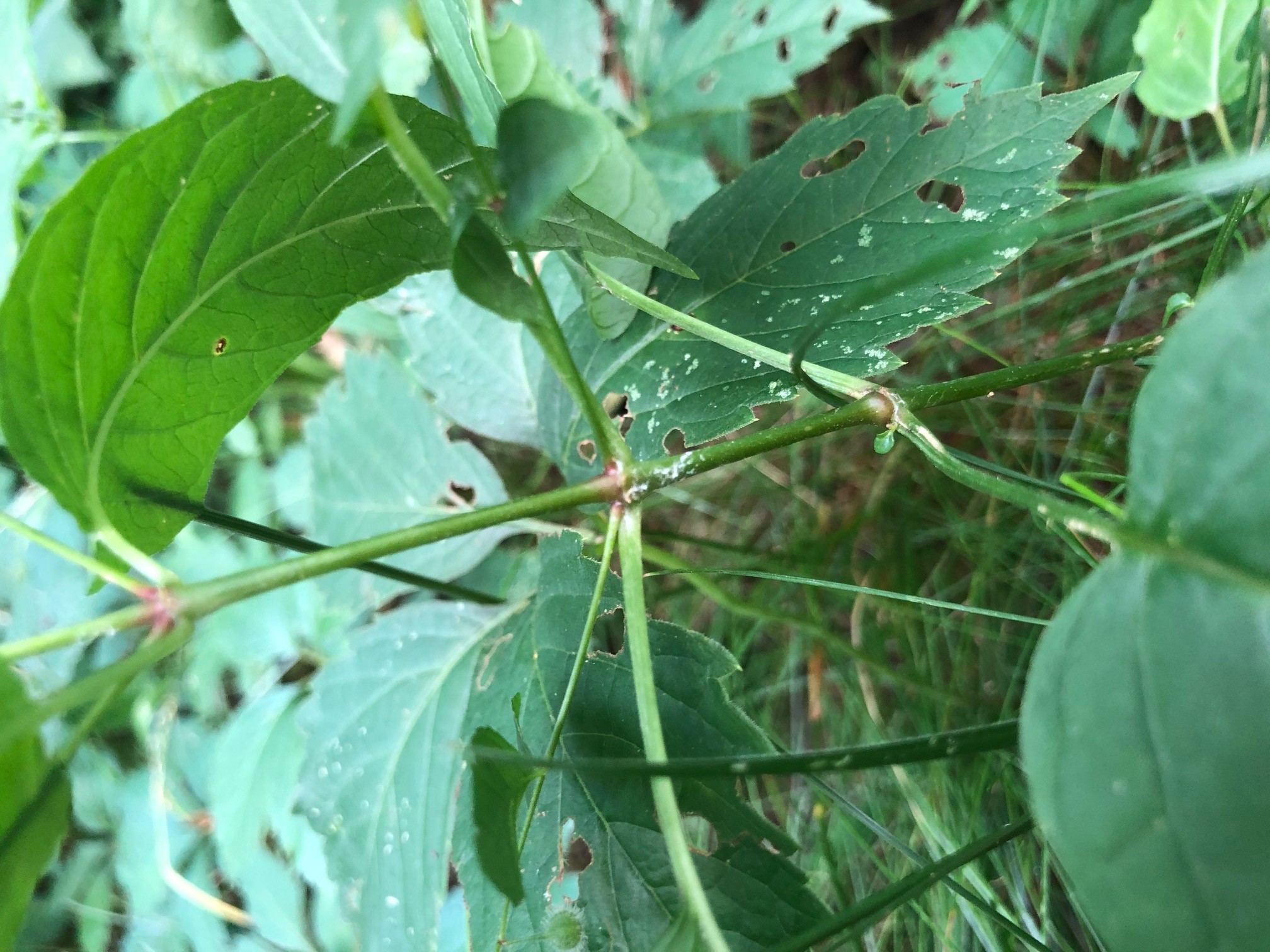
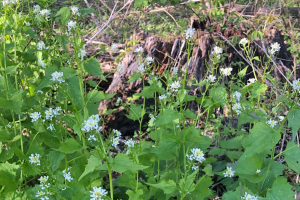
The main stem is unbranched, and white hairs may be present. The central stem terminates in a raceme of flowers.
Flowers and fruit
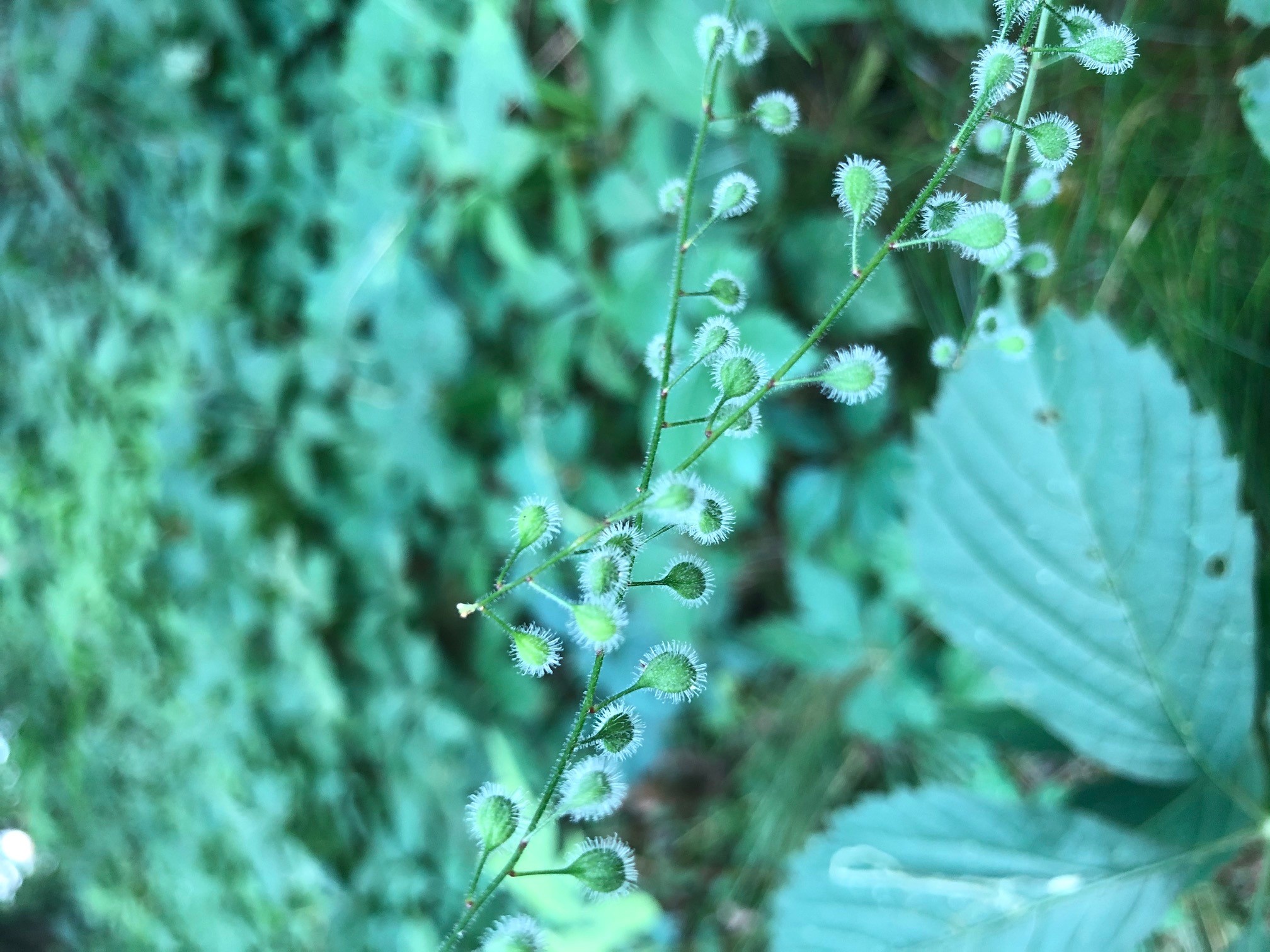
Each flower consists of 2 white petals that are deeply divided into 2 lobes. The flower stalks are covered in short white hairs. The base of each flower contains a 2-celled ovary that is green and covered with stiff hooked hairs. Each cell contains a single tear-drop-shaped seed. When mature, the hooked hairs can attach themselves to animal fur or human clothing for seed dispersion.
Reproduction
Seeds and rhizomes.