


Field horsetail
August 7, 2015
 Print
Print Email
EmailEquisetum arvense L.
Life cycle
Perennial spore-producing plant.
Leaves
Not present.
Stems
Vegetative stems are green and branch in whorls. Stems may have a bottle-brush appearance and should not exceed 2 feet in height. Stems die back to the ground in winter.
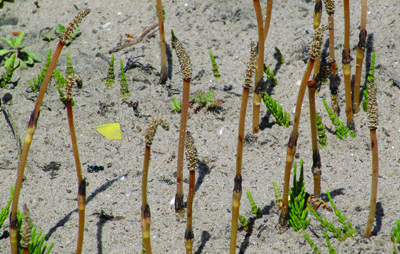
Patch of field horsetail fruiting and vegetative stems.
Flowers and fruit
Erect, unbranched, white to brown fruiting stalks (stems) bear terminal spore-releasing cones. Flowers are not produced.
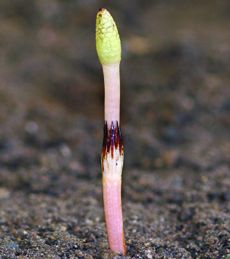
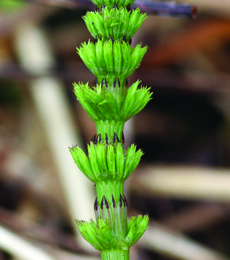
Field horsetail fruiting stalk (left). Close-up of vegetative stem of field horsetail (right).
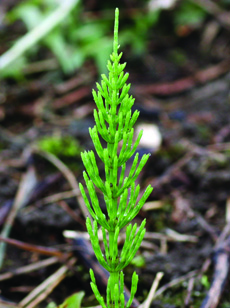
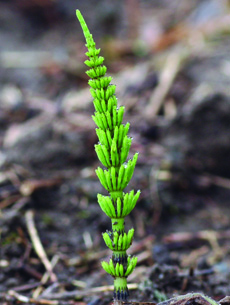
Field horsetail vegetative stems.
Reproduction
Spores and prolific rhizomes.
Similar weeds
Scouringrush (E. hyemale L.) Differs by having larger evergreen stems with little or no branching. Grows only in wet areas.
Print a PDF of this page: Field horsetail
Other Documents in this Series
You Might Also Be Interested In
-
September 2026 Michigan Beekeeping Office Hours Webinar
Published on September 14, 2026



Accessibility Questions:
For questions about accessibility and/or if you need additional accommodations for a specific document, please send an email to ANR Communications & Marketing at anrcommunications@anr.msu.edu.