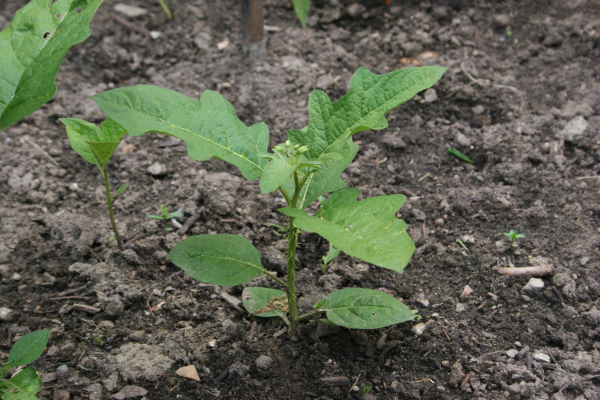
Horsenettle – Solanum carolinense
 Print
Print Email
EmailSolanum carolinense L.
Solanaceae (Nightshade family)
MI Status
Non-native
Life cycle
Spreading to erect, patch-forming perennial.
Leaves
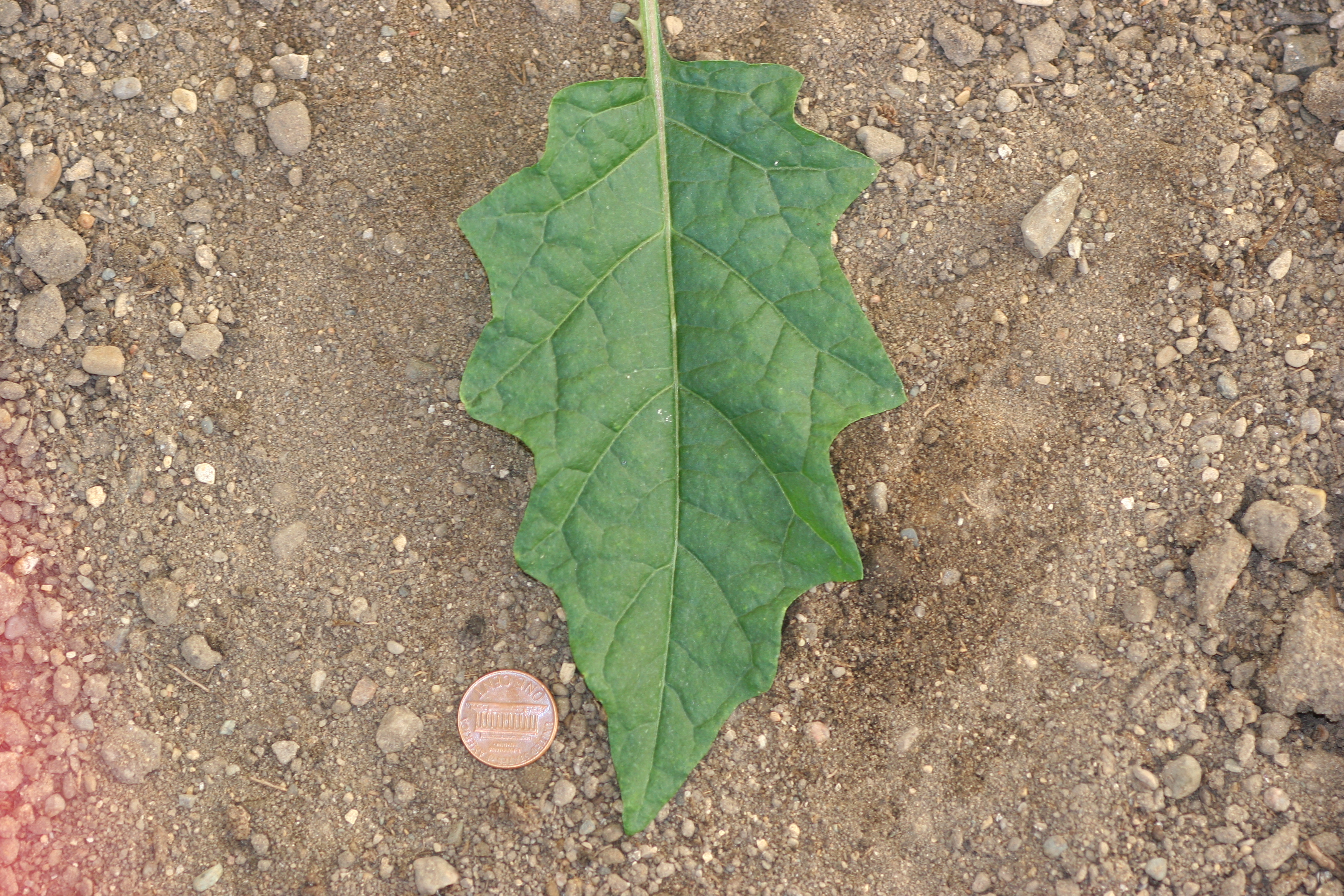
Alternate, egg-shaped, shallowly to deeply lobed, 2 to 5 inches long with sharp, prominent prickles on the leaf veins, midveins, and petioles. Star-shaped hairs are present on both leaf surfaces.
Stems
Spreading to erect, herbaceous stems with multiple branching, up to 3 feet in height. Stem has sharp, prominent prickles and star-shaped hairs.
Flowers and fruit
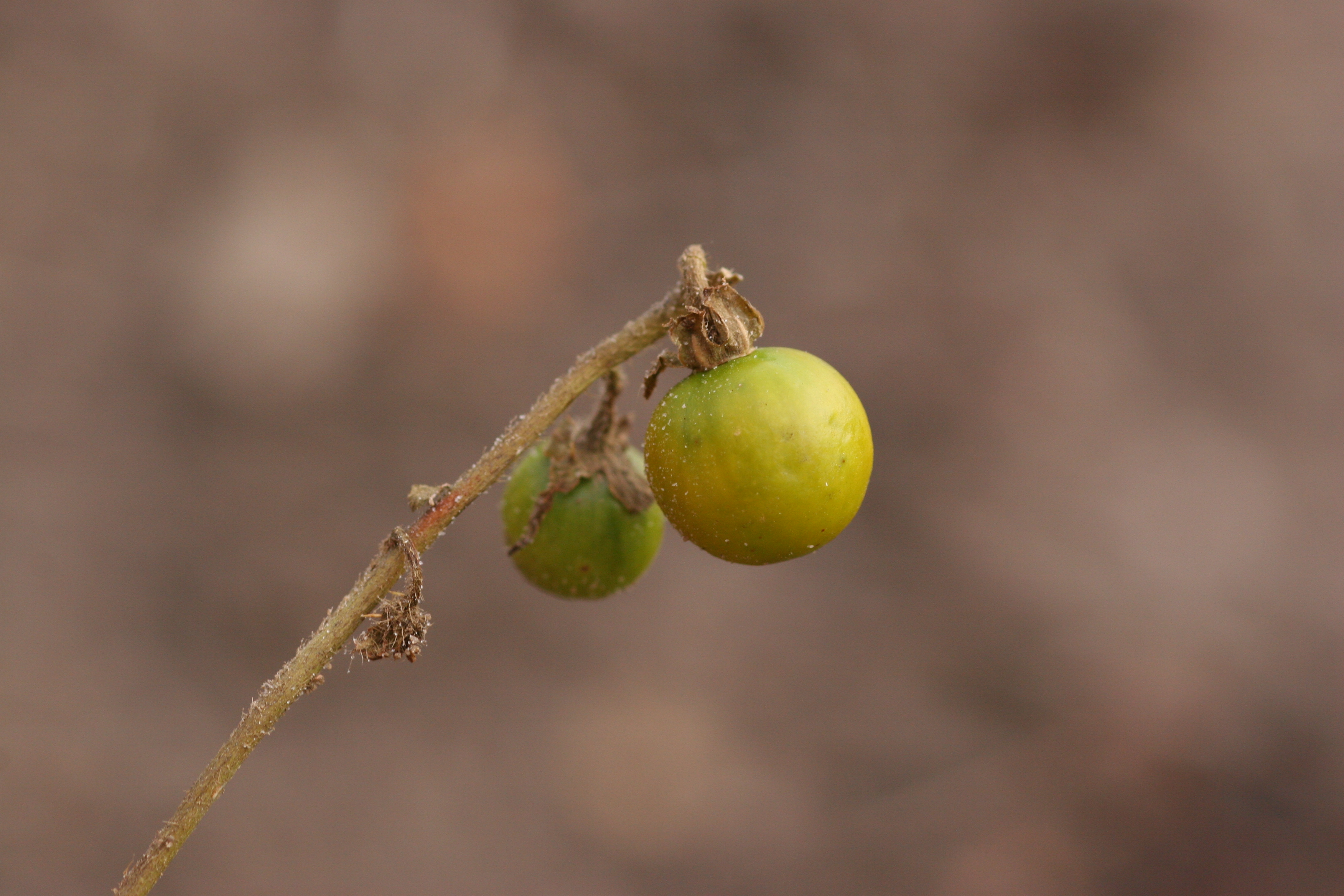
Flowers are white to pale purple, star-shaped with five petals fused at the base, and found in clusters on prickly flowering stalks. Flower centers consist of bright yellow, cone-shaped anthers. Berries are yellow at maturity, globe-shaped, wrinkled, and approximately 0.5 inches across, and contain up to 170 seeds.
Reproduction
Seeds and deeply penetrating vertical to horizontal creeping roots.
Toxicity
All plant parts are toxic to animals.