Marsh yellowcress – Rorippa palustris
 Print
Print Email
EmailRorippa palustris L. (Bess)
Brassicaceae (Mustard family)
MI Status
Native
Life cycle
Taprooted annual or biennial. Occasionally, a weak perennial.
Leaves
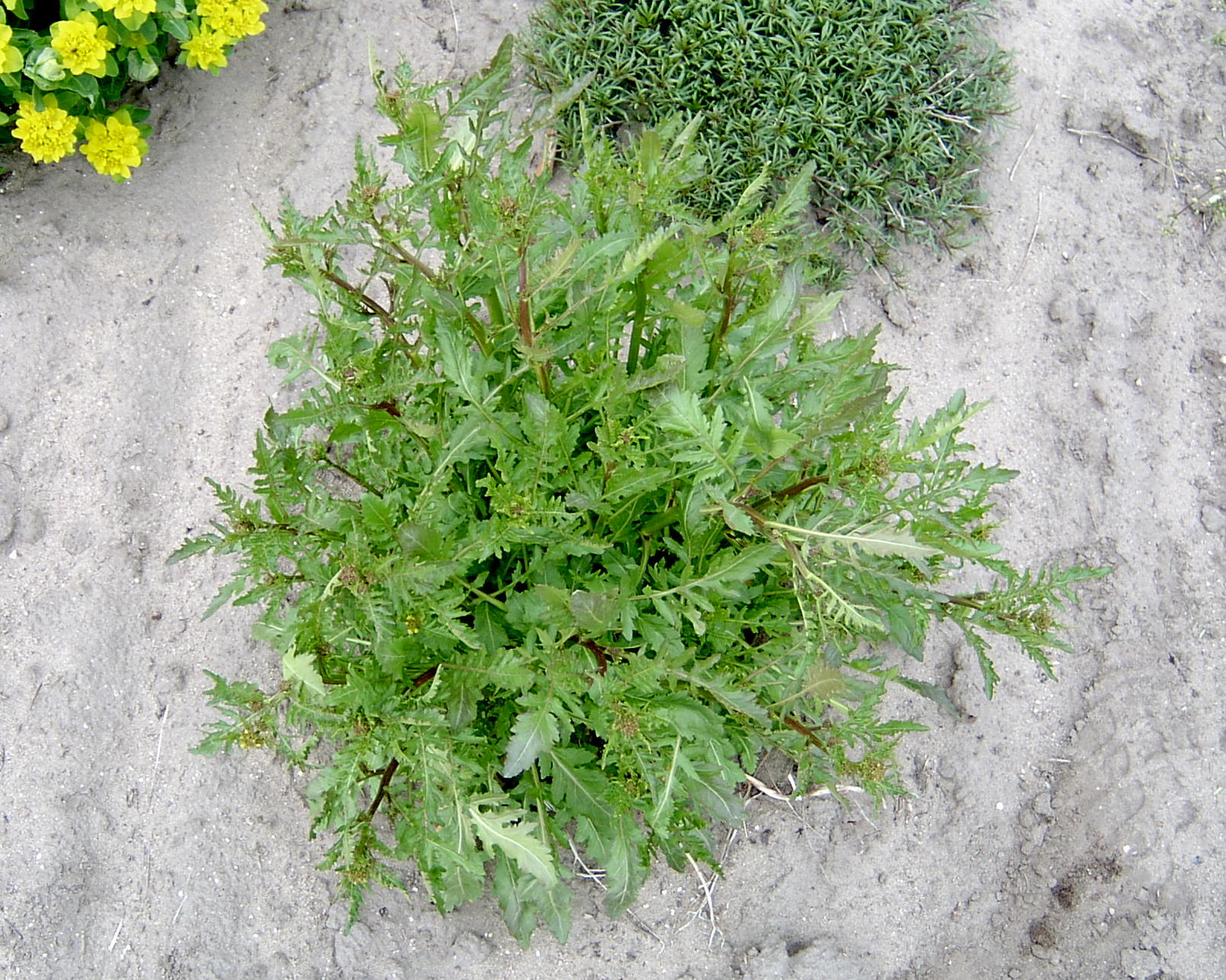
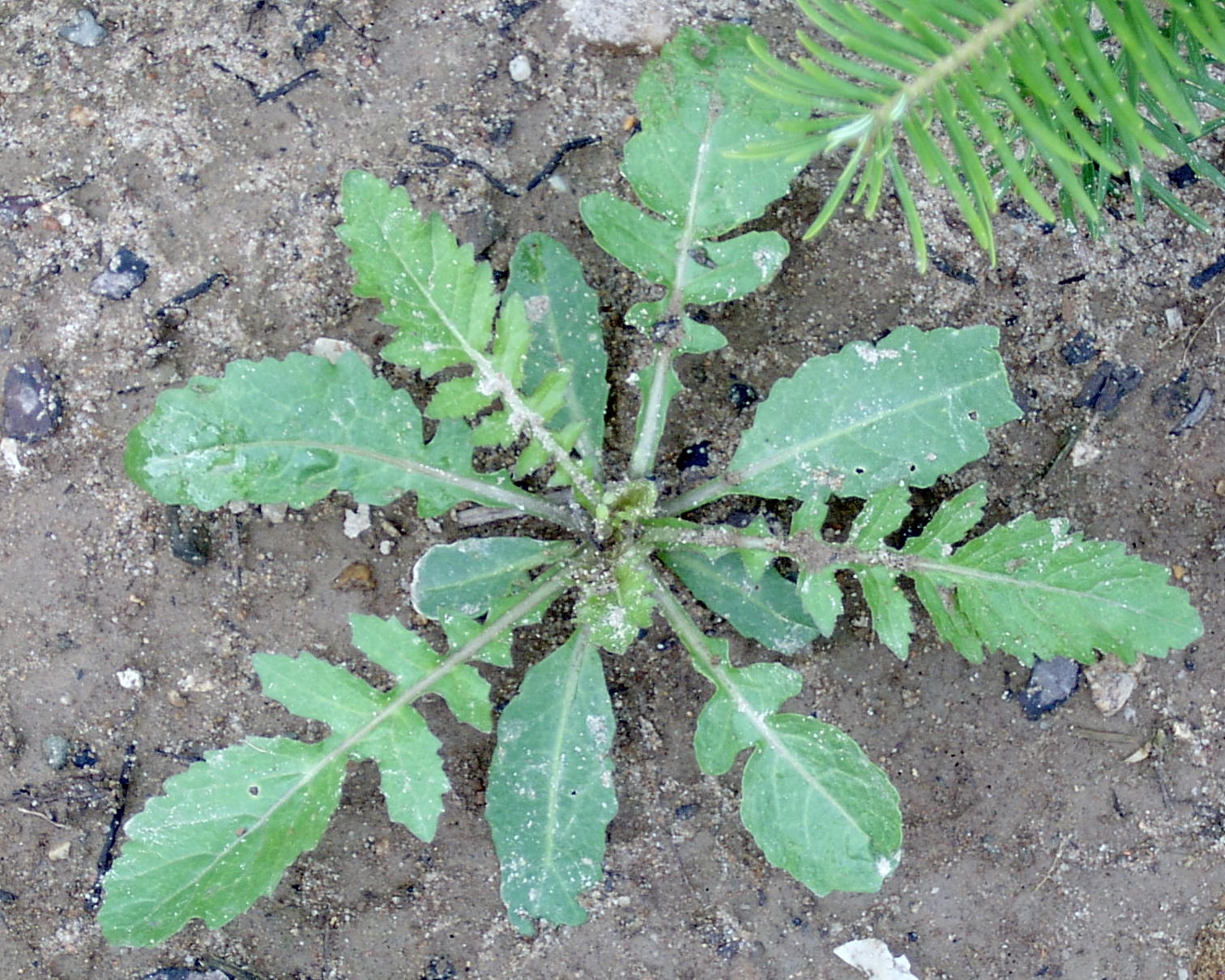
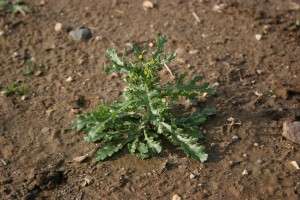
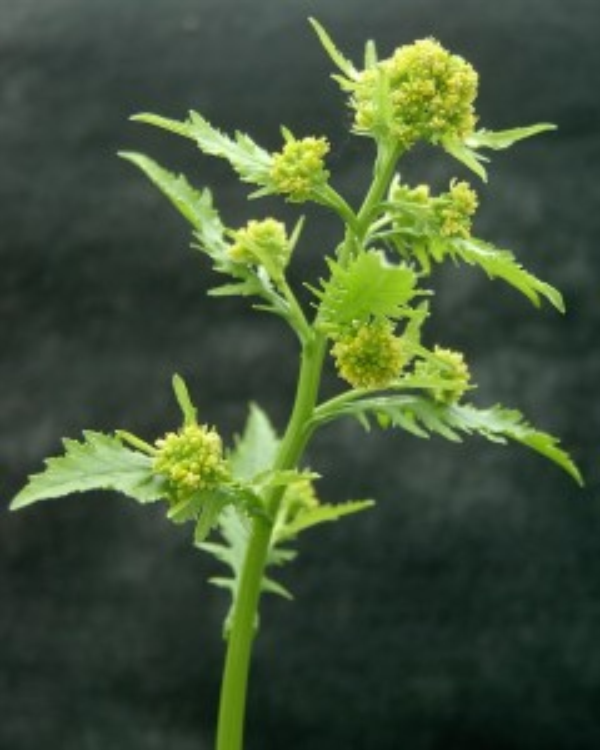
Alternate, variably shaped leaves initially develop from a basal rosette. Leaves are deeply lobed with a large terminal lobe and three to seven other lobes. The upper stem leaves are smaller with lobed to toothed margins and, occasionally, winged petioles with earlobe-shaped bases.
Stems
Branched or unbranched stems arise from a basal rosette to flower, usually less than 2 feet in height.
Flowers and fruit
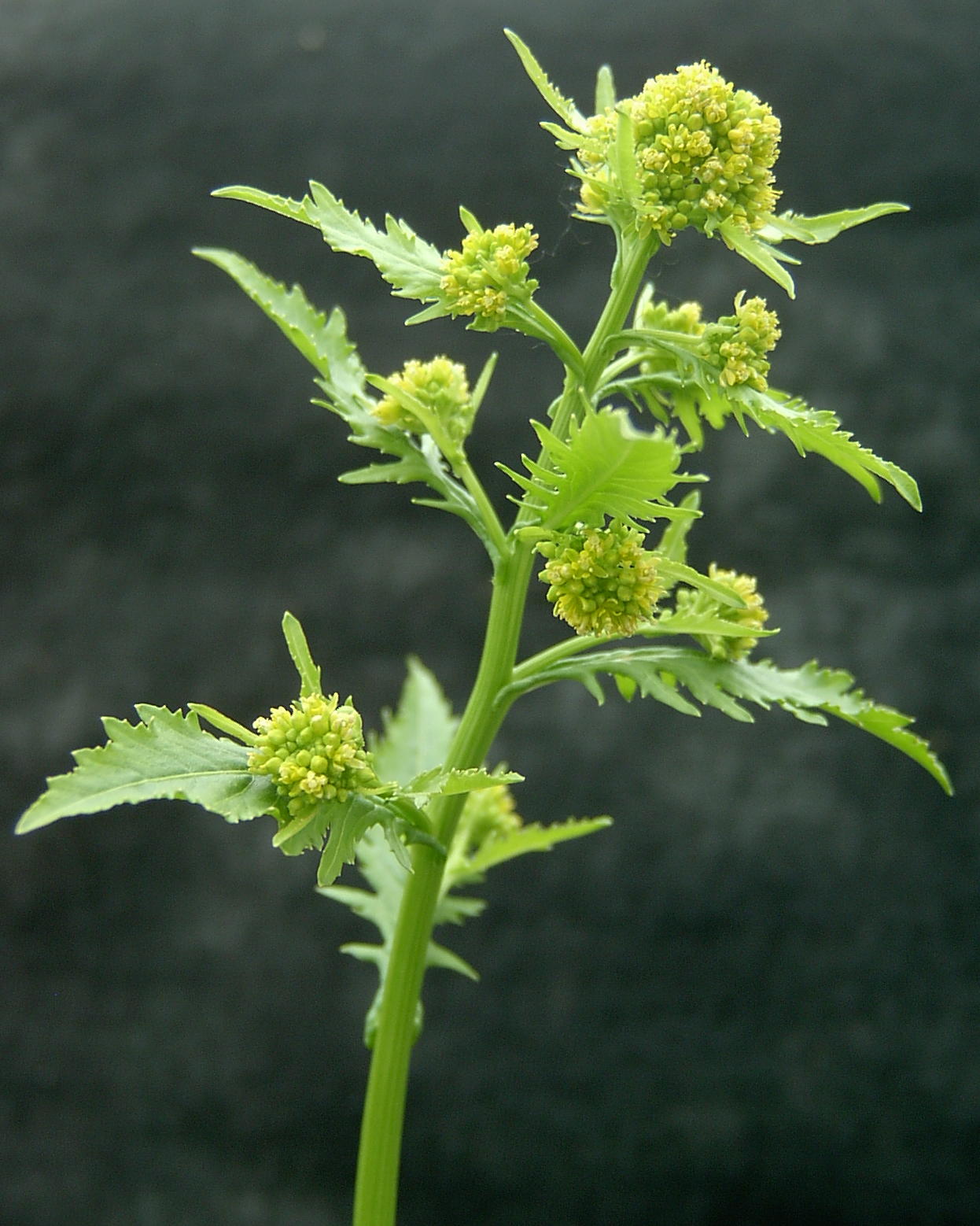
Small, light yellow flowers with four petals are found in terminal clusters. Fruits are small, globe- to short cylinder-shaped capsules with a slight upward curve. Each capsule contains numerous tiny, yellowish-brown seeds.
Reproduction
Seeds.
Similar weeds
Yellow fieldcress [Rorippa sylvestris (L.) Bess.]
Differs by having a perennial nature with prolific, aggressive creeping roots and more deeply lobed leaves. Flowers are more conspicuous and brightly colored. Capsules are smaller and usually do not contain seeds.