Providing Timely & Relevant Information to Field Crop Producers & Agronomists
DOWNLOADAugust 19, 2026 - Michigan State University Extension
 Print
Print Email
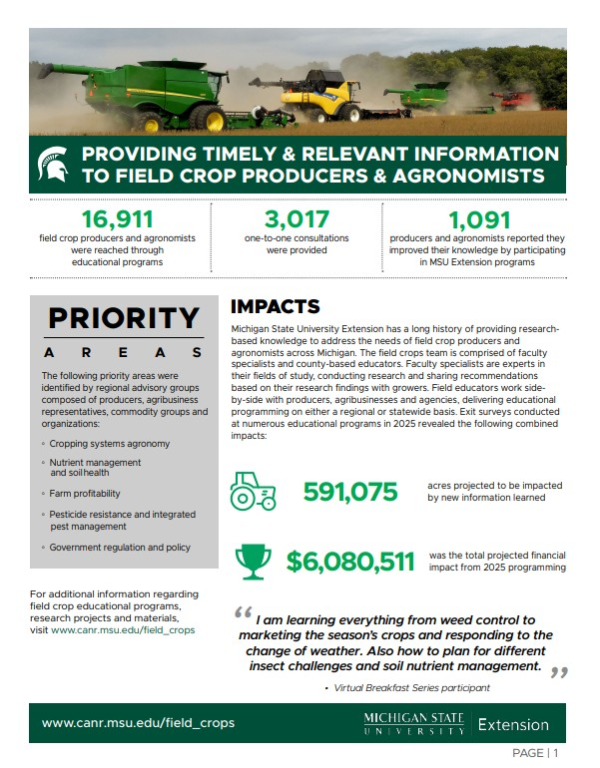
Email- 16,911 field crop producers and agronomists were reached through educational programs
- 3,017 one-to-one consultations were provided
- 1,091 producers and agronomists reported they improved their knowledge by participating in MSU Extension programs
Priority Areas
The following priority areas were identified by regional advisory groups composed of producers, agribusiness representatives, commodity groups and organizations:
- Cropping systems agronomy
- Nutrient management and soil health
- Farm profitability
- Pesticide resistance and integrated pest management
- Government regulation and policy
Impacts
Michigan State University Extension has a long history of providing researchbased knowledge to address the needs of field crop producers and agronomists across Michigan. The field crops team is comprised of faculty specialists and county-based educators. Faculty specialists are experts in their fields of study, conducting research and sharing recommendations based on their research findings with growers. Field educators work sideby-side with producers, agribusinesses and agencies, delivering educational programming on either a regional or statewide basis. Exit surveys conducted at numerous educational programs in 2025 revealed the following combined impacts:
- 591,075 acres projected to be impacted by new information learned
- $6,080,511 was the total projected financial impact from 2025 programming
"I am learning everything from weed control to marketing the season's crops and responding to the change of weather. Also how to plan for different insect challenges and soil nutrient management." Virtual Breakfast Series participant
Virtual Breakfast Series
MSU Extension field crop educators have planned, promoted, conducted and evaluated the Field Crops Virtual Breakfast Series since its inception in 2018. The Virtual Breakfast Series is a weekly morning webinar that provides timely crop and pest management updates and shares information to farmers, agribusiness professionals and others throughout the growing season. Participants hear weekly crop and pest updates, detailed weather updates and forecasts from MSU’s climatologist, earn pesticide recertification credits and certified crop adviser credits, and have ample opportunity to ask questions during a Q&A session.
Producers and agronomists accessed the sessions through various channels such as participating in the live session via Zoom, listening to podcasts, viewing YouTube videos or through Facebook live. The 2025 Virtual Breakfast series reached 5,556 live participants over 26 weeks. In addition to live viewing, the series garnered more than 10,342 views on YouTube, 1,311 podcast views with additional views off social media and the MSU Extension website. The live sessions reached participants in 19 states and nine countries in addition to those from 61 Michigan counties.
The financial and educational impacts of the program were evaluated through a follow-up survey distributed six weeks after the last weekly session of the season. The 238 participants that provided a survey response represented 74,245 acresand indicated they planned to make changes producing a projected additional cost savings or income of $715,438 in 2025.
"I used the information to refine my planting rates, plant spacing and harvest while also considering what crops to plant and when" Virtual Breakfast Series participant
Field Crops Webinar Series
The Field Crops Webinar Series is an annual program that consists of eight weekly sessions conducted in February and March. Each session features two specialists who give interactive presentations around various topics related to field crop production agriculture. The audience is typically farmers and agribusiness professionals. The 2025 Field Crops Webinar Series had 120 registered participants attend live sessions. The participants across the eight sessions reported an 83% knowledge increase, with 29% intending to change management practices due to the webinar series.
Wheat On-Farm Work
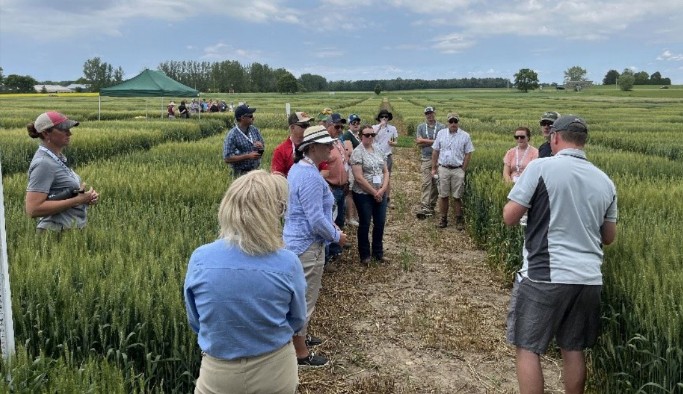
The MSU Extension wheat team has been working over the past five years with the Michigan Wheat Program and the Grain Farmers of Ontario on a project called the Great Lakes Yield Enhancement Network, modeled off the Yield Enhancement Network (YEN) started in the United Kingdom (UK). This program helps farmers improve their wheat yields using three components: 1) A yield contest, where the goal is to inspire farmers to try new practices that improve yield; 2) A detailed benchmark report, where data from all farms is collected, summarized and reported back to participants; and 3) Networking activities to share ideas and learnings with other participants. In 2025, the fifth year of this project, 201 fields were registered. The program included seven variety trials, five on-farm trials, three field days and a YEN trip and tour to the UK.
"The YEN project showed us more of what our ground is capable of with proper management. From now on, we are going to be doing tissue sampling and more soil testing to push our yieds from what we learned." YEN participant
Soybean On-Farm Research and Education Program
The Michigan Soybean On-Farm Research Program marked its 15th season, providing Michigan farmers with research-based information to help them make important management decisions. The program is the result of a fruitful partnership between MSU Extension and the Michigan Soybean Committee. In January 2025, six meetings were held in the major soybean production regions of the state.
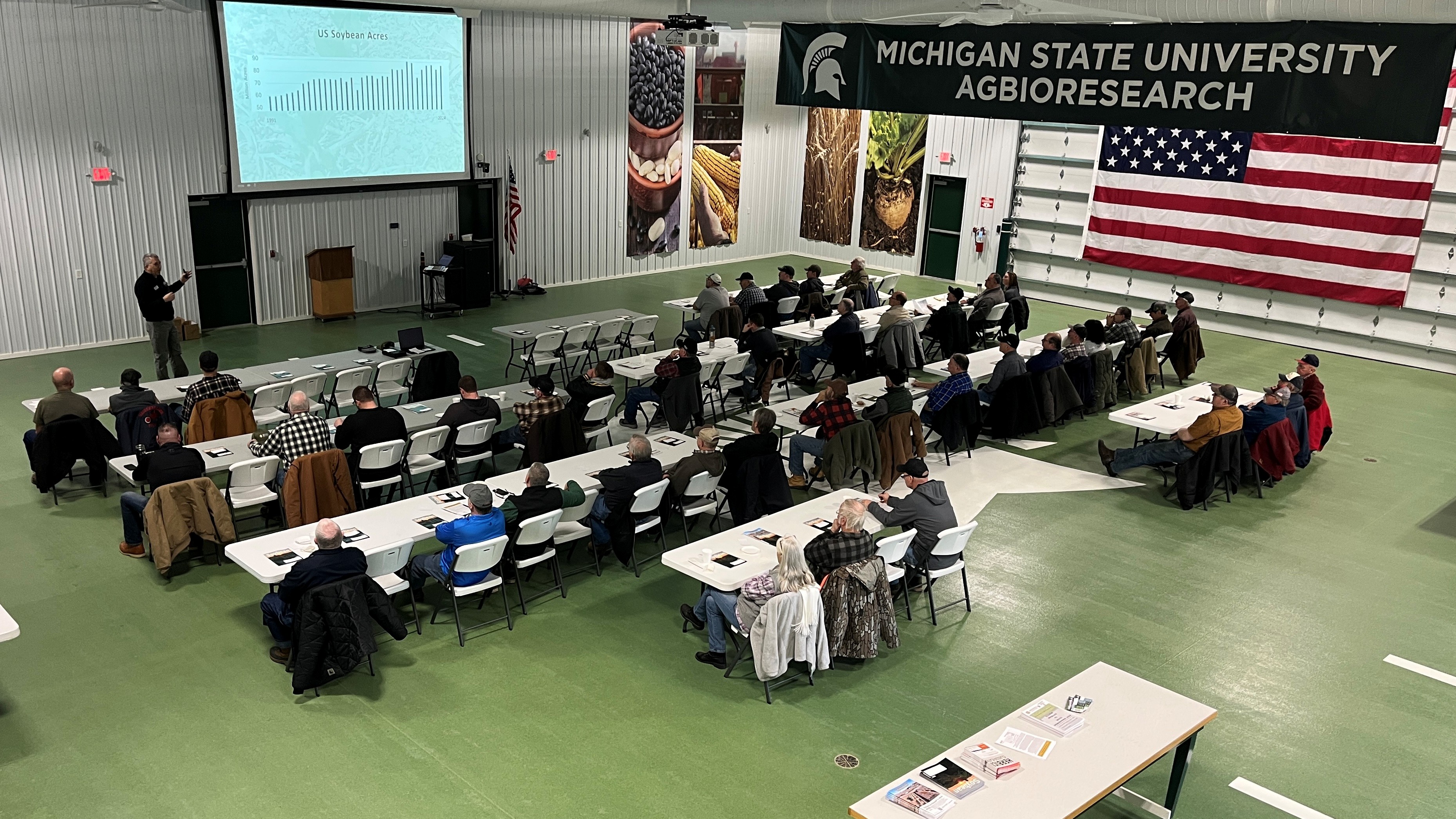
The main focus of the programs was to explain results from on-farm trials conducted during the previous growing season. These results were published in a 32-page magazine-style report that was mailed to over 9,000 soybean farmers throughout the state. Although many state soybean checkoff programs conduct on-farm research trials, Michigan is the only state that prints and distributes these results to growers. Another key aspect of the regional updates is the collection of feedback from participants about soybean management issues they feel are most important. The feedback is then used to determine what new on-farm research trials will be conducted that growing season. This annual needs assessment ensures the on-farm research program remains nimble, makes effective and efficient use of farmers’ investment in the checkoff program, and addresses agronomic issues important to Michigan farmers.
"I enjoy going to these meetings because I learn what works and doesn't work, and I do not have to do all these tests myself." MI Soybean On-Farm Research Update participant
A total of 398 people attended the regional meetings. A post-meeting survey was conducted at all but one location to gauge the impact of the meetings and solicit suggestions for improvement. Of the 187 participants who completed the survey, 150 reported an increase in knowledge and 102 indicated an intent to make a change to their farm or business due to information presented that was estimated to impact 153,472 acres and result in $1,334,034 in increased revenue. During the 2025 growing season, 38 producers around the state conducted 51 research trials on their farms within 12 projects. Most of the projects were conducted at multiple locations and, in some cases, across several years, improving the reliability of the results. The results were then analyzed and summarized to inform future crop management
decisions. The Michigan Soybean On-Farm Research Program would not be possible without the support of the farmer cooperators who host on-farm research trials, the MSU Extension field crop educators who facilitate many of the trials, and the partnership with the Michigan Soybean Committee.
Integrated Crop and Pest Update for Agribusiness
The annual Integrated Crop and Pest Update for Agribusiness held in December kicks off the winter meeting season for many agribusiness professionals. This timely winter meeting shares management lessons from the year before and considerations for the year ahead. In 2025, 108 participants attended in-person and 162 participants attended virtually. Participants represented 44 out of Michigan’s 83 counties. Based on evaluation results from 204 respondents:
- 3,078,351 acres of agricultural land reported as being managed or directly impacted by participants
- 95% of participants indicated their knowledge increased because of the meeting
- 235,000 acres are likely to be impacted by changes made in 2025
- $2,043,393 is estimated to be the total value of increased profitability
Meeting attendees were also asked if they attended the 2024 meeting and what changes they implemented during the 2025 season as a result of information shared during that meeting. Of those who attended the 2024 meeting, 41% reported making management changes during the 2024 season, impacting 630,692 acres and resulting in an estimated savings or added value of $5,722,577.
"Very good topics, relevant to today's problems. Good information and good pace of presentations." 2025 Integrated Crop and Pest Management participant.

Regional Crop and Pest Updates
The MSU Extension field crops team conducted the 2025 Regional Crop and Pest Updates across the state at five locations: Dowagiac (southwest), Frankenmuth (Bay), Ithaca (central), Bad Axe (Thumb) and Hillsdale (southeast). These regional meetings were planned and implemented by educators to bring timely and accurate information to producers and agribusinesses to provide updates in a myriad of field crop production areas, including integrated pest management, cropping systems agronomy, nutrient management, forage management and more. The subject matter delivered was tailored to each region.
In 2025, this program reached 239 participants who reported an 87% increase in knowledge about the topics delivered, with 75% reporting they intend to change management based on this knowledge. These changes were estimated to impact 454,406 acres across the state and create $1,200,00 in savings or increased revenue for farmers.
Regional Scouting and Newsletters
The MSU Extension field crops team conducted crop scouting in 22 counties throughout the 2025 growing season. Scouting efforts included field visits to address farmer concerns, pest monitoring and assessments of growing conditions to enable farmers and agronomists to make timely management decisions.
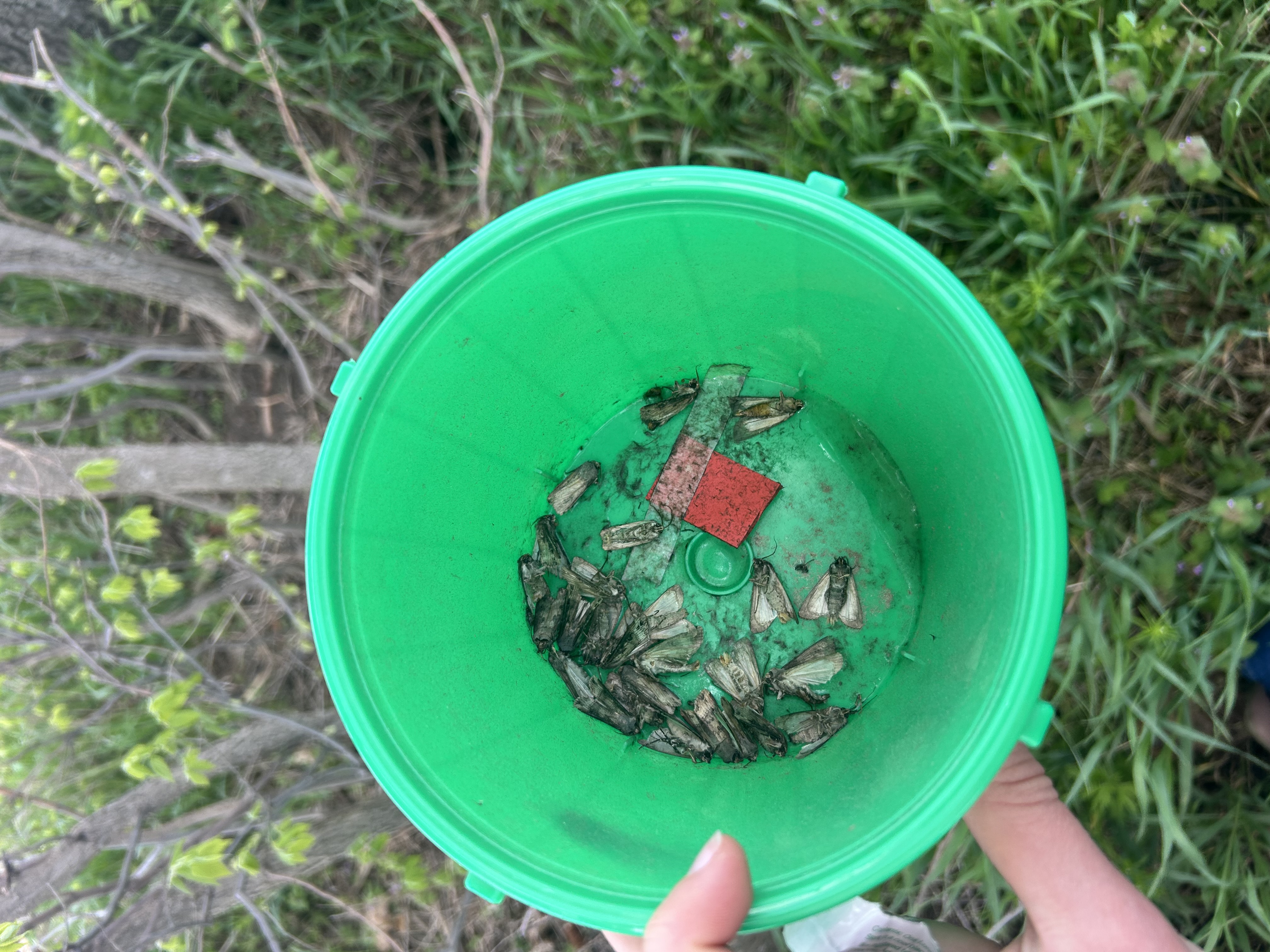
Regional email newsletters distributed to 3,200 recipients provided farmers in 25 counties with timely updates on crop growth and development, diseases and pests for corn, wheat, soybeans and canola during the growing season as well as announcements of pertinent educational opportunities.
"These [newsletter] emails are very much appreciated, keep it up! I read all your newsletters, they are very helpful for keeping me up to date on what's going on during the season and reminding me about upcoming meetings so I can get all the [pesticide applicator certification] points I need." Regional email newsletter subscriber