Stinging nettle
September 9, 2015
 Print
Print Email
EmailUrtica dioica L.
Life cycle
Erect, rhizomatous perennial.
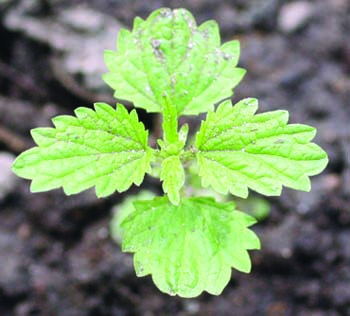
Stinging nettle seedling.
Leaves
Opposite, egg- to lance-shaped with a rounded base and pointed tip. Petiolated leaves have coarsely toothed margins, smooth surfaces to a few hairs beneath and long, stinging hairs on the lower surface. Contact with stinging hairs can cause a skin irritation.
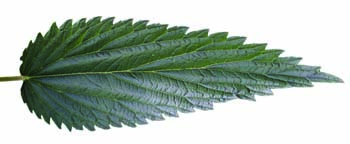
Stinging nettle leaf.
Stems
Four-angled, herbaceous stems are usually erect and unbranched, up to 6 feet tall and covered with stinging hairs. Contact with stinging hairs can cause a skin irritation.
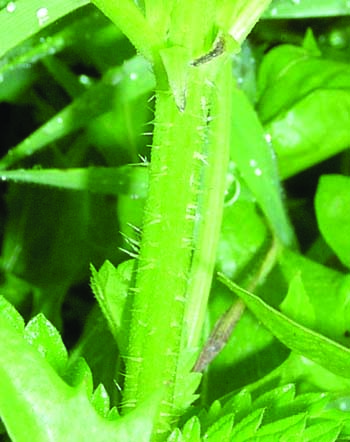
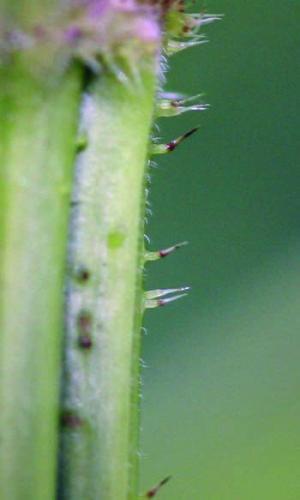
Stinging nettle stem (left). Close-up of stinging hairs on stem of stinging nettle (right).
Flowers and fruit
Inconspicuous, green to yellow flowers are formed in clusters in the upper leaf axils. The seed is enclosed in a single-seeded, tan, egg-shaped fruit.
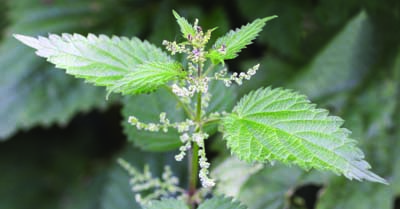
Stinging nettle foliage and flower clusters.
Reproduction
Seeds and rhizomes that form extensive colonies.
Print a PDF of this page: Stinging nettle.