Bulletin E3539
The Blueberry Maggot
December 16, 2025 - Carlos Garcia, Michigan State University Extension; Steven Van Timmeren, Rufus Isaacs and John Wise, Department of Entomology, Michigan State University
 Print
Print Email
EmailThis Document is offered in: English Espanol,
The Blueberry Maggot
Rhagoletis mendax Curran (Diptera: Tephritidae)
Introduction
The blueberry maggot, Rhagoletis mendax Curran, is one of the main blueberry pests of economic importance in Michigan. This species is native to eastern North America and is closely related to the apple maggot Rhagoletis pomonella (Walsh), which attacks apples, pears, quince, and other stone fruits. The difference between these two species is that the blueberry maggot does not attack stone fruits and emerges from the ground earlier (Lathrop and Nickels1932; CABI 2020).
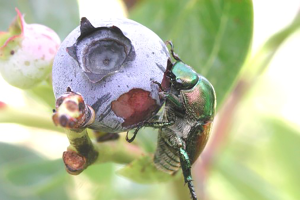
Berries infested with blueberry maggots are inconspicuous and inadvertently harvested with live maggots inside. Consumers and food markets have zero tolerance for maggot-infested fruit, whether for fresh consumption or for processing in the food industry. Therefore, growers need to maintain an effective pest control program to keep berries from becoming infested with blueberry maggot larvae.
Identification
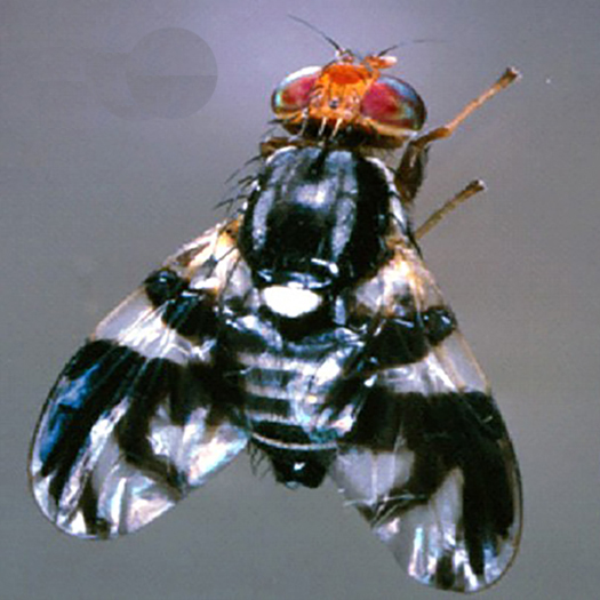
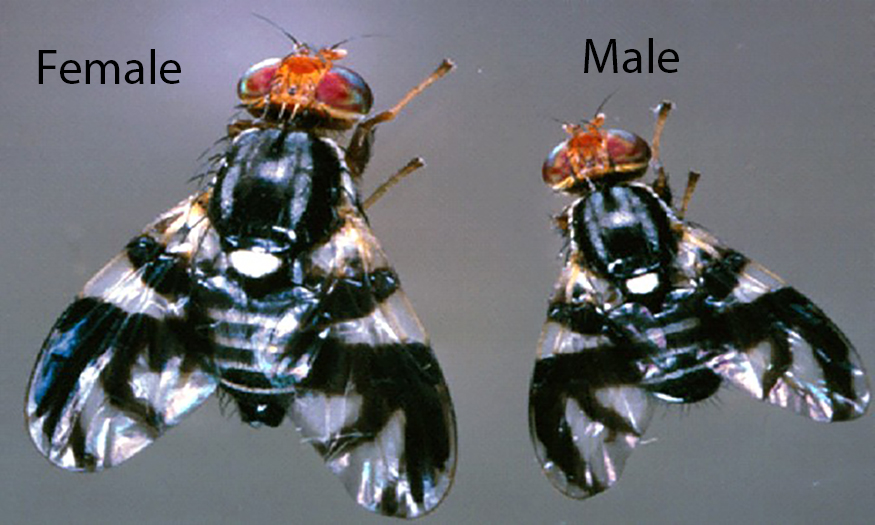
Blueberry maggot flies are small, dark, and approximately 5 mm long. The main morphological characteristic is the dark bands on their single pair of wings. The bands form a “W” or an “M” on the wings that differentiate the blueberry maggot from other closely related flies. The blueberry maggot males are smaller than females.
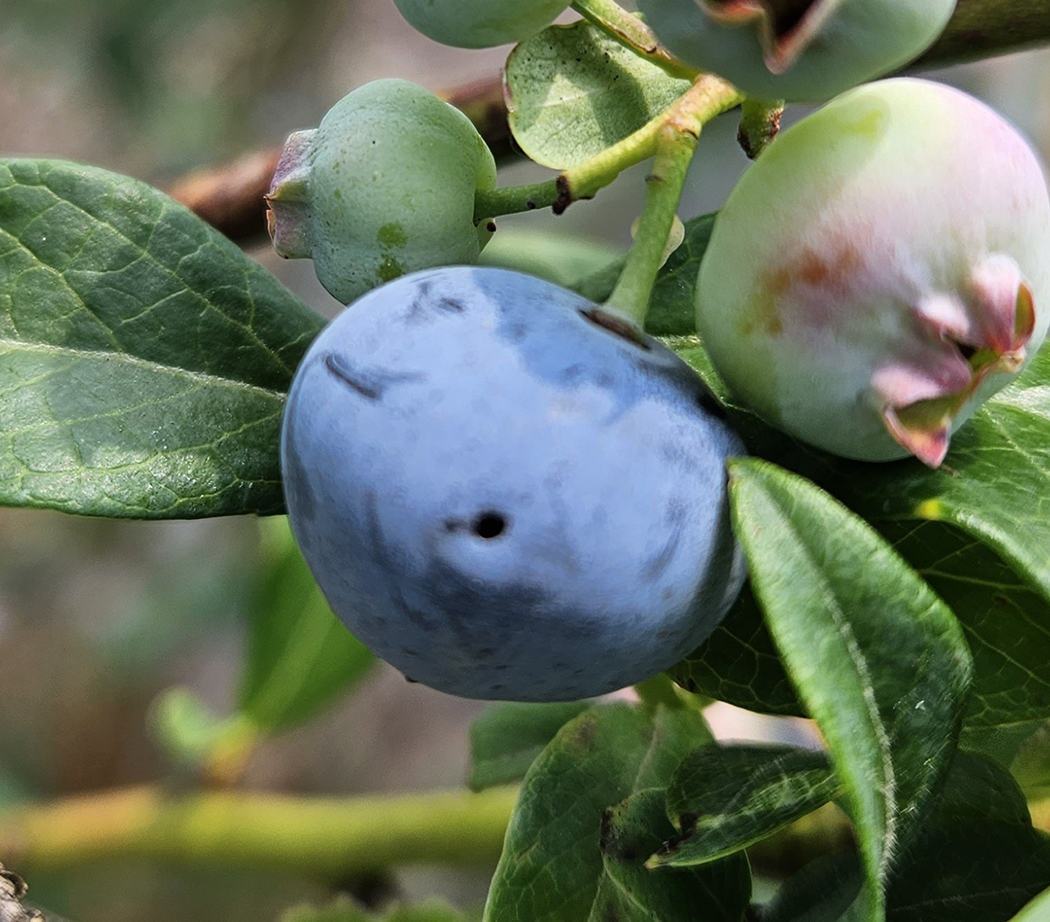
Eggs. The blueberry maggot eggs are oval, opaque, and are just under 1.0 mm in length. Flies oviposit the eggs individually in ripening or ripe blueberries directly beneath the fruit skin. The only visible sign of the oviposition is a small puncture on the fruit, visible with a 20X hand lens.
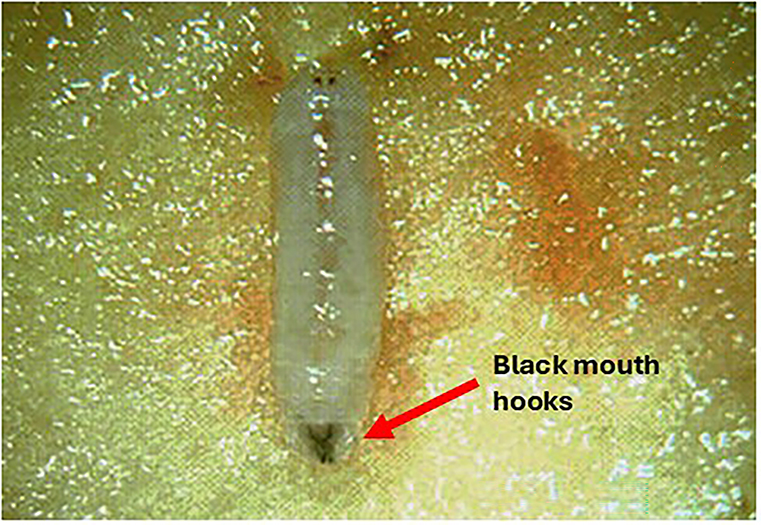
Larvae. Blueberry maggot larvae are legless, appear headless, and have no apparent segments. The larvae are whitish and attain a length of 7 mm upon maturity. The head end is narrow and has black mouth hooks, modified hollow jaws, used for feeding on liquids. These mouth hooks are visible under a microscope.
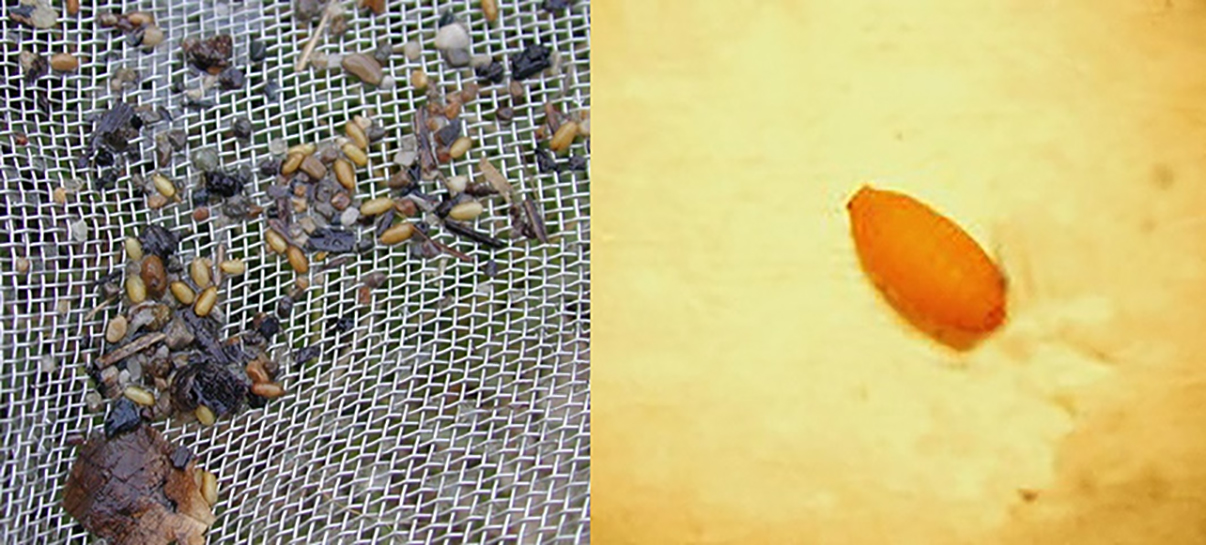
Pupa. The blueberry maggot overwinters as pupa in the ground. The pupa is smooth and oval, brown or yellowish, and approximately 5 mm long.
Life Cycle
In Michigan, the blueberry maggot typically has one generation a year, but in some years, a smaller (1% to 4%) second generation in late July–August is possible.
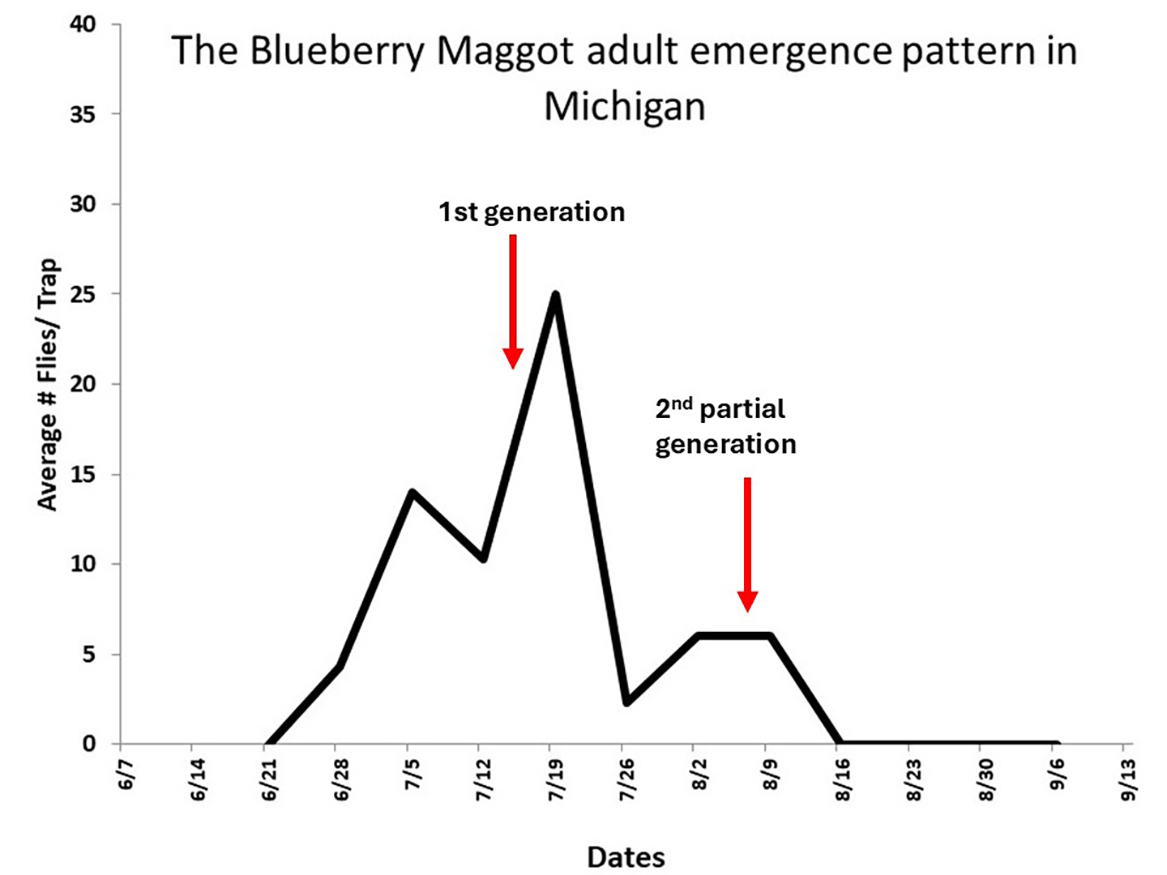
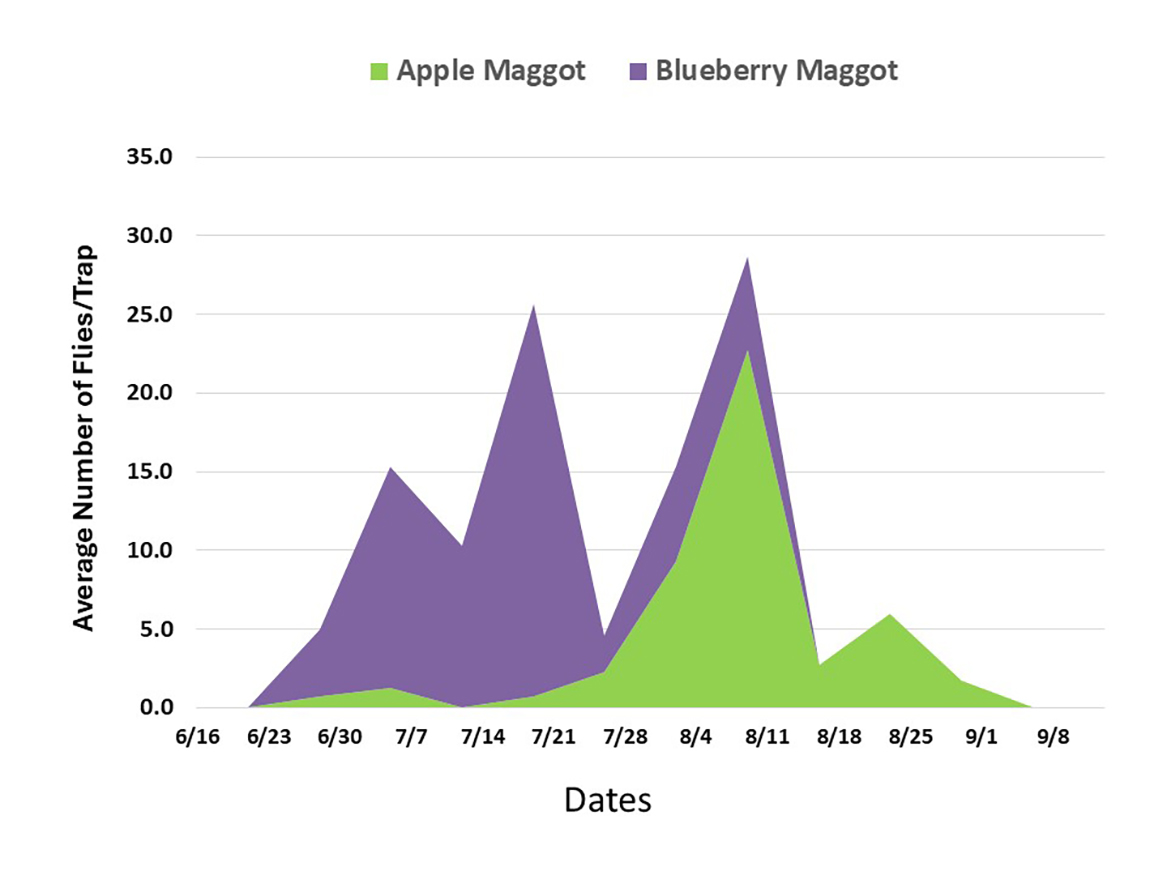
This suggests that the blueberry maggot has a facultative diapause like the apple maggot (Payne and Berlocher 1995). In southwest Michigan, adult emergence begins in mid to late June, with adult flight continuing through August (Figure 1). Soil moisture stimulates adult emergence, and the onset of fly activity. Dry weather conditions delay adult emergence, as pupae respond to increases in soil moisture resulting from rainfall or irrigation. Fly emergence and activity are lower during dry years compared to wet ones.
Upon emergence, adult blueberry maggot flies feed on flower nectar, dew, and bird droppings. Female flies reach sexual maturity 7 to 10 days after emerging from the soil, after which they begin mating and laying eggs (Smith and Prokopy 1981). Females prefer to oviposit in ripening or ripe fruit but are also capable of laying eggs in green berries (Van Timmeren, unpublished data).
Once the females find a suitable berry, they puncture the skin and deposit a single egg just beneath the fruit’s surface. Over a two- to three-week period, a single female can lay up to one hundred eggs. Eggs typically hatch in about five days, and the larvae feed on the fruit pulp, completing their entire development within the berry.
In southwest Michigan, the initial detection of blueberry maggot larvae typically occurs in mid-July. Infested fruit progressively softens and collapses, developing sunken areas as larval feeding liquifies the internal pulp. Bacteria introduced into the fruit during oviposition contribute to pulp breakdown and fruit decay (McCollum et al. 2009). As infestation advances, the pedicels of affected berries weaken, causing premature fruit drop. However, infested berries may also remain attached to the bush and inadvertently harvested with healthy fruit.
When the larvae complete its development, it falls to the ground and burrows 3 to 5 inches (7 to 12 cm) deep into the ground before pupating (Lathrop and Nickels 1932). In Michigan, most blueberry maggot flies emerge from the puparium the next summer, but a small percentage of the population may emerge in the same year or remain in diapause for two or more years (Lathrop and Nickels 1932, Rodriguez-Saona et al. 2015).
Monitoring and Control
Detecting the beginning of adult emergence is key to developing an effective blueberry maggot control program. For timely monitoring of the arrival of the first flies, use yellow sticky traps baited with ammonium acetate or ammonium carbonate (Pherocon® AM).
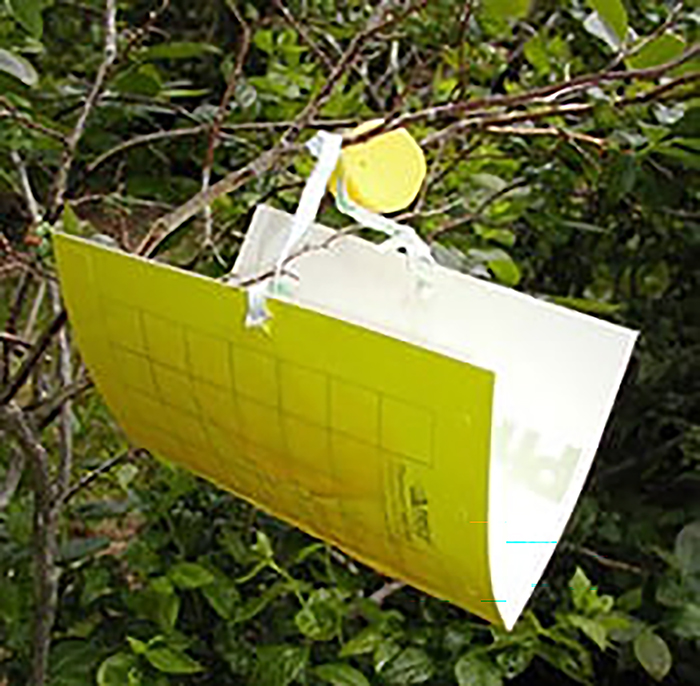
Traps come pre-baited with the attractant mixed with the glue, or the unbaited traps can be baited with a small ‘charger’ of ammonium bait. Yellow sticky traps should be unfolded and placed in a “V” shape (Figure 7) with the yellow surface facing down.
Green or red spheres baited with synthetic fruit volatiles can also be utilized to trap blueberry maggot flies searching for oviposition sites.
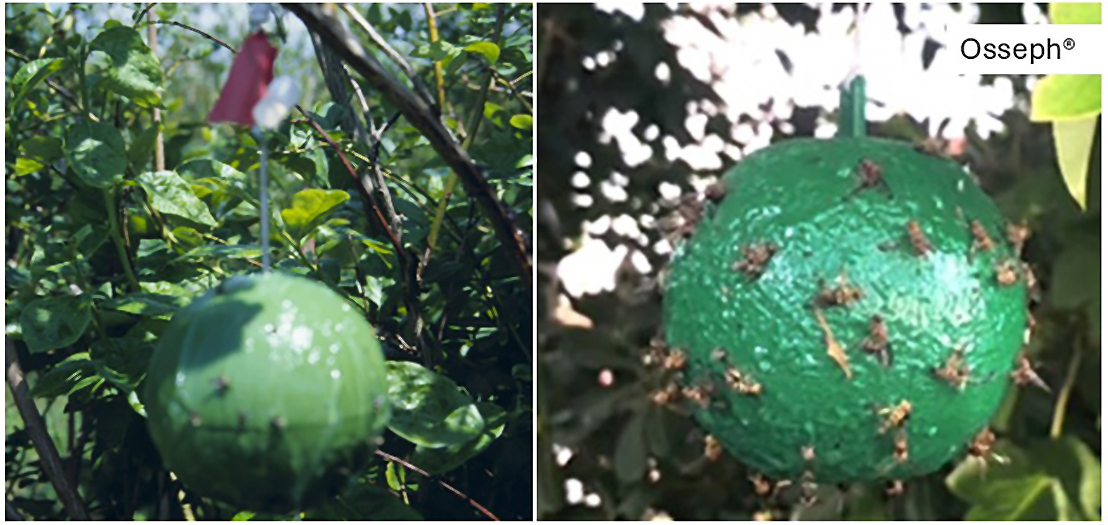
Upon emerging, young female flies feed actively for 7 to 10 days before starting to oviposit, and the green ball bait’s smell attracts them to the trap. Since most flies migrate from wild or unsprayed hosts outside commercial plantings, you should place traps along the perimeter rows of the field before adult flies move into the crop. Replace traps or lures every 2 to 3 weeks, as the ammonium acetate bait gradually volatilizes and loses effectiveness. If traps become covered with insects, dust, or debris, replace them sooner to maintain accurate monitoring.
Your local MSU Extension office can help you find trap and lure suppliers near your operation.
To forecast the beginning of the emergence of the first flies you may use a calendar day or a Growing Degree Days (GDD) predictive model. The onset of the emergence of the first adults occurs at around 913 GDD (base 50 °F) accumulated since March 1. Begin checking traps twice a week once about 750 GDD (base 50 °F) have accumulated—usually in early June in southern Michigan—and keep monitoring until you catch the first fly.
You can detect larvae in ripe fruit using a flotation test method (Neilson and Lawrence 1986; Dixon and Knowlton 1994) or a filter test (Van Timmeren et al. 2017). If you find larvae in the fruit, applying insecticide before harvest may help reduce their numbers and limit additional damage (Wise et al. 2015). Be aware of pre-harvest and other restrictions on using insecticides around harvest time.
Control
Biological Control. There are several species of parasitoids that infest blueberry maggot larvae. Among them, the parasitic wasp Diachasma alloeum is the most important in Michigan (Rodriguez-Saona et al. 2015; CABI 2019). After ovipositing on blueberry maggot larvae, parasitic wasp larvae develop inside the blueberry maggot larvae. In spring, after completing development, tiny wasps will emerge from parasitized larvae. However, parasitoids alone cannot provide commercially acceptable control but, if preserved, can keep fly populations low.
Chemical Control. Early chemical control focuses on reducing the adult population before female flies lay their eggs in the fruit. Once the eggs are beneath the fruit skin, they are out of reach for most insecticides. Conventional contact insecticides such as phosmet (organophosphate), pyrethroids, and the spinosyn insecticides, such as spinetoram and spinosad (organic) are toxic to blueberry maggot flies. They are effective during most of the blueberry maggot adult flight period. In addition, when weather conditions or harvest activities disrupt regular spray schedules, the application of systemic insecticides with curative activity against eggs and newly hatched larvae such as the neonicotinoid acetamiprid can serve as an effective tool for blueberry maggot management.
When there is a source of continuous migration from outside and the fly population remains high, it is important to know the residual activity of the product to maintain effective spray coverage. If blueberry maggot is the only target pest, a 10–14-day insecticide spray schedule can effectively protect fruit. However, in fields where spotted wing Drosophila (Drosophila suzukii, SWD) is also present, the 7–10-day application interval recommended for SWD control is typically sufficient to manage both pests.
For some newer insecticides such as the diamide and spinosyn chemical classes, activity improves if the fly ingests the product, but they work more slowly. Consequently, these compounds are most effective when sprayed during the pre-oviposition period.
Acknowledgment
We thank Ryan Vander Poppen for collecting field data on the blueberry maggot population dynamics and photographs presented in this publication.
Project GREEEN and Michigan State University Extension funded the data collection and production of this fact sheet.
Literature Resources
Bush GL. (1966). The taxonomy, cytology, and evolution of the genus Rhagoletis in North America (Diptera, Tephritidae). Bulletin Museum Comparative Zoology 134: 431–562
CABI. (2019). Biosteres melleus. Invasive Species Compendium. https://www.cabi.org/isc/datasheet/9191.
CABI. (2020). Rhagoletis mendax. Invasive Species Compendium. https://www.cabi.org/isc/datasheet/47057
Dixon, P. L., and A. D. Knowlton. (1994). Post-harvest recovery of Rhagoletis mendax Curran (Diptera: Tephritidae) from lowbush blueberry fruit. The Canadian Entomologist. 126: 121–123.
Gut, L. J., Brunner, J. E., (1994). Parasitism of the apple maggot, Rhagoletis pomonella, infesting hawthorns in Washington. Entomophaga 39(1), 41–49.
Feder JF, Chilcote CA, Bush GL. (1989). Are the apple maggot, Rhagoletis pomonella, and blueberry maggot, R. mendax, distinct species? Implications for sympatric speciation. Entomol. Exp. et Appl. 51: 113–123.
Lathrop, F. H., C. B. Nuckels. (1932). The biology and control of blueberry maggot in Washington county, ME. USDA Technical Bulletin 275.Washington. D. C.
MacCollom, G. B., C. R. Lauzon, R. E. Sjogren, W. L. Meyer, and F. Olday. (2009). Association and attraction of blueberry maggot fly Curran (Diptera: Tephritidae) to Pantoea (Enterobacter) agglomerans. Environ. Entomol. 38(1): 116–120.
Neilson, W., and R. Lawrence. (1986). A method to determine the maggot content of lowbush blueberries. Kentville Research Station Annual report. 10–11.
Payne, J.A., and Stewart H. Berlocher. (1995). Distribution and host plants of the blueberry maggot fly, Rhagoletis mendax (Diptera: Tephritidae) in southeast North America. J. Kans. Entomol. Sco. Vol. 68, No 2 (Apr., 1995), pp. 133–142.
Rodriguez-Saona, C., C. Vincent, D. Polk, F. A. Drummond. (2015). A review of the blueberry maggot fly (Diptera: Tephritidae). J. Integr. Pest Manag. 15(1): 11; https://doi.org/10.1093/jipm/pmv010
Smith, S. D., R. J. Prokopy. (1981). Seasonal and diurnal activity of Rhagoletis mendax flies in nature. Ann. Entomol. Soc. Am. 74: 462–466
Van Timmeren, S., L. M. Diepenbrock, M. A. Bertone, H. J. Burrack, and R. Isaacs. (2017). A filter method for improved monitoring of Drosophila suzukii (Diptera: Drosophilidae) larvae in fruit. J. Integr. Pest Manage. 8: 23; 1–7.
Wise, J. C., R. Vander Poppen, C. Vandervoort, C. O’Donnell, and R. Isaacs. (2014). Curative activity contributes to control of spotted-wing drosophila (Diptera: Drosophilidae) and blueberry maggot (Diptera: Tephritidae) in highbush blueberry. Can. Entomol. 147: 109–117.