Yellowjackets
September 1, 2026 - Howard Russell, Sarah Hughson
 Print
Print Email
EmailYellowjackets (Vespula spp.)
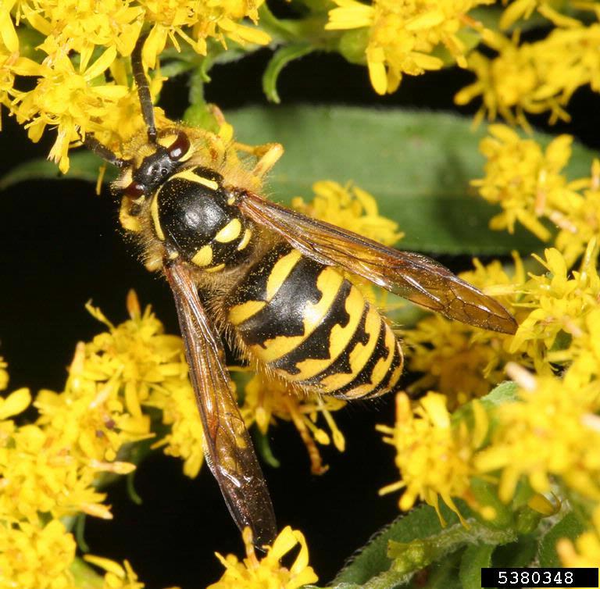
Yellowjackets are the most troublesome wasp pests in Michigan because they nest in and around homes and other structures, and because they are attracted to many of the foods we enjoy eating outdoors. The German Yellowjacket, Vespula germanica, is a species that commonly nests in wall voids, attics, crawlspaces and other enclosed cavities. The Eastern Yellowjacket, Vespula maculifrons, and most other yellowjackets build their nests underground that are usually started in an abandoned mammal burrow. Yellowjacket nests are constructed of a papermache-like material that the wasps make by mixing their saliva with chewed, weathered wood. Nests are arranged in layers of brood cells where the larvae are reared. Yellowjackets feed primarily on live prey such as flies, caterpillars, and other insects. Some species like the German and eastern yellowjackets will forage for meat from carcasses, garbage and picnic tables. They will also forage for sugars such as beer, fruit, sweet beverages, and the honeydew produced by aphids and scale insects. Sugars are particularly important to the new developing queens in late summer. This behavior of foraging for human foods brings people and these yellowjackets in frequent conflict, especially in the late summer and early fall when yellowjacket numbers peak and other “natural” food sources begin to decline.
Yellowjackets and other wasp species do not use the same nest year after year, new queens start a new nest each spring. If a location is particularly favorable, the new queen may construct the new nest in that general area, so sometimes nests are built near an old one. New queens, which are the only members of the colony that survive the winter, do not overwinter in the nest. They leave the nest in the fall and overwinter under tree bark and other protected sites. The workers usually die out by the first of November.
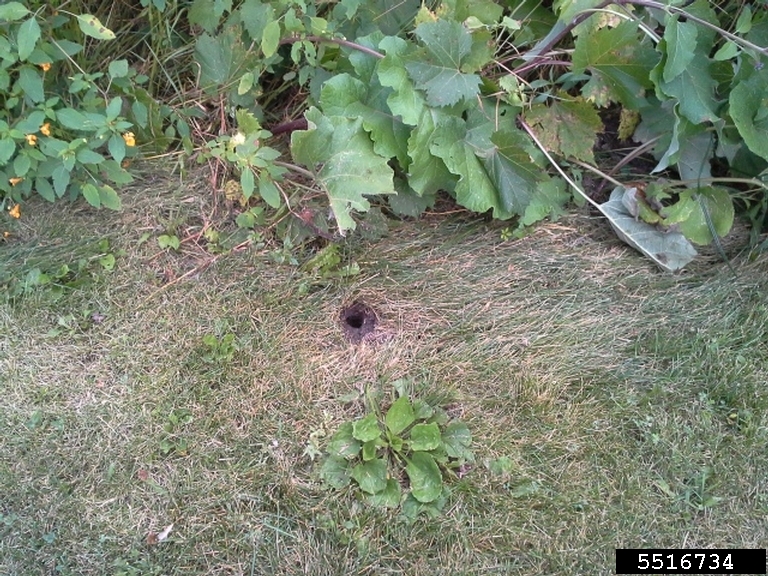
Image by Mohammed El Damir, Bugwood.org. |
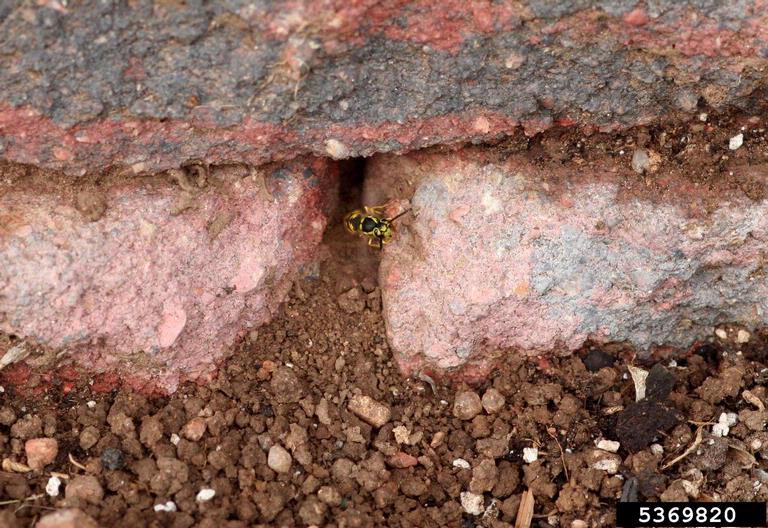
Image by Whitney Cranshaw, Colorado State University, Bugwood.org. |
Management options:
- If possible, avoid the nest: If the nest is in a low traffic area and it is possible to avoid the nest, consider doing so. Since wasps die out in the fall and do not re-infest the same nest, tolerating wasps can be an easy option that removes the risks of being stung during nest removal.
- Do not plug a nest opening: Plugging a nest opening before wasps have left the nest or been killed can force the wasps to chew their way into the living area. The nest opening should be caulked shut the following spring to prevent wasps from returning and building a new nest in this same area.
- Insecticides: Locate the nest and treat it with a registered insecticide.
- A spray or dust labeled for wasp control can be applied directly to the nest opening to control ground-nesting species. Treat wasp nests at night when the entrance is not being used and most of the wasps are inside the nest.
- Protect yourself by wearing eye goggles, leather gloves and heavy winter clothes. If a flashlight is required to locate the nest opening, place the flashlight on the ground and direct the beam at the opening. Do not hold the flashlight as many species will come at the light after the insecticide is applied. Once the insecticide is applied, leave the area immediately. Yellowjackets can and will sting repeatedly.
- Professional wasp removal: If you are allergic to bees or prefer not to manage the nest on your own, you can reach out to a local pest control company.
- If you are located in the Lansing area, Rock's Free Hornet and Yellowjacket Removal is a free option that collects and uses the wasps' venom for immunotherapy treatments.
Original article by Howard Russell
Article updated: 09/01/2026 by Sarah Hughson