


Step 3: Explore What’s Working
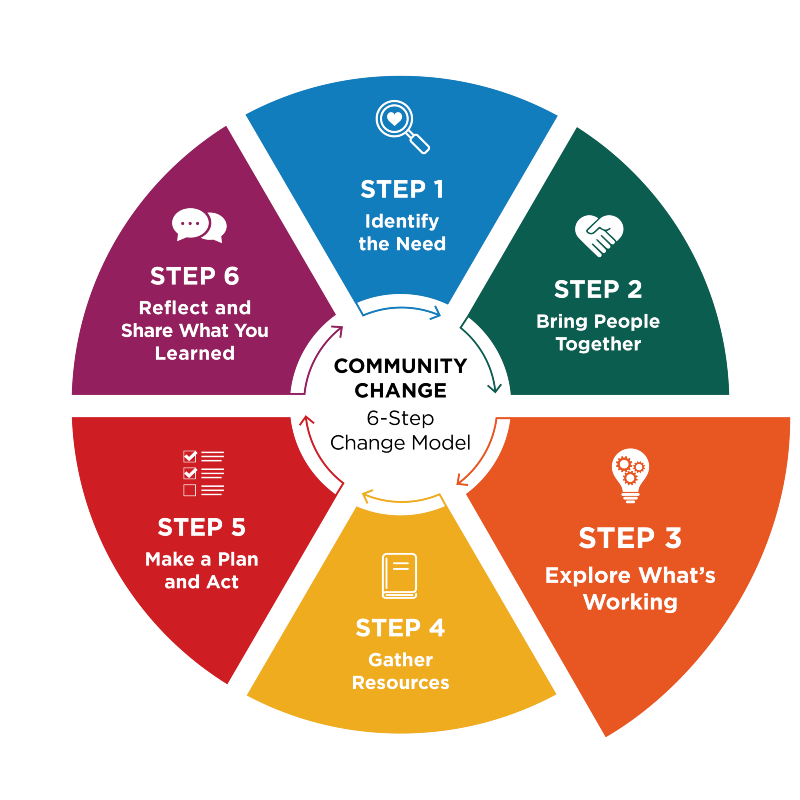 Community champions contribute insight into what has worked before, ground options with real needs and help define what matters most to the community.
Before choosing your next steps, it helps to understand what things look like right now and what has worked well in the past in your community or in other communities. This means paying attention to what is already helping, what has been successful, and what might be getting in the way. When you understand current conditions, you can make thoughtful decisions about where change would be most useful.
Look at everyday practices and spaces
With your partners, take time to observe the setting, talk through routines and think about the places where people spend time. This helps you notice strengths, gaps, and opportunities for improvement.
You may find it helpful to keep a list of guiding questions on hand during your discussion.
Questions like these can get the conversation started:
- What’s working well—and what has worked well in the past—that we can build on?
- Are there current practices we could improve?
- Where do people feel stuck or frustrated?
- Are there patterns or gaps that seem important to address?
- Are there opportunities to make healthy choices easier?
- What changes have you already been thinking about?
- Is there anything in the data that supports the direction you’ve been considering?
- What would make the biggest difference for clients, students or the community?
Consider readiness for change
It is also important to think about changes you are ready to act on. Readiness includes confidence, motivation, capacity and feeling supported. When people feel ready, changes are more likely to stick.
By understanding both what’s happening at your site currently and how ready your team is, your team can choose the next steps that feel realistic, meaningful and doable for the group.
Use tools or structured approaches when helpful
In some situations, tools can help organize the conversation. For example, Appreciative Inquiry is a process that focuses on what is going well and how to build on those strengths. In other cases, simply having a goal-oriented discussion or walking through the setting together can help people notice what could improve.
Choose an approach that helps people feel comfortable sharing ideas and noticing possibilities.
Use these resources to guide your local efforts
 Print
Print Email
Email