


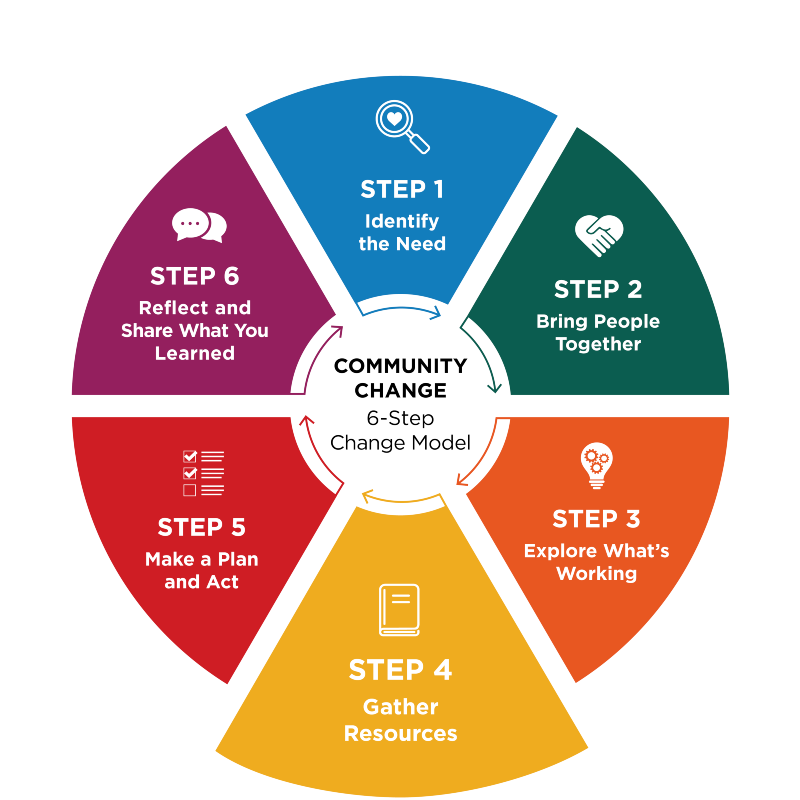
Step 4: Gather Resources
 Community champions often know partners and are passionate about choosing practical strategies that fit the community.
Once you have explored what is working and what could be better, the next step is to decide what your group wants to do. Work together to choose one clear, realistic goal and gather information that can help you reach it.
Look for reliable ideas and examples
Start by reviewing trustworthy resources, practical strategies and real‑world examples. Talk with your group about tools or ideas that could move your goal forward. Ask if anyone knows another place, person or group who has tried something similar.
You may also want to:
- Visit communities or sites that have used successful approaches.
- Connect with community champions who have done similar change work.
- Observe what makes their approach effective.
Seeing what others have tried can spark ideas and help you understand what might work in your setting.
Use trusted sources
MSU Extension’s Community Change Hub is self-guided, virtual collection of resources designed to be used alongside this toolkit. It provides tools and examples to support stronger community environments, with a focus on nutrition, food access, physical activity and community health.
When reviewing online materials, look for resources that highlight research or evidence‑based practices.
Reliable, evidence-based information often comes from:
- Universities
- Professional organizations
- Government (.gov) sites
Talk with your team about what fits best
Discuss what strategies feel like a good match for your group’s goals and readiness. Partners may know about resources that:
- Describe promising or evidence‑based strategies.
- Provide funding or financial support.
- Help plan or carry out the work.
Choose options that feel realistic and doable for your group.
Questions to consider
As your group begins planning, the following questions can help clarify what’s required and where to focus your efforts.
- What does the group want to change?
- What resources are needed for success?
- Will financial support be needed?
Use these resources to guide your local efforts
 Print
Print Email
Email