


AI may be watching, but who is leading?
 Print
Print Email
EmailTechnology is now available to dairy farmers that monitors employee actions. Is that a good thing or a bad thing? The answer lies in the motivation of the farmers who use the system.
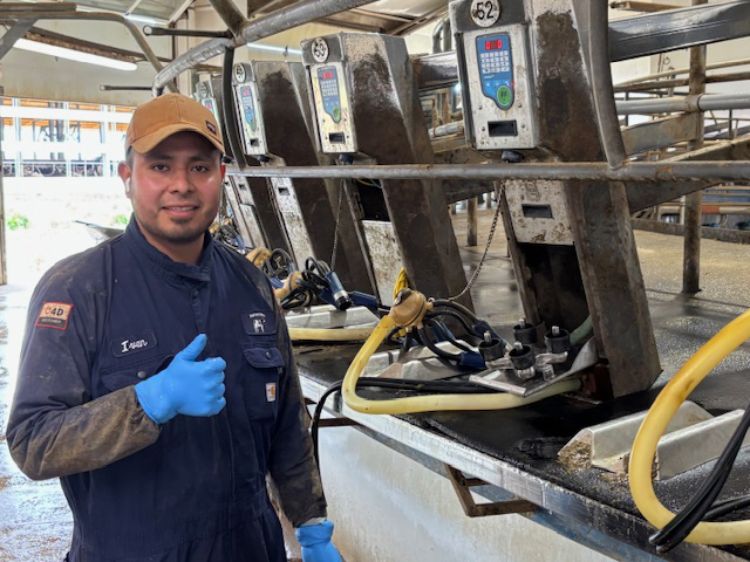
Progressive dairy farmers adopt technologies that propel their business forward. This has been true for decades, even centuries. New technology using Artificial Intelligence (AI) has the potential for even greater reward but should be used in the context of quality human interactions and leadership.
In the last few years, technology has come on the market that analyzes employee actions recorded on cameras in the parlor, calf area and other areas on the farm. This technology uses facial recognition and analyzes employee movements to determine compliance with protocols and provides an individualized report card on employee performance at regular intervals. The technology offered by these systems is impressive.
When technology monitors cattle, whether it is production, activity, health measures or lameness, it gives us a progress report on how or what cattle are doing. There are no ethical questions in collecting that data.
However, when monitoring employees, how one uses the information is critical. The animals cannot object to being watched or misinterpret why they’re being watched, but employees can, and their trust in the system depends heavily on how transparently and fairly it’s introduced.
The technology system prepares a weekly report on each monitored employee with a numerical rating indicating compliance with established protocols. It backs up scores with video clips showing what the employee did wrong, either by choice or through ignorance.
Dairy owners and managers can use that information either to punish bad behavior or to train and reward good behavior. Two managers, presented with the same reports, may choose different ways to respond to them.
An employer’s response to the information available from this technology is grounded in how they view their employees. Do they value them as team members who contribute to the success of the farm or as individuals who are intent on slacking off? Do they believe employees want to do the right thing when no one is watching, or only when a supervisor is around?
This technology enables owners and managers to act on that belief either way. Studies and experience have shown that recognizing good performance reinforces employees' desire to continue performing well. When employee performance is substandard, then corrective, constructive feedback produces better long-term results than negative feedback. The expectation of being checked is a strong deterrent to rule-breaking and cutting corners, exactly what we don’t want on the farm. That expectation is apparently an even greater deterrent than a known consequence to the failure to abide by protocols.
Cindy Tevoortwis and her daughter Nicole Hagan of Bad Axe Dairy, a dairy with 35 employees milking more than 4,000 cows in Bad Axe, Michigan, have used the monitoring system Cattle Care since January 2025. They wondered what it would be able to do for the farm since they thought employees mostly adhered to the protocols. They learned that there was “so much that they missed, just the little details that make a difference.”
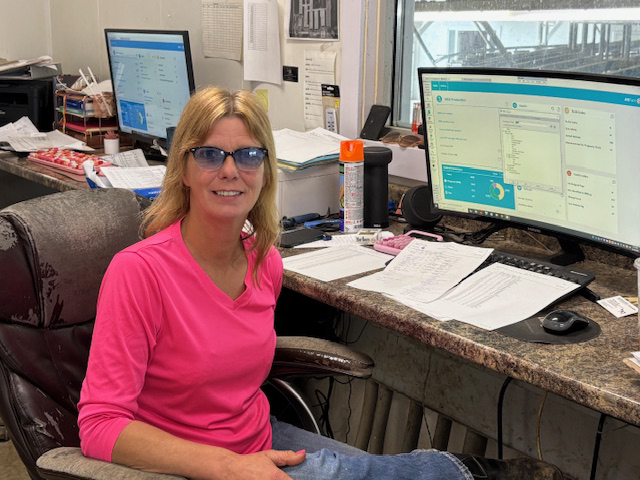
They chose to adopt the technology and use it for positive reinforcement, rather than as “a yelling tool.” Hagan made it clear from the start that this “was not a negative tool, but a positive tool to help them do better.” Each week, employees receive a picture of their report card. Hagan’s goal is overall quality of 95% or better. Employees who reach that level receive a bonus.
Many employees now qualify for a bonus, but it took time for some employees to achieve the target quality score. They had bad habits to break and new habits to form. When asked how it has changed the way she deals with employees, Hagan replied, “I’ve never been much of a yeller; I treat people the way I want to be treated. Cattle Care makes it easy to show them where they are failing or succeeding.”
It takes new employees 3-4 weeks to routinely achieve the goals, according to Tevoortwis, but every employee can qualify for the bonus. A bonus offered for performance is better than a bonus offered for somatic cell count (SCC) because there is so much a parlor employee can’t control that affects SCC.
Mike Blessy of Leatherbrook Holsteins in Americus, Georgia, a 9,000-cow dairy with 120 employees, has used the Cattle Care technology for about a year in two parlors and plans to use it in the third parlor they are building. He said that “generally, (employee) scores have gone up.” He also said that the reports make it more conducive to having an employee meeting because he can show them exactly what is a problem or what the correct actions are. He tells employees, “If you want to score high — and we want you to score high — this is what you need to do.”
“We explain the Cattle Care system to employees when we hire them and how the reports are used; that way there are no surprises,” said Chico Da Silva, operations manager of New Heights Dairy, LLC in Rice, Minnesota. Setting that expectation up front appears to matter to employees who understand why they’re being monitored and what the data will and won’t be used for. Da Silva treats the technology as a coaching tool rather than for surveillance.
When the goal is employee success, this tool can be valuable to help achieve it. Employee success brings with it farm success, and both Hagan and Blessing reported lowered SCC with less mastitis and even increased milk yield.
Good employees want other employees to do their work well and completely. At Bad Axe Dairy, employees seek out the weekly reports. Employees Jesus and Ivan both said that the technology doesn’t bother them because they know they are doing a good job. Recently, a shift leader received a “middle” grade for the week. Hagan spoke to him and told him he can do better. “He can get a “best” grade anytime, but he wasn’t trying this week; he needs to be consistent.”
The technology is a tool for management. It makes managing the crew easier and faster. It is best used when it is part of working with the team to do quality work and accomplish the goals of the farm. “Before being a manager, be human. If you work from that perspective, you will be a better manager,” Da Silva said.
Like any tool, this technology can be misused by lazy managers who are looking for employees to blame. But when used right, this is a powerful tool to ensure consistency in procedures, analyze problems, provide teaching aids for workers, and reward great effort, resulting in better performance at the farm.
Whether or not a dairy farm employs this new technology, treating employees with respect, valuing their input and helping them find success in the business is something that every farm owner and manager can do.