Crack the code on grass identification July 30-31 at W.K. Kellogg Biological Station
 Print
Print Email
EmailJoin botanists for this two-day grass identification course that blends fieldwork, lab sessions and expert instruction.
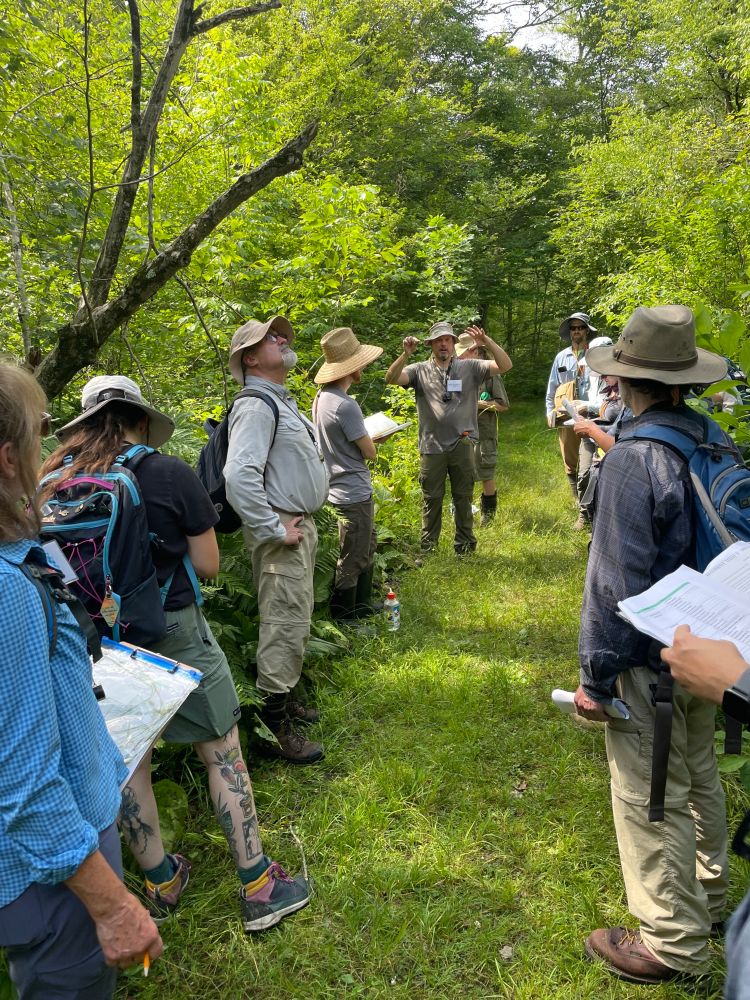
In the wonderful world of plants, the grass-like species are a source of constant consternation even for the botanically inclined. You may have heard the saying, “sedges have edges, rushes are round, grasses have nodes all the way to the ground.” But then you try and identify a grass and your head starts to spin … glumes, lemmas, and rachilla, oh my! Is this EVEN A GRASS?!
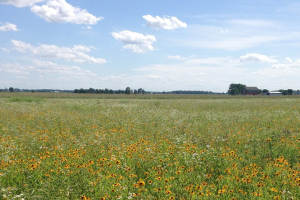
Grasses, more specifically the plant family Poaceae, are found around the world in all kinds of ecosystems. The fifth largest plant family on Earth with roughly 12,000 species in 780 genera, there are 155 native and 119 non-native grass species in Michigan. They occur in dry, wet and aquatic environments; forests, shrublands, and yes, grasslands. While grasses dominate the plant biomass in grasslands, they exhibit incredible diversity and often occupy unique microhabitats in all ecosystems where they are found.
Decoding that diversity is, admittedly, challenging. There is a dizzying array of terms that don’t apply to other plant groups, and even locating the flower parts can be difficult. An upcoming grass identification course hosted at the W.K. Kellogg Biological Station (KBS) is intended to help you crack the code and give you a leg up to meet this challenge.
From 8:30 a.m.-5 p.m. on July 30-31, this two-day immersive course is packed with expert instruction, fieldwork and lab sessions intended to help participants better understand the unique anatomy of grasses and gain insights into the ecological principals that can serve as useful shortcuts toward accurate identification. If you know what you are looking at and what kind of ecosystem you are in, it is much easier to get that identification right.
The course is geared toward conservation professionals, resource managers and interested amateurs trying to interpret the natural world by understanding the full breadth of plant diversity, along with anyone simply curious to learn more about grasses. Whether your job or your joy depend on in it, this class is for you.
Participants will learn:
- Morphology and terminology used to identify grasses
- A greater familiarity with the grass species encountered in southern Michigan
- The ecological role of grasses in a wide range of habitats
- Ideally, a life-long love of grasses and the natural places they inhabit
This workshop will be led by Tyler Bassett, Ph.D., co-lead botanist with the Michigan Natural Features Inventory through Michigan State University Extension, and Brad Slaughter, senior botanist with Orbis Environmental Consulting. Tyler has over 25 years of experience studying the ecology, classification and management of ecosystems, with a focus on the rare plant species they support. Brad is a botanist and vegetation ecologist with nearly 20 years of experience managing and conducting projects, specializing in ecological and floristic inventories, rare plant surveys and vegetation monitoring.
The cost to participate is $250 for Sanctuary members or $300 for non-members, and includes a copy of the fantastic resource, “Grasses of the Northern Forest: A Photographic Guide” ($17 value). The registration deadline is July 27, 2026, and is capped at 20 participants.
Registration and more details are available through the W.K. Kellogg Biological Station.
For more information, contact the Kellogg Biological Station Community Relations Office at communityrelations@kbs.msu.edu.