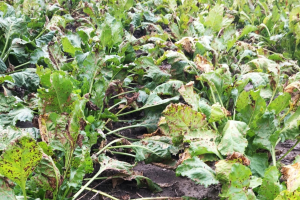
Current status of potato late blight in Michigan – August 18, 2026
 Print
Print Email
EmailElevated risk in Michigan this week supports continued vigilant scouting efforts after last week’s late blight detection in St. Joseph County on Aug. 12, 2026.
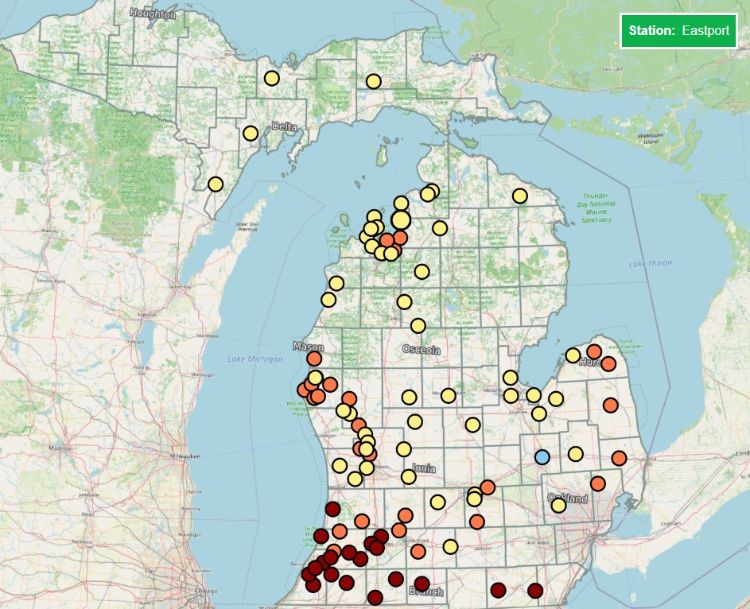
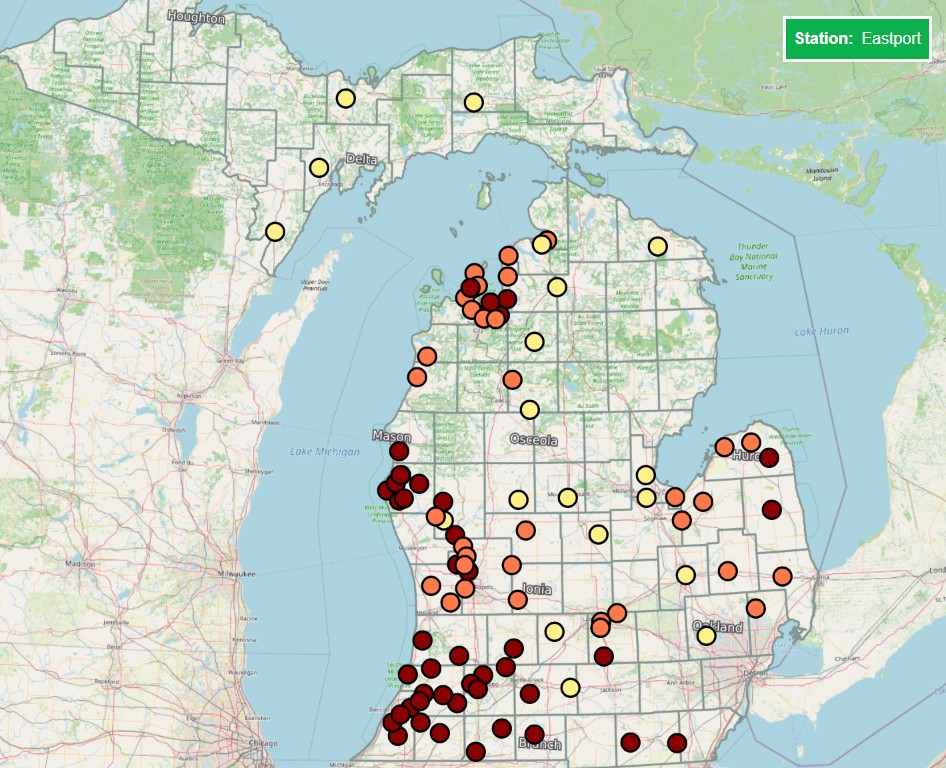
Late blight risk is elevated this week, particularly very high risk noted in southwest Michigan and high risk in the central west and Thumb regions (Figure 1). Forecasted risk into next week continues to be elevated and increasing in intensity in these areas (Figure 2). This follows last week’s detection in St. Joseph County found in a single potato field on Aug. 12 and characterized as genotype US-23 by Mid-Michigan Agronomy. This genotype of Phytophthora infestans can typically still be managed with phenylamide fungicides including mefenoxam and metalaxyl (Ridomil). As of mid-August, no other late blight has been reported in the United States or Canada this year.
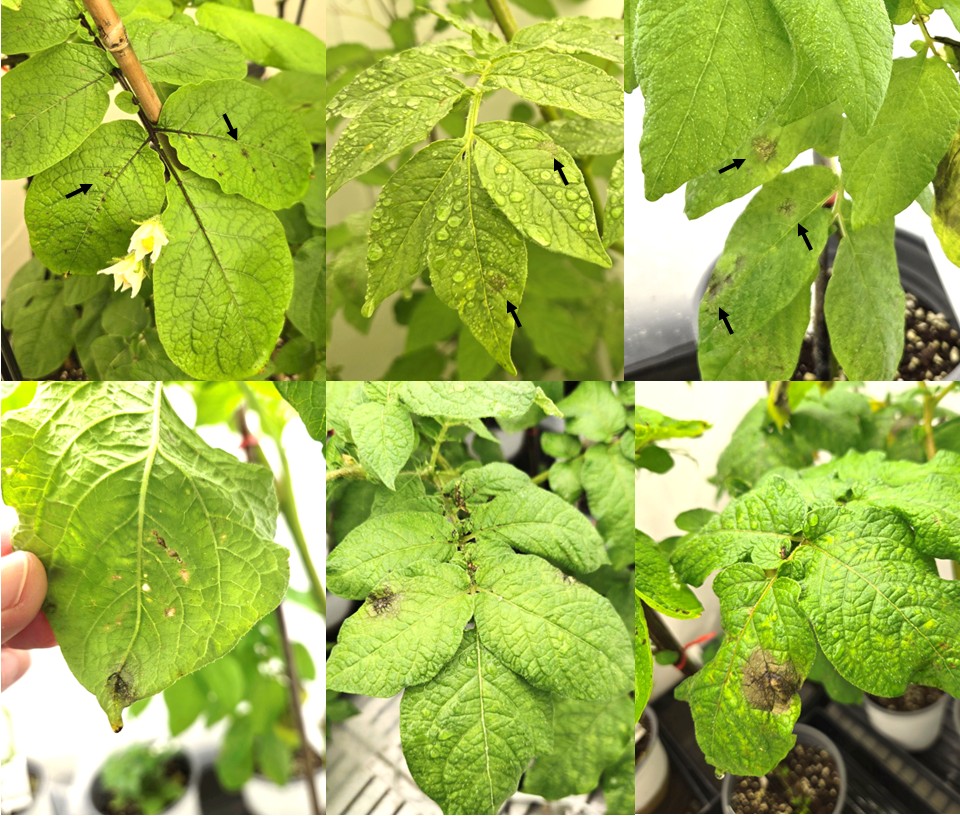
Vigilant scouting and monitoring efforts should continue as the crop continues to mature. Early onset late blight symptoms may include small, irregular “sooty” brown to black irregular blotches on the leaves (Figure 3). These develop into more advanced water-soaked lesions on leaves and stems with signs of white sporulation on the underside of infected leaves in high humidity (Figure 4). Under favorable conditions, susceptible crops can be destroyed within days if left untreated.
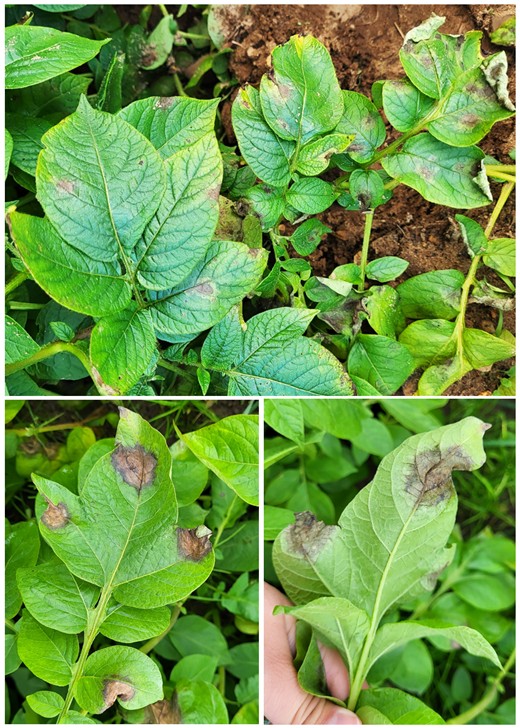
Generally, optimal conditions for infection and sporulation are temperatures from 64-72 degrees Fahrenheit with high humidity or leaf wetness, but sporulation can occur between 37-79 F. Customizable Potato Late Blight Risk maps are available through MSU Enviroweather and can help support monitoring and management decisions as the season progresses.
Disclaimer: MSU Enviroweather late blight tools are in development and being evaluated in 2026. Tools should be used in combination with existing scouting and monitoring approaches. Please reach out to Jaime Willbur at willbur1@msu.edu or Keith Mason at eweather@msu.edu or 517-432-6520 with questions or comments.
Additional information about late blight risk, volunteer survival, and the research behind these tools is available at our FAQs page.
Please contact MSU Potato and Sugar Beet Pathology at willbur1@msu.edu or 517-355-4754 or MSU Plant & Pest Diagnostics at pestid@msu.edu or 517-355-4536 to report potential late blight detections or visit our websites for more information.