Explore the rarely seen world of freshwater plants
 Print
Print Email
EmailTake a deep dive into aquatic plant identification with a 2-day course at Kellogg Biological Station.
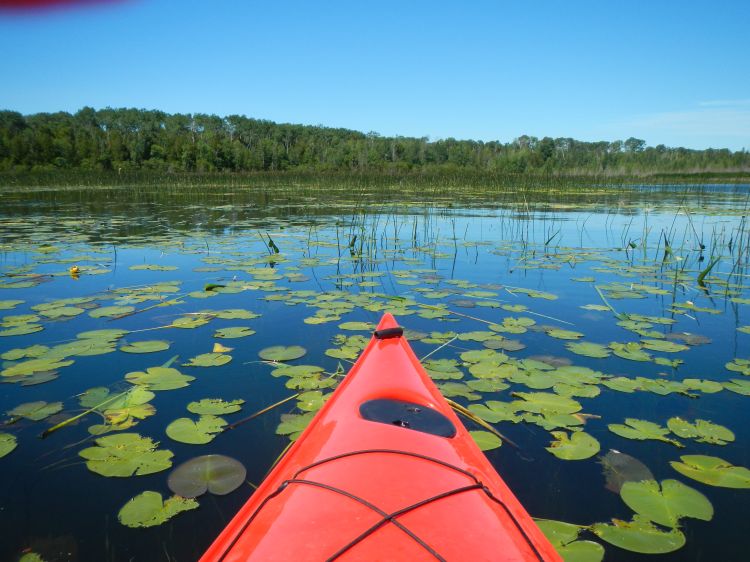
Let's face it: aquatic plants get a bad rap. We refer to them as "weeds" or, even less accurately, "seaweed." We complain about them touching us when we swim, snagging our fishing tackle, or tangling in our boat motor propellers. We see one aggressive invasive plant overtaking part of a lake and jump to the conclusion that all aquatic plants are undesirable.
We should take another look! Within our lakes — mostly below the surface — exists a diverse and beautiful underwater forest. There are so many shapes and sizes, from the tiny duckweed to the lush growth of large-leaf pondweed. Some plants grow massive root systems, some float freely in the water column, and others that rest on the surface. Some are even carnivorous!
Perhaps you've heard of the highly invasive Eurasian watermilfoil, but did you know there are six species of watermilfoil native to Michigan waters that are beneficial parts of the aquatic ecosystem? Maybe you have seen invasive curly-leaf pondweed in your lake. You might be surprised to learn that there are 27 native pondweeds, too, with a range of appearances from thread-like to floating, not to mention those that are lush and leafy.
Native aquatic plants benefit our lakes by using up excess nutrients and stabilizing shorelines and bottom sediments. They provide habitats for fish, frogs, turtles and insects. Many waterfowl rely on them for food. Healthy native plant communities can also make areas of a lake less susceptible to invasion by non-native plants.
If you'd like to learn more about Michigan's underwater forests, we invite you to participate in a two-day course on Aquatic Plant Identification at Michigan State University's Kellogg Biological Station, June 17-18, 2026.
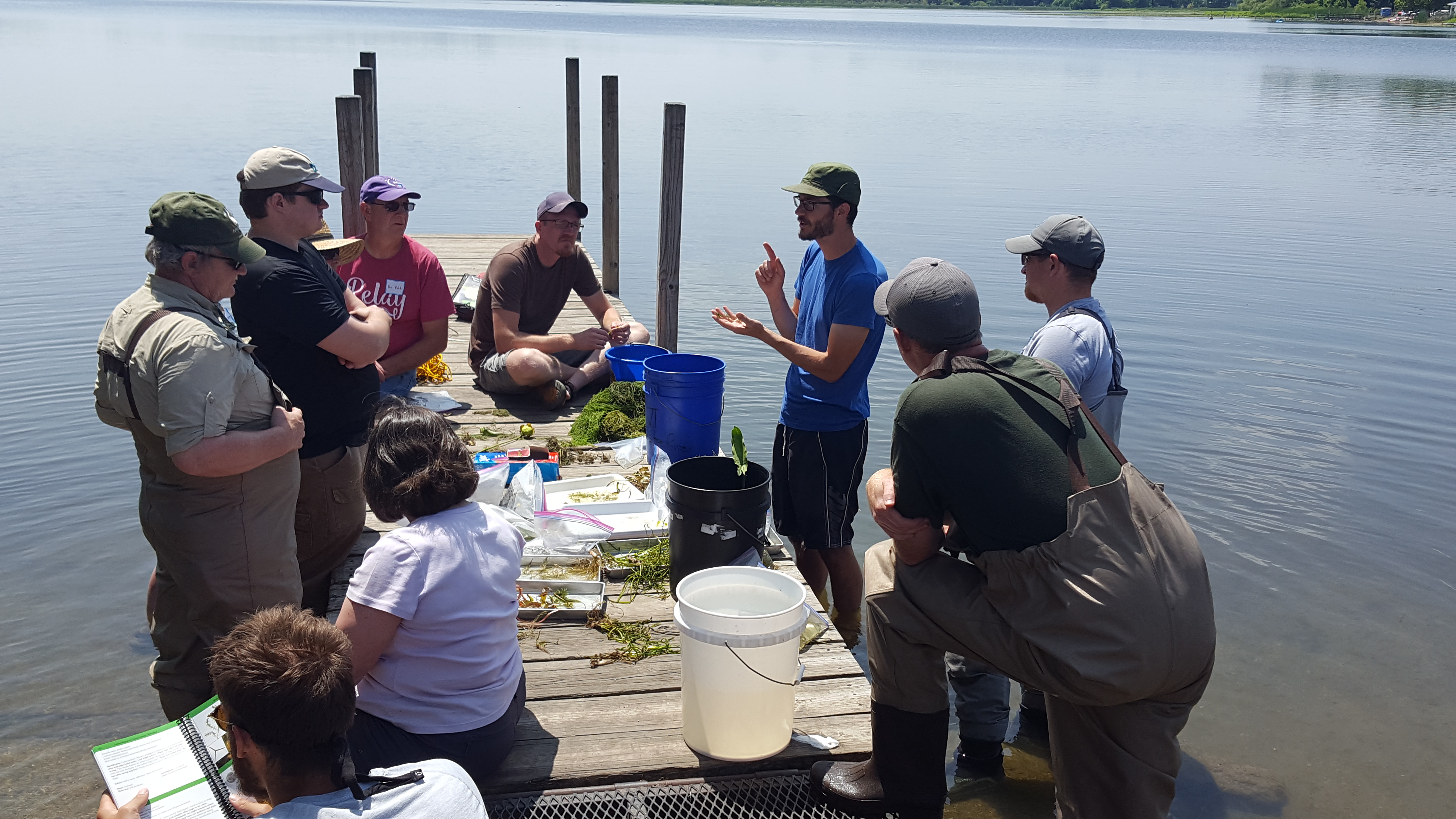
This two-day class (8:30 a.m. to 5 p.m. each day) will cover identification of aquatic plant species (native and invasive), focusing on littoral zone (shallow water) submersed and emergent plants. Participants will have the opportunity to obtain a hands-on look at lake and pond species and receive professional instruction for identification and determination at the species level. The class will visit field sites in the greater Kalamazoo and Barry County area, and participants will have the opportunity to examine specimens in a laboratory setting.
Aquatic plant experts Erick Elgin, Jo Latimore, Ph.D., and Jeremy Hartsock, Ph.D. with Michigan State University Extension and the MSU Department of Fisheries and Wildlife will introduce you to the many types of freshwater aquatic plants that call Michigan lakes home and teach you how to distinguish between the various species.
Participants will gain skills and experience in:
- Aquatic plant morphology and terminology
- Michigan aquatic plant identification
- The ecological role of aquatic plants in Michigan water bodies
The cost to participate is $300 ($250 for Kellogg Bird Sanctuary members) and includes a copy of the field guide “Aquatic Plants of the Upper Midwest” ($45 value). The registration deadline is June 14, 2026, and is capped at 20 participants. For more information, contact the Kellogg Biological Station Community Relations Office at communityrelations@kbs.msu.edu.
Registration and more details are available through the W.K. Kellogg Biological Station.