Exploring the Roots: The Origins of the Michigan Farm to School and Early Care Network
 Print
Print Email
EmailLaunched in 2026, the Michigan Farm to School and Early Care Network brings together years of work to support programs and people that buy local food, grow gardens, and teach children about food and farming. Dig into the history of this network!
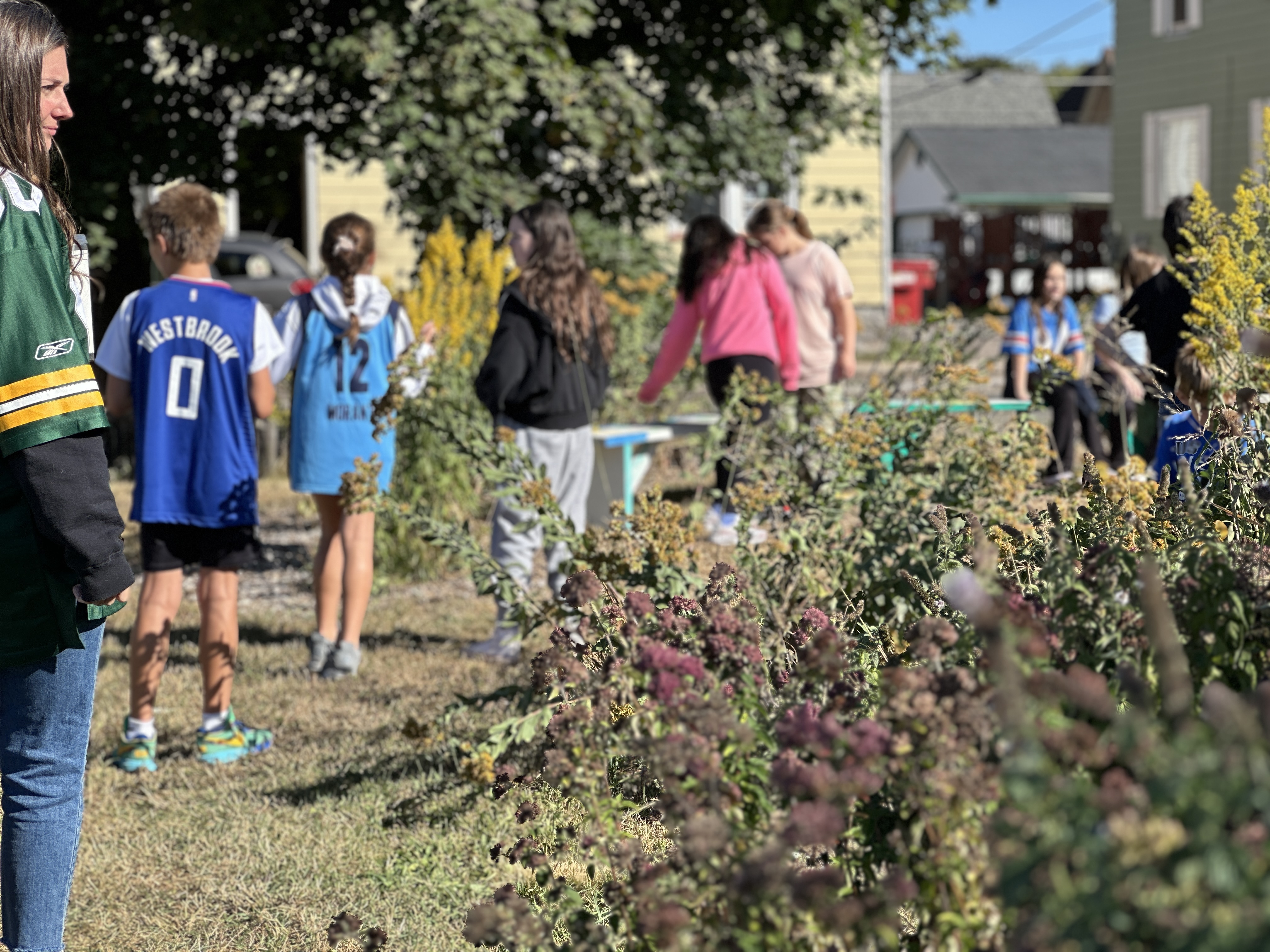
Farm to School centers around efforts to serve local foods in school and early care and education (ECE) settings. For decades, the power of these practices has inspired schools and ECE providers across Michigan to invest in food and agricultural education, learning gardens, and serving local food to our youth. Launched in 2026, the Michigan Farm to School and Early Care Network will uplift the shared goals of those invested in farm to youth work across the state.
A Look at our Shared History
Footnote: This timeline of farm to school and farm to ECE in Michigan is based on documented events and initiatives rather than the implementation of activities within sites. Many teachers and schools have prioritized implementing farm to youth activities well before the start date of this timeline.
Our Process

On November 22, 2024, 18 stakeholders from across Michigan gathered online to discuss bringing a statewide Farm to School and Early Care and Education multi-day training institute to Michigan. Inspired by Shelburne Farms Farm to School Institute Adaptation Program, the group decided to write a grant and meet monthly to move the idea of an institute for Michigan forward. In conjunction to this, throughout 2025, Michigan State University Center for Regional Food Systems (CRFS) staff began convening conversations with other states about their Farm to School and Farm to ECE networks.
Networks across the county shared their experiences:
- Association of State Public Health Nutritionists Farm to ECE
- Iowa Farm to School and Early Care Network
- National Farm to School Network, on behalf of Mississippi
- North Carolina Farm to School Coalition in conjunction with NC Farm to Preschool Network
- Ohio State University Farm to School Network and Farm to ECE Coalition
- Oregon Farm to Institution Collaborative
- Vermont Farm to School and Early Childhood Network
Beginning in the summer of 2025, many things happened that impacted the farm to school landscape in Michigan, including: the loss of SNAP-Ed under the One Big Beautiful Bill Act, 10 Cents a Meal was defunded in the state budget, and the grant proposal to bring a farm to school institute to Michigan was denied. In August 2025, given all the funding changes, the stakeholders pivoted to pursue the development of a shared, robust Farm to School and Early Care network, allowing for more resource sharing and the opportunity to lift up work across the landscape.
Led by CRFS, key stakeholders were invited to take part in listening sessions with statewide constituents to gain feedback about combining the efforts of Michigan’s farm to school work with the already established Farm to ECE Network within one “big-tent” network.
Over the second half of 2025, CRFS staff:
- Connected with those currently working in Michigan’s Early Care and Education space, including National Kidney Foundation of Michigan, Groundwork Center for Resilient Communities, Michigan Department of Health and Human Services, and Michigan Department of Education.
- Asked the established group of stakeholders to share feedback, which was then used to craft a statewide survey. That survey brought in over 40 additional perspectives.
- Held a listening session to share back initial survey responses on November 20, 2025.
- Received feedback that led to additional push for input, promoting the survey for an additional month.
- Hosted a final “share out” session in December 2025 to highlight survey results, provide a future direction for the network, and asked attendees to respond to these collective recommendations.
In all, 87 unique farm to school and ECE stakeholders participated in statewide listening sessions and/or statewide surveys.
Quotes from Participants
|
“I think combining Farm to School and Farm to ECE efforts into one network is a great way to bridge the work we’re already doing with early care and education programs and schools. It creates opportunities for collaboration, resource sharing, and alignment across age groups, which can strengthen local food systems and learning experiences for children.” |
|
“Pooling resources right now makes a lot of sense.” |
|
'It would help me stay engaged in this network if “more real-time resources that are something to actually be done in the classroom” are provided.”' |
| “This network will be successful if we, 1) Recruit a diverse coalition of people from a range of professions and experiences, including farmers, gardeners, teachers, students, parents, health professionals, school administrators, policy experts, community organizers, and more. 2) Establish community guidelines or values that ground our approach and philosophy.” |
Survey and Listening Session Takeaways:
- With state and federal funding in question, constituents replied they wanted to find ways to collaborate on shared resources.
- Responders shared that having too many networks in the state of Michigan means people’s time and energy are spread thin.
- Constituents shared their hope for ECE work to be recognized in every space farm to school is. However, they noted that we “don't want to lose the distinct needs of Farm to ECE, or have any stakeholders feel like their needs and concerns are left out or marginalized.”
Survey Responses, By the Numbers
- 95% felt combining K-12 and ECE perspectives would be somewhat to very important
- 60% reported that a coalition and a larger network would be the best structure
- 70% preferred a leadership model with co-chairs or advisory group
- 76% reported the network should prioritize local food procurement
- 73% reported the network should prioritize providing training and resources
- 93% approved of combining Farm to School and Farm to Early Care newsletters
Through the survey and listening sessions, it was established that the folks “centered” in the Farm to School and Early Care Network, or the primary audience, should be: ECE and K-12 stakeholders including educators, food service staff, administration, parents, and youth. A secondary audience would be farmers (with a special priority on farms smaller than $250K/ year, women, minority, and young farmers) and food distributors that want to connect within the school and early care landscape.
Michigan Farm to School and Early Care Network goals:
- Support local farmers through promotion of local foods for youth
- Improve child/youth nutrition education
- Share resources and best practices

With strong community voices providing shared direction, the next step was to intentionally create the foundation of a robust and durable network. In January 2026, Network co-leads from CRFS, National Kidney Foundation of Michigan, Groundwork Center for Resilient Communities, and Michigan Department of Education met to work on internal leadership development, network structure, and goals. To steer the overall direction of the Network, the Michigan Farm to School and Early Care Network Steering Committee was established and composed of 18 cross-sector stakeholders, including farmers, food service staff, and state agencies.
Specifically, steering committee members support by:
- Providing perspective and advice in order to develop and implement an inclusive and equitable experience for the Network’s primary audience of Early Care and Education and K-12 stakeholders
- Define Network goals and outcomes, designing a network for impact and long-term success
- Set timelines and assist with funding Network work.
- Monitor and model the Network values, overall Network quality, and impact.
Steering Committee Members Represent the Following Organizations:
- Bendle Public Schools
- Creating Healthy Schools Muskegon County - Muskegon Area ISD
- Detroit Public Schools Community District
- East Jordan Public Schools
- Gavin Orchards
- Great Start to Quality Northeast
- Keep Growing Detroit
- Kent County Food Policy Council
- Michigan Department of Education
- Michigan Department of Health and Human Services
- Michigan Public Health Institute, Center for Healthy Communities
- MSU Extension Health and Nutrition
- Rahma Worldwide
- Superior Central School District
- The Henry Ford
A Look at our Shared Future
Thanks to the long history of farm to school champions in Michigan, many schools, ECE providers, and organizations are already implementing farm to youth practices at their sites. The Michigan Farm to School and Early Care Network will work to support these practitioners at all levels. Growing a new statewide network is a process; to do so, the Network has established four focused workgroups: Strategy, ECE, Education/Communications, and Procurement. These workgroups will lead activities that include completing a five-year MI Farm to School and Early Care Network strategic plan (integrating the current Farm to ECE Strategic Plan) and aligning, planning, and promoting education opportunities and resources that teach local food purchasing and scratch cooking skills. Communications and education will be shared through an updated newsletter and website. These tools will share resources and stories to support providers across Michigan. The network will also host local food sourcing matchmaking events to increase overall reach and engagement.
The Michigan Farm to School and Early Care Network is just sprouting and there is space for everyone!
.png?language_id=1)
About the Michigan Farm to School and Early Care Network
The Michigan Farm to School and Early Care Network works to expand access to local food and nutrition education, support healthier children, and strengthen family farms and communities across the state. Learn more and get involved at mifarmtoyouth.org