Fats that fight: Omega-3s in dairy cows
 Print
Print Email
EmailSupplementing dairy cow diets may have immune benefits.
From grocery aisles to supplement stores, omega-3 fatty acids are everywhere. Their potential benefits may extend beyond people, even to dairy cows. Recent MSU research explored whether immune function in dairy cows can be improved by using omega-3s.
In addition to providing energy and other essential nutrients, various feedstuffs and feed additives contain bioactive components that alter animal physiology. While the term “bioactive” describes many compounds, fatty acids (FA) are familiar bioactives in the dairy nutrition space. The common FA supplemented in a dairy cow’s diet are palmitic, stearic, and oleic; however, less is understood about the omega-3 fatty acids such as alpha-linolenic (ALA), eicosapentaenoic (EPA), and docosahexaenoic acids (DHA). In other species, these omega-3 FA are known for their anti-inflammatory effects in the body.
Cows in intensive dairy systems may be deficient in omega-3 FA compared to grazing cattle. Fresh grasses contain substantial amounts of ALA; however, most dairy cows do not have access to these fresh forages and may be deficient in omega-3 FA. Due to limited DHA in traditional dairy cow diets and its potential impact on cow health, a collaborative team studied how DHA directly affects production and the immune response in lactating dairy cows. To test these effects directly, we had to bypass the rumen, since rumen microbes rapidly convert these FA to saturated forms without the same potential to benefit health. While this approach is not practical in a commercial farm setting, the outcomes of this research may provide insight for development of new feed products that can deliver omega-3s past the rumen.
After abomasally infusing cows with varying doses of DHA, we collected blood samples to assess immune signaling and the immune cell response to a laboratory bacterial stimulation. We found that DHA increased the proportion of neutrophils (a type of white blood cell) that internalize Escherichia coli. Neutrophils are one of the first immune cells to respond to infections and eliminate pathogens by phagocytosis, which is the process of internalizing and killing the pathogen. These results suggest that DHA may enhance neutrophil function, although the response may be dependent on the type of bacterial challenge.
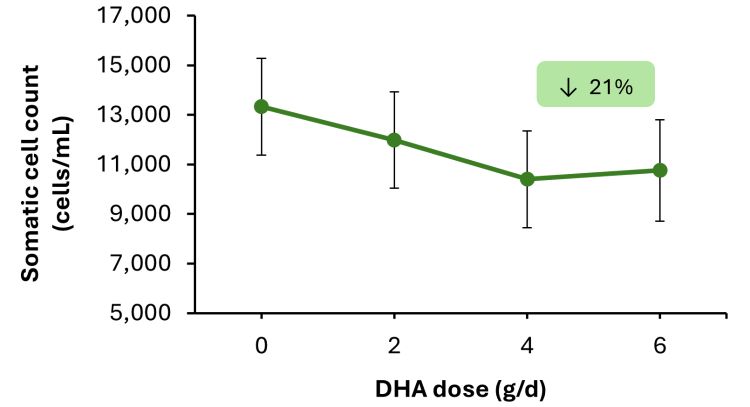
While DHA enhanced E. coli uptake (a sign of increased immune function), DHA also increased anti-inflammatory signaling molecules. These results suggest that DHA can promote resolution of inflammation without interfering with the neutrophil’s capability to eliminate harmful pathogens. Additionally, milk production was not affected by DHA infusion. In fact, DHA decreased somatic cell count, even when all cows were within a healthy somatic cell count range. This finding also supports the immunomodulatory potential of DHA.
While DHA had positive effects on the immune system, effectively feeding DHA to the cow is difficult for two main reasons. First, the sources highly abundant in DHA are algal and fish oils, therefore requiring additional processing. Additionally, DHA is highly susceptible to alterations by rumen microbes, which requires effective encapsulation. Calcium salts of EPA and DHA are commercially available; however, these products do not fully protect DHA in the rumen. Nevertheless, these findings warrant further research on practical ways to support the immune resilience of our hard-working dairy cows.