Good Work Takes Time: The Living Impact of MSU Center for Regional Food Systems
 Print
Print Email
EmailCRFS continues to evolve to achieve our vision of just, regenerative, and sovereign food systems. Look back at some of our continued efforts that aim to transform regional food systems to support generations to come!
Since our beginning as the C.S. Mott Group for Sustainable Food Systems in 2003, we have committed to building more resilient and equitable food systems in Michigan and beyond. Recognizing the need to advance support for strengthening local and regional food systems, we laid the foundation for sustainable change through applied research, education and outreach. We established as the Center for Regional Food Systems (CRFS) at Michigan State University in 2012 and continue to evolve to transform regional food systems that will support generations to come.
Looking back at some of our continued efforts, our steady work over decades is getting us closer to achieving our vision of just, regenerative, and sovereign food systems.
Developing a Shared Vision Rooted in Michigan Communities
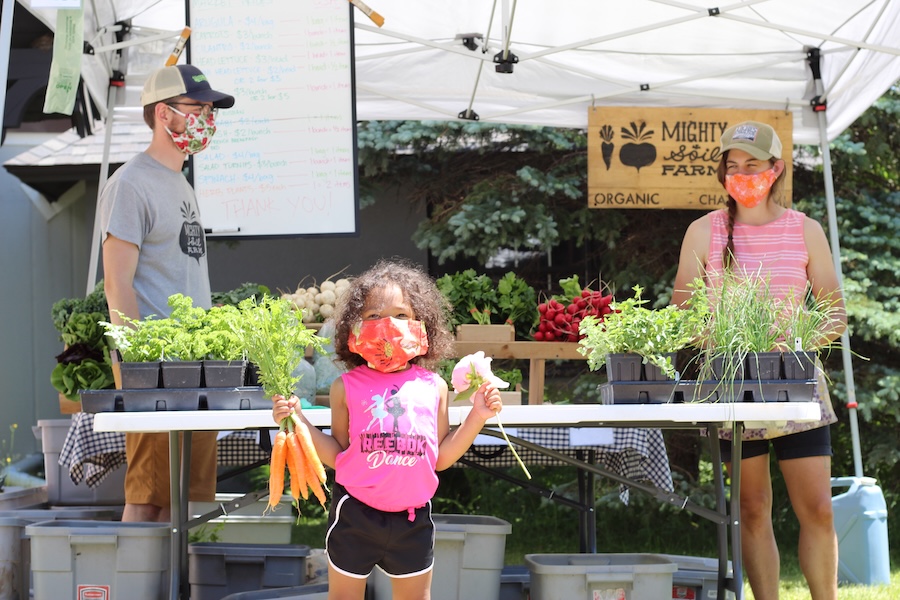
“Michigan food systems should ensure food is accessible to everyone, promote healthy communities, use fair and sustainable production methods, and support a diverse and equitable society.” – 2022 Michigan Good Food Charter
To create a collective vision for Michigan’s food and agriculture system that could support the economy, environment, and eaters, CRFS stewards the Michigan Good Food Charter, the state's food systems policy framework. In 2009, we led the process to create the 2010 Michigan Good Food Charter in partnership with the Food Bank Council of Michigan and the former Michigan Food Policy Council. Following the work of five working groups, each focusing on key aspects of Michigan’s food system, and community input gathered at the inaugural Michigan Good Food Summit, the 2010 Charter included 25 agenda priorities alongside which outlined specific state and local actions to turn a vision for Michigan’s food and agriculture system into a possible reality.
We continued momentum towards these shared goals through seven Michigan Good Food Summits held between 2010 and 2023 which convened over 2,300 food systems advocates from across the region. These spaces provided, and will provide in the future, an opportunity to create connections across sectors and geographic regions to align efforts addressing Charter priorities and emerging food systems needs.
As the ten year span of the original Charter neared, statewide leaders agreed on the need for an update. To prepare the 2022 Michigan Good Food Charter, CRFS coordinated a coalition and public input campaign, eventually engaging representatives from over 150 Michigan agriculture, food, health, education, business, and governmental organizations. The Charter provides a shared vision for good food systems – that Michigan has a thriving food economy distinguished by equity, health, and sustainability. With six goals, six strategies, and 22 action recommendations, the 2022 Charter can be used as a tool to align towards systemic change to address complex food systems challenges through strategic, coordinated policy action. There has been tremendous growth in support for local and regional food systems in the last decade, but there is still more to be done!
Researching to Understand Possibilities and Barriers
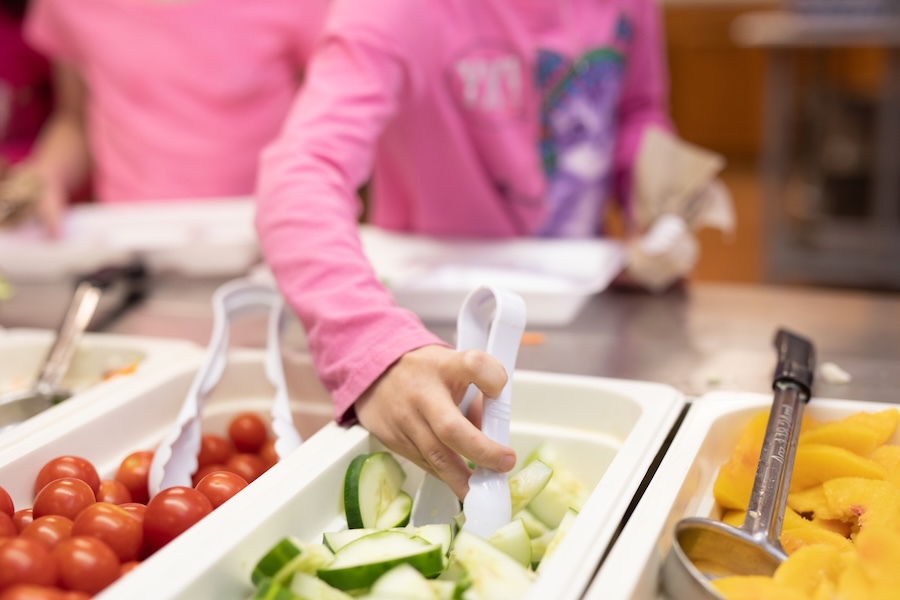
“Michigan’s 10 Cents a Meal program is exactly the kind of high-impact, bipartisan solution that pays for itself.” —Anonymous, How Michigan Shaped the Field: The National Impact of Michigan’s 10 Cents A Meal Program
Originally named as an agenda priority in the 2010 Michigan Good Food Charter, 10 Cents a Meal for Michigan’s Kids and Farms (10 Cents a Meal) launched as one of the first state-funded local food purchasing incentive programs in 2016. Since the program’s inception, 10 Cents a Meal has been administered by the Michigan Department of Education (MDE) and supported by a core team of organizational partners: Groundwork Center for Resilient Communities, Michigan Department of Agriculture and Rural Development, and CRFS.
Continuously operating from 2016-2025, 10 Cents a Meal works by reimbursing the cost of Michigan-grown fruits, vegetables, and dry beans used in meals at schools, child care facilities, and meal sites. In response to detailed program evaluation conducted by CRFS and supported by MDE, the 10 Cents a Meal program evolved to meet the needs of its grantees over time. For example, in recent years, the program shifted to include funding for foodservice labor costs and product delivery, making purchasing from local farms more achievable for some schools. The evaluation on 10 Cents a Meal demonstrated that it was meeting its program goals of improving daily nutrition for children and investing in Michigan’s agriculture.
Despite reaching over 600,000 children and generating nearly $11.9 million in estimated economic impact during the 2024-2025 school year, 10 Cents a Meal was not funded in the state budget for the following year. However, thanks to the available longitudinal data, including the influence the program has had nationally, along with collective advocacy work led by the Groundwork Center for Resilient Communities, funding for the 10 Cents a Meal program was partially reinstated in the 2027 Fiscal Year Budget.
Not only did these evaluation data support the program’s continued funding in Michigan, the legacy of 10 Cents a Meal has led the way for other local food purchasing incentive programs across the country. A national survey that CRFS conducted in partnership with the National Farm to School Network found that at least 5 states reported successfully starting their own programs by leveraging the proven track record of 10 Cents a Meal. Through offering academically grounded evaluation that informs and improves good food efforts, CRFS further supports programs and policies that benefit eaters, producers, and local economies.
Committing to Food Systems that Serve Everyone
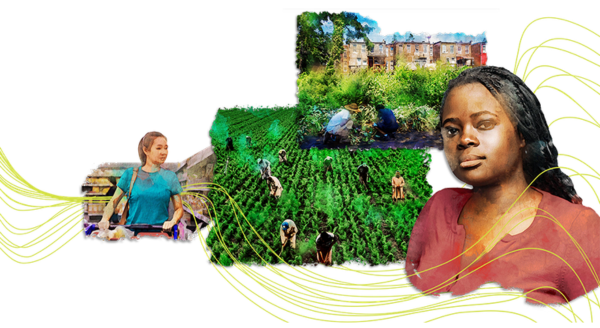
“Structural Racism in the U.S. is the normalization and legitimization of an array of dynamics – historical, cultural, institutional and interpersonal – that routinely advantage whites while producing cumulative and chronic adverse outcomes for people of color.” – Structural Racism, Keith Lawrence, & Terry Keleher, 2004 Race and Public Policy Conference
CRFS recognizes that racism in the food system is historic, ongoing, and systemic.
We take our role as researchers seriously as we seek to understand the existing realities of structural racism in food systems and how we can dismantle it. Since 2015, CRFS has compiled research, outreach, and analysis in An Annotated Bibliography on Structural Racism Present in the U.S. Food System (ABSR).
The ABSR, now in its 11th edition, contains over 720 resources from peer-reviewed articles, books, reports, videos, and more. Each citation includes a description and is categorized across themes. This annotated bibliography offers a foundation for learning and communications about structural racism in food systems.
To look back on over a decade of preparing this resource, CRFS recently published a peer reviewed article in the Journal of Agriculture, Food Systems, and Community Development titled, “Reflections on 10 years of “An Annotated Bibliography on Structural Racism Present in the U.S. Food System””. In addition to discussing this research process, the article describes learning, outcomes, and opportunities that have emerged from the development of the ABSR. On the horizon, CRFS will produce further syntheses that examine the research findings, tools, and resources captured in the ABSR to illuminate ways to reimagine food systems that improve lives and strengthen communities for all.
These examples of our longstanding focus areas demonstrate our continued alignment with a vision of transformation toward food systems that regenerate people and the planet. We are constantly inspired and guided by the efforts of communities and food systems advocates. Going forward, CRFS will continue designing our work to develop food systems that support future generations in Michigan and beyond.
For a deep dive into our work from the last year, check out our 2025 CRFS Impact Report.
CRFS is generously supported by private foundations, federal agencies, state departments, and Michigan State University Extension, as well as by individual donors. By giving to CRFS, you can contribute to our mission supporting the resilience of regional food systems.