How to combine a laying worker colony with a queenright colony using newspaper
 Print
Print Email
EmailBeekeepers can fix a laying worker colony by using newspaper to combine it with a queenright colony.
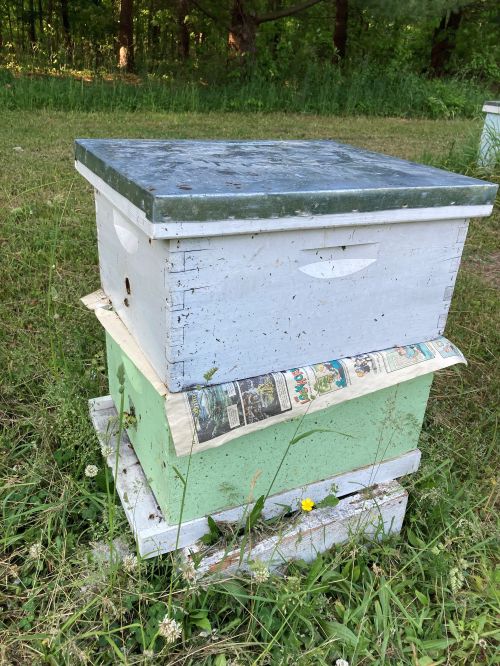
Honey bee colonies that have been queenless and broodless for a period of time will develop laying workers. A colony will eventually die without a queen to lay more young workers, but it cannot raise its own queen. Colonies that have laying workers are unlikely to accept a new queen due to the physiological and behavioral changes in laying workers. Laying workers have developed their ovaries and will become hostile toward a real queen bee, and they can only lay unfertilized eggs that will develop into drones. If a beekeeper tries to introduce a caged, mated queen, it’s likely that the laying worker colony will reject and kill the introduced queen. Beekeepers therefore need a method to fix a laying worker colony so that it does not simply dwindle in population and die off.
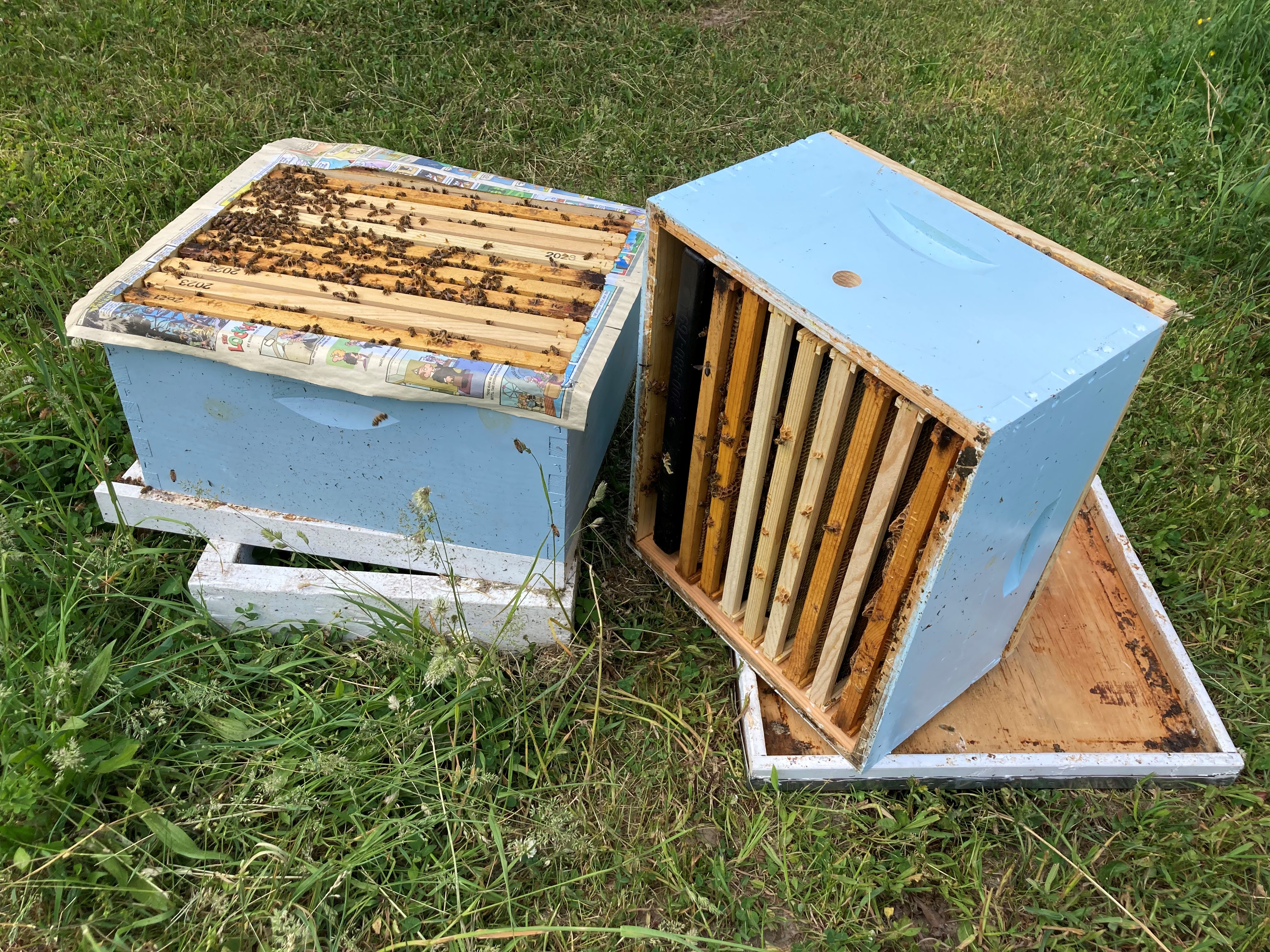
One simple and effective way to deal with a laying worker colony is to combine it with a queenright colony using newspaper. Here are the steps:
- Identify a strong, queenright colony, at least the size of a five-frame nucleus colony (nuc). If you have multiple brood boxes of laying workers, you may prefer combining a laying worker colony with multiple queenright colonies to avoid making one towering hive with multiple brood boxes. In this case, you can give each queenright colony one brood box from the laying worker colony. If you don't have any queenright colonies, then you will have to get a nuc or colony from another beekeeper for the combination.
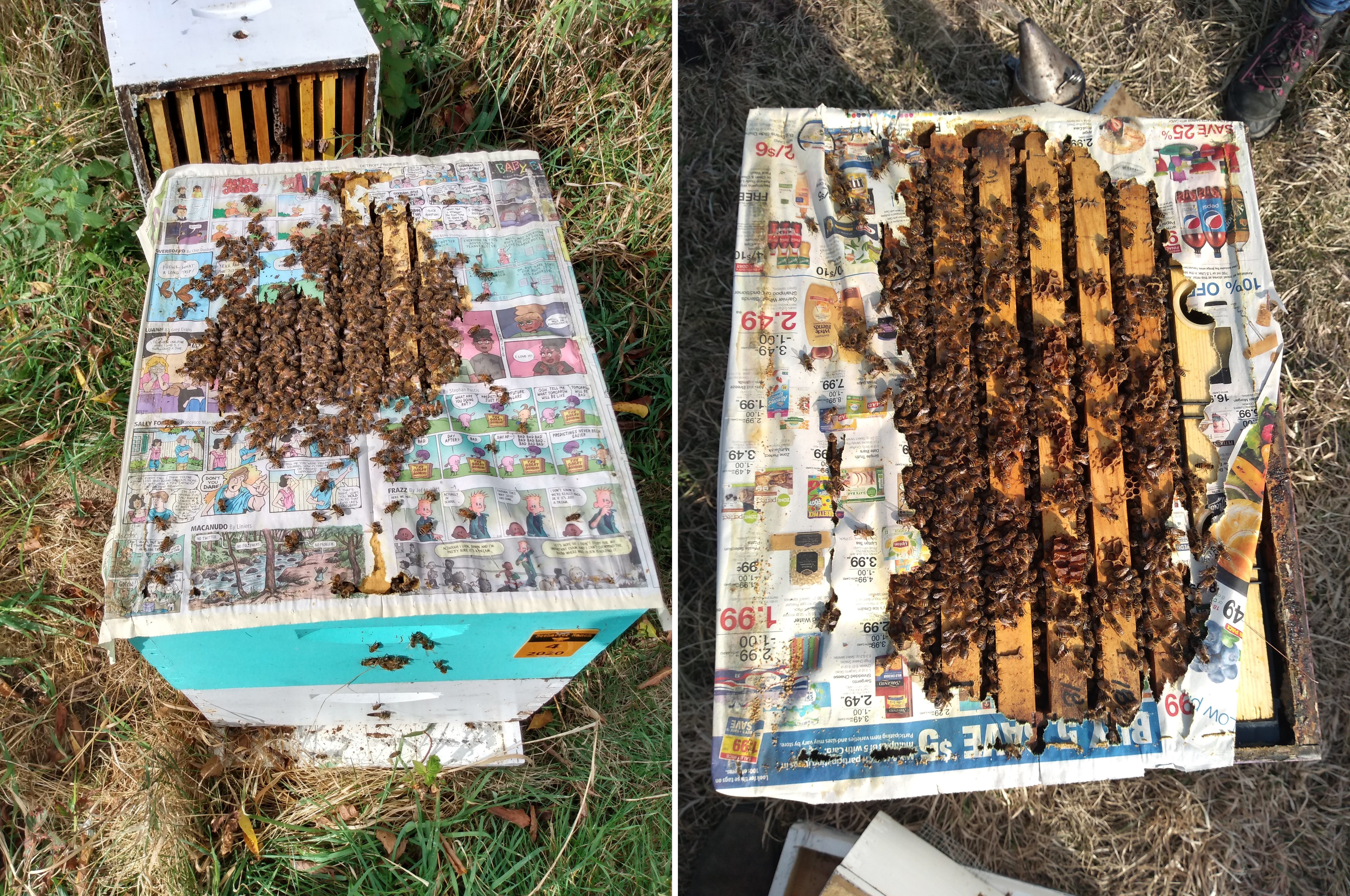
- Remove the lid and any honey supers from the queenright colony and then place a single sheet of newspaper directly on the frames above the broodnest of the queenright colony. The newspaper allows the colonies to get used to each other’s scents while the bees remove the newspaper. Allowing the bees to get used to each other’s scents can reduce fighting between the colonies. Optionally, you can make a few tears in the newspaper with a hive tool to get the bees started on removing the newspaper.
- Place the brood box(es) from the laying worker hive above the newspaper.
- Make sure there is an entrance above the newspaper, especially if the weather is warm, to prevent bees above the newspaper from overheating. You can use a notched inner cover, an auger hole, or simply prop a box or cover to create a gap for the bees to enter and leave the top box.
- Stack any honey supers from the queenright colony and the laying worker colony above the brood boxes. It’s usually fine for the bees in the supers from both colonies to intermix with each other.
- Check the combined colony in a week or so. Inspect the colony queen-laid eggs and young worker brood. It may take a while for the drone comb from laying workers to contain worker brood.
- Once the colonies have successfully combined, you can rearrange the boxes and frames as needed. It’s good if the top brood box is full of honey frames before winter. Colonies usually cluster low in the hive and then move up throughout the winter as they consume stored honey and syrup. You may need to feed the colony sugar syrup in the fall so the colony stores syrup in the brood boxes.
MSU Extension and Michigan Pollinator Initiative beekeeping and pollinator resources
- Michigan State University Extension Beekeeping and Pollinators website
- Michigan Pollinator Initiative website
- Getting started with beekeeping in Michigan
- Apiculture programs and resources from Michigan State University Extension
- MSU Extension Beekeeping and Pollinators email newsletter
- Michigan State University Beekeeping YouTube channel
- Michigan Pollinator Initiative Facebook page
- Michigan State University Beekeeping Facebook page
- Ask Extension
Acknowledgments
Thank you to the Michigan Department of Agriculture and Rural Development for securing funding from the U.S. Environmental Protection Agency for Michigan State University to implement strategies in the Michigan Managed Pollinator Protection Plan.
This work is supported by the Crop Protection and Pest Management Program (grant no 2024-70006-43569) from the USDA National Institute of Food and Agriculture.
Any opinions, findings, conclusions, or recommendations expressed in this publication are those of the authors and do not necessarily reflect the view of the U.S. Department of Agriculture.