Improving chestnut quality through better irrigation and sap flow monitoring
 Print
Print Email
EmailIrrigation is critical to optimizing tree health and nut quality.
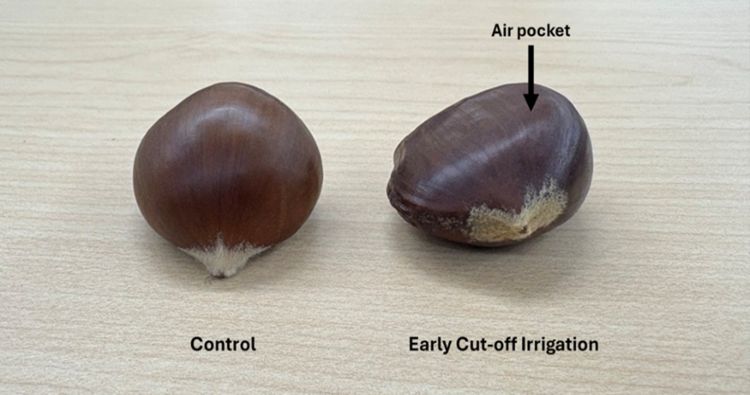
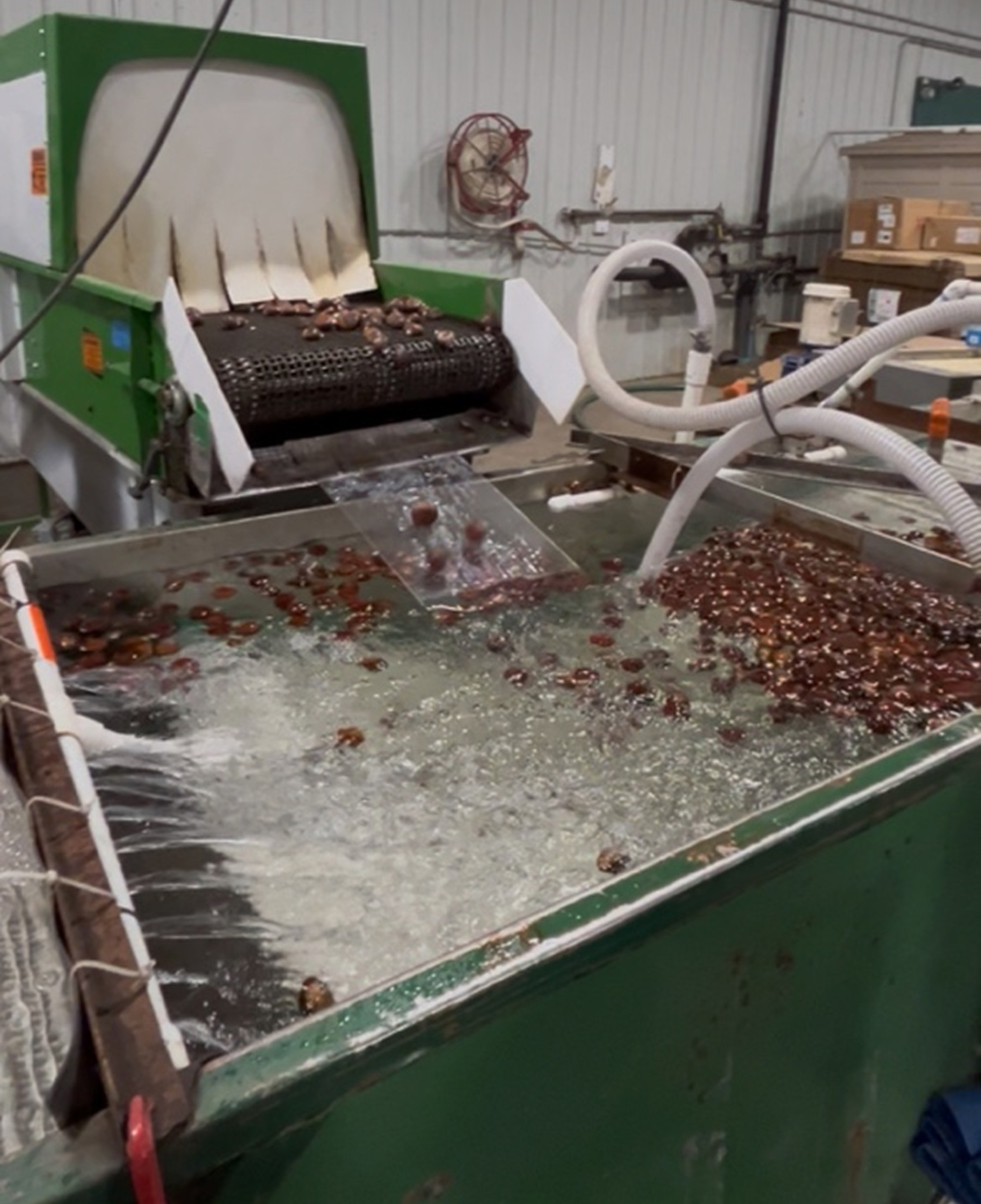
Chestnut trees are typically grown in sandy soils, requiring adequate irrigation to maintain optimal soil moisture throughout the growing season. Insufficient irrigation can stress the trees, reducing both nut quality and yield. As shown in Figure 1, inadequate irrigation during a dry year can cause air pockets to form inside the shells. These air pockets cause the nuts to float and be culled during postharvest processing even though they are salable (Figure 2). Culling of saleable nuts with an air pocket can result in additional sorting and processing expenses and yield losses. Proper irrigation management is essential for reducing air pockets in nuts to improve nut quality, yield and processing efficiency.
One way to understand how much water a tree is actively using is by measuring sap flow. Sap flow refers to the movement of water from the roots through the stem and out to the leaves via transpiration. To measure sap flow, sensors are inserted into the trunk to measure water movement and determine daily water use. Each sensor consists of two probes that track heat transfer through the sapwood; as sap moves, the rate of heat dissipation indicates the speed and volume of water flow.
A datalogger records sap flow measurements every 15 minutes and automatically uploads the data to the cloud (remote digital data storage) to allow users to monitor tree water use remotely in real-time. The cloud-based system also makes it easy to compare data across different trees or locations, track sap flow changes over time, and quickly identify patterns related to weather conditions or irrigation events. Figures 3 and 4 show the installation of sap flow sensors and an example of collected data during the growing season.
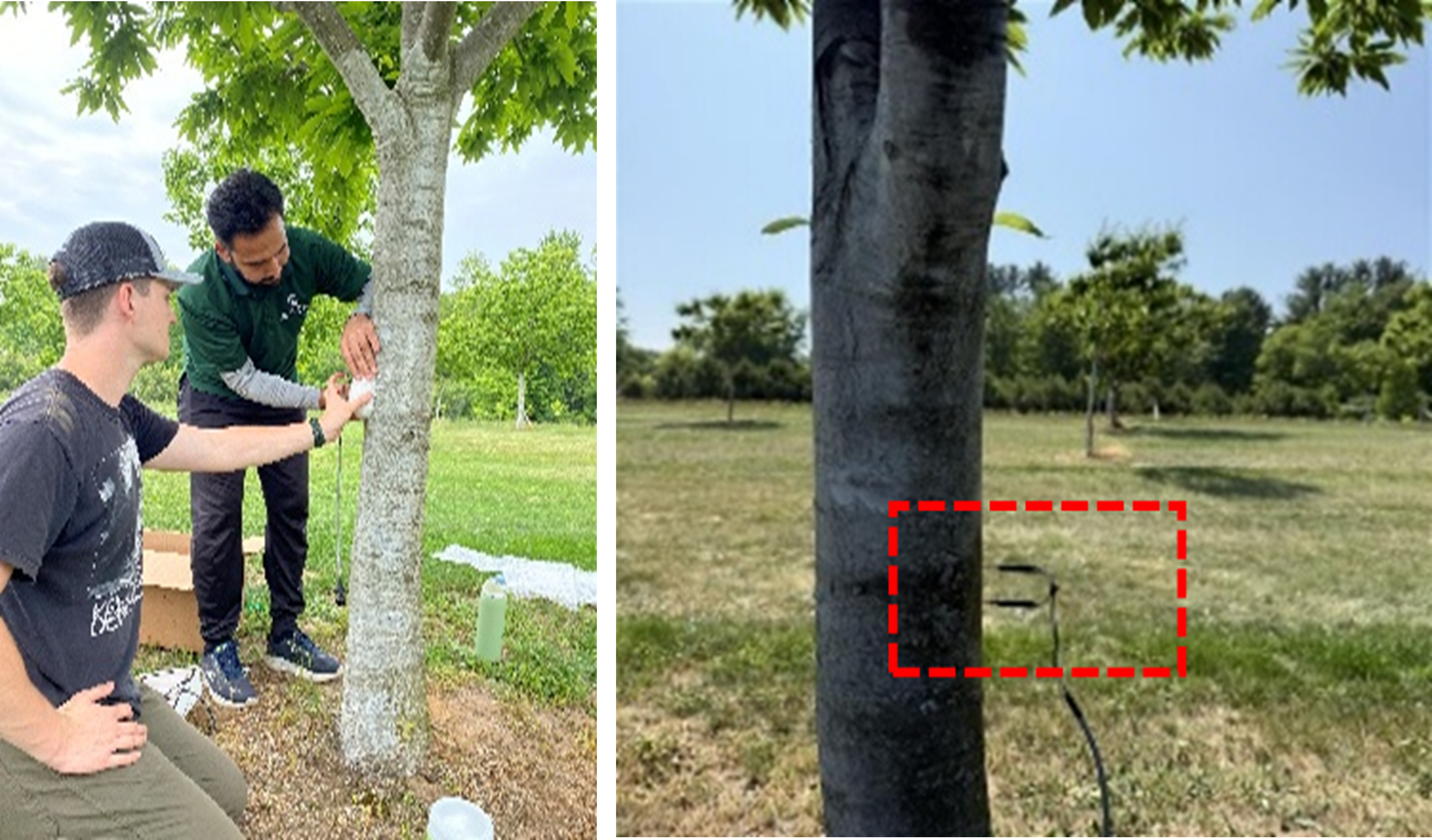
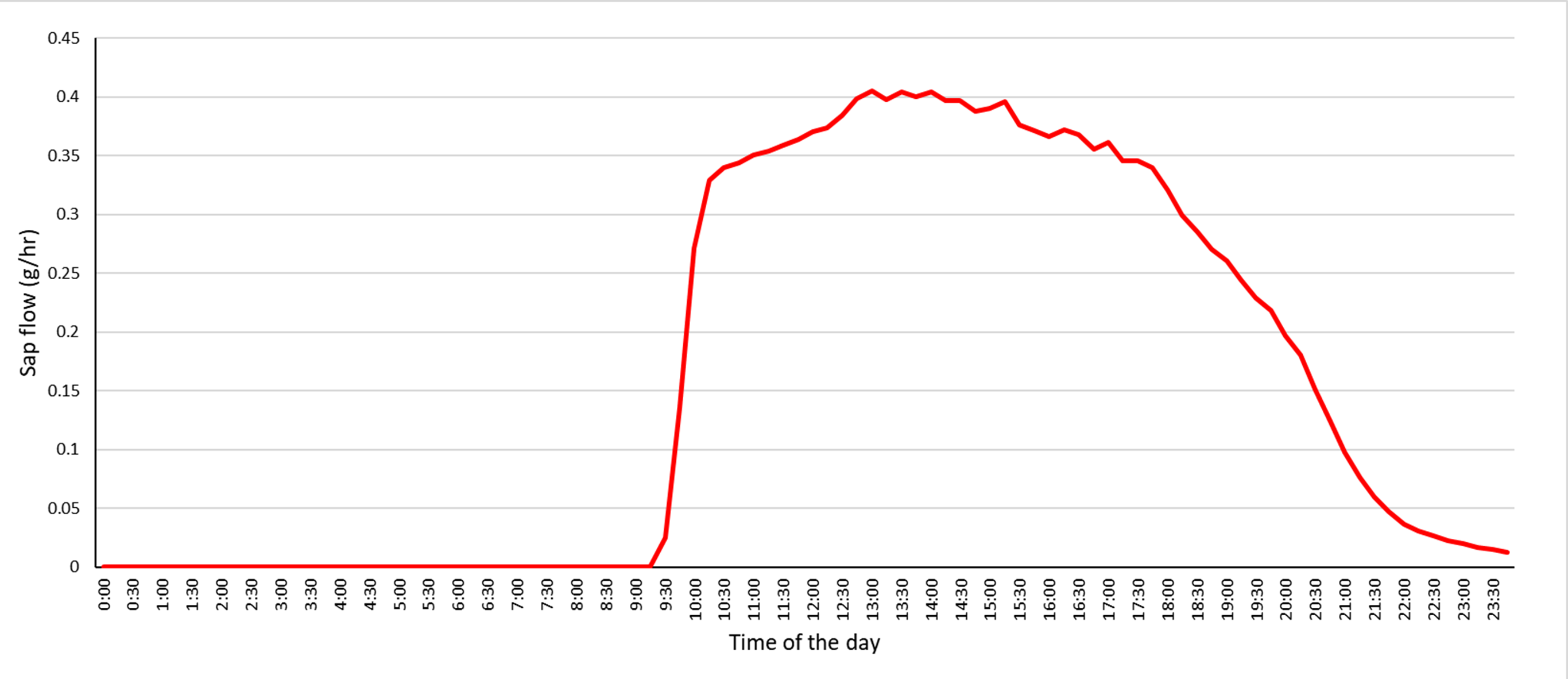
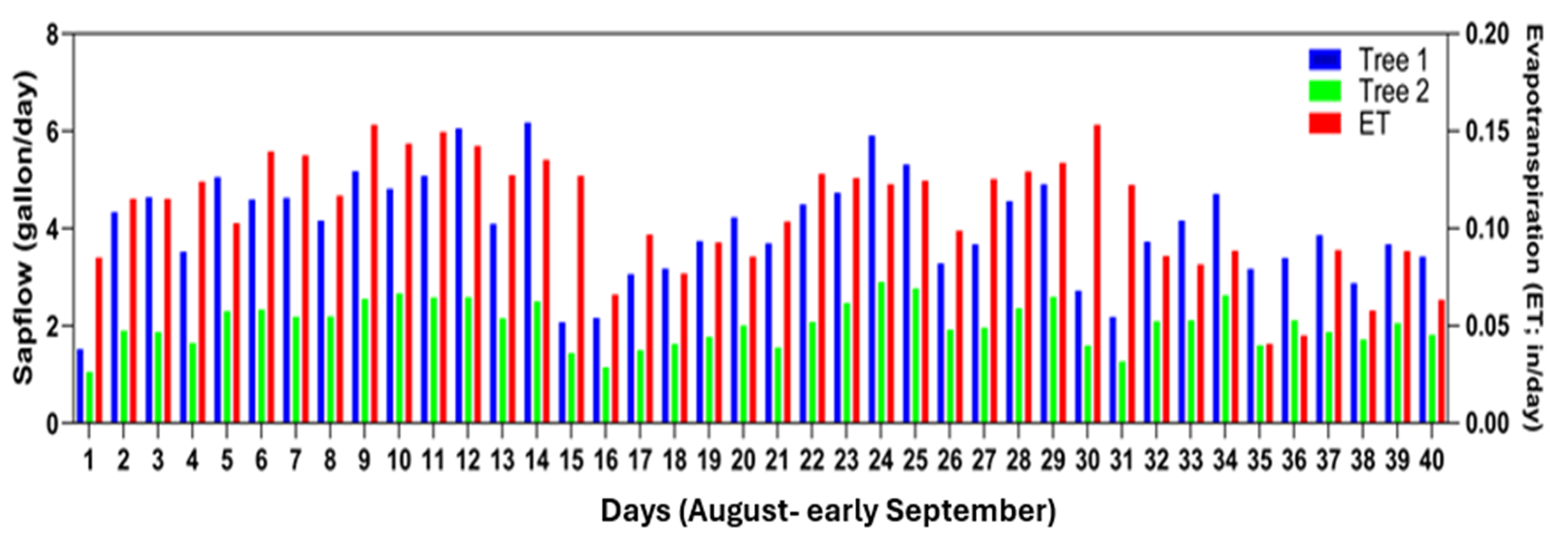
Figure 5 shows that sap flow in chestnut trees generally follows the daily trends in evapotranspiration. Larger trees, with a trunk diameter of 6.1 inches, used more water on average (about 3.6 gallons per day) compared with smaller trees, with a trunk diameter of 5.1 inches (about 2 gallons per day). This difference reflects the greater canopy size and leaf area of larger trees, which increases water demand.
It is also important to remember that daily water use can vary depending on variety, tree size, growth stage, canopy cover and environmental conditions that impact evapotranspiration (ET), including solar radiation, air temperature, wind speed and humidity. In September 2025, unusually warm weather caused the trees to continue taking up water later in the season, highlighting the importance of monitoring water needs even in late-season periods.
In addition to sap flow sensors, other irrigation scheduling methods, such as ET-based and soil moisture sensor-based approaches, can also help growers manage irrigation more effectively. ET-based scheduling estimates crop water use from weather data (temperature, solar radiation, humidity and wind) and crop coefficient, helping determine how much water should be applied to replace what’s lost through evapotranspiration. Soil moisture sensors, on the other hand, measure how much water is available in the root zone, allowing growers to irrigate when soil moisture drops below an optimal level.
More information about these tools and how to use them can be found in this Michigan State University Extension bulletin and factsheet: Irrigation Scheduling Tools and E3445-Improving Irrigation Water Use Efficiency: Using Soil Moisture Sensors.
Research and data on irrigation management for chestnut production are still limited. Continued field studies and grower participation will be key to developing reliable guidelines and best practices for efficient irrigation management in chestnut orchards.