LandTexture: North Library Plaza and Beal Botanical Garden
 Print
Print Email
EmailAlumni-led visions for MSU’s North Library Plaza and Beal Botanical Garden.
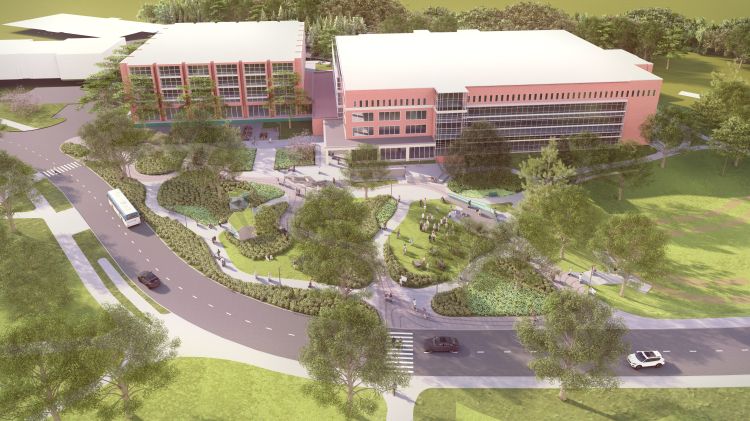
ALUMNI-LED VISIONS FOR MSU'S NORTH LIBRARY PLAZA AND BEAL BOTANICAL GARDEN
The North Library Plaza design and Beal Botanical Garden Land Use Master Plan emerged through collaborative, interdisciplinary processes with MSU’s Infrastructure Planning and Facilities team, as well as the MSU Library and Beal Botanical Garden leadership. Led by SmithGroup, including MSU Landscape Architecture alumni Lori Singleton and Jessica Pilon, key stakeholders participated in ongoing, iterative dialogue throughout the planning process, with students and community volunteers contributing valuable feedback throughout the process. Although advanced as separate projects, coordinated discussions ensured that decisions related to accessibility, circulation, and programming were mutually reinforced, supporting the long-term stewardship and educational missions of both landscapes.
.jpg?language_id=1)
The redevelopment of the North Library Plaza aims to function not only as an architectural threshold to the Main Library but also as a connective civic space linking culture, ecology, and academics. Its design is deeply intertwined with the Beal Botanical Garden Programmatic and Land Use Master Plan (Beal), which elevates Beal as a living laboratory and cultural landscape embedded in daily campus life. The Beal Land Use Master plan provides a framework for balancing ecological stewardship with accessibility, clarifying how circulation, programming, and landscape character can support inclusive learning, wellbeing, and discovery while protecting sensitive plant collections and natural systems. Together, these projects reveal a coordinated approach to land use, circulation, programming, and experiential design at the northern core of campus.
The Plaza occupies one of MSU’s most active pedestrian intersections, linking north campus— the Main Library, Beal Botanical Garden, the MSU Museum, and the Music Building— to south campus. Despite its central location, the Plaza revealed significant opportunities for renewal, as aging infrastructure and limited amenities underscored its potential as a welcoming civic space. Adjacent to the Plaza, Beal Botanical Garden—one of the nation’s oldest continuously operated university botanical gardens—represents a highly sensitive living landscape. Beal’s five acre site lines the banks of the Red Cedar River, where the waterway defines a natural edge to the garden and reinforces its role as a living landscape shaped by riparian ecology and seasonal change. Together, these neighboring environments framed a critical design challenge: balancing the demands of heavy pedestrian circulation with the responsibility of ecological stewardship.
NORTH LIBRARY PLAZA DESIGN VISION
The North Library Plaza sits on a 1.4-acre site along the library’s north facade, offering iconic views of the historic oak openings and Beaumont Tower. The redesign reimagines a space long dominated by concrete and limited seating, transforming it into an inviting landscape inspired by the concept of nature reclaiming an urban environment. Expanded planting areas soften the plaza, while a diverse range of seating opportunities support studying, informal gathering, and campus events. Circulation routes emulate the organic movement of water, forming gently winding pathways that enhance wayfinding and create moments for contemplation and intimate seating.
Key design considerations included enhanced accessibility, preservation of mature trees, thoughtful evaluation of the existing water feature, relocation of bike infrastructure, and expanded seating throughout the site. Central to the design is the transformation of the library’s north entrance into a welcoming, universally accessible, and highly flexible public space—an activated extension of the library that supports learning, social interaction, and reflection.
Envisioned as a vibrant, flexible outdoor space that supports both daily use and campuswide events. Designed to accommodate a wide range of activities, spaces support individual study, small group collaboration, outdoor classes, and informal gathering, alongside areas sized for performances, exhibitions, and community events. A sculptural stage with tiered seating, garden folly structures, movable furnishings, outdoor power, and Wi-Fi enable year-round learning and social engagement.
A sculptural water feature reinterprets natural hydrologic movement, fostering new traditions and shared memories while enhancing the space with sound, motion, and reflection. Integrated seamlessly into the main entry stairs, the feature creates an interactive and contemplative experience while reinforcing the plaza’s identity as a welcoming civic space and providing a new iconic backdrop for social gatherings and campus tours.
Together, these elements position the plaza as a cultural crossroads, supporting programming in partnership with the Libraries, Arts MSU, the MSU Museum, the College of Music, and Beal Botanical Garden. More than a space for circulation, the plaza functions as civic infrastructure—expressing MSU’s values of access, inclusion, and belonging at the front door of its intellectual heart.
BEAL BOTANICAL GARDEN PROGRAMMATIC AND LAND USE MASTER PLAN FRAMEWORK
Beal Botanical Garden is a sacred campus space that occupies a unique position as both a historic landscape and a living academic resource. Guided by a mission rooted in the interconnectedness of people, plants, and place through learning, research, and environmental stewardship, the Garden’s Programmatic and Land Use Master Plan defines how the garden can remain a protected ecological asset while becoming more legible and accessible as a campus destination.
Rather than pursuing intensive development, the plan emphasizes refined circulation, clear entrances, and strategic programmatic spaces that integrate Beal into daily campus life while safeguarding sensitive plant collections. Reinforcing Beal’s identity as a living laboratory, the plan supports interdisciplinary teaching, botanical research, student wellbeing, and cultural engagement.
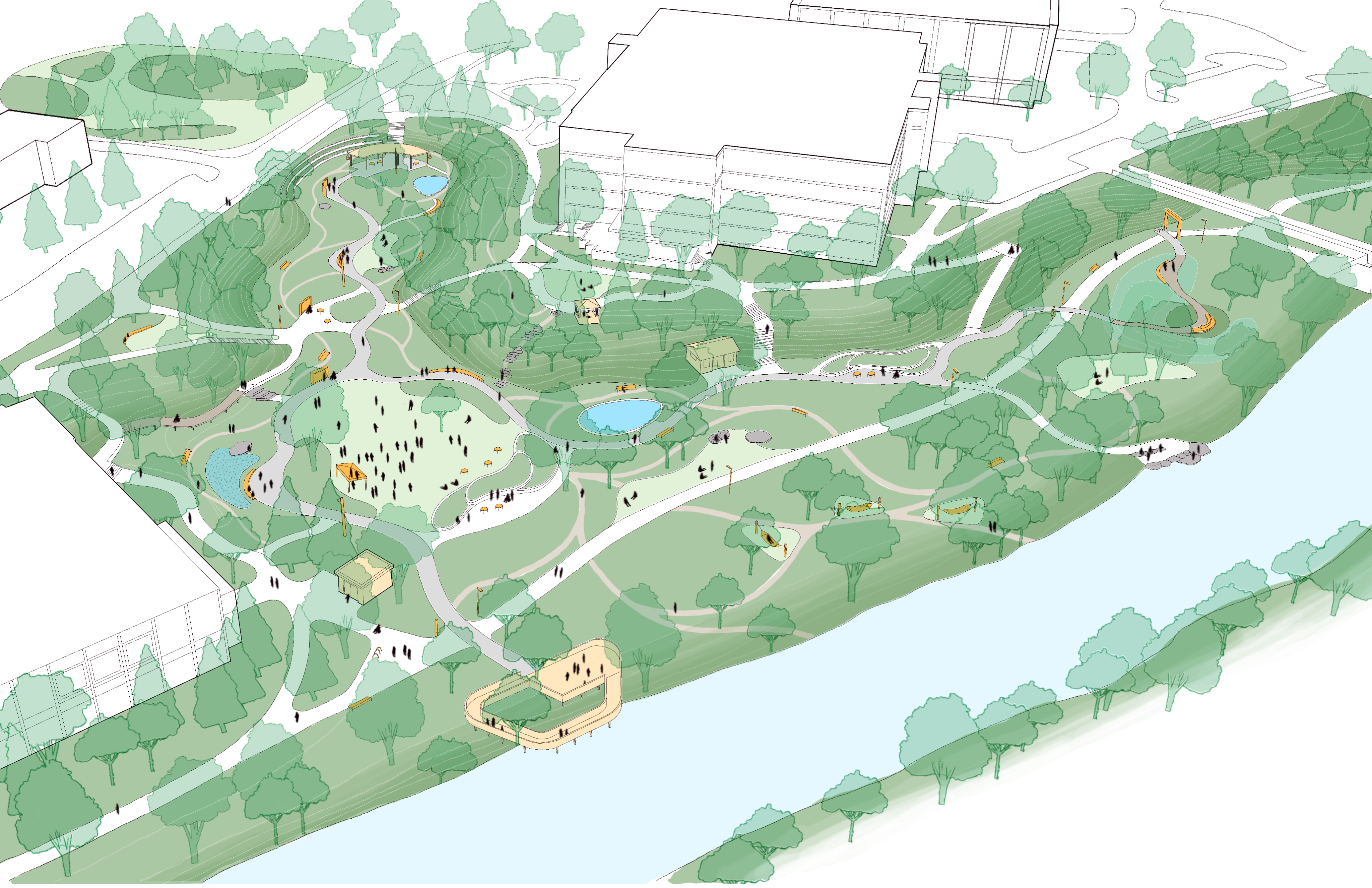
The master plan enhances accessible programming by thoughtfully aligning circulation, seating areas and programmatic spaces to reduce barriers and welcome a wide range of users. It establishes a balanced framework in which accessibility and ecological stewardship work together, demonstrating how circulation, programming, and landscape character can support inclusive learning, wellbeing, and discovery while protecting sensitive plant collections and natural systems. Clear, universally accessible paths and legible entrances address diverse mobility and sensory needs, while intuitive circulation and identifiable destinations improve wayfinding for first time visitors, classes, tour groups, and individuals with disabilities—ensuring educational and cultural experiences are distributed throughout the garden rather than concentrated in a single location.
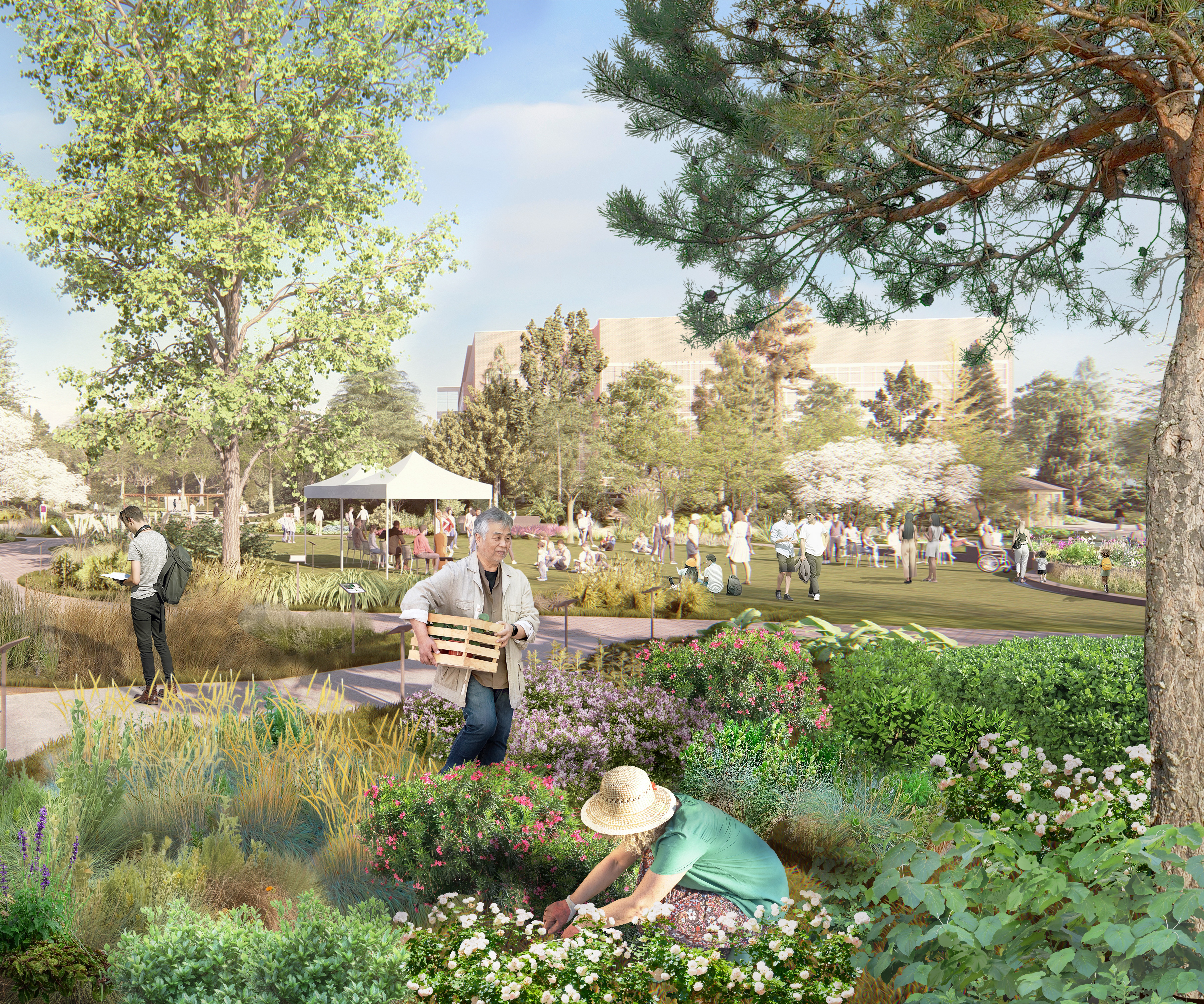
The design envisions a transition toward a more native, naturalistic landscape inspired by the historic creek that once ran through the site. Expansive lawn areas are reimagined as layered collection beds and water features that demonstrate diverse hydrologic systems and ecological processes. Learning spaces—including outdoor classrooms, gathering nodes, overlooks, and interpretive areas—are thoughtfully positioned along primary circulation routes to support teaching, research, wellness activities, and public programming while remaining accessible to a wide range of users. Improved access to the river’s edge, enhanced visual connections and integrated native plantings strengthen the garden’s relationship to the Red Cedar River, grounding it as both an ecological and experiential asset. Together, these strategies reinforce Beal’s role as a place for education, discovery, and meaningful community engagement.
SEAMLESS INTEGRATION
Rather than forming a hard boundary, the shared edge between the Plaza and Beal unfolds as a soft, layered transition—using planting, materials, and a shared circulation language to gently connect the two landscapes. Pedestrian circulation provides a key point of alignment: the Plaza accommodates high intensity- movement and gathering, while Beal routes visitors through thoughtful, meandering paths that protect plant collections. Programming reinforces this relationship—Plaza activities support events, studying, and performance, while Beal hosts tours, fieldwork, and experiential learning.
The relationship between the North Library Plaza and the Beal Botanical Garden master plan is best understood as a dialogue. The Plaza concentrates civic energy and accessibility at a busy campus crossroads, while Beal sustains MSU’s legacy as a living landscape devoted to learning and stewardship. Together, they transform a former tension between movement and preservation into a cohesive, educational, and ecologically grounded campus threshold.
MORE INFO:
North Plaza Development | MSU Libraries
Mission & Strategic Plan | Beal Botanical Garden | Michigan State University