Late-season soybean decisions: Maximizing harvest efficiency and planning for 2027
 Print
Print Email
EmailDecisions made this fall can influence profitability beyond yield, from minimizing harvest losses and managing grain moisture to selecting soybean varieties that better fit 2027 production goals.
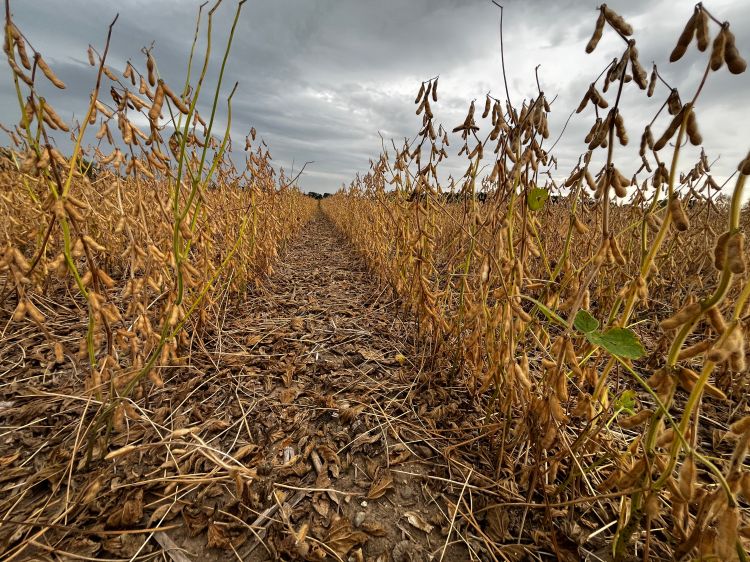
As the 2026 soybean crop moves toward maturity, many management decisions remain that can influence harvest efficiency, grain quality and overall profitability. While most yield has already been determined by this point in the season, Michigan growers still have opportunities to reduce harvest losses, improve harvest logistics and gather information that can help guide management decisions for the 2027 crop.
Harvest timing matters
One of the most common questions each fall is, "How dry should soybeans be before harvest?"
Soybeans are marketed at 13% moisture, but waiting for the crop to naturally dry all the way to market moisture before beginning harvest is often not the best strategy. As soybeans dry below 13%, growers may experience increased shattering losses in the field and at the combine header, while also losing saleable grain weight as moisture continues to decline. Every day harvest is delayed after the crop reaches maturity also increases exposure to adverse weather, lodging and wildlife damage.
Many growers begin harvesting soybeans when grain moisture is between 14% and 16%. While this may require some moisture reduction during storage or blending later, harvesting slightly tougher beans often reduces field losses and improves overall harvest efficiency. In years with favorable drying conditions, soybean moisture can decline very rapidly during September and October, making frequent scouting important.
The optimum soybean harvest window for profit maximization is often shorter than many realize. Once soybeans reach physiological maturity and leaves have dropped, fields can lose moisture quickly during warm, dry conditions. Fields should be monitored closely as harvest approaches, particularly early-planted and early-maturing varieties.
Timely soybean harvest is also critical for growers who plant winter wheat after soybeans and benefit from diversity of crop rotation. Our recent research in Michigan has shown that timely wheat planting (First week of October or earlier) is critical in achieving the highest wheat yield and profits.
Understanding soybean drydown
Soybean drydown rates vary considerably from year to year depending on weather conditions during late August, September and October. Warm temperatures, low humidity, sunny conditions and moderate winds accelerate drying. Conversely, cool temperatures, cloudy weather and frequent rainfall slow drydown substantially. Under favorable drying conditions, grain moisture may drop by more than 1% per day.
Soybean maturity group can also influence harvest timing. Earlier-maturing varieties generally reach harvest readiness sooner, creating opportunities to begin harvest earlier. However, this advantage must be balanced against potential yield implications when selecting maturities for a specific region and planting dates.
Growers should remember that calendar date is often less important than crop stage and environmental conditions. Two fields planted only days apart may differ significantly in harvest readiness because of maturity group selection, planting date, soil type, disease pressure or stress experienced during the growing season.
Are harvest aids worth considering?
Harvest aids or desiccants occasionally receive attention when soybean harvest is delayed by green stems, late-season weeds, uneven maturity or adverse weather conditions.
In most Michigan soybean fields, harvest aids are not routinely used. Soybeans generally mature naturally and reach harvest moisture without intervention. However, there are situations where desiccation may improve harvest efficiency.
Fields with significant weed infestations, particularly late-emerging annual weeds, can benefit from improved combine performance when vegetation is controlled prior to harvest. Similarly, fields with later-maturity varieties or highly variable maturities may experience more uniform drydown following an appropriately timed harvest aid application.
Timing is critical. Applications made too early (e.g. R6 stage) will reduce yield and seed quality because seed fill is still occurring. Harvest aids should only be considered when soybeans have reached the appropriate growth stage. Our research has shown that applications made before physiological maturity (R7 stage) can reduce seed weight and overall yield. Growers should carefully review product labels, pre-harvest intervals and market restrictions before making any application. For more information on labeled products, please see Table 2H (pages 90-91) in MSU weed control guide.
Desiccants should not be viewed as a substitute for selecting adapted varieties or properly managing weeds throughout the season. Instead, they may help improve harvest operations under specific circumstances.
Looking ahead: Planning for the 2027 season
Harvest is an excellent time to evaluate soybean variety performance and begin making seed decisions for 2027. While yield receives the most attention, variety selection should also consider harvest timing, grain moisture, disease tolerance, standability and how the crop fits within the overall farming operation.
One of the key lessons from our recent Michigan research is that maturity group selection should be matched to both planting date and management goals. As Michigan growers have moved toward earlier planting and growing seasons have lengthened, there are greater opportunities to capture yield by fully utilizing the available growing season. Our research has shown that when soybeans are planted in late April or early May, varieties that are one-half to one maturity group later than typically recommended often maximize yield by extending vegetative as well as reproductive growth. These later-maturity varieties may be more likely to warrant harvest aid use when harvestability becomes a concern.
However, maximizing soybean yield is not always the only objective. Many farms must balance soybean production with timely wheat establishment, cover crop adoption, labor availability and harvest logistics. For growers planning to plant winter wheat after soybean, selecting an earlier-maturing variety may be a practical strategy because earlier harvest can improve the likelihood of planting wheat within its optimum window.
Rather than planting a single maturity group across the entire farm, many growers may benefit from using a range of maturities. Earlier-maturing varieties can be targeted to fields intended for wheat or cover crops, while later-maturity varieties can be used in early-planted fields where maximizing soybean yield is the primary objective.
As harvest progresses this fall, pay attention not only to yield but also to harvest moisture, drydown, and harvest timing. Those observations can provide valuable information for optimizing variety selection and management decisions for the 2027 crop.
This article was first published in the Michigan Soybean News magazine.