


Local regulation of manufactured housing
 Print
Print Email
EmailLearn more about how to balance local zoning authority and state preemption under Michigan’s Mobile Home Commission Act.
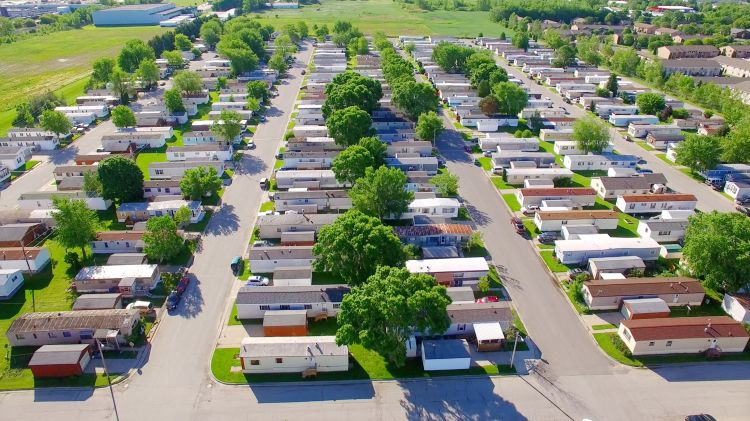
For local government officials in Michigan, regulating manufactured housing communities (MHCs) and individual manufactured homes requires a careful balancing act between local zoning authority and state-level preemption. The primary framework governing this relationship is the Mobile Home Commission Act (MHCA), which significantly limits the ability of municipalities to impose standards that exceed those established by the state. Understanding the nuances of this act, and the relevant case law, is essential for maintaining valid local oversight.
Scope of preemption and "higher" standards
The core of state preemption is found in Section 7(1) of the MHCA. This section stipulates that any local government proposing a standard for manufactured housing communities (sometimes referred to as mobile home parks) – or the homes within them – that is "higher" than the standards provided in the Act or the state administrative rules must file that standard with the Michigan Manufactured Housing Commission. This also applies to standards regarding the business practices of dealers, installers and repairers (MCL 125.2307(1)).
While the law states the Commission "shall" approve a higher standard unless it is "unreasonable, arbitrary, or not in the public interest," the practical reality is more restrictive. The Commission’s Ordinance Review Committee typically only approves higher standards when backed by a compelling justification. Ultimately, unless a local substantive zoning standard is identical to the MHC Rules or has been formally approved by the Commission via an Administrative Order, it is unenforceable.
Constraints on site plan review
Local authority is further constrained regarding the procedural review of MHC site plans. Under Section 11 of the MHCA, a municipality’s role is limited to granting "preliminary" approval. Final approval authority and the power to issue construction permits reside solely with the Commission.
During the preliminary review, local officials cannot require detailed construction plans. Instead, their review authority is strictly limited to determining if the proposal conforms to laws and ordinances regarding:
- Land use and zoning;
- Municipal water supply, sewage service, and drainage; and
- Compliance with local and state fire laws.
Municipalities have only 60 days from the submission of an administratively complete preliminary plan to approve or deny it. If the municipality fails to act within this window, the plan is automatically considered approved. Once local preliminary approval is secured (or the 60 days expire), the developer submits detailed plans to the Commission, which then has 90 days to issue a final decision.
Review and approval by special land use permit
A common point of confusion for local officials is whether an MHC can be designated as a Special Land Use (SLU). The MHCA states that ordinances shall not contain "special use zoning requirements that apply only to, or excludes, mobile homes." However, in Fetter v. Windsor Twp (unpublished), Docket No. 228671 (Mich App, Sept. 27, 2002) and Silver Creek Twp v. Corso, 246 Mich App 94; 631 NW2d 346 (2001) the Michigan Court of Appeals determined that this prohibition applies specifically to individual mobile home units, not to the MHCs themselves.
Therefore, a municipality may lawfully use the special land use mechanism to regulate the placement of new MHCs or additions to existing ones. This allows local governments to decide whether an MHC is appropriate for a specific location, though local government cannot dictate site design or layout nor require detailed construction plans as discussed above.
Crucially, the Silver Creek decision confirmed that obtaining a local SLU permit, when required, can be a prerequisite before the preliminary plan review process. Once the SLU permit is granted, the municipality remains preempted from imposing any "higher" design or construction standards without Commission approval.
Individual manufactured homes outside of MHCs
Regarding individual manufactured homes located on private lots outside of MHCs, the Michigan Supreme Court ruled in Robinson Township v. Knoll, 410 Mich 293; 302 N.W.2d 146 (1981) that the per se exclusion of manufactured homes from all areas not designated as an MHC (or mobile home park at the time of the decision) is unconstitutional.
Nonetheless, local governments are not required to permit all manufactured homes regardless of quality. A municipality may exclude a manufactured home if it fails to meet reasonable standards designed to ensure it is compatible with site-built housing in the same zone. Such standards as minimum height, width, roof pitch or aesthetic requirements would apply to all dwellings in the zoning district, rather than single out manufactured homes.
Under the MHCA, an ordinance cannot contain roof configurations or special use requirements that only apply to mobile homes. By applying uniform standards to all residential dwellings, local governments can ensure neighborhood compatibility while complying with state and constitutional law.
Modular homes are different
As compared to manufactured homes that are built to meet Federal Housing and Urban Development (HUD) standards, modular homes are factory-built homes designed to meet the Michigan Residential Code. Modular homes are subject to the same building standards as stick-built homes. Under local zoning, modular home construction is treated the same as a stick-built or site-built dwelling and is subject to local regulations such as minimum square footage, setbacks and architectural standards.
Other limitations on local government authority abound
Michigan State University Extension maintains a comprehensive document that summarizes state and federal limitations on local government regulatory authority: Restrictions on Zoning Authority. Local governments are encouraged to always work with a municipal attorney on questions of regulatory authority.