MSU Entomologist Brings Lily Beetle Biocontrol Program to Michigan
 Print
Print Email
EmailParasitoid wasps were released statewide to help protect lilies and slow the spread of a destructive pest.
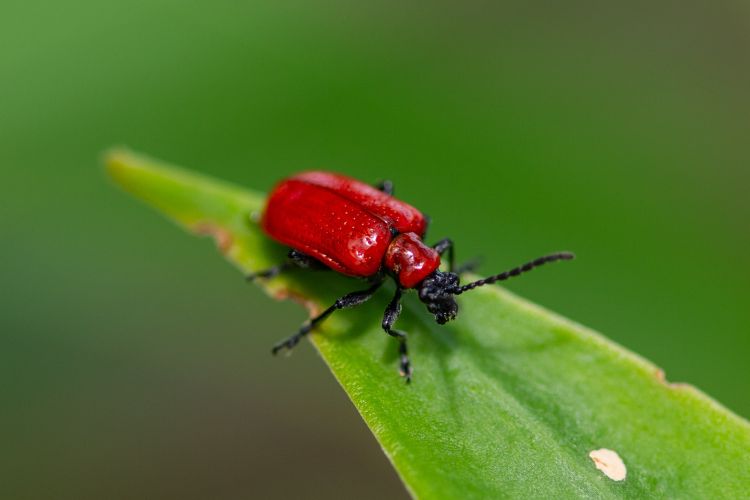
After years of planning, permit approvals and international collaboration, Michigan State University entomologist Marianna Szűcs has launched the state's first biological control program targeting the invasive scarlet lily beetle, Lilioceris lilii.

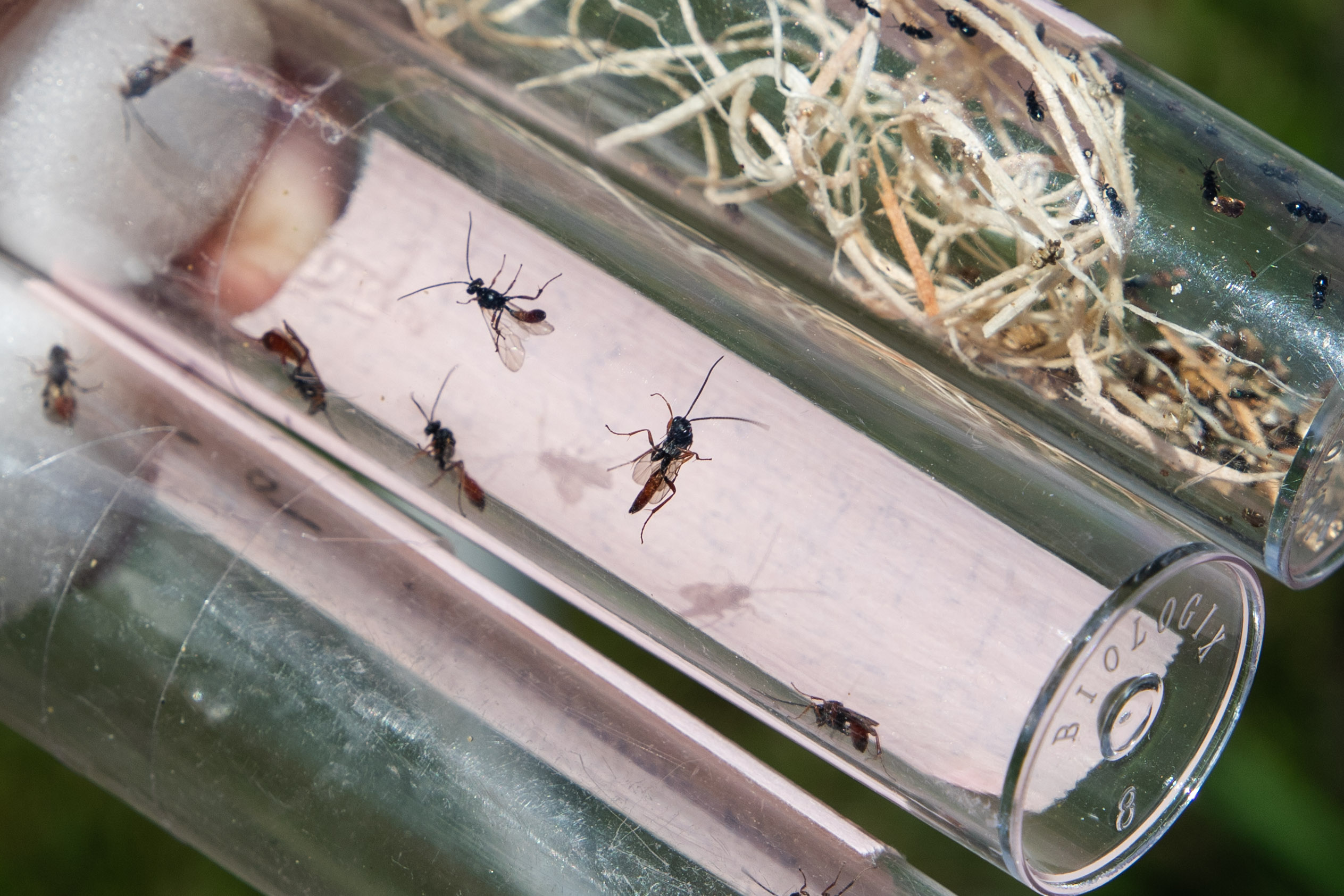
The bright red beetles are a growing problem for gardeners, feeding on lilies and causing extensive damage to leaves, stems and flowers. To help control the pest, Szűcs released three species of parasitoid wasps across Michigan during the 2026 field season. Biological control uses a pest's natural enemies to reduce populations over time rather than relying solely on insecticides or hand removal.
Szűcs became interested in the beetle in 2022 as reports increased from Extension educators, Master Gardener programs and invasive species networks. Her interest was fueled by the success of a similar biological control program in New England.
"Because I was already familiar with the success of the biological control program in New England, I was excited to explore whether similar approaches could be implemented in Michigan," Szűcs said.
That success became clear during a 2023 trip to Rhode Island, where Szűcs and a technician traveled to collect parasitized lily beetle larvae. Instead, they found far fewer larvae than expected.

"The biological control program had become so successful in some locations that there were relatively few beetle larvae left to collect," she said.
Research from New England has shown encouraging results, with some sites reporting parasitism rates of 70% to 90% and gardeners noting reduced beetle damage and declining populations.
Before any releases could occur in Michigan, Szűcs established lily beds for future parasitoid rearing, secured federal permits and worked with collaborators in Europe and Rhode Island to obtain insects for release. The North American Lily Society also played an important role by helping recruit volunteer gardeners who hosted many of the Michigan release sites.
The three wasp species used in the program, Tetrastichus setifer, Diaparsis jucunda, and Lemophagus errabundus, underwent extensive testing to confirm they target lily beetles and pose little risk to other insects.
Michigan is considered to be near the leading edge of the beetle's westward spread in the United States. Successfully establishing biological control agents here could help protect ornamental and native lilies while slowing the pest's expansion into neighboring states.
Szűcs says that results will take time. "Homeowners should think of biological control as a long-term investment," she said. "The parasitoids must establish, survive winter and gradually build their populations before noticeable suppression occurs."
Even so, she remains optimistic. "Seeing the dramatic reductions in beetle populations that occurred in Rhode Island and Massachusetts gives me confidence that we can achieve similar results here," Szűcs said.
For more information about scarlet lily beetles and the biological control release in Michigan, read Szűcs' MSU Extension article.