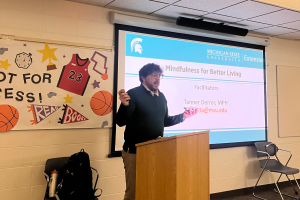
Want better sleep? MSU Extension offers evidence-based programming that can help
 Print
Print Email
EmailMSU Extension is helping Michigan adults make small, practical changes that can improve sleep, while partnerships with popular wellness programs are bringing sleep education to new audiences.

Everyone needs sleep. Getting enough quality sleep is essential to our physical health, mental well-being and ability to function each day. Yet for many Americans, getting enough sleep remains a challenge. According to the Centers for Disease Control and Prevention, in 2024, about 30.5% of U.S. adults reported getting less than seven hours of sleep on average each night.
When people consistently struggle to get enough quality sleep, it can affect more than how they feel the next day. Poor sleep is associated with an increased risk of chronic health conditions, including diabetes, obesity, cardiovascular disease and dementia. Yet many adults who experience sleep difficulties may not seek help because of cost, limited access to care or the perception that sleep problems are just a normal part of life. Accessible, evidence-based education can provide an important starting point for people looking to improve their sleep and overall health.
Helping people improve their sleep is one way Michigan State University Extension connects university research and expertise with practical education for Michigan communities. The Sleep Education for Everyone Program (SLEEP) gives adults evidence-based strategies for improving their sleep and developing healthier sleep habits.
The program was developed at MSU by Robin Tucker, associate professor in the MSU Department of Food Science and Human Nutrition, and MSU Extension. Extension Educator Elizabeth Williams serves as a program lead for SLEEP, which is implemented by trained MSU Extension educators across Michigan. The SLEEP curriculum was developed with funding support from The Michigan Health Endowment Fund and USDA National Institute of Food and Agriculture.
For Williams, the lack of basic sleep education is one reason the program is so important.
“Sleep is something we all do and is the foundation of health, but very few of us have been taught how sleep works or what can affect the quality of our sleep,” Williams said.
Stress, routines, technology and even exposure to bright light at night can affect sleep quality. Understanding those factors can help people make informed decisions that support better sleep and overall health.
Since January 2024, more than 1,600 adults have participated in SLEEP programs offered by MSU Extension.
Turning information into action
The SLEEP program is designed to do more than provide participants with a list of sleep tips. The six-week series features a different sleep topic each week, with 30-minute sessions that combine professionally produced educational videos, group discussion and personal goal-setting.
Topics include sleep recommendations and duration, sleep hygiene, stimulus control therapy, mindfulness and relaxation, physical activity and sleep, and common sleep myths.
At the end of each session, participants set an achievable sleep goal to practice during the following week. At subsequent sessions, they have an opportunity to discuss their progress and, when needed, work through barriers with the educator and other participants.
That emphasis on small, achievable changes can help turn information into action.
Evidence that better sleep is possible
The SLEEP program is designed around a simple idea: small, practical changes can make a meaningful difference in how people sleep. Evaluation of the program shows that participants improved how long and how well they slept, along with the sleep habits that can make a difference at bedtime.
The program has also shown similar results whether it is offered online or in person. Participants in the SLEEP program increased the amount of sleep they were getting by about 24 minutes.
Just as importantly, participants indicated that they intended to keep using what they learned.
One participant described the program’s impact this way:
“I learned not to get frustrated if I can’t fall asleep or if I wake up during the night . . . instead I stay calm, pull out my ‘toolbox’, and take action.”
Another participant said the program changed their experience of bedtime altogether:
“I loved the sleep class . . . I used to dread bedtime not knowing how the night would go.”
For many participants, establishing a personal timeline for winding down, including limiting caffeine, listening to relaxing music, taking a hot bath and using guided meditation helps make bedtime something they look forward to.
Connecting sleep with overall health
The SLEEP curriculum incorporates components of Cognitive Behavioral Therapy for Insomnia, including sleep education, behavior change and cognitive therapy. Research evaluating the program found statistically significant and clinically meaningful improvements in sleep duration, sleep quality, insomnia symptoms and sleep behaviors. Participants also reported similar improvements whether the program was delivered online or in person.
One participant described the changes they experienced after taking SLEEP:
“I feel more refreshed and energized. I am thinking more clearly, my memory/attention span has improved, and my mood is definitely consistent, whereas I had more ups/downs prior to taking the SLEEP course.”
Reaching new audiences through popular programs
SLEEP is offered as a stand-alone program, but MSU Extension has also found another effective way to bring sleep education to Michigan communities: bundling it with popular wellness programs.
In 2025, MSU Extension launched Mindfulness for Better SLEEP and Tai Chi for Better SLEEP, combining the SLEEP curriculum with established mindfulness and tai chi programming. The approach allows participants to benefit from sleep education while taking part in programs they are already interested in.
This has also helped introduce SLEEP to audiences who may not have initially recognized how much they could benefit from learning about sleep.
“Sometimes people come for the tai chi or mindfulness program and discover that the sleep component is something they really appreciate,” Williams said. “It gives us another opportunity to reach people with practical information that can make a difference in their daily lives.”
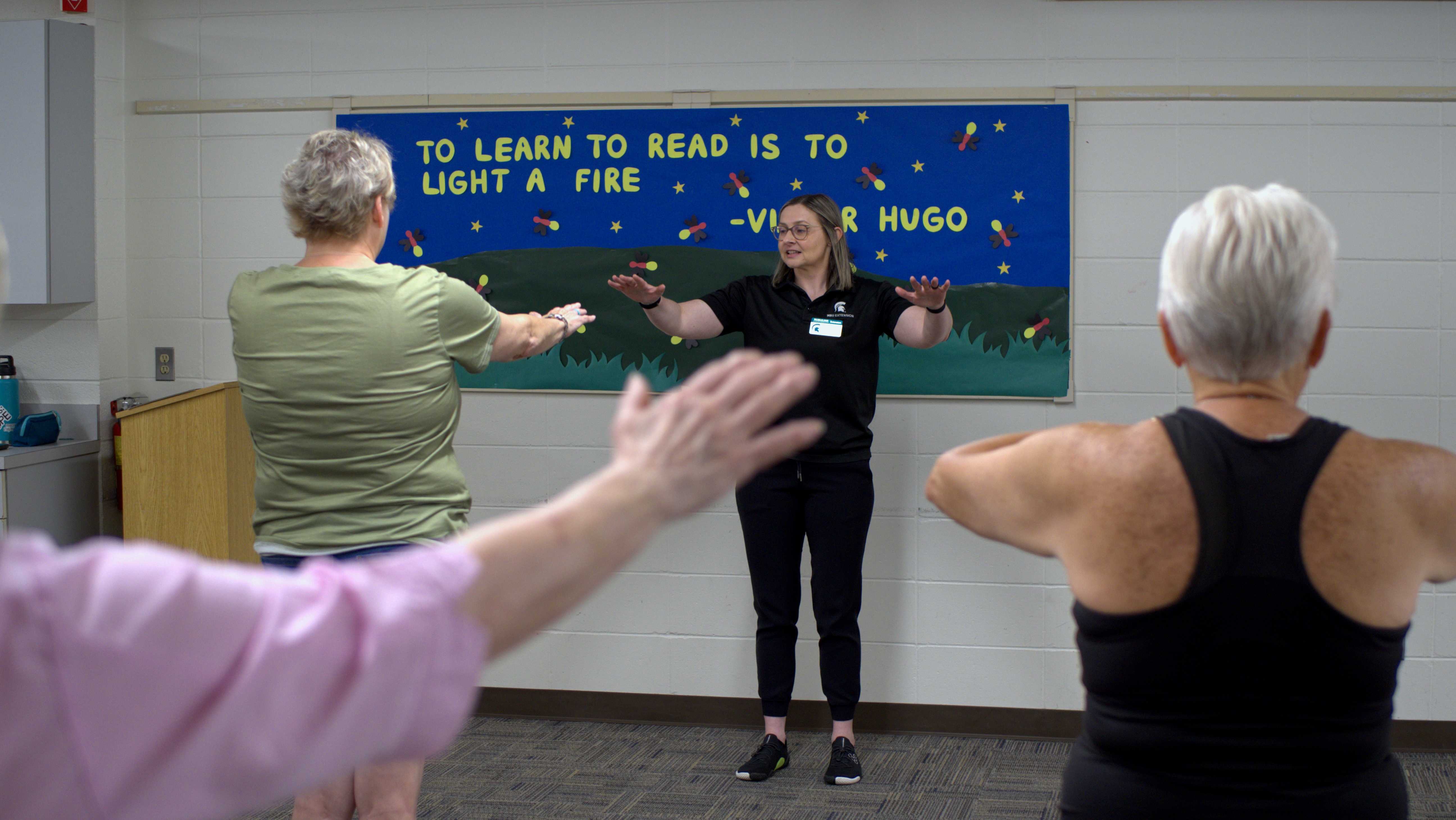
The bundled program approach is part of the aims of MSU Extension’s current rural health and safety grant from the USDA National Institute of Food and Agriculture.
Whether offered on its own or alongside another popular wellness program, SLEEP reflects MSU Extension’s ability to bring research-based education into formats that meet people where they are.
Getting started
For those looking to improve their own sleep, Williams offers one simple place to start: establish a consistent sleep schedule.
“Try to go to bed and wake up around the same time every day. A consistent sleep schedule can make it easier to fall asleep, stay asleep and wake up feeling more refreshed!”
Whether you join a SLEEP class or simply want to learn more about healthy sleep habits, MSU Extension offers resources, articles and programs to help you get started. Visit the MSU Extension SLEEP website to find a class or explore resources you can use to improve your sleep.