MSU researcher drives equine safety, welfare forward through M-AAA–backed studies
 Print
Print Email
EmailM-AAA support empowers MSU research that’s reshaping how horses are trained, treated and protected.
*This story is part of a series highlighting the impact of MSU AgBioResearch’s work with Michigan agriculture and natural resources told through our stakeholders' perspectives. Through partnerships with the State of Michigan and industries, MSU AgBioResearch is finding solutions to some of the timeliest problems facing our state. To view the entire series, visit agbioresearch.msu.edu.
In addition to the written story, listen to the below podcast with MSU AgBioResearch Director George Smith and Leesa Massman, equestrian professional and owner of Massman Stables, on Spotify, Apple Podcasts and YouTube.
EAST LANSING, Mich. — “We’re not curing cancer, but we’re saving horses, and we’re saving people.”
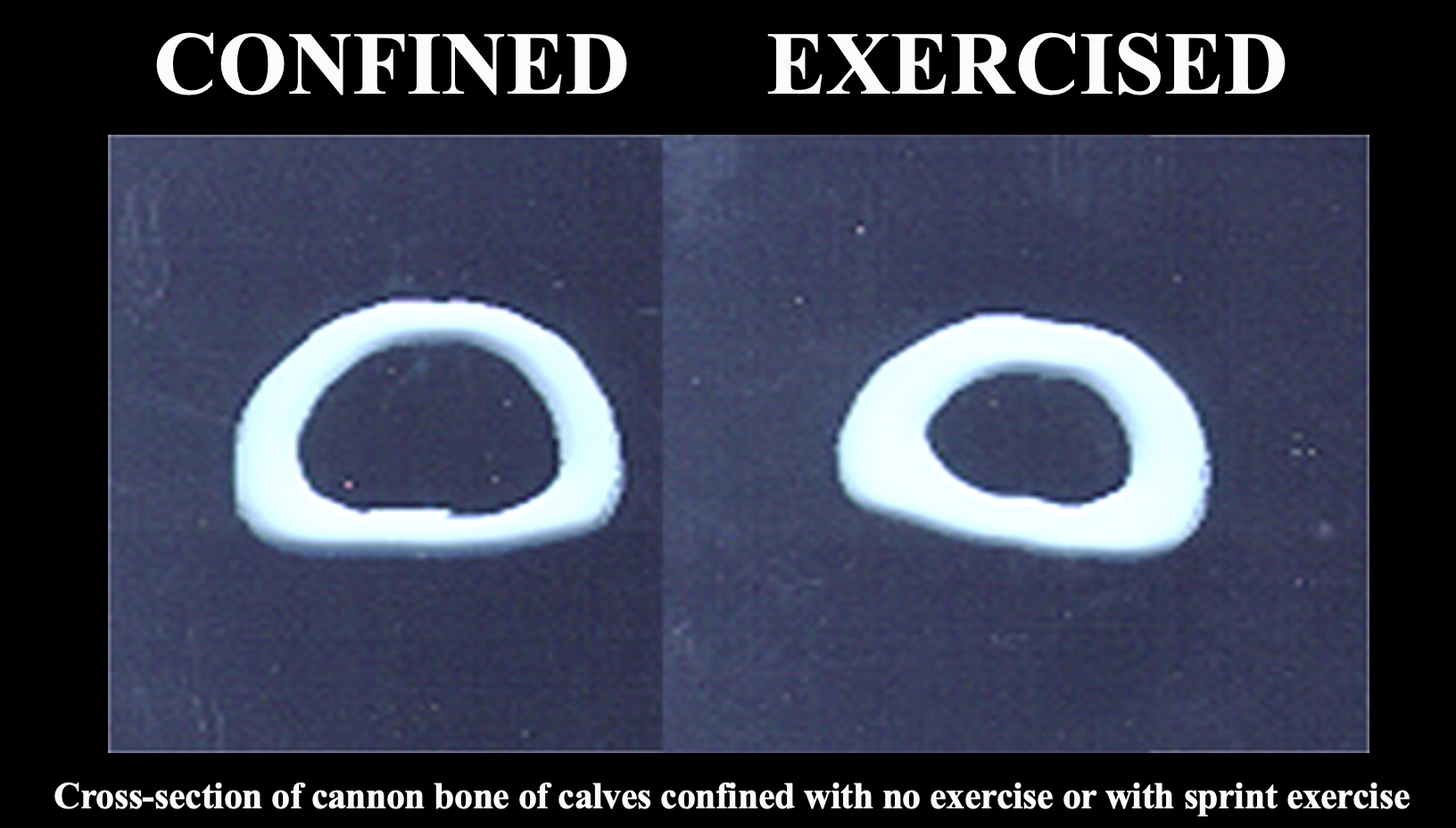
This is the statement that drives Brian Nielsen and his research. Nielsen, a professor in the Michigan State University Department of Animal Science specializing in equine exercise physiology, came to this realization when he heard that Cash from Texas, the $120,000-winning racehorse he rode in the early ‘90s as a graduate student at Texas A&M University, broke his leg during one of his races.
“When I spoke with his trainer on the phone, he said, ‘We did everything we could to try to save him,’ and you could tell he was on the edge of tears,” Nielsen recalled when telling the story.

A few years later, Nielsen learned that Sam Thompson, one of Cash from Texas' former jockeys whom Nielsen described as a “consummate professional” in the horse-racing industry, died after being injured when his horse broke down during a race.
“There’s no good reason a horse breaks a leg, other than when you’re hiding problems,” Nielsen said.
Uncovering problems relating to maintaining and treating horses has since been central to Nielsen’s research, which is supported by the Michigan Alliance for Animal Agriculture (M-AAA).
The alliance is made up by Michigan’s animal ag and allied industries, MSU AgBioResearch, MSU Extension, the MSU colleges of Agriculture and Natural Resources and Veterinary Medicine, and the Michigan Department of Agriculture and Rural Development. Its purpose is to grow and strengthen Michigan’s animal ag industries through MSU research and outreach.
Nielsen has relied on its funding in several instances to conduct research that has given horse owners, trainers and breeders insight they can use when making decisions on how to care for their horses.
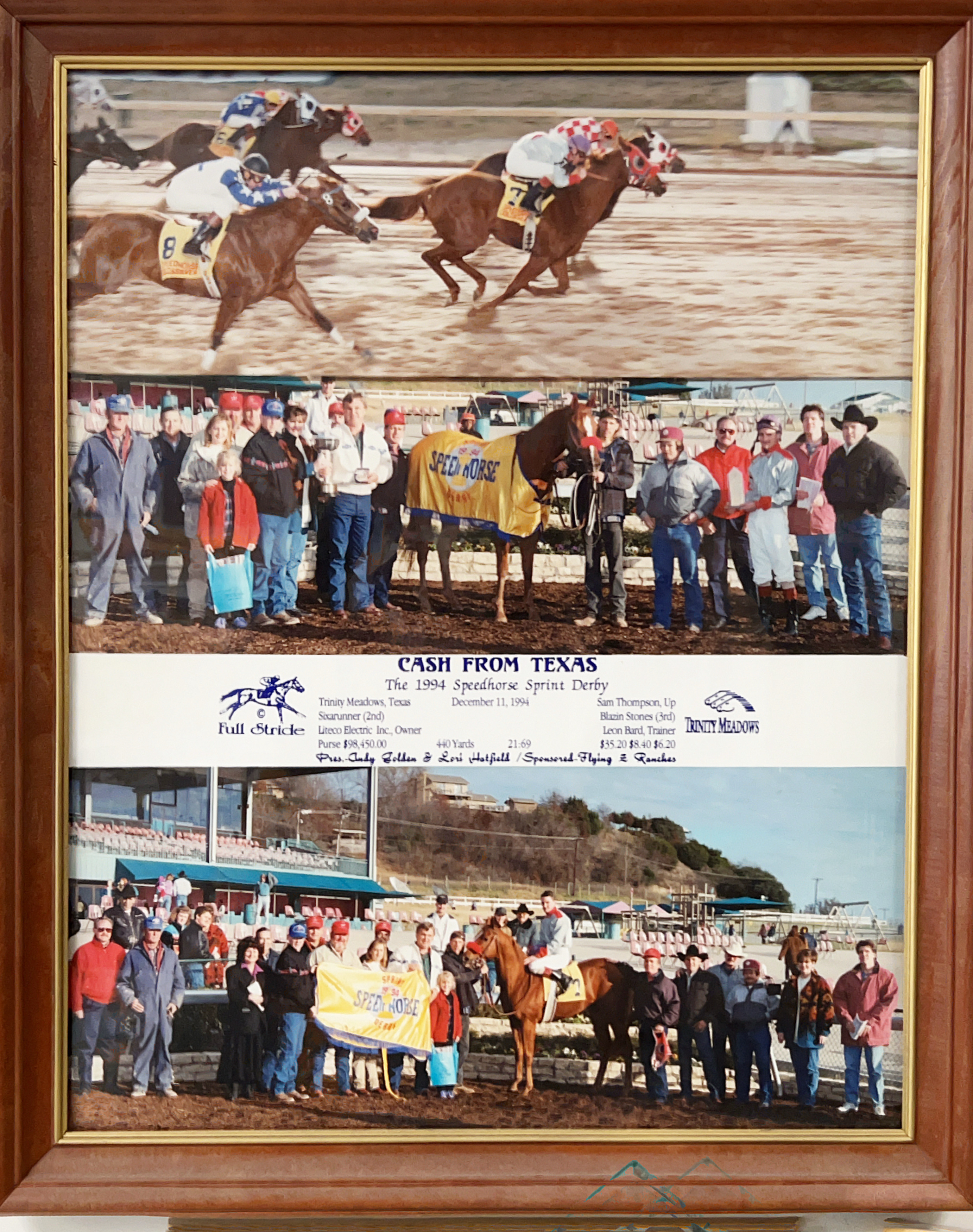
Early projects of his funded by M-AAA focused on the importance of exercising juvenile horses to improve bone strength. Because many horses live in stalls or exercise by doing low-intensity work, he studied calves as a model for horses. His findings showed that exercise needed to be done fast, but not often, to improve skeletal strength. From 2017-2019, he found that sprinting calves about 75 yards for just one day per week over a six-week period increased bone-breaking strength by 25%.
“Sprinting builds bone mass, and that’s a finding from research we did through M-AAA,” Nielsen said.
Nielsen and his team have also used M-AAA funding to study the efficacy of joint supplements when treating joint issues in horses.
For this project, Nielsen and Renee Harbowy, a doctoral student studying animal science in Nielsen’s lab, partnered with a Michigan horse ranch that Harbowy had worked closely with in the past to study its horses, many of which are older and have problems with their joints. The ranch is also a summer camp for girls interested in horses, which gave Harbowy insight into how M-AAA is impactful beyond the research it supports.
“I think that’s a great thing to point out in terms of the reach of M-AAA,” Harbowy said. “Not only is it funding good research that helps the equine industry, but between all the students we mentored at this farm and all the staff we worked with on other farms who aren’t university students, the number of people who became more well-versed in these topics and scientific protocols — or even just handling animals — benefitted from us receiving this funding from M-AAA.”
To study these horses, Nielsen and Harbowy divided them into two groups: one that received joint supplements and one that did not. They found no true differences in joint functionality between the two groups, a finding that had been hinted at in previous literature on the subject.
These results, Harbowy said, shed light on another important component of M-AAA funding: producing unbiased research.
“M-AAA offers a really nice, independent way to evaluate these questions our industry needs answered in a manner that’s going to help horses and their owners without us having to necessarily go through a company just because they’re willing to fund these types of projects,” Harbowy said. “In getting M-AAA funding for this project, I think the short, sweet moral of the story is that it allowed us to assess what these products are doing and what horse owners should expect from the label-recommended feeding period. If you have a horse with joint problems, what should you realistically expect to happen in a month and a half?”
Nielsen received his latest funding from M-AAA in 2024 to study a topic that builds off the research done on joint supplements. In addition to joint supplements, corticosteroids are a common treatment for joint problems and are used to quickly alleviate issues — comparable to how ibuprofen treats pain in humans. However, the long-term effects they have on joints aren’t extensively known. Nielsen said this can pose a serious risk to horses and jockeys when racing, especially if the injections are masking problems rather than solving them.
“Corticosteroids are commonly used,” Nielsen said. “They take away the pain. They take away the inflammation. What makes them tricky is that you can’t heal a joint in two days, but you can make a horse not know there’s a problem.”
The goal of this study is to provide an answer to the question on if corticosteroids ultimately heal or hurt joints.
“It’s one thing if corticosteroids take away the pain,” Nielsen said. “Most people think that helps. But if they’re not actually healing the joints — if we show that they’re impairing healing instead — maybe that will be enough to make a change in how they’re used.”
Making an impact in Michigan and beyond
When it comes to the equine industry in Michigan, Leesa Massman is well-respected. As a former 20-year head coach of the MSU equestrian team who’s shown horses, judged horses, bred horses and run her own equestrian facility — Massman Stables — based in Mason, Michigan, for over 30 years, Massman has positioned herself as a leader in the industry.
Having personal ties with MSU, she’s worked closely with Nielsen on his research — even offering her facility as a place where studies can be done. She said she’s done this because she knows the horse industry is rich in tradition with how horses have been trained and cared for, but having the science to ensure these methods are beneficial to the horses is critical.
“Dr. Nielsen is so critical because he understands the industry,” Massman said. “He’s got tremendous range. He’s been on the backs of these horses galloping. He doesn’t just sit there and observe them. He wants to answer questions such as: When are we doing damage to horses? When are we helping them? What do we need to do to do less damage and help them more?
“This research is critical, especially in today’s world where every time something goes wrong or there’s an accident during a race, it’s plastered all over social media right in our faces. So, we really need to make sure we’re on top of the safety and welfare of these horses.”
Roughly 1,300 miles away, Hank Bird agrees.
Bird is the founder and owner of Steephollow Farms in Bryan, Texas, where he’s bred, trained and sold horses for over 40 years. Horses from his farm have gone on to have great success, including racing in the Kentucky Derby and winning hundreds of thousands of dollars in stakes races. One of those horses was Two Altazano, a $709,000-winning Thoroughbred that Nielsen helped train when he was a Texas A&M University graduate student in the ‘90s.
Since then, Bird has kept up with Nielsen and his research, crediting his work on the importance of sprinting young horses as a reason why horses from his farm have grown up to be fit and healthy.
“Before this research was done, we pretty much trained like everybody else,” Bird said. “We rode them for 60 days and gave them a good case of what I call ‘gallop-itis’ while not putting any speed in them or loading the bone at all. Then when we started putting speed in them, we wondered why their shins bucked.
“Seeing it in black and white from the radiographs — the change in the structure of the bone and how the conformation of the bone changed — we figured out that there’s a window right there in a horse’s early training where we don’t need to press them too hard, but we’ve got to find that fine line where they can be trained up to and then give the bone plenty of time to adjust to the stress that’s being put on it.”
Although much of Nielsen’s research is done to assist racehorses specifically, Massman said many of his findings are applicable to different segments of the horse industry.
Dustin Boehmer, an American Quarter Horse Association judge who runs DMB Performance Horses out of Massman Stables and has allowed Nielsen and his team to study his horses, said he’s enthused about how the research coming from Nielsen’s lab can be used in other parts of the horse industry, such as the performance horses he works with that are involved in activities beyond racing.
“Anytime I talk to other industry professionals about this research, they get excited and want to know where they can find out more or support Dr. Nielsen and his colleagues in their efforts to create more data,” Boehmer said. “It’s something for us to be super excited about because there’s still very little data that supports our performance horse industry, so I see the work coming from MSU as the start of where we can get more insight.”
As a former industry representative who served on the M-AAA committee deciding on research priorities for funding, Massman said the alliance among MSU, the state of Michigan and her industry is vital.
“Horses don’t always fit neatly into agriculture — or some people don’t see it that way — but they actually do,” Massman said. “Just because they’re not a food animal doesn’t mean they’re not impactful. Horses are a great intro to the agriculture space, which impacts the entire agricultural community. It’s been very refreshing to see the committee on board with this research.”
Michigan State University AgBioResearch scientists discover dynamic solutions for food systems and the environment. More than 300 MSU faculty conduct leading-edge research on a variety of topics, from health and agriculture to natural resources. Originally formed in 1888 as the Michigan Agricultural Experiment Station, MSU AgBioResearch oversees numerous on-campus research facilities, as well as 15 outlying centers throughout Michigan. To learn more, visit agbioresearch.msu.edu.