Needs assessment and resources for veterinarians to practice honey bee medicine
 Print
Print Email
EmailAn article in the Journal of the American Veterinary Medical Association describes results from a needs assessment of veterinary medicine practitioners on honey bee medicine. MSU and collaborators created resources and programs to address these needs.
The Journal of the American Veterinary Medical Association published a referred article titled Honey bee medicine: a lack of knowledge, education, skills, and training identified as the most commonly cited challenge for veterinary medicine practitioners. The article describes results of a needs assessment survey of veterinarians, veterinary medicine students, and veterinary technicians related to honey bee medicine.
Michigan State University (MSU) distributed the survey and collected responses. Melinda Wilkins, DVM, PhD, DACVPM, from the University of Minnesota was the article’s lead author. Meghan Milbrath, PhD, was the project’s principal investigator and the article’s senior author. Ana Heck and collaborators at other universities were contributing authors.
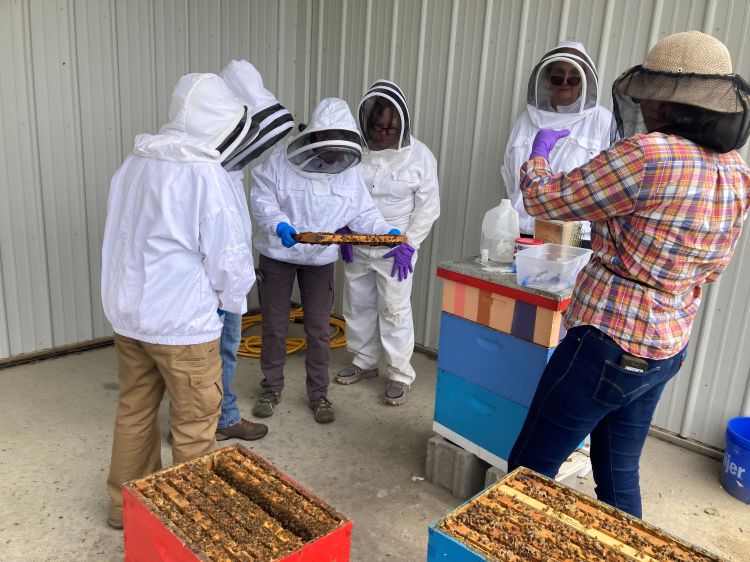
The article describes needs identified by survey respondents and their perceived barriers to working with beekeepers. It also highlights some educational programs delivered by MSU, Texas A&M University, University of Florida, and University of Minnesota to train veterinary practitioners in honey bee medicine. The article reports post-program evaluation responses that measured knowledge and confidence from participating in clinics and follow-up evaluation responses measuring steps toward taking on beekeeping clients as a result of participating in MSU’s clinics.
Resources for veterinary practitioners interested in honey bee medicine
Michigan State University worked with Texas A&M University, University of Florida and University of Minnesota to develop training materials on honey bee medicine. Resources are listed below and are available on the Bees Need Vets webpage:
- Diagnostic tools for honey bee diseases - online learning module
- Diagnostic factsheets - printable handouts
- Honey bee anatomy - list of resources
- Starting your honey bee veterinary business - online learning module, worksheets, and video
- Honey bee veterinary field diagnostic kit - list of items included in field kits distributed to veterinary practitioners
- Additional honey bee veterinary resources - list of resources
Depopulation guidelines
The American Veterinary Medical Association has guidelines for the depopulation of animals, including a chapter on guidelines for the depopulation of honey bees.
Why do honey bees need veterinary medicine?
Honey bees can be affected by viral, fungal and bacterial diseases, and like other livestock, need access to medical care and treatments. Veterinarians trained in honey bee medicine are needed to provide beekeepers access to antibiotics for honey bees. In 2017, changes in the federal code required beekeepers to receive an order from a veterinarian to access antibiotics for honey bee colonies. Prior to these changes, beekeepers had been able to access these medications directly from beekeeping supply companies.
Trained veterinarians are not only needed to provide access to antibiotics for honey bees but also to help address other issues with the honey bee health crisis, including optimizing nutrition and managing parasites. It can be difficult for beekeepers to find good care for their colonies since honey bee medicine is not covered in most veterinary schools.
Acknowledgements
This work is created with funding from the Veterinary Services Grant Program (VSGP) Education, Extension, and Training (EET) competitive grants program of the USDA National Institute of Food and Agriculture (NIFA) (2202-04170) and the USDA NIFA Sustainable Agriculture Research and Education (SARE) Research and Education Grant program (LNC22-468).