New synergies spark MSU AgBioResearch’s vision for a smarter, more sustainable dairy system
 Print
Print Email
EmailGlobal partnerships anchored at MSU are aiming to create new pathways that reward farmers and advance resilient dairy systems in the U.S.
EAST LANSING, Mich. — There’s no question Michigan State University’s new $75-million state-of-the-art Dairy Cattle Teaching and Research Center is impressive to the eye.
Over 650 cows housed in a 165,000-square-foot barn interacting with cutting-edge technology like automatic milking robots and advanced feed systems — while also being supported by MSU’s Anaerobic Digestion Research and Extension Center (ADREC) where organic waste is transformed into a public asset — makes this a world-class facility.
But what also makes this facility one of a kind isn’t its design, but the opportunities it’s creating for dynamic partnerships to come alive and lead the next wave of dairy innovation.
Keith Kenny and Mark Brooking see the potential. In February, the two traveled from the U.K. to tour the center and explore how approaches already being deployed at scale within dairy supply chains in the U.K. could be adopted into U.S. operations and supply chains.
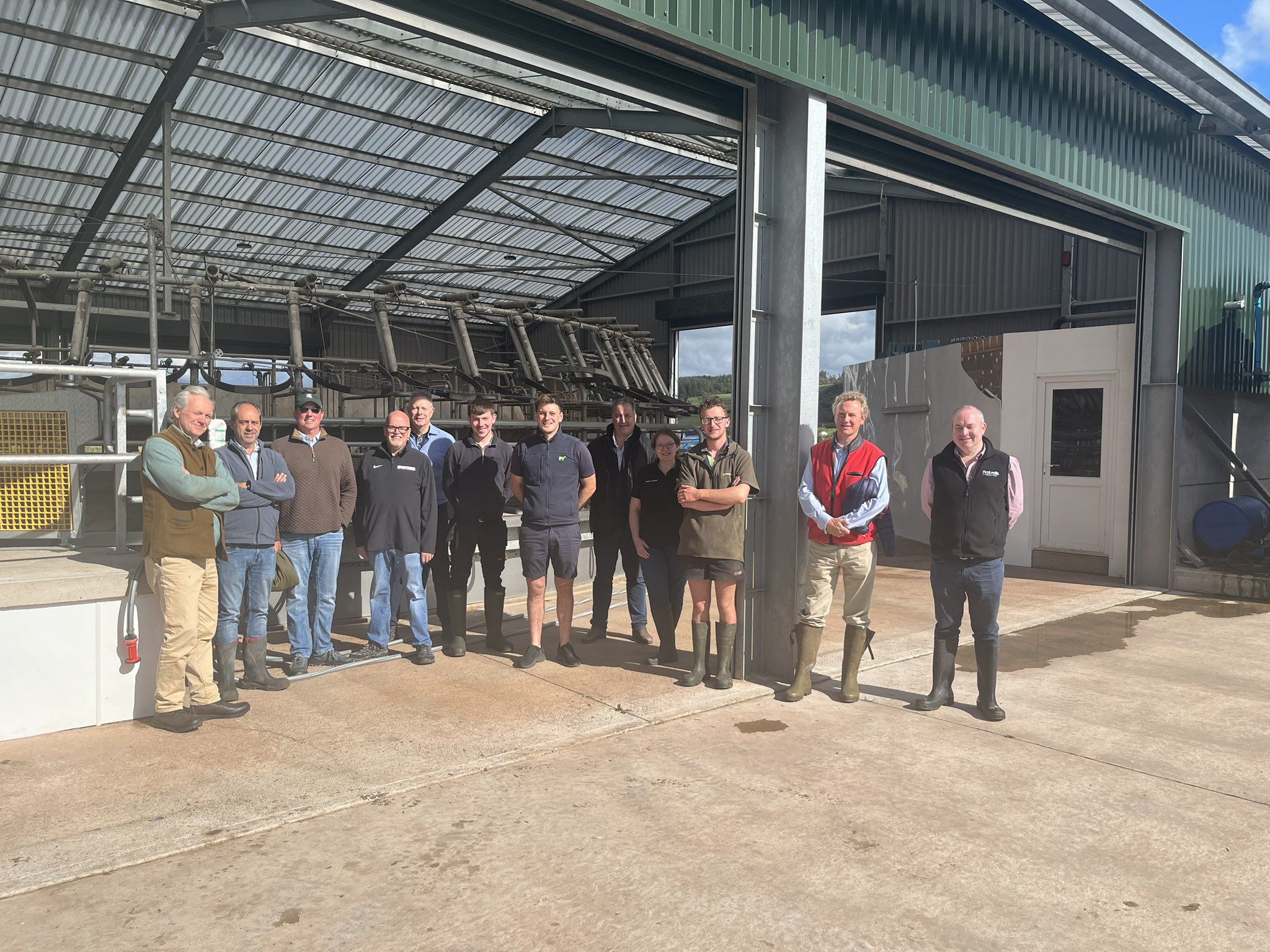
Kenny, a former vice president of sustainability at McDonald’s, is the co-founder of Tellus Mater, a U.K.-based company finding market-based solutions by connecting farmers and consumer businesses through a natural capital infrastructure. The model he and his team have built evolves, expands and internationalizes one that’s already embedded within First Milk, a British farmer-owned dairy cooperative representing more than 700 producers, where Brooking serves as chief impact officer.
MSU, they believe, is the place where these concepts can be taken up and grown across the U.S.
“We set up the Tellus Mater platform because we felt there’s a fundamental failure in the food supply chain where farmers aren’t rewarded for producing food well,” Kenny said. “That’s something we’ve set out to change. What excites us is that from the very first minute we spoke with MSU leaders, we were all completely aligned on what’s missing: Farmers need to be rewarded for doing things right. We’re working with MSU to help make that a reality in the U.S.”
George Smith, director of MSU AgBioResearch, and Ian Olson, executive in residence of supply chain resiliency at MSU, visited Kenny, Brooking and other U.K. dairy leaders in Scotland last September to witness this practice in action.
“The mission of AgBioResearch is to advance agriculture, sustain natural resources, boost economic prosperity and enhance the quality of life for those in Michigan and beyond,” Smith said. “What I saw on our trip to Scotland does that. MSU has world-renowned scientists — from our experts at ADREC to our scholars at the MSU Center for Regenerative Agriculture — doing research to advance regenerative ag principles, where food systems work with the environment and the livelihoods of people, not against them. We welcome any opportunity to bolster this work. Tellus Mater shows how we can.”
Agriculture is an economic powerhouse in Michigan, contributing $125.8 billion to the state’s economy each year, according to the Michigan Department of Agriculture and Rural Development. Within it, the dairy industry sits atop, generating approximately $15.7 billion annually.
Olson said to keep the industry a predominant force not only in Michigan but in the country, where it ranks first for production of milk per cow and sixth for overall milk output, a holistic look at the supply chain is needed to continue giving farmers clear pathways for success.
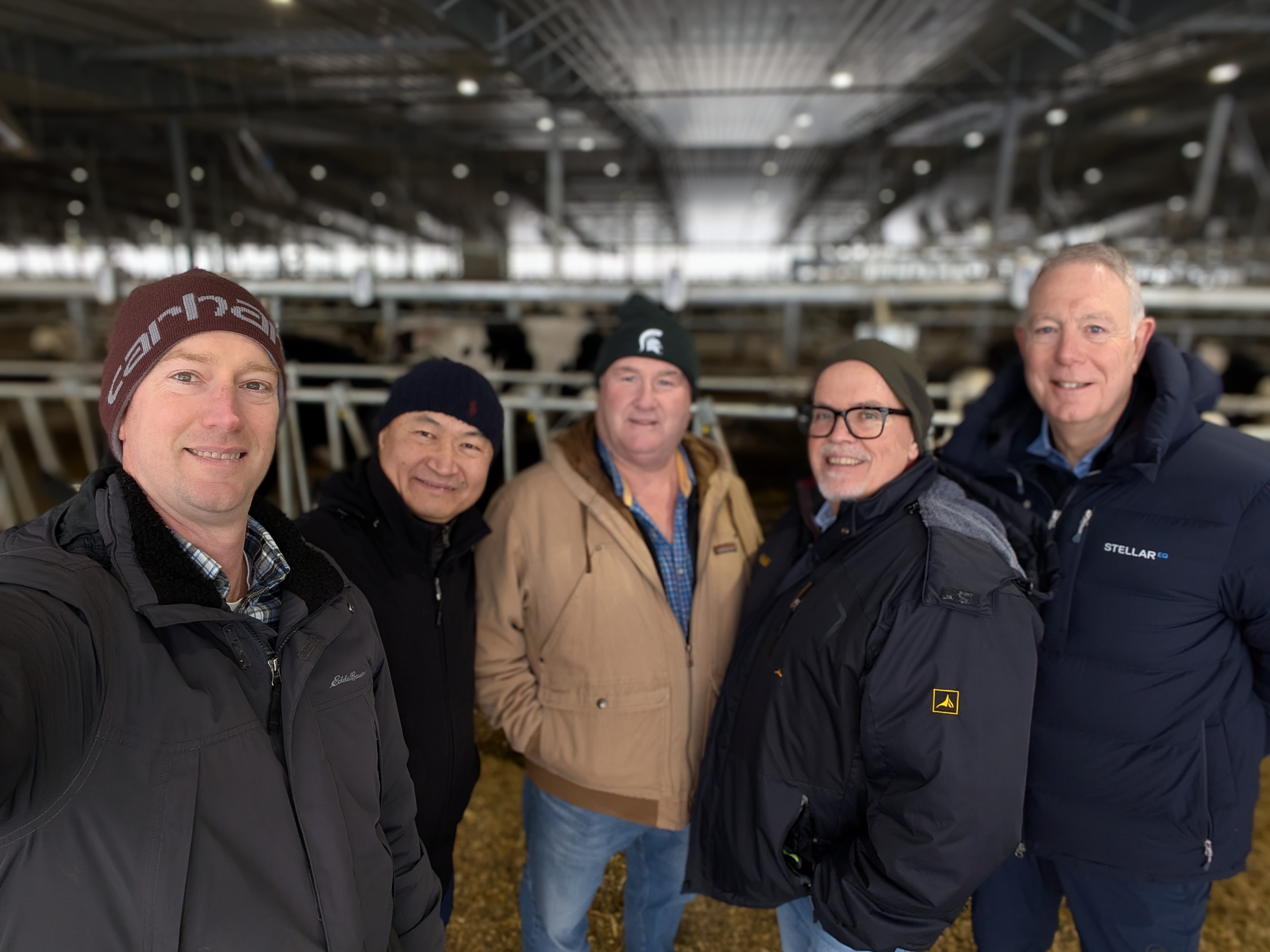
“I’ve known Keith since my time at McDonald’s helping direct global sustainability efforts, and I’ve always appreciated his insight on what needs to happen at the producer level for solutions to be adopted,” Olson said. “Solutions need to make sense financially for the producer. What First Milk and Tellus Mater have done, and what we can do here, is to better ensure farmers are rewarded while investing in the natural capital that's critical to future food production, such as healthy and resilient lands and water systems.”
Brooking, a farmer and sustainability leader working at a cooperative and supply-chain scale, has seen that virtuous cycle firsthand, where supply chains support farmers who support the environment, which in turn allows the environment to support farmers who can then contribute to supply chains.
A key customer of First Milk is Nestlé, which has an agreement with the co-op to reward farmers who actively work to lessen their environmental footprint and safeguard the natural resources on their land.
It’s all about working together, Brooking said. It doesn’t matter where you’re at in the supply chain or where you’re at in the world. There are steps each player can take to strengthen food systems while protecting the land and promoting ecological function.
“There is only one planet,” Brooking said. “Whether you’re farming in the U.K. or the U.S., the challenges are shared. Farmers hold enormous power to work with nature to address them. Our responsibility is to ensure farmers are recognized and rewarded for doing so.”
For Brooking and Kenny, MSU represents a unique opportunity to connect farmer-led practice, scientific rigor and market incentives at a scale not yet seen in the U.S.
Michigan State University AgBioResearch scientists discover dynamic solutions for food systems and the environment. More than 300 MSU faculty conduct leading-edge research on a variety of topics, from health and agriculture to natural resources. Originally formed in 1888 as the Michigan Agricultural Experiment Station, MSU AgBioResearch oversees numerous on-campus research facilities, as well as 15 outlying centers throughout Michigan. To learn more, visit agbioresearch.msu.edu.