One Team, One Health: How MSU Extension is building a healthier Michigan through connection
 Print
Print Email
EmailBy fostering relationships with communities, applying research to real-world problems and developing the next generation of leaders, MSU Extension is helping Michigan State University put One Health into practice.
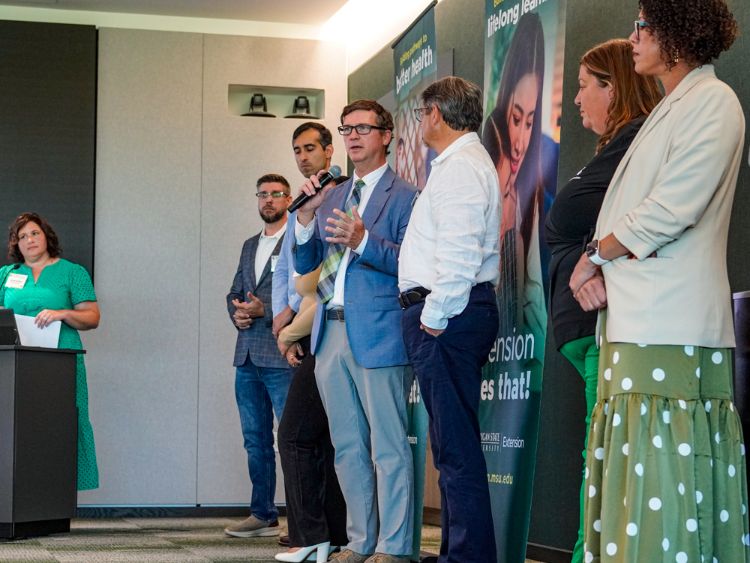
Excitement was in the air as conversations about public health, agriculture, veterinary medicine, food systems and environmental stewardship filled the room at Michigan State University Extension's inaugural One Team, One Health event on Aug. 28.
The gathering brought together researchers, educators, health professionals and community partners around a simple but powerful idea.
"When we talk about One Health, we are talking about a concept that is both ambitious and practical: Our health is connected," Quentin Tyler, director of MSU Extension said. "People, animals, plants, the environment we all share ... if you pull on any one of those threads, before long, you find the others."
For MSU Extension leaders Cheryl Eschbach, director of Health and Nutrition programming, and Jeannine Schweihofer, associate director of Agriculture and Agribusiness programming, the event was an opportunity to bring people together and explore what those connections could make possible.
"While this gathering is a single event, it is one step in a larger movement toward deeper collaboration, shared learning and meaningful impact," Schweihofer said.
The idea behind One Health may be gaining momentum at Michigan State University, but the approach is rooted in the university's land-grant mission. -MSU has a long history of putting knowledge to work for the public good, and MSU Extension has carried that mission into communities across Michigan for generations.
Bringing MSU together
Michigan provides a compelling setting for understanding those connections. The state combines major population centers with rural communities, a diverse agricultural economy, abundant water and natural resources, and health challenges that can look very different depending on where someone lives.
While the work is grounded in Michigan communities, the challenges at the heart of One Health extend far beyond the state, with regional, national and global implications.
MSU Extension works across that geography, with professionals serving all 83 Michigan counties, while also extending its reach through international partnerships and collaborations. Last year, MSU Extension delivered more than 8,000 programs, worked with more than 1,000 community partners and published more than 1,200 educational articles.
"We do that with a team of more than 700 MSU Extension professionals working across Michigan," Tyler said. "But our work rarely stays within those lines."
For Eschbach, that ability to cross boundaries applies not only to MSU Extension's work in communities, but to its role within the university.
"Most people know MSU Extension as the 'outreach arm' of our land-grant university," Eschbach said at the event. "Today, we're highlighting another important role: 'in-reach'."
That means bringing professionals together within MSU, connecting people, ideas and expertise across disciplines to spark new partnerships and create greater impact.
Knowledge moving both ways
The goal is not simply to move university research into communities.
Tyler described MSU Extension's role as a two-way exchange.
"MSU's land-grant mission gives us a particular responsibility: knowledge generated at this university is meant to move," he said. "It should move from laboratories and research stations into farms and communities. Research should reach people making decisions and become education and practice that improves lives."
But the movement goes in the other direction, too.
"When an MSU Extension professional sits across the table from a farmer confronting a disease threat, works with a family navigating food insecurity or works alongside a community protecting its water, we learn something, too," Tyler said. "Those experiences surface new questions, identify gaps and create opportunities for research and collaboration."
"That is Cooperative Extension at its best: knowledge moving outward and insight coming back."
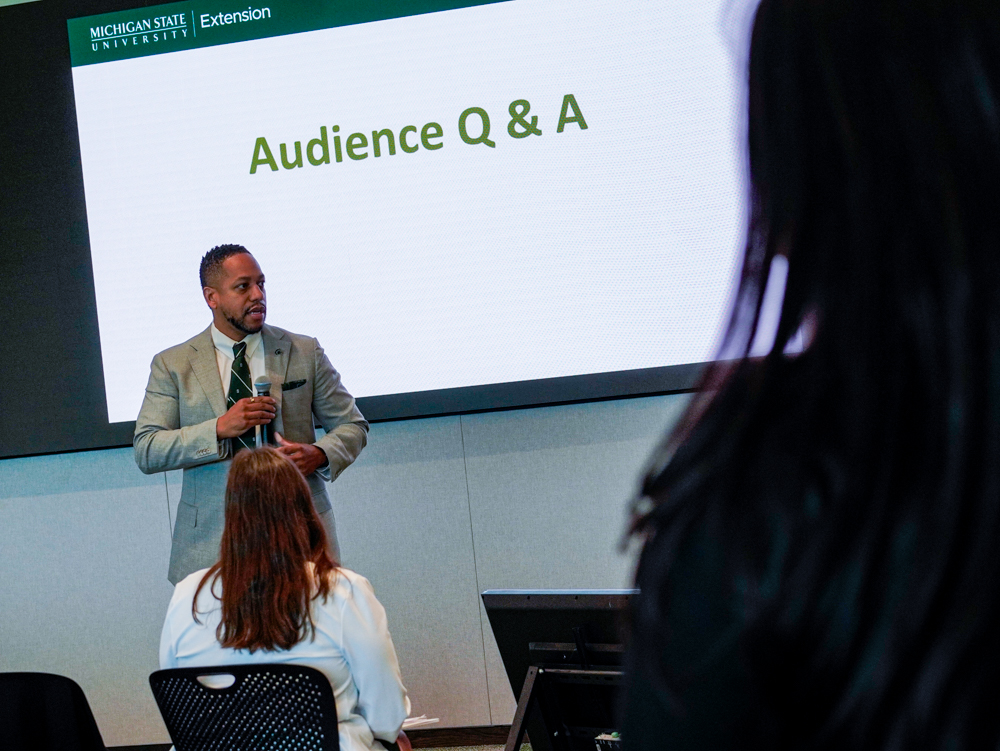
That approach was visible throughout the event. Zelmar Rodriguez, assistant professor in the MSU College of Veterinary Medicine, and a veterinarian and epidemiologist, discussed efforts to better understand highly pathogenic avian influenza in dairy cattle, emphasizing the importance of understanding producers' needs and challenges. MSU Extension educator Beth Ferry described how 4-H and county fairs connect animal and human health while helping communities prepare to respond to emerging issues.
Food safety specialists Phil Tocco and Wade Syers shared food safety practices that can affect agriculture, water quality, local economies and public health.
Vaccine education initiatives offered another example of the approach in action. Maggie Magoon discussed how, for 30 years, MSU Extension has leveraged its role as a trusted community partner to improve vaccine education, including through schools, youth programs and other community settings. Physician Jennifer Morse described the value of the Physician Peer Education Project on Immunization, which helps health care professionals have more effective conversations about vaccines and vaccine confidence.
Relationships that create opportunities
Those connections depend on relationships built over time.
Amy Hertel, MSU’s senior advisor to the provost for strategic initiatives, captured that approach concisely: "At our best, we don't begin with solutions, we begin by listening."
MSU Extension's statewide presence gives MSU an opportunity to do that in communities ranging from urban to rural across Michigan.
Those relationships also create opportunities to connect MSU with organizations beyond the university.
Jeffrey MacKeigan, senior adviser with the Office of Research and Innovation, co-chair of the Henry Ford + MSU Cancer Committee and professor of pediatrics and human development in the College of Human Medicine, highlighted the opportunity to better harness MSU's research capacity through the One Team, One Health Research Network.
MacKeigan pointed to the partnership with Henry Ford Health as one example of what that could look like, including opportunities to pursue cancer prevention by bringing together MSU research expertise, clinical knowledge and community-based relationships.
The potential network extends beyond health systems too. Community-based organizations bring their own knowledge of local needs and priorities, creating opportunities for research, education and outreach that draw on expertise from multiple sectors.
Sometimes the connection is a person
One of the day's most memorable moments came from Reyna Atkinson, a former Michigan Vaccine Project 4-H community health ambassador and current MSU student (Class of '28).
Atkinson shared how her experiences with Michigan 4-H and the ambassador program helped shape her path. She described how 4-H gave her opportunities to develop new skills, discover her strengths and explore interests that eventually led her to MSU and a future career in public health. She also spoke about the mentorship she received from MSU Extension educator Alyssa Picone, whose guidance helped her navigate those opportunities and envision what might come next.
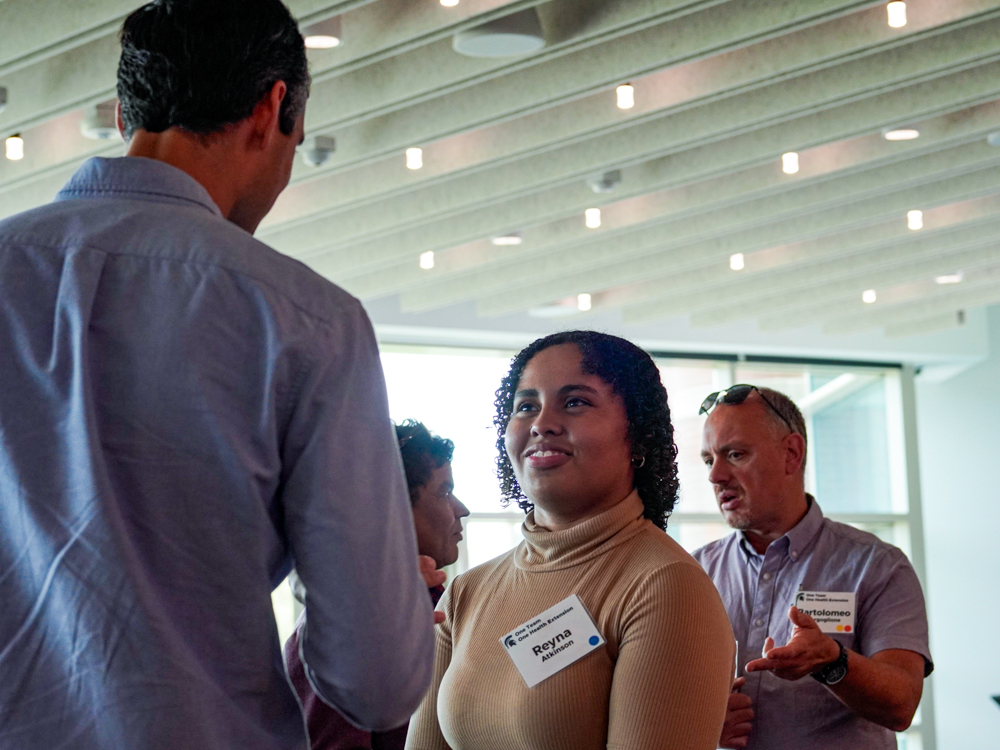
For those in the room, hearing a young person describe how 4-H changed her life brought the impact of MSU Extension's work into focus.
MSU Extension can give young people, like Atkinson, opportunities to build skills and confidence, discover their strengths and find ways to contribute to their communities. Those experiences can open doors to education, careers and continued engagement.
Atkinson's story showed how a connection made in one program can continue to grow over time.
Building on what is already here
Keith English, chair of the Department of Pediatrics and Human Development in MSU's College of Human Medicine, attended the event and said he was impressed by the enthusiasm of the presenters and the examples of how connections with MSU Extension can make a difference.
"The One Team, One Health Initiative provides an opportunity to dramatically expand the partnership between MSU College of Human Medicine and MSU Extension statewide," English said. "MSU Extension's footprint in every county of the state helps connect faculty and community partners to facilitate education, research and outreach about child health."
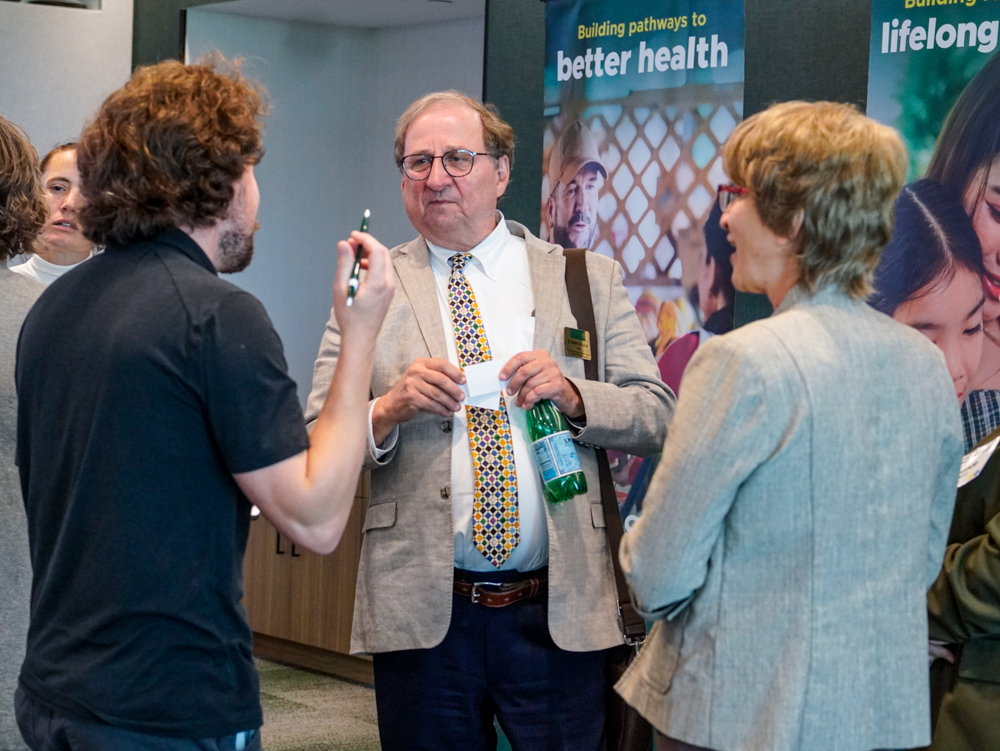
He also pointed to MSU Extension's "boots-on-the-ground" connections in rural counties in the Upper Peninsula and metro Detroit as a unique asset for future One Health efforts.
For Eschbach, the opportunity is ultimately about what happens when those connections continue beyond a single event.
Schweihofer sees the event as part of that longer-term effort.
"MSU is well positioned to be the leader in the One Health space, and MSU Extension is excited to be part of this unique opportunity to build a healthier future," she said.
The energy in the room on Aug. 28 suggested that there is plenty of enthusiasm for what comes next.
For MSU Extension, the opportunity is both familiar and new: to continue the pioneering work of the land-grant mission by connecting people, moving knowledge into practice, listening to communities and bringing what is learned back to MSU.
From Detroit to Ironwood, from research laboratories to farms and community organizations, those connections can help MSU bring more of its expertise to bear on challenges that cross the boundaries of any single discipline.
The work ahead is to turn that enthusiasm into partnerships that make a difference in communities across Michigan.