Pesticide label changes coming to a shelf near you
 Print
Print Email
EmailAgricultural pesticide applicators need to carefully review labels for changes related to the Endangered Species Act.
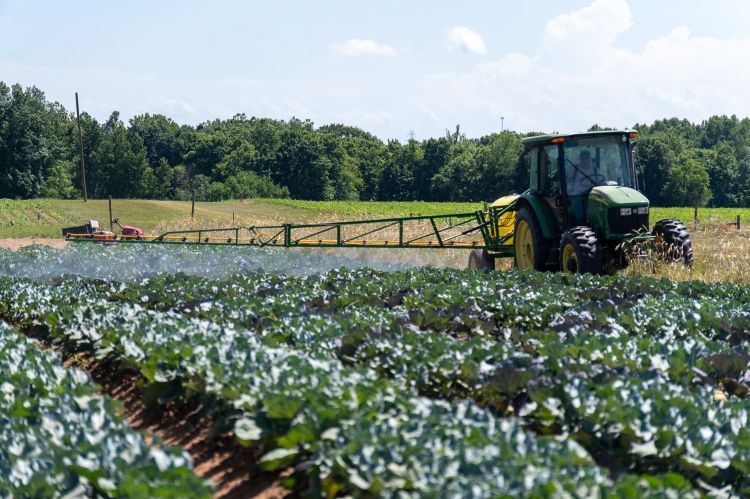
With spray season approaching, pesticide applicators are weighing many factors, including whether new U.S. Environmental Protection Agency (EPA) Endangered Species Act (ESA) regulations will apply to the products they use. Applicators can check the “Direction for use” section of any label to see if they are now required to consult the EPA’s Bulletins Live! Two web-based tool before making an application.
To follow label requirements, applicators need to understand how to use the EPA’s Bulletins Live! Two web-based tool for identifying measures that protect endangered species and their habitats. Michigan State University Extension and the Environmental Protection Agency have a number of support resources to help. Read on to learn more.
What is Bulletins Live! Two (BLT)?
BLT is the EPA’s interactive online system that helps pesticide applicators identify specific pesticide use limitation areas (PULAs) within the United States. These PULAs have been established to protect endangered or threatened species that inhabit various regions and these protection measures are legally enforceable under the Federal Insecticide, Fungicide and Rodenticide Act (FIFRA).
The word “Bulletin” in the context of Bulletins Live! Two is the actual report that pesticide applicators can generate when they access the BLT website. The report outlines products that have current registrations under the Endangered Species Act and helps applicators know if there are PULAs in place for products they apply in their geographic areas.
A bulletin is only required when the label on the product container includes a BLT directive. If the label does not mention BLT, then the applicator is not required to generate a bulletin for that product.
Why BLT matters this spring
Applicators across Michigan may see changes to familiar pesticide labels this year. Many labels now include BLT language in the “Directions for Use” section. As a result, applicators should begin checking all their product labels now and make a habit of doing so each time they buy a new container. This will eliminate any surprises during the spray season, because even if the product has been used for many years without restrictions, the 2026 label may include the new requirements.
Make a habit of reviewing the label before purchase or use
Before buying or applying any pesticide, applicators should:
- Review the actual label on the container in hand, as that is the binding legal document.
- Look for any statement directing the applicator to consult BLT prior to use.
- Understand that if a BLT directive appears, a bulletin from the EPA’s BLT website must be checked and obtained before application.
How BLT timing works
BLT bulletins can be generated up to six months before the planned application date. For example, a bulletin for a July application can be pulled as early as January. Depending on endangered species protections in your area, bulletins may:
- Restrict the timing of applications.
- Require buffer zone or spray drift mitigation measures.
- Prohibit the use of certain products in specific areas or during certain time periods.
How to use the EPA BLT website
Using the BLT tool is straightforward and can be done on a desktop or mobile device. Here are the steps an applicator can take to generate bulletins for their products:
- Visit the EPA BLT web tool.
- Enter the EPA Registration Number from your product label.
- Select the location and month of your planned application.
- Zoom in to each specific field location to identify PULAs and generate a bulletin.
- Download, print or save the bulletin to include with your pesticide application records.
A record keeping practice of filing bulletins alongside spray records will help an applicator easily demonstrate compliance with the Endangered Species Act.
BLT tracker report: An easy planning tool from MSU Extension
Keeping up with EPA product releases and label updates can be challenging. To help applicators stay informed, Michigan State University (MSU) Extension provides a biweekly BLT Tracker Report which lists current U.S. and Michigan products that now have a label with BLT directives.
This report is intended as a helpful planning resource for applicators but should not be used in lieu of checking the BLT website for PULAs and/or generating bulletins for upcoming pesticide applications.
Applicators must still verify the application requirements using:
- The label on the product container
- Region specific bulletins generated from the official EPA BLT website
Support and resources for growers and applicators
MSU Extension provides an online hub with step-by-step instructions, videos, FAQs and links to additional support at https://www.canr.msu.edu/blt.
Resources on this site include:
- How-to guides for using BLT
- A link to the MSU Extension BLT Tracker Report
- Frequently asked questions
- Educational videos
- Contact information for MSU Extension educators and local offices
- Links to EPA BLT tools and Michigan Department of Agriculture and Rural Development BLT resources
What happens if you do not follow BLT requirements?
If a pesticide label instructs you to check BLT and you fail to do so, it may be considered pesticide misuse. Following BLT directions is not optional, it is part of legally compliant pesticide use.
Spring spray season tips from MSU Extension
To stay on track this season:
- Review all your product labels for BLT language well before spraying begins.
- Generate required BLT bulletins early.
- Keep your bulletins organized with your spray application records.
- Contact MSU Extension if you have questions. Our educators are here to help you navigate these new requirements.
Please consider taking a brief feedback survey on our Bulletins Live! Two resources. Your insight is critical to improving MSU efforts to support stakeholders. All questions are optional and your responses are confidential.
This work is supported by the Crop Protection and Pest Management Program (grant no 2024-70006-43569) from the USDA National Institute of Food and Agriculture. Any opinions, findings, conclusions, or recommendations expressed in this publication are those of the author(s) and do not necessarily reflect the view of the U.S. Department of Agriculture.
This project is supported by Project GREEEN, project award number GR25-052, from AgBioResearch and MSU Extension at Michigan State University, in partnership with the Michigan Department of Agriculture and Rural Development.