Q&A with Michigan’s Emerging Farmers Partnership Specialist, Bekah Galang
 Print
Print Email
EmailGet to know Bekah Galang, Partnership Specialist of Michigan's Emerging Farmers! Learn more details about the project, check out upcoming opportunities, and explore new resources!

Michigan’s Emerging Farmers is a statewide network of educators and technical assistance experts in Michigan. This project aims to help Michigan producers access business technical assistance to connect with USDA resources and market opportunities, address business finances, explore risk management strategies, and more.
This project is funded by USDA National Institute of Food and Agriculture, in a cooperative agreement with members of the Michigan State University Center for Regional Food Systems, Michigan State University Extension, and Michigan Food and Farming Systems (MIFFS).
In June 2026, May Tsupros, Director of Farm to Institution Programs at CRFS had a conversation with Bekah Galang, the Partnership Specialist for Michigan's Emerging Farmers, to learn more about this project. Through supporting new and emerging farmers across the state, this project has the potential to widen markets and develop increased opportunity for institutions to purchase local food by increasing the number of farmers who are ready to sell to them!
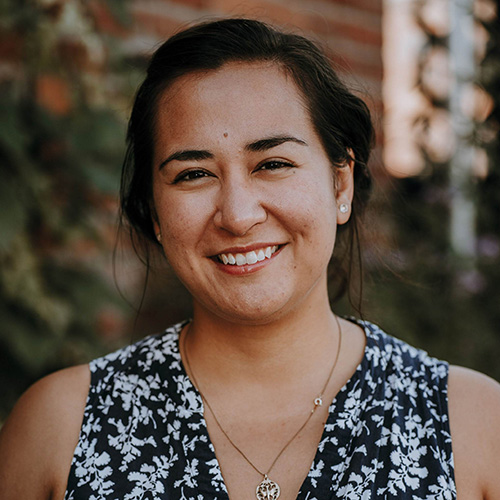
Bekah, tell us about yourself. What’s your background and what should people across the Michigan food system know about you and your passion around this work?
Galang: Hi! My background is in running small food businesses, with a bit of non-profit food systems work sprinkled in. I’ve worked to increase access to local foods, worked in wineries and taprooms and so many kitchens, helped to build cooperative food businesses, and most recently completed a ten-year stint managing a legacy bakery in Detroit. I’m excited to get my hands on anything to do with food and community, especially in Michigan.
What makes Michigan’s Emerging Farmers unique? Tell us about the partnerships driving this work.
Galang: Michigan’s Emerging Farmers is a project rejuvenated by the Network for Inclusive Farm Business Engagement, or NIFBE. This collective of farm educators from Michigan State University Extension, Michigan Food and Farming Systems (MIFFS), and Michigan State University Center for Regional Food Systems works together to make resources and opportunities more accessible to farmers across the state of Michigan. We’ve been given this unique opportunity to work together on projects like translating materials and certification exams into Spanish, hosting farmers at conferences they wouldn’t normally attend on their own and creating guides to participating in USDA programs that might otherwise seem daunting to small-scale and urban farmers. We are all able to work together to analyze and overcome more barriers than we would be ourselves and reach a larger audience.
What potential do you feel this program is having in shaping the Michigan food system today? What have you heard from the emerging farmers taking part in this network?
Galang: This program has so much potential to shape Michigan’s food system. For example, we have seen tangible results like 30 farmers attending the Great Lakes Fruit Vegetable and Farm Market Expo with us, the majority of whom have not attended previously, or farmers participating in soil testing or biosecurity workshops for the first time. But there has also been more intangible shaping taking place. Some of these more difficult to measure impacts are the relationships built between educators and community members, farmers that are then empowered to become trainers themselves, and even the collaborations between educators throughout these three organizations that may not have happened otherwise.
We’ve been able to provide programming, such as our Emerging Farmer Learning Series, where we saw many repeat attendees. Some have participated in a farmer gathering or conference with us. We’ve heard that they value the camaraderie of attending with other farmers from around the state. From their perspective, I hope it feels like there are more resources made just for them, wherever they are in their farm business’s lifespan. I hope they feel seen and heard and that they know they’re not alone in their particular journey.
Can you give us a glimpse of some exciting stuff with the program in the near future? How can new farmers and businesses get involved?
Galang: Wow- we have so much we’re working on! Our team is relatively large and gets a lot done working together. Recently we completed our USDA Guides webpage. The webpage shows if and how a farmer can get involved in USDA programs. Coming up, we have more USDA guides that show farmers filling out USDA forms for the first time exactly what goes in each box (which sounds really tedious but those forms are challenging!), templates and examples of farm business plans for a range of different farms (working with farmers to share their real farms’ business plans), and working with more Indigenous farms on soil health.
One thing I’m personally working on is funding and support for more farmers to attend conferences. I am looking for feedback from farmers about what would allow them to attend upcoming conferences that provide amazing opportunities for learning and networking. Farmers can share their needs and opinions in this survey!
Okay, here is a fun one: can you share a food memory from your past? Maybe one that gets to the core of why you are here today?
Galang: Since we’re at the tail end of strawberry season, one of my core food memories is a mashup of years of strawberry picking with my family: the hot near-solstice sun, the itchy legs and arms from reaching down into bushes, and the squish of the darkest ripe berries (those went in my mouth, not the pail). We would pick in the morning, have a picnic for lunch in the shade next to the car, then we’d go home to mash berries, freeze them whole, or make into jam. We always had strawberry shortcake for dinner on berry picking day. I can remember the different jobs I was given as I got older- from picking, to using a dull knife to take the tops off, to eventually ladling the hot jam into jars- I guess that’s how I got here!
Any final thoughts or words?
Galang: This program has been challenging to work on- and I think that it is supposed to be. If it wasn’t challenging, we would have already found a way to make resources and opportunities accessible to all farmers across the state. Instead, we encounter barriers that haven’t been solved for everyone already, and I’m proud that we engage the collective brainpower of these partnerships to solve it together.
About Michigan Farm to Institution Network
The Michigan Farm to Institution Network (MFIN) helps people across the farm to institution supply chain learn, connect, and collaborate. Since 2014, we have provided a space for learning, sharing, and working together to help farm to institution programs grow in Michigan. Learn more: mifarmtoinstitution.org
About Michigan State University Center for Regional Food Systems
The Michigan State University Center for Regional Food Systems advances regionally-rooted food systems through applied research, education, and outreach. We do this by uniting the knowledge and experience of diverse stakeholders with that of MSU faculty and staff. Our work fosters a thriving economy, equity, and sustainability for Michigan, the nation, and the planet by advancing systems that produce food that is healthy, green, fair, and affordable. Learn more: foodsystems.msu.edu