Regenerative agriculture in vineyards and orchards: Cover cropping considerations
 Print
Print Email
EmailWhile regenerative practices aim to improve soil, water, nutrient cycling and biodiversity, and strengthen farmer and community well-being, they also come with challenges. Learn key insights on how to navigate and implement these different principles.
In February 2026, Michigan State University Extension partnered with the MSU Center for Regenerative Agriculture to offer a special webinar series on regenerative agriculture. These sessions brought together farmers, educators and landowners who are interested in healthier soils, stronger farms and more resilient rural communities.
The series introduced six key principles that help guide regenerative agriculture. These principles focus on things like keeping living roots in the soil, minimizing soil disturbance, increasing plant diversity, integrating livestock, and understanding your unique farm context. One important message from the series was clear: regenerative agriculture is not “one size fits all.” Every farm is different. Climate, soil type, crops, livestock and personal goals all matter. The goal of the webinar series was not to tell farmers exactly what to do, but to share ideas, examples and research that can help guide decisions.
Cover crops in vineyards
Michela Centinari, an associate professor of viticulture at Penn State University, shared lessons from her research and Extension work with wine grape growers. Many vineyard growers are increasingly interested in using cover crops to improve soil health, reduce erosion and manage weeds.
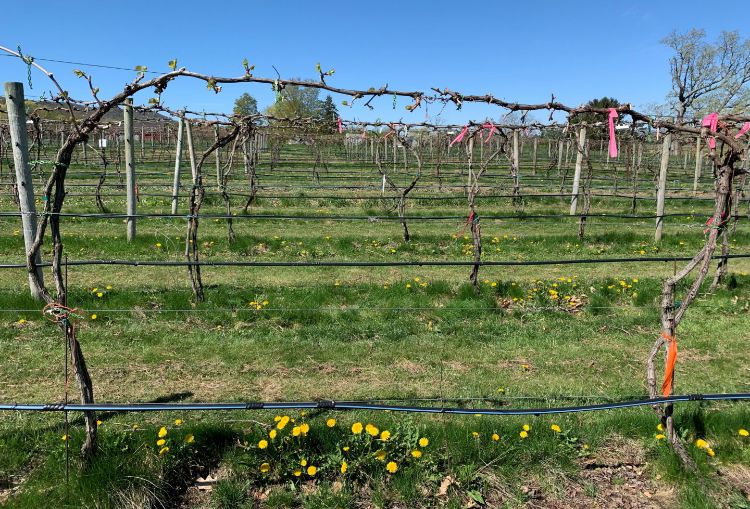
In vineyards, cover crops grow alongside grapevines year after year. This makes them different from cover crops in annual row-crop systems. Because vines and cover crops share space, water and nutrients, careful planning is needed.
One key concept is dividing the vineyard floor into two zones:
- The inter-row area (between rows), where tractors drive and erosion often starts
- The under-vine area, where most vine roots are found
The inter-row area is considered lower risk and often the best place to start. Cover crops here can reduce erosion, improve water infiltration, and make it easier for equipment to move through the vineyard.
Under-vine cover crops are more advanced and require careful management. In high-vigor vineyards with fertile soil and plenty of water, under-vine grasses like fescue or plants like chicory can reduce the need for herbicides, improve soil structure, and increase soil life. However, in young vineyards or dry sites, these cover crops can compete too much with vines and reduce growth and yield.
Benefits and challenges
The webinar shared many benefits of cover crops in vineyards:
- Reduced soil erosion, especially on slopes
- Better soil structure and water infiltration
- Improved soil biology and diversity
- Reduced herbicide use
- In some cases, better control of vine vigor
At the same time, speakers emphasized the importance of monitoring. Growers need to watch for signs of water stress, nutrient shortages, pest pressure or yield loss. Regenerative practices work best when they are adjusted over time.
Regenerative practices in orchards
Kyle Rasch, farmer and owner of Third Leaf Farm, shared his family’s experience transitioning to organic and regenerative orchard systems. His farm grows apples and other fruits and has spent more than a decade testing different cover crops, mulches and soil management strategies.
In orchards, managing plants under trees can be challenging. Young trees are especially sensitive to competition from grasses and weeds. Rasch explained how his farm uses wood chip mulch around young trees to reduce competition and mouse damage, while allowing more diverse vegetation under older, established trees.
Over time, their practices led to higher organic matter, healthier soil structure, and better water-holding capacity. While the first few years required extra attention and patience, long-term results showed healthier trees, stronger beneficial insect populations, and improved resilience.
A long-term partnership with the land
A central message of the webinar was that cover crops in perennial systems are long-term partners. When matched carefully to site conditions and farm goals, they can improve soil health without harming crop productivity.
Both speakers encouraged growers to start small; test practices on a small part of their farm and work closely with Extension educators, local experts and other experienced farmers. Regenerative agriculture is a journey, not a quick fix.
If you are curious about regenerative agriculture and cover crops in perennial fruit systems, watch the following full webinar session.