Should you prioritize planting soybean or corn?
 Print
Print Email
EmailPrioritize soybean over corn under early planting dates when field conditions might not be ideal.
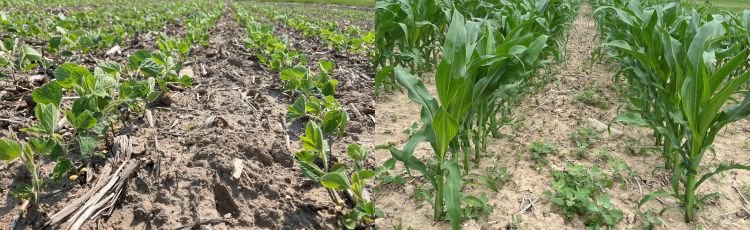
Planting field crops takes time, and most growers manage large acreages that must be prepared and planted each season. Starting early in the spring, when field conditions are considered good enough, is key to finishing planting on time. The race to complete planting has become increasingly important in recent years due to more frequent heavy spring rains, which can leave fields too wet and delay planting for weeks.
Temperature and soil moisture are important weather factors that affect crop growth. A soil temperature of 50 degrees Fahrenheit is generally recommended for planting corn and soybean. This threshold ensures that seeds can absorb moisture and complete the germination and emergence process successfully. If soil temperatures drop below this threshold, it can cause chilling injury, slower germination and uneven plant stands.
Adequate amount of soil moisture ensures that planted seeds have water available to absorption for germination to proceed. However, excessive soil moisture depletes the soil of oxygen, causes seed rot and increases the risk of seedling diseases. Field operations in wet soil can also result in poor seed-to-soil contact and can also result in long-term compaction issues.
In early spring, soil temperatures fluctuate a lot and often drop below 50 F for several days. Additionally, heavy rains are frequent. As previously mentioned, low temperatures and wet soils impact emergence and plant stand which can subsequently lead to yield penalties. Understanding how planting time and associated field conditions impact corn and soybean growth and yield will provide clear guidance on which crop Michigan growers should prioritize at different times during the planting season.
Corn and soybean planting date trials in Michigan
Michigan State University (MSU) analyzed multiyear data (2018-2025) from corn and soybean planting date trials conducted by the MSU Cropping Systems Agronomy Lab. Soybean trials were conducted across multiple locations, whereas corn trials were primarily conducted in Lansing, Michigan. Planting dates for both crops ranged from mid- or late-April through late June.
Figure 1 shows corn and soybean relative yields across different planting dates. Relative yield (percent of maximum for a given trial) helps compare planting date response across years, locations and crops and generate recommendations across these variables. From mid-April through early May, relative corn yield was mostly lower than soybean. In early May (between May 1 and 15), corn yield increased by 0.5% per day. From mid- to late May, both crops experienced similar yield reduction of 0.3% per day with delayed planting. In June, corn yield decreases by 1.1% per day, exceeding the decline in soybean yield of 0.6% per day.
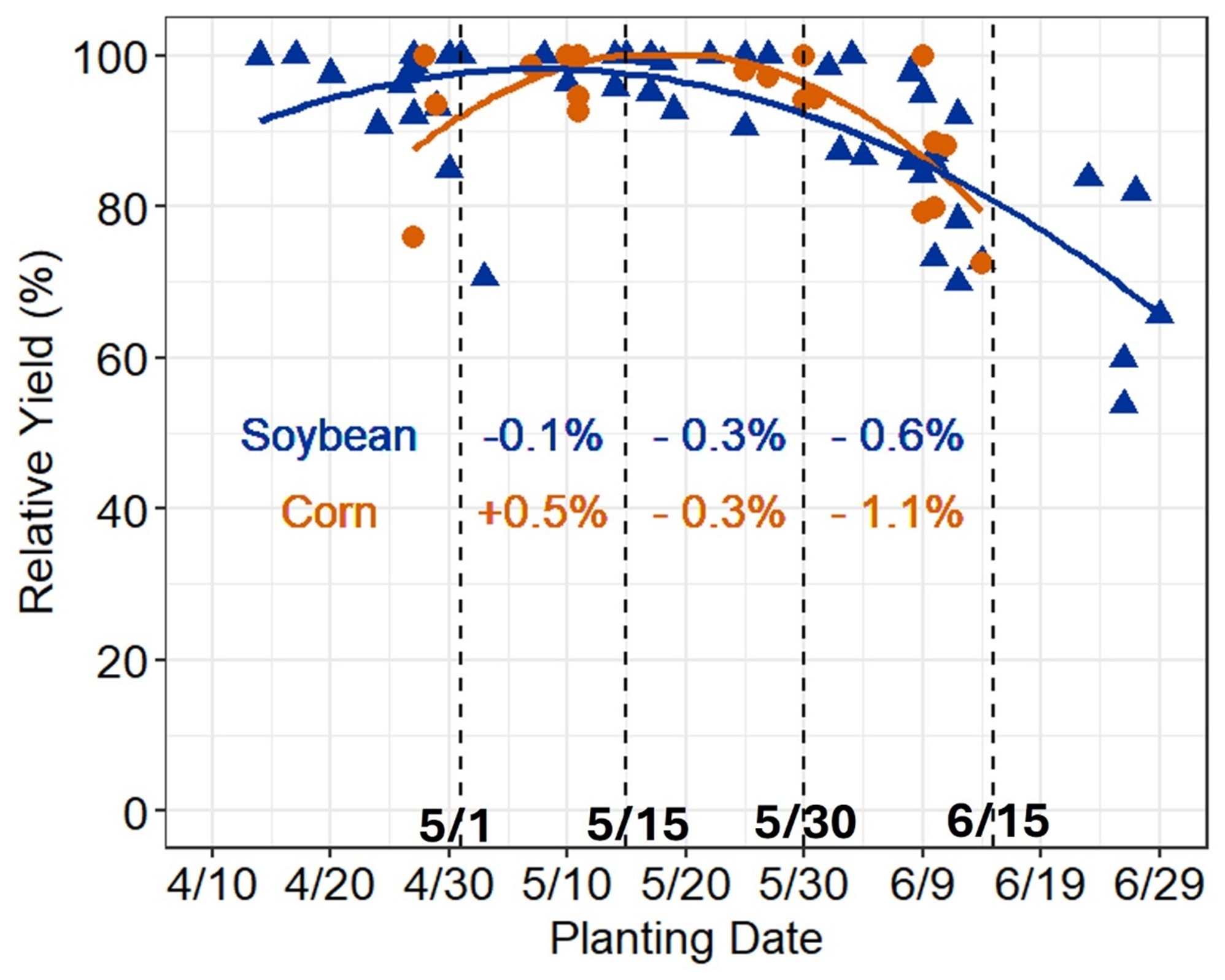
These results indicate that, through early May, growers should prioritize planting soybean over corn to minimize potential yield losses in corn. Between the first and third week of May, focus should be shifted to corn with a target of completing corn planting before late May.
All plantings in June should be dedicated to finishing soybean planting as all corn fields should be planted by this time. This is because corn yield penalties are much greater under such late planting dates compared to soybean.
Corn and soybean response to environmental conditions
Corn and soybean respond differently to environmental conditions and that can help explain why their yields are affected differently across planting dates. From mid-April through early May, non-ideal planting conditions can cause uneven emergence and variable plant stands as explained earlier.
Corn plants that emerge earlier become dominant and capture more sunlight, water and nutrients. Late emerging plants become dominated and often are not able to catch up. Once competition begins, corn has limited ability to adjust. Therefore, dominated plants are outcompeted, which leads to the production of fewer kernels. Most importantly, the dominant corn plants cannot fully make up for the dominated ones by producing more or heavier kernels despite having access to extra resources. This results in overall reduction in grain yield.
On the other hand, soybean plants have a greater ability to adjust to differences in plant size during the seed-filling period. Soybean plants that emerge first can use extra sunlight, water, nutrients and space to produce more branches and set more pods and seeds. Additionally, the dominated plants can still produce enough pods and seeds under restricted growth. The ability of soybean plants to adjust to the variability in plant-plant spacing helps it maintain higher yield even under non-ideal conditions.
While planting date is an important management factor that affects corn and soybean yield, other decisions such as varietal maturity selection, seeding rate, seed treatment and fertilizer and pesticide applications also play an important role in maximizing yield and profits. In future Michigan State University Extension articles, we will discuss how some of these key management practices can be fine-tuned based on planting date in corn and soybean.
Key takeaways
- Pay attention to field conditions (soil moisture and temperature) and weather forecast instead of just calendar date for planting.
- Consider planting soybean from late April through early May, as soybean plant can better tolerate non-ideal field conditions around this time.
- Switch your focus to corn planting in May to avoid sharp decline in yields towards end May.
- While it is still ideal to finish soybean planting in May, daily decline in soybean planted in June is smaller than corn.