Southwest Michigan fruit update – May 19, 2026
 Print
Print Email
EmailWarm days mean things are moving quickly.
MSU fruit updates
Happy spring! If you haven’t signed up to come to the Tuesday night South Michigan Fruit IPM meetings, sign up now.
Tree fruit
Apricot trees have small fruit in central Berrien and Van Buren counties, with an average of 16 millimeters (mm) fruit size. Cold damaged fruit has fallen off. Controlling plum curculio now prevents unmarketable fruit later in the season. Plum curculio damage has shown up in the past week. More information on controlling plum curculio can be found in this MSU Extension article, which includes a table of insecticide options.
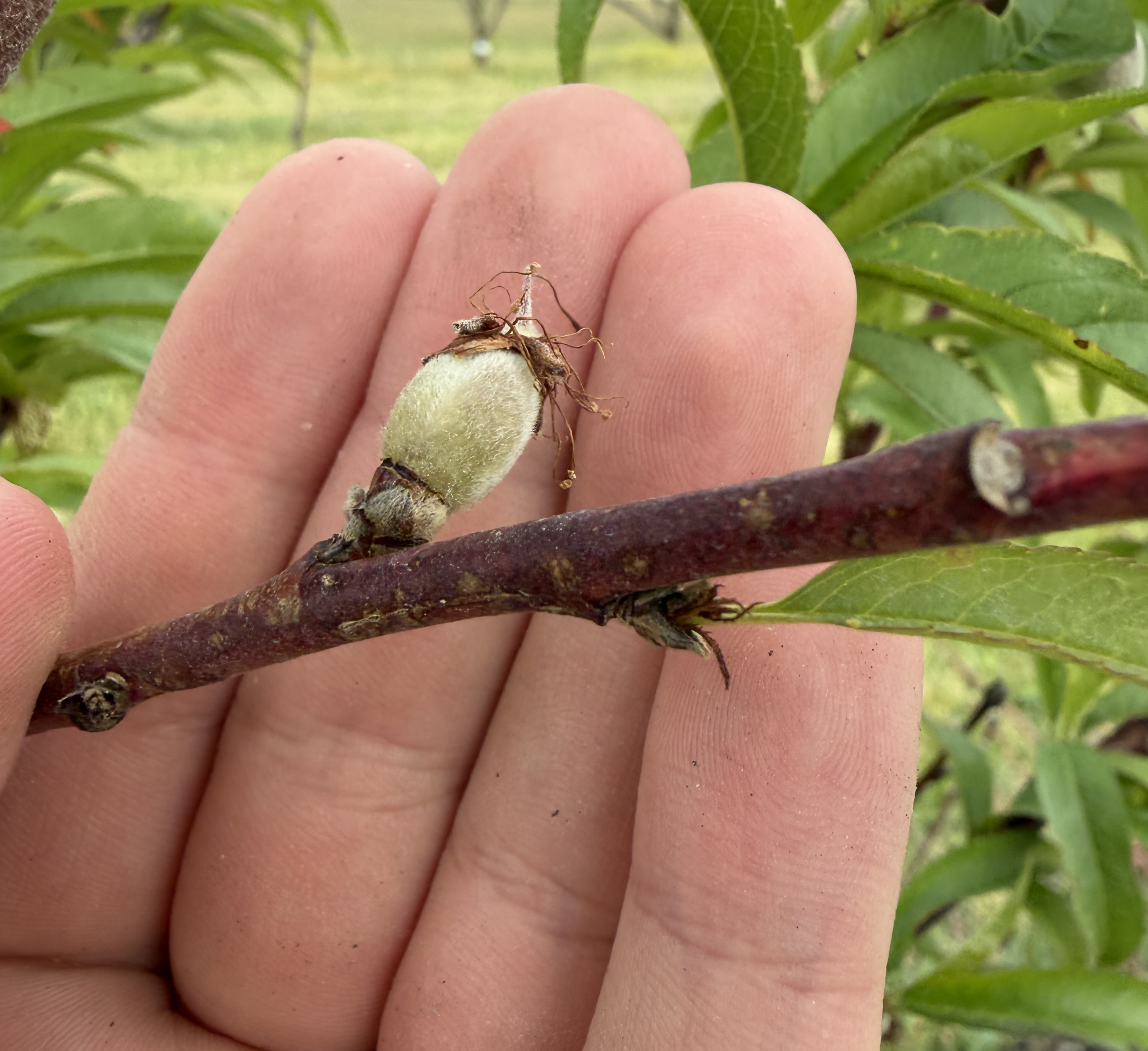
Peaches and nectarines are sizing, with early cultivars approaching 14 mm. All cultivars are out of the shuck. The wind on Monday, May 18, removed many loose fruit damaged by cold.
Brown rot is not a major concern until fruit begins to soften later in the season.
Selecting insecticides for plum curculio should prioritize rapid knockdown of immigrating adults combined with enough residual activity to protect exposed fruit during the oviposition window. This week is a time to use a neonicotinoid to protect fruit from oviposition.
Oriental fruit moth is ending the first generation and shoot strikes should appear in plantings soon. Continue monitoring trap catch, shoot strikes and degree-day accumulation to assess first generation pressure and determine whether additional protection is needed as activity progresses into the next generation. For more information, use the MSU Enviroweather oriental fruit moth model. For information on managing oriental fruit moth along orchard edges, this MSU Extension article provides excellent resources.
Plums are now around 13 mm and sizing. Management should focus on maintaining a consistent protective program, timing insecticides with periods of pest activity and keeping fungicide coverage ahead of rain events to limit infection during early fruit development. More information on American brown rot, the most important disease of plum, can be found in this MSU Extension article.
In cherries, tart and sweet cherry fruit continue to size rapidly across Berrien and Van Buren counties, with the average tart cherry at 11 mm and the average sweet cherry at 13 mm. Protecting cherries against leaf spot is critical during warm, wet periods. Thus far, conditions have not favored rapid leaf spot development, though increased temperatures next week in conjunction with wetting events make adequate coverage critical. At this timing, many fungicide classes are effective, including 3, 11, 7 and M04. More information on cherry leaf spot can be found in this MSU Extension article.
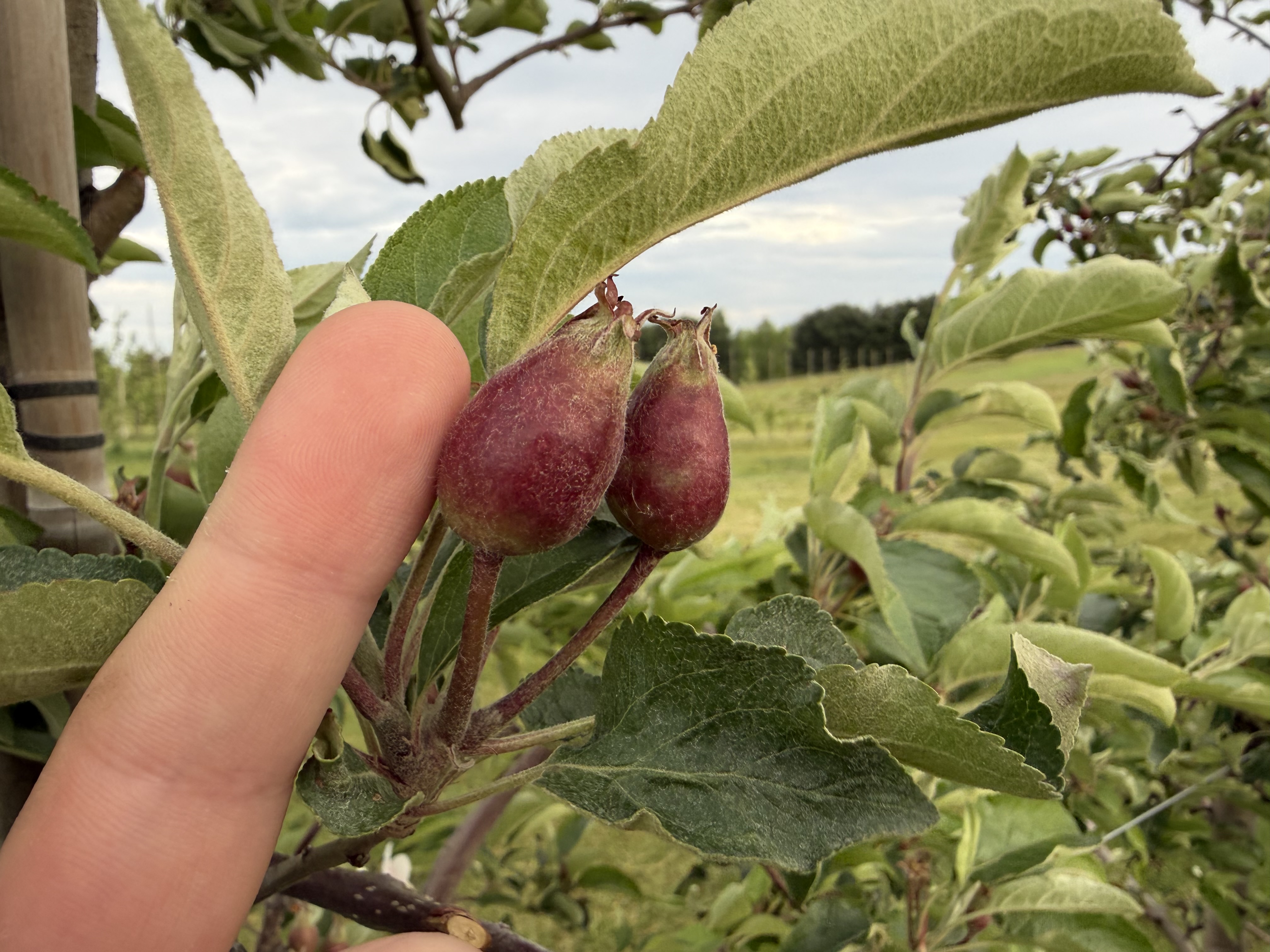
Apple fruitlets are sizing and between 10 and 13 mm.
Apple scab pressure remains relatively quiet for a third consecutive week. Even with limited infection risk, orchards should stay covered ahead of meaningful wetting periods so that low pressure does not become an avoidable primary scab issue. Copper is no longer a preferred option because of russeting concerns on developing fruit. SDHI fungicides remain strong choices for primary scab management. When conditions remain marginal, the MSU Enviroweather apple scab model is especially useful for identifying infection windows and refining spray timing.
Insect pressure remains worth watching closely as newly set fruit continue through a highly injury-prone window. Plum curculio is still the primary concern, with the greatest risk during warm, humid periods and in orchards near wooded edges where movement into blocks is often more pronounced. Continue checking for new crescent-shaped oviposition scars on fruitlets. Other early-season injury may also remain visible, including feeding from tarnished plant bug, green fruitworm, European apple sawfly and early leafroller activity. Decisions on any follow-up insecticide should be driven by fresh injury, trap or scouting observations, and the crop’s continued susceptibility.
Apple thinning. For information about fruit thinning, visit last week’s scouting report and visit the following links:
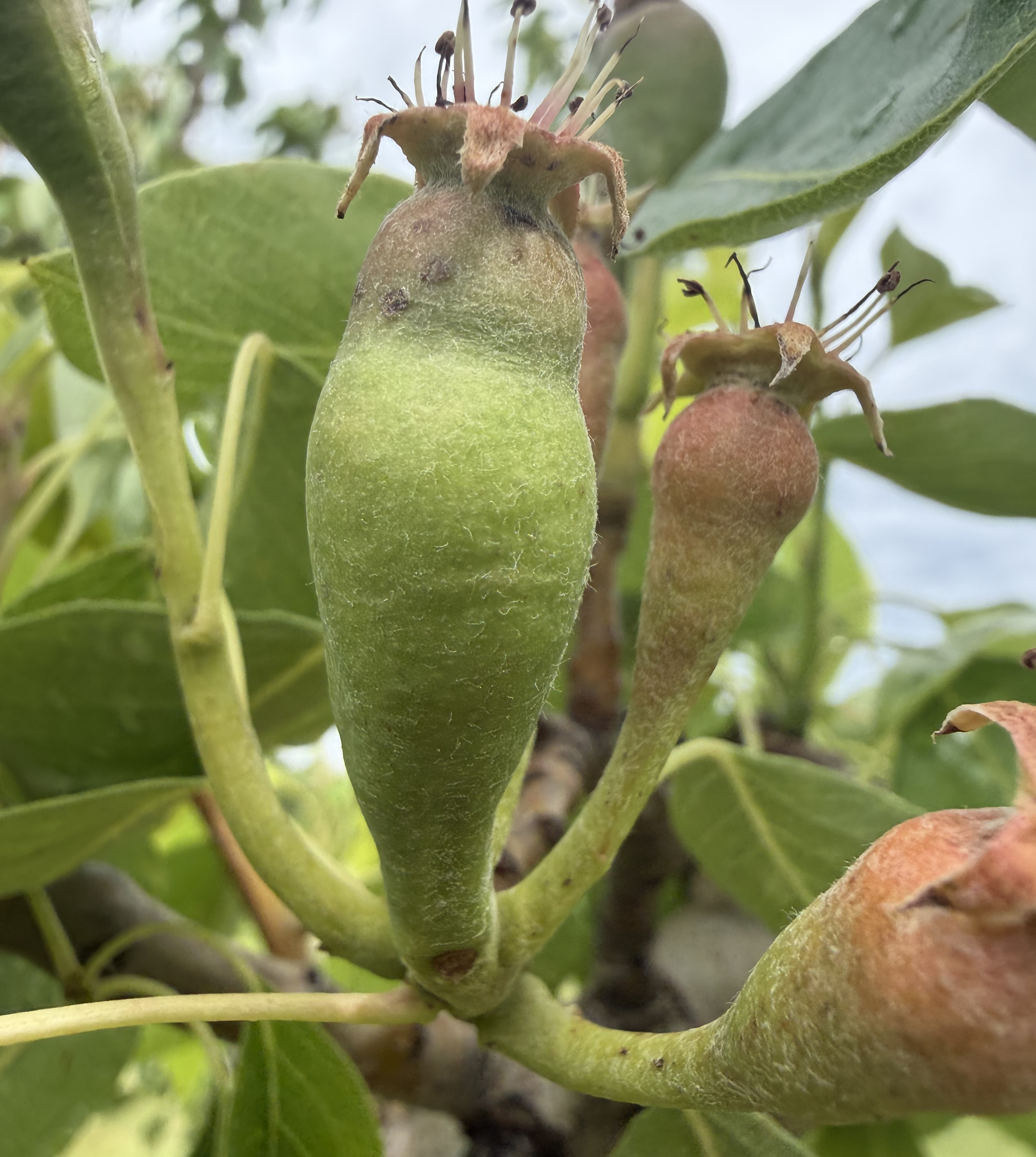
Pear fruit are sizing quickly across Berrien, Van Buren and Allegan counties, with many blocks now around 11-15 mm in diameter. As fruit and canopies expand, maintaining fungicide protection ahead of wetting events remains important. Pear scab risk is still driven by rainfall and extended leaf wetness, and secondary infections can build quickly on unprotected foliage and fruit.
Plum curculio, tarnished plant bug, green fruitworm and pear psylla should all remain on the scouting radar. Pear psylla should also be monitored as summer populations begin to develop on new shoot growth, particularly in blocks with a history of pressure. Watch for adults, eggs and early nymphs to guide follow-up management and avoid letting season-long pressure become established.
Small fruit
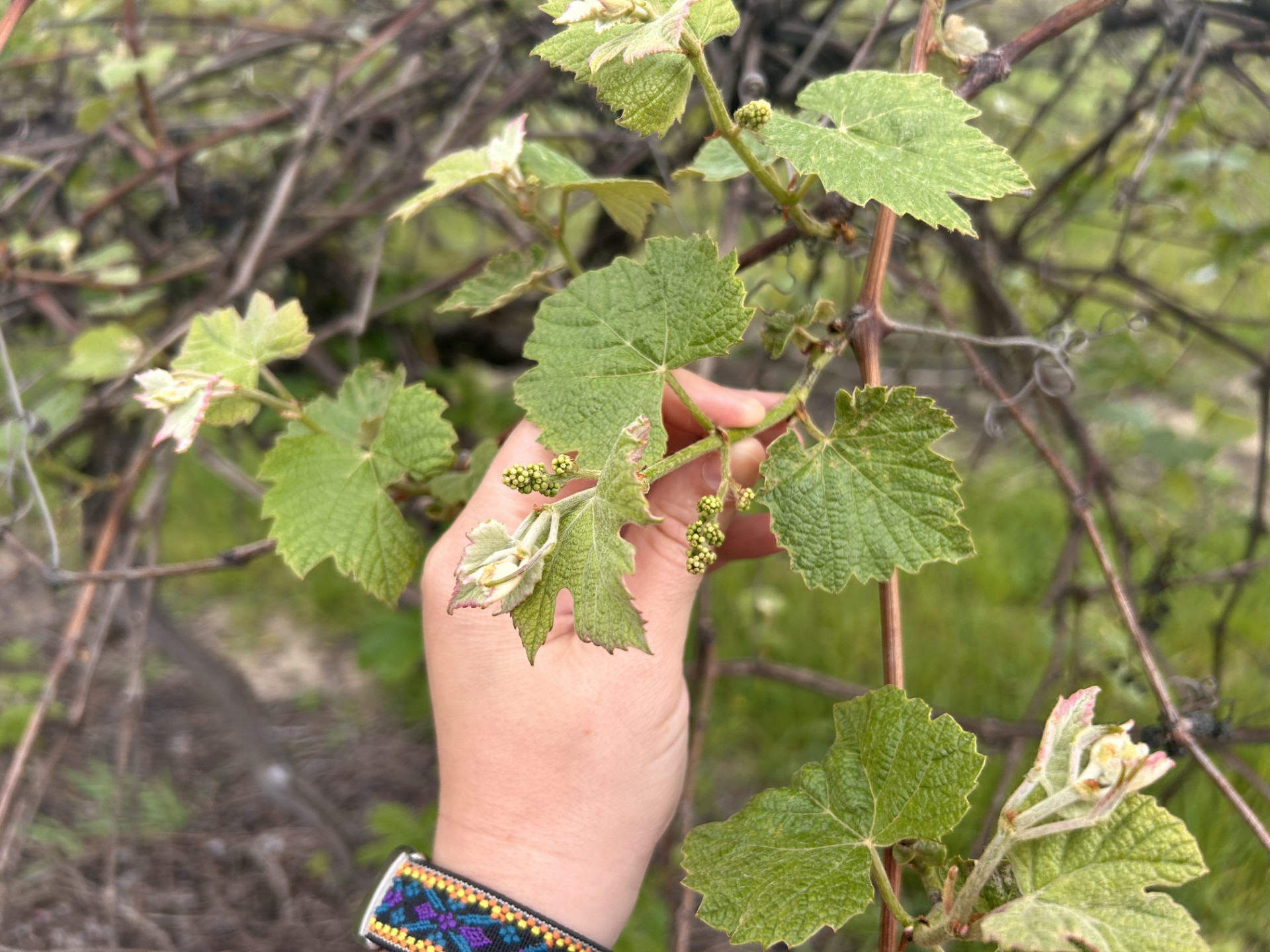
Grape berry moth catches have increased. We are still watching out for wild grape bloom. Grapes that weren’t hurt by the freezes are as follows in Berrien County: vinifera are at 1-to-6 inch shoots; hybrids are at over 1 foot shoots and immediate pre-bloom, with bloom likely to occur by the weekend; late hybrids are at 3-inch shoots; juice grapes are at 4-to-8 inch shoots. Damaged grapes from frost are finally pushing secondary buds.
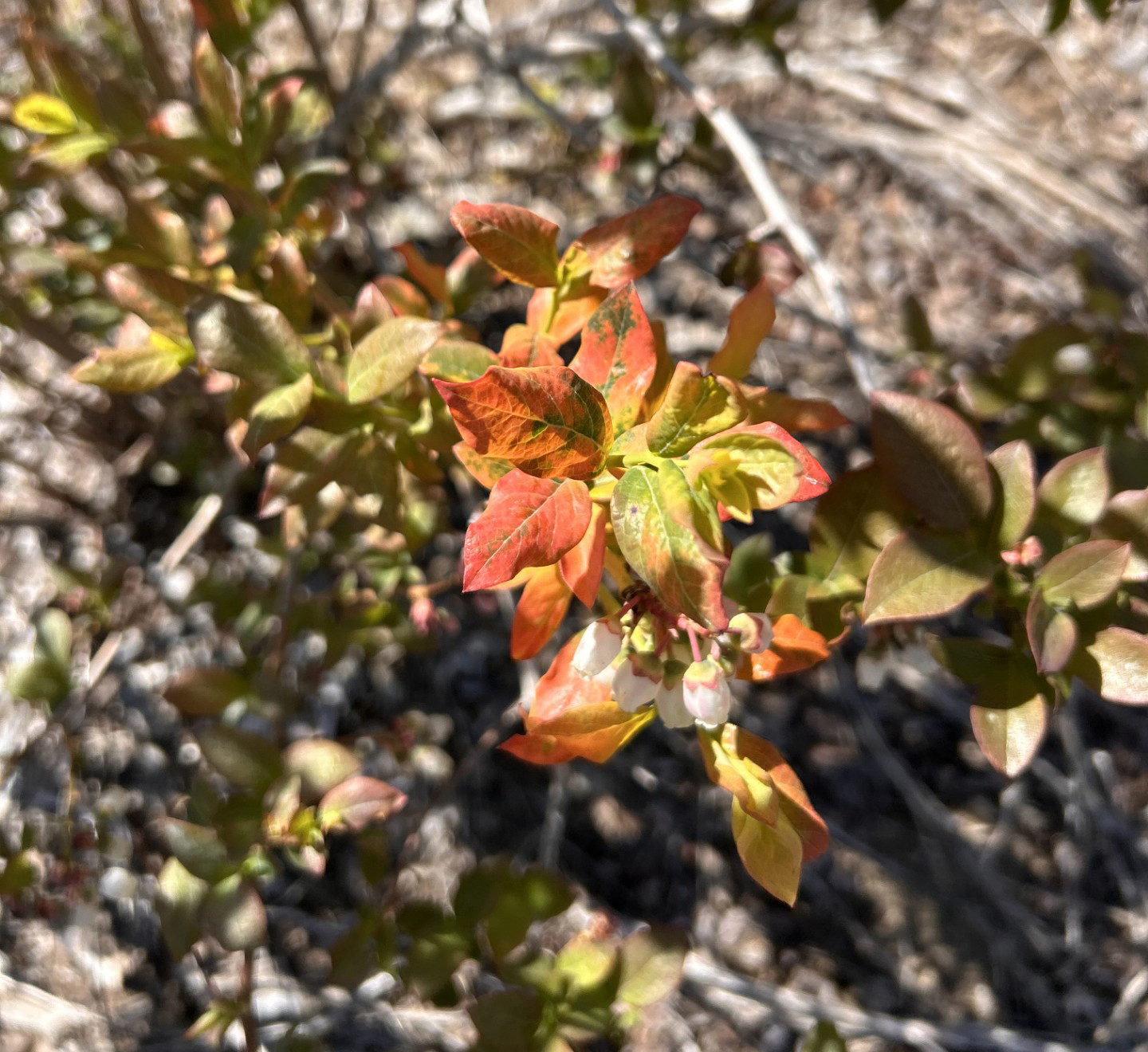
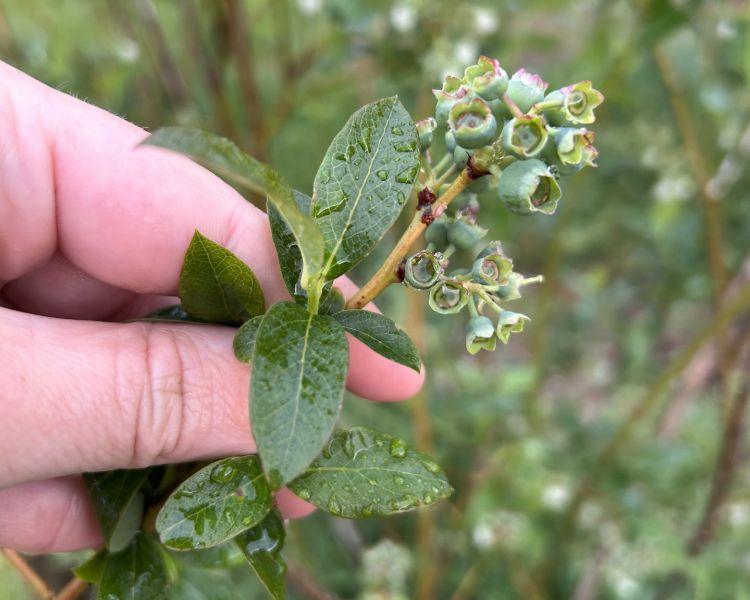
Blueberry are at petal drop through VanBuren County and at bloom in southern Allegan County. With bees out and about, it’s important to keep pollinators in mind while spraying. Mummy berry is still a concern with bloom. With flowers out, we are thinking about flower thrips and monitoring other insects. Monitoring for cherry fruitworm and cranberry fruitworm is in progress. Cranberry fruitworm was caught at the Trevor Nichols Research Center (average 31 per trap) and they are setting the biofix for May 16–17. Enviroweather models are estimating 50% emergence of blueberry gall wasp by April 25 from Berrien County through Van Buren County.
Fertilization typically begins around bloom, which is ending soon. Make sure your irrigation systems are up and running. We are likely going to have a drier summer. This time of year is a great time to walk the fields and scout for viruses.
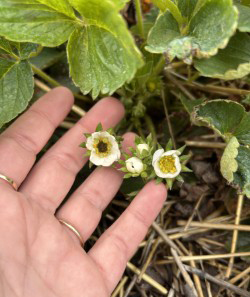
Strawberry flowers are out and strawberries are developing! Growers are focused on controlling leaf spot and preventing fruit rots.
Bramble leaves are emerging.
Upcoming meetings
This year, we are hosting Tuesday Night Fruit IPM meetings. They take place in person at the Southwest Michigan Research and Extension Center in Benton Harbor and online via Zoom. The meetings cover phenology, insect and disease progression and selected topics from experts in Extension. These meetings cover small fruit for southwest Michigan and tree fruit for southwest and southeast Michigan. The meetings start at 5:30 p.m. and occur weekly until June 24. Sign up for the online option. Past meeting recordings are available online via MSU Mediaspace.
This work is supported by the Crop Protection and Pest Management Program [grant no 2024-70006-43569] from the USDA National Institute of Food and Agriculture. Any opinions, findings, conclusions, or recommendations expressed in this publication are those of the author(s) and do not necessarily reflect the view of the U.S. Department of Agriculture.