Southwest Michigan fruit update – May 12, 2026
 Print
Print Email
EmailCool weather has plants and insects moving slowly.
MSU fruit updates
Happy spring! If you haven’t signed up to come to the Tuesday night South Michigan Fruit IPM meetings, sign up now.
Tree fruit
Apricot trees have small fruit in central Berrien and Van Buren counties, with an average of 14 millimeters (mm) in size. Cold damaged fruit are beginning to fall off. Controlling plum curculio now prevents unmarketable fruit later in the season. The first catches of plum curculio occurred three weeks ago in Berrien County, and catches are up this week. This week is a control window for plum curculio with neonicotinoids and other insecticides. More information on controlling plum curculio can be found in the Michigan State University Extension article, “Effectively controlling plum curculio in stone and pome fruits,” which includes a table of insecticide options.
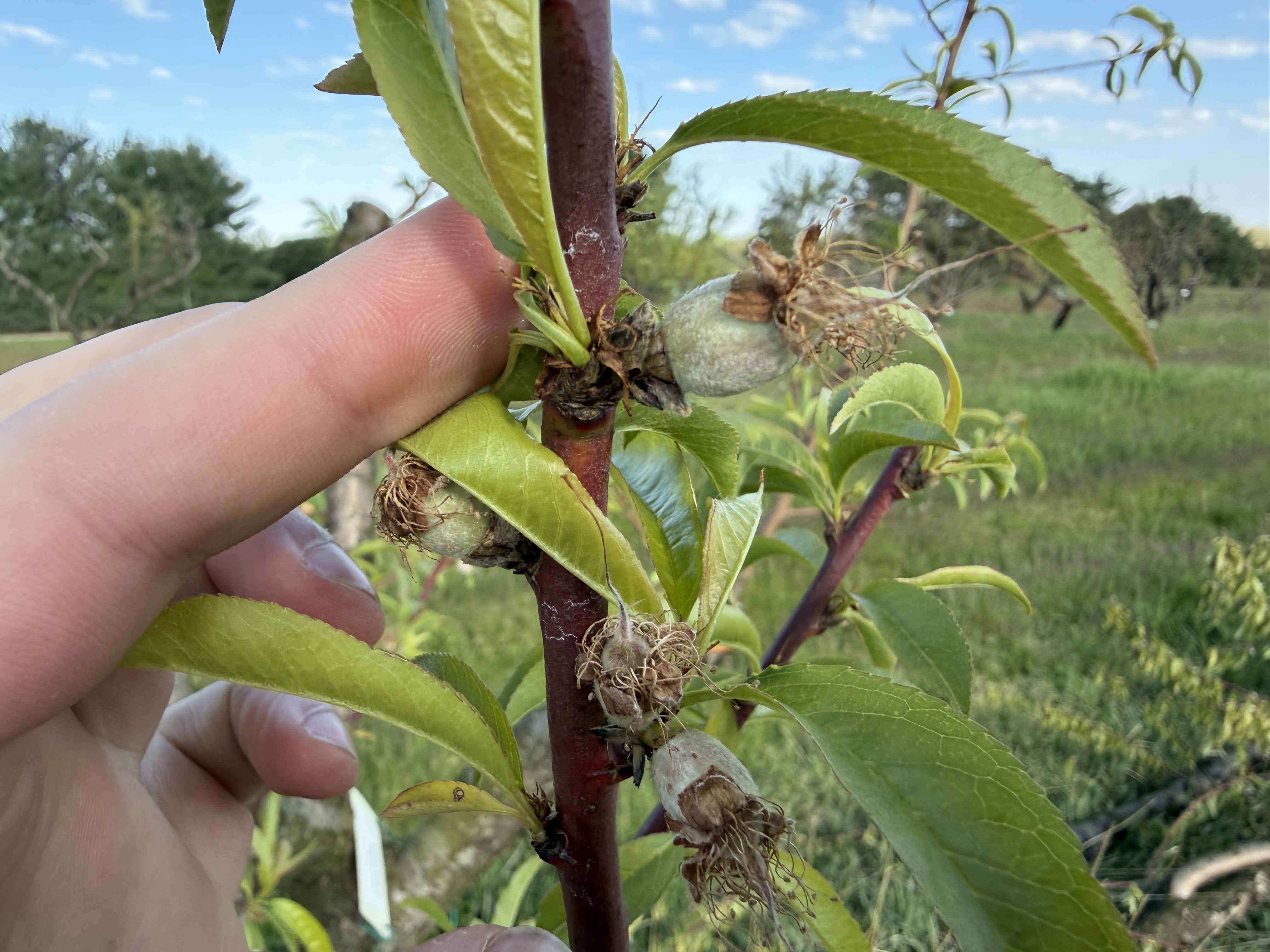
Peaches and nectarines are sizing, with early cultivars approaching 12 mm. Most cultivars are out of the shuck.
Again this week, brown rot pressure is expected to be low. When weather favors infection, prioritize high-efficacy materials with rotation among FRAC groups, and ensure applications are made ahead of rainfall events with strong coverage throughout the canopy.
Selecting insecticides for plum curculio should prioritize rapid knockdown of immigrating adults combined with enough residual activity to protect newly exposed fruit during the oviposition window. In all cases, choose products paired with tight application timing at petal fall, followed by additional coverage based on temperature-driven activity. Protection must be in place before egg laying begins to prevent irreversible fruit injury.
Continue to closely monitor oriental fruit moth activity, as first generation larvae are actively entering succulent shoot terminals and early fruit. Initial injury often appears as wilted or “flagged” shoots caused by larval tunneling within new growth. As larvae become established inside shoots or fruit, insecticide efficacy declines substantially, making preventative coverage and proper timing important during ongoing egg hatch.
Continue monitoring trap catch, shoot strikes and degree-day accumulation to assess first generation pressure and determine whether additional protection is needed as activity progresses into the next generation. For more information, use the MSU Enviroweather oriental fruit moth model. For information on managing oriental fruit moth along orchard edges, this MSU Extension article provides excellent resources.
Plums are now around 10-12 mm and sizing. Management should focus on maintaining a consistent protective program, timing insecticides with periods of pest activity and keeping fungicide coverage ahead of rain events to limit infection during early fruit development. More information on American brown rot, the most important disease of plum, can be found in this MSU Extension article.
Tart and sweet cherry fruit continue to size rapidly across Berrien and Van Buren counties, with many blocks now fully beyond shuck split and into early fruit development. Cooler temperatures and reduced rainfall this week have generally lowered disease pressure compared to the previous period, slowing brown rot infection risk in many orchards. Even under lower-pressure conditions, maintaining protective fungicide coverage remains important as fruit continue to expand and new tissue becomes exposed.
Continue to closely monitor insect activity during this stage, particularly for plum curculio injury, obliquebanded leafroller feeding, tarnished plant bug activity and early oriental fruit moth pressure in susceptible blocks. As fruit enlarge, even minor feeding or oviposition injury can remain visible through harvest and reduce marketability. Continued scouting for fresh oviposition scars, feeding injury and shoot strikes will help determine whether additional management is needed as orchards move further into the first generation insect activity period.
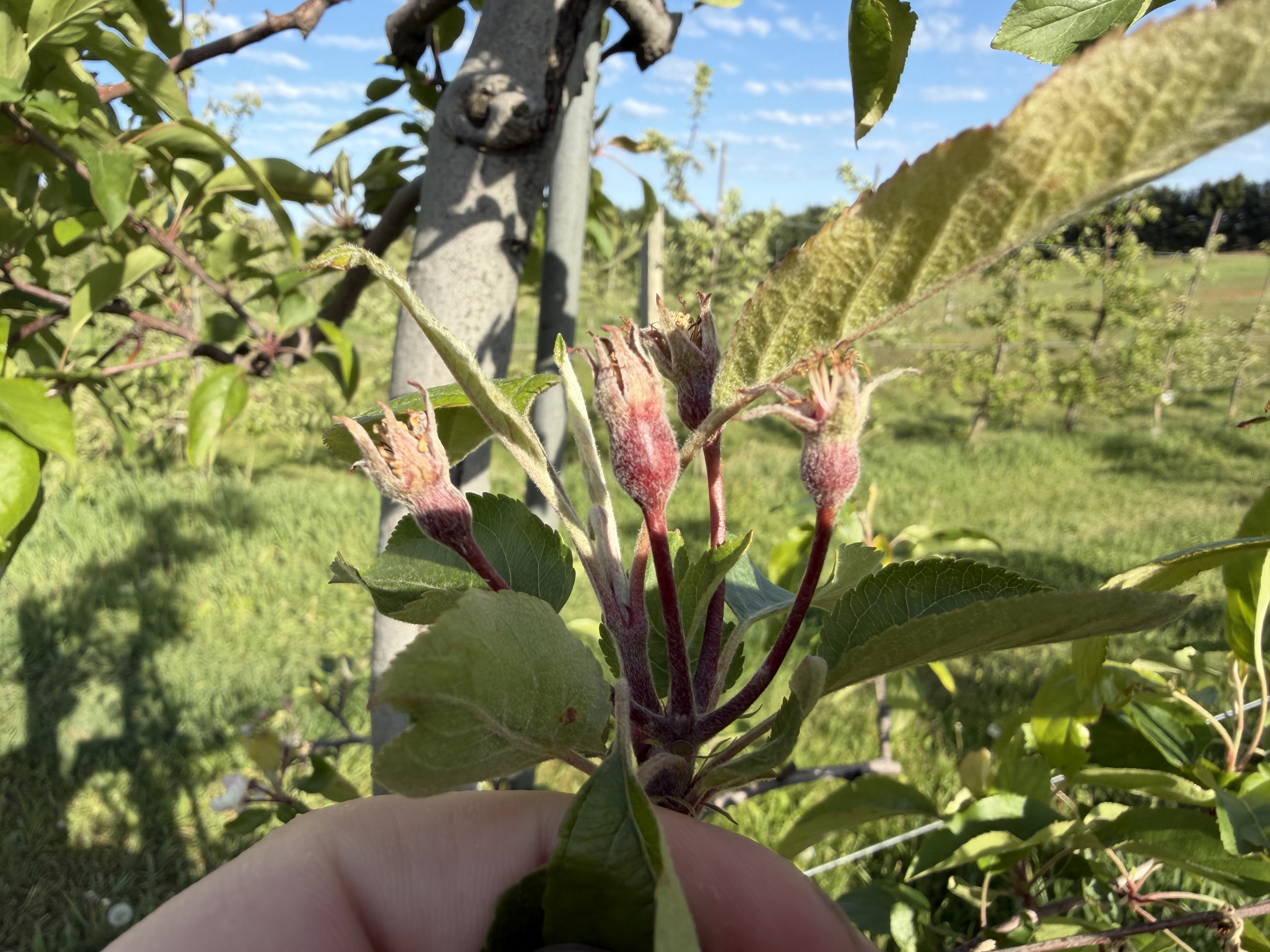
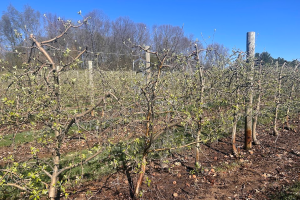
Apple fruitlets are sizing and between 6 and 8 mm.
Apple scab risk is still low. While risk is low, maintaining adequate fungicide protection is important to stop the spread of disease during wetting events. Copper should be avoided beyond half-inch green to reduce the risk of fruit russeting. SDHI fungicides are excellent choices to control primary scab. The MSU Enviroweather apple scab model can be used to track infection periods and better time applications.
As fruitlets continue to expand, susceptibility to early-season insect injury remains high across many apple blocks. Plum curculio activity may continue during warm evenings, particularly following rainfall events or periods of increased humidity, and fresh oviposition scars may still be observed in susceptible orchards near wooded borders. European apple sawfly injury, tarnished plant bug feeding, green fruitworm activity and early obliquebanded leafroller feeding may also continue during this period, although cooler temperatures this week may slow overall insect movement and feeding intensity compared to warmer conditions.
Even under reduced activity, maintaining protection remains important because young fruit remain highly vulnerable to injury that will persist through the season. Continued scouting should focus on fresh plum curculio scars, feeding damage and developing leafroller populations to determine whether follow-up applications are warranted as orchards progress further beyond petal fall.
Apple thinning. Apple fruitlets are now entering the primary post-bloom thinning window across much of southwest Michigan. This period is highly responsive to chemical thinners because developing fruit are rapidly competing for carbohydrates while seed-driven hormonal signals determining fruit retention are still being established.
Weather conditions during and after application will strongly influence thinner activity. Cooler temperatures and reduced cloud cover generally slow carbohydrate deficits and can reduce thinner response compared to warm, cloudy conditions that increase stress and fruit abscission. As a result, thinning programs may act more conservatively under the current forecast than during periods of sustained heat.
NAA and 6-BA materials remain most effective when applied during active cell division and rapid fruit growth, while combinations with carbaryl may increase overall thinning response where additional activity is needed. Continue monitoring fruit growth rates and initial fruit drop over the next seven to 10 days following applications, as thinning responses often develop gradually and may vary substantially by cultivar, tree vigor, crop load and environmental conditions.
More information on thinning can be found in the links below:
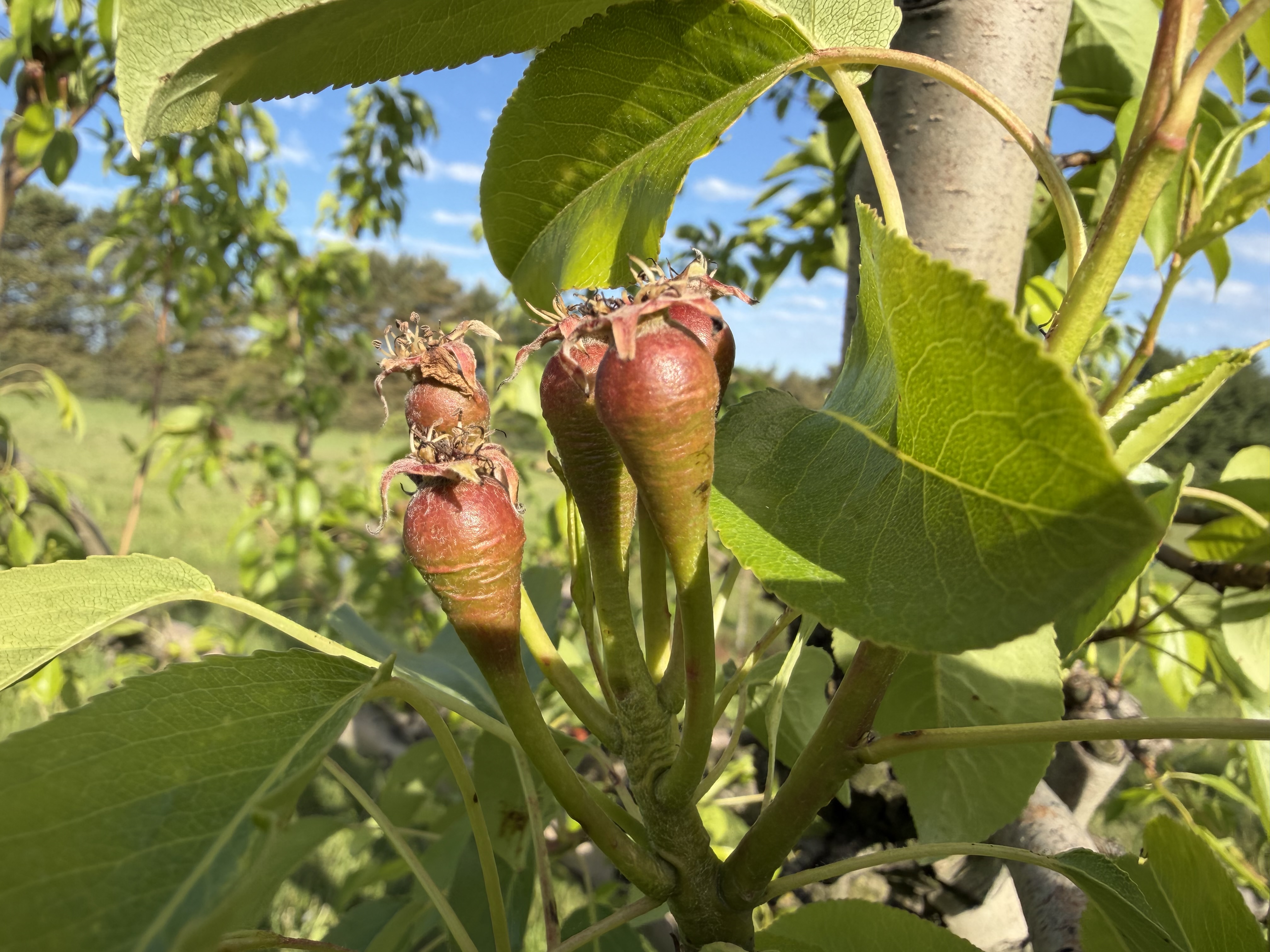
Pear fruit are continuing to size rapidly across Berrien, Van Buren and Allegan counties, with most blocks now averaging approximately 10-14 mm fruit diameter. As fruit enlarge and canopy density increases, management priorities shift further toward protecting developing fruit from secondary disease infection and early-season insect injury. Pear scab risk remains highly dependent on rainfall frequency and extended leaf wetness periods. Continue maintaining fungicide protection proactively through upcoming precipitation events. Even during periods of reduced visible symptom development, secondary scab infections can establish quickly on unprotected foliage and fruit, contributing to inoculum pressure later in the summer.
Insect activity also continues increasing as fruit become more exposed and attractive to ovipositing pests. Plum curculio pressure may remain elevated during warm evenings following rainfall, particularly in blocks adjacent to wooded habitat or orchards with a history of injury. Continue closely monitoring tarnished plant bug feeding, green fruitworm activity and pear psylla populations during this period.
Pear psylla management becomes increasingly important as populations expand and honey dew accumulation begins developing within dense canopies, potentially leading to reduced photosynthetic efficiency, fruit russeting and increased difficulty controlling later generations. Timely applications targeting active adults and early nymph stages remain critical for maintaining season-long suppression. Materials such as Imidan 70 WP, Avaunt eVo or pyrethroid products can continue providing strong activity against key chewing pests, while psylla programs may benefit from integrating selective materials, insect growth regulators or horticultural oils, depending on population pressure, beneficial insect activity and orchard conditions.
Small fruit
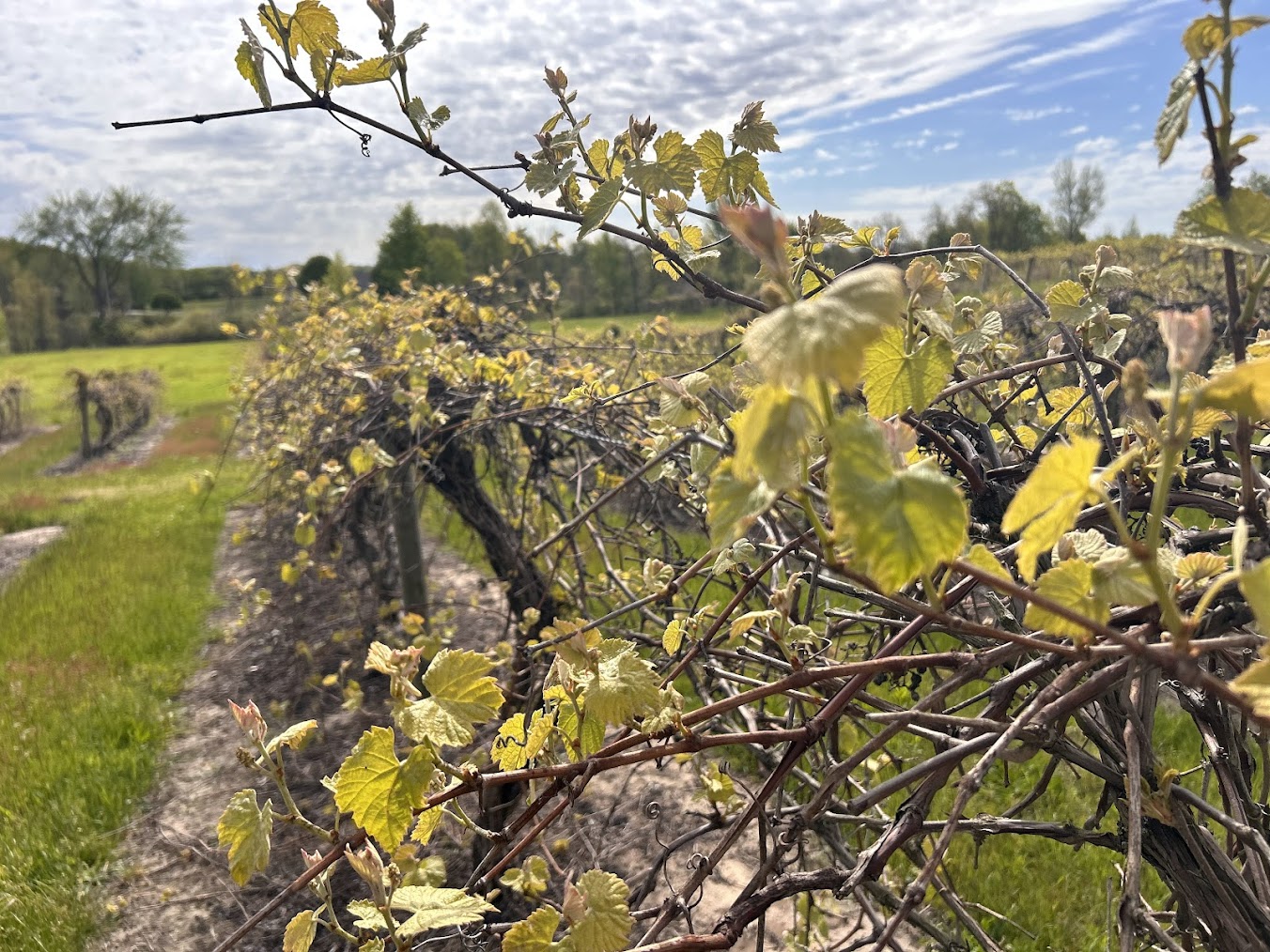
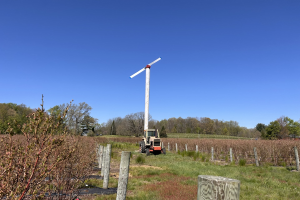
In locations not damaged by the spring frosts and freezes, juice grapes and early hybrid wine grapes are at approximately 3–6 inches of shoot growth, with clusters separating and beginning to elongate. Late hybrid and vinifera cultivars are generally between first leaf and about 1 inch of shoot growth.
The disease focus is on phomopsis, black rot, anthracnose and powdery mildew. Once leaf tissue is visible, contact fungicides that include broad-spectrum/contact fungicides like the EBDCs (FRAC M3) and captan are effective. They function similar to dormant applications by sanitizing the vineyard before bloom.
The first grape berry moths have been caught. The first catch is the suicidal males. We are still watching out for wild grape bloom.
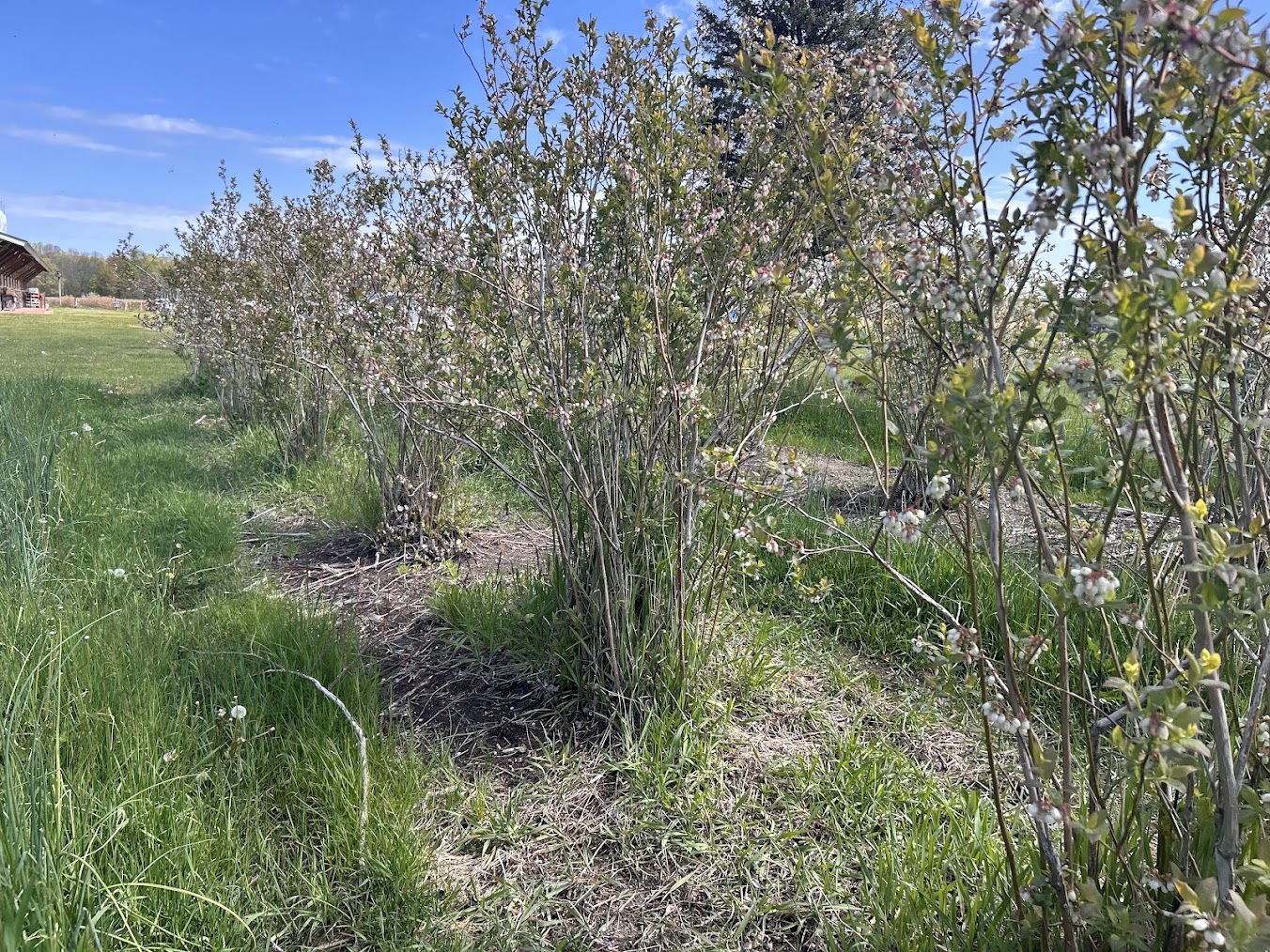
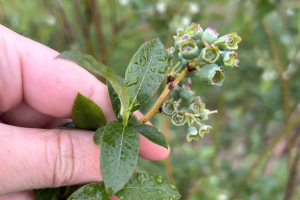
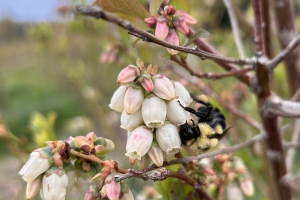
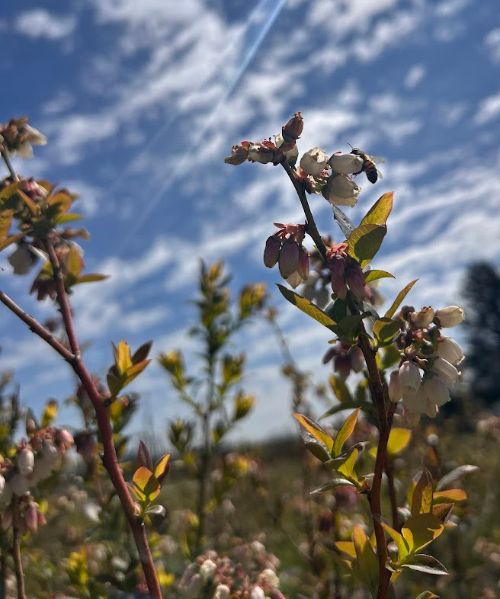
Blueberry are blooming through VanBuren County and at late pink bud in southern Allegan County. The frost over the weekend caused frost damage. With bees out and about, it’s important to keep pollinators in mind while spraying.
Mummy berry is the next pathogen to manage. With flowers out, we will be thinking about flower thrips and beginning to monitor other insects. Monitoring for cherry fruitworm and cranberry fruitworm has begun. Last week, cranberry fruitworm was caught at the Trevor Nichols Research Center, but none were caught this week, likely due to the cold.
Fertilization typically begins around bloom, which is fast approaching. Make sure your irrigation systems are up and running. The weather isn’t supposed to dip too much in the next week, but the frost-free date for most of Michigan is the middle of May. It's good to be prepared for potential frost protection between now and then.
Strawberry flowers are out and strawberries are developing! Critical temperatures for strawberries are 10 F when they’re in the ground and 20 F when out of the ground. So, keep an eye on the phenology of your strawberries. The official frost-free date for southern Michigan is almost here! Growers are focused on controlling leaf spot and preventing fruit rots.
Bramble leaves are emerging.
Upcoming meetings
This year, we are hosting Tuesday Night Fruit IPM meetings. They take place in person at the Southwest Michigan Research and Extension Center in Benton Harbor and online via Zoom. The meetings cover phenology, insect and disease progression and selected topics from experts in Extension. These meetings cover small fruit for southwest Michigan and tree fruit for southwest and southeast Michigan. The meetings start at 5:30 p.m. and occur weekly until June 24. Sign up for the online option. Past meeting recordings are available online via MSU Mediaspace.
This work is supported by the Crop Protection and Pest Management Program [grant no 2024-70006-43569] from the USDA National Institute of Food and Agriculture. Any opinions, findings, conclusions, or recommendations expressed in this publication are those of the author(s) and do not necessarily reflect the view of the U.S. Department of Agriculture.