Tips for roller crimping cereal rye
 Print
Print Email
EmailWant to roller crimp next spring? Start planning now.
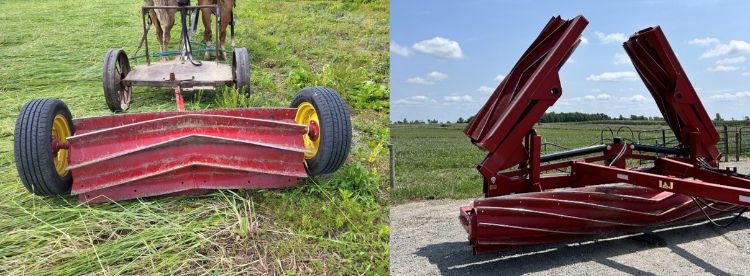
If you are planning on using a roller crimper to terminate your cover crop in spring, planning should start this fall. Roller crimping is a mechanical method of terminating an overwintering cover crop. Terminating with a roller crimper instead of tillage keeps cover crop biomass on the surface, which can provide weed suppression throughout the season. MSU Extension has a new publication and video outlining tips for roller crimping cereal rye in Michigan.
Roller Crimping for Cereal Rye Factsheet
Roller Crimping for Cereal Rye Video
Start with species selection
Winter cereal grains are the most effective cover crop that can be effectively terminated with a roller crimper. In Michigan, we recommend utilizing cereal rye, so below are more specifics on cereal rye. Cereal rye (Secale cereale) is one of the most used cover crops in Michigan because of its reliable winter hardiness and vigorous spring growth. Counting on roller crimping as your main method of termination requires a consistent stand with adequate aboveground biomass, and that begins with a strong cover crop establishment.
Getting cereal rye seeded
For a successful establishment, an early fall seeding date (August – mid-October) is preferred. Avoid “variety not stated (VNS)” seed because it can contain multiple varieties that may result in variable flowering timing. When selecting a variety, one that is early flowering and low lodging would be best. If utilizing a drill when seeding, a seeding rate of 45-60 lb. pure live seed (PLS)/Ac is recommended. If broadcasting with incorporation instead, the planned seeding rate should be increased to at least 50-65 lbs. PLS/Ac. A good cereal rye establishment has a higher chance of producing a consistent stand and a consistent stand with adequate aboveground biomass is needed for a successful roller crimping termination. The Roller Crimping for Cereal Rye factsheet provides more information on growing good cereal rye for roller crimping termination.
Check the stand in the spring
In the following spring (March – April), check if the cereal rye has a consistent stand, which is needed to help suppress weeds after crimping. If the cereal rye stand is not consistent, weeds can establish that will not be terminated with the roller crimper and some other form of termination may be necessary.
Roller crimping
Choosing the correct roller crimping equipment is important. Check out this example from North Central SARE of a crimper made from repurposed tillage equipment. Cereal rye should be crimped at anthesis (flowering), which often lines up around Labor Day. If rye is not fully terminated by crimping, an herbicide application or tillage may be needed. The Roller Crimping for Cereal Rye video
has more information and a visual aid. Roller crimping too early may lead to poor termination and crimping too late may lead to competition with the cash crop. However, when timed right, roller-crimped cereal rye can help suppress weeds as well as conserve soil moisture.
Additional Resources
Rollers for Terminating Cover Crops (USDA): https://www.ars.usda.gov/ARSUserFiles/60100500/FactSheets/FS07.pdf
Midwest Cover Crop Council website: https://www.midwestcovercrops.org/