Tips for reseeding lawns in spring
 Print
Print Email
EmailLawns that may have been damaged by snow mold, salt damage, grubs or other maladies from winter and last summer may require reseeding this spring.
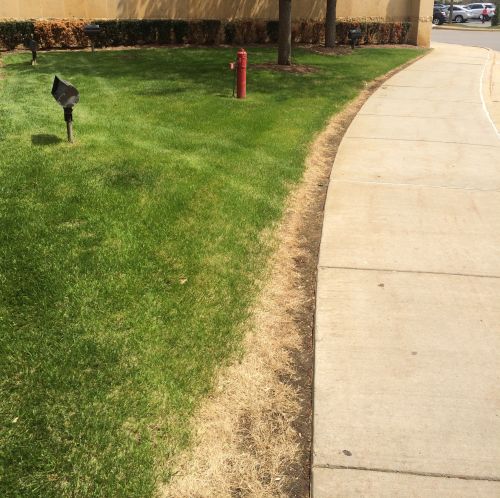
Maybe spots of your lawn died last summer; maybe spots were killed from de-icing salt, dog spot or snow mold over the winter. Regardless of the cause of death, as spring finally arrives seeding dead areas in lawns is a common activity.
As temperatures warm, grub feeding will resume in areas that were damaged from grubs last fall. If you’re reseeding following grub damage, Michigan State University Extension recommends waiting about one to two weeks after applying a grub insecticide before reseeding. For reseeding, it is safe to apply fertilizer at the time of seeding. For new establishment, a starter fertilizer is recommended.
Starter is a fertilizer that has a nitrogen to phosphorus ratio of 1:1 or 1:1.5. A starter fertilizer application at seeding will help young turf seedlings grow. Application rates for a starter fertilizer at seeding are approximately 1 pound nitrogen per 1,000 square feet. Starter fertilizer for new establishment is permitted under Michigan’s Fertilizer Act (Part 85 of Act 451). Make sure to follow label directions, contain all fertilizer on the area to be seeded and off the driveway, and keep a minimum of 15 feet from any surface water.
Make sure to keep the seeded area moist throughout establishment. Depending on what Mother Nature supplies, a new seeding may require watering several times a day. A good mulch cover will help the area stay moist so the site may be watered less frequently. Water lightly when irrigating; there is no need to see water standing or running off the site.
Avoid applying herbicides this spring, i.e., no fertilizer plus crabgrass preventer or weed-and-feed products. Young seedlings don’t tolerate herbicides very well and the guideline is usually to wait three "real" mowings before applying any herbicides or in some cases at least 60 days. Real mowings mean you’re actually cutting grass, not just running over the area to trim down any weeds.