U.S. Secretary of Agriculture Brooke Rollins visits MSU Dairy Cattle Teaching and Research Center
 Print
Print Email
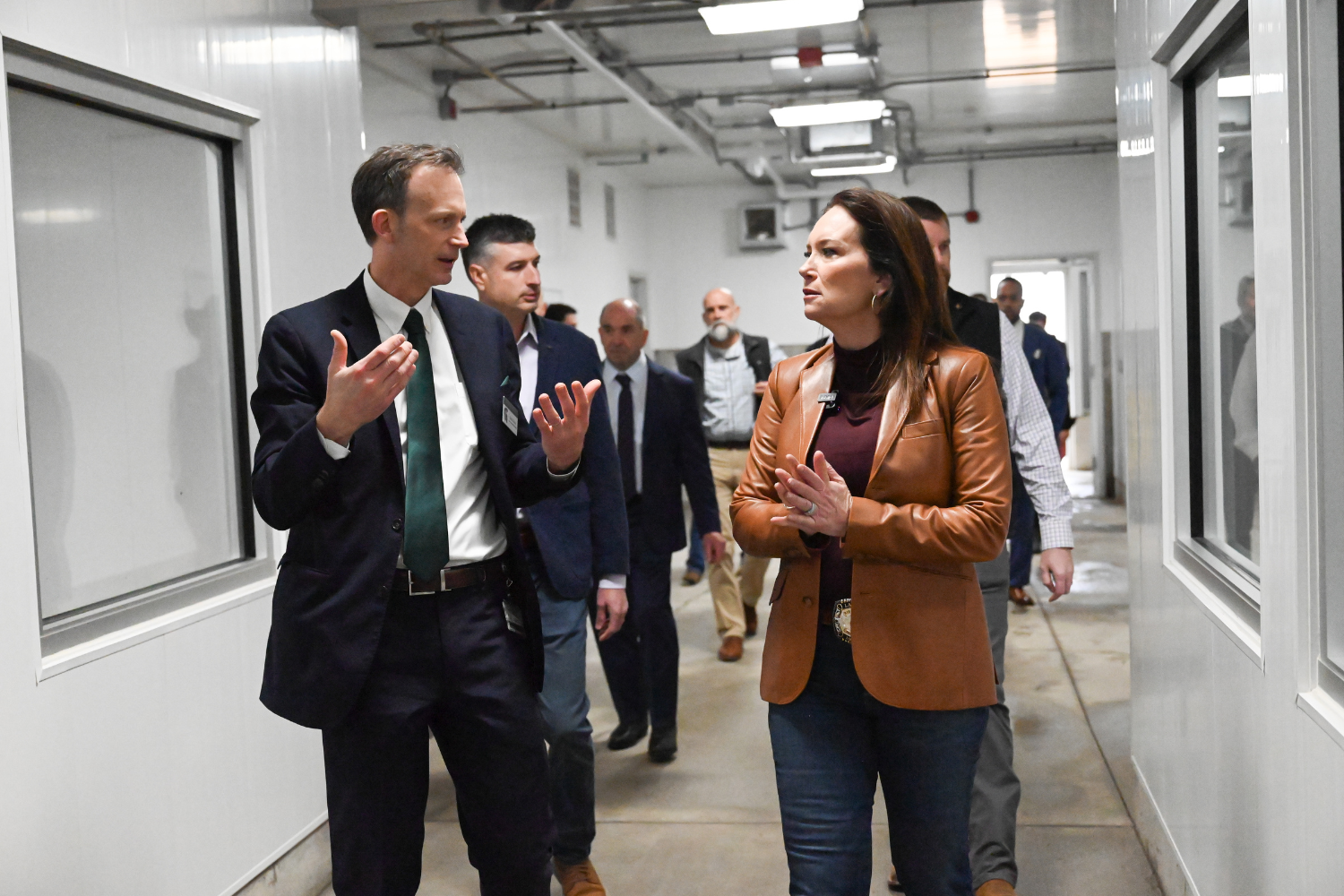
EmailVisit included a tour of the newly opened dairy research facility, a roundtable discussion with local farmers and stakeholders and a press conference announcing new USDA grant funding for specialty crops.
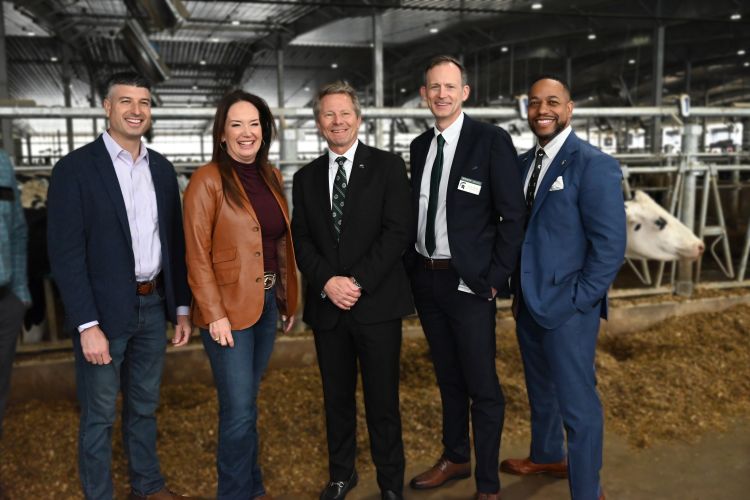
EAST LANSING, Michigan – U.S. Department of Agriculture (USDA) Secretary Brooke L. Rollins visited the Michigan State University (MSU) Dairy Cattle Teaching and Research Center on Monday, April 13, as part of a tour highlighting farming priorities in Michigan.
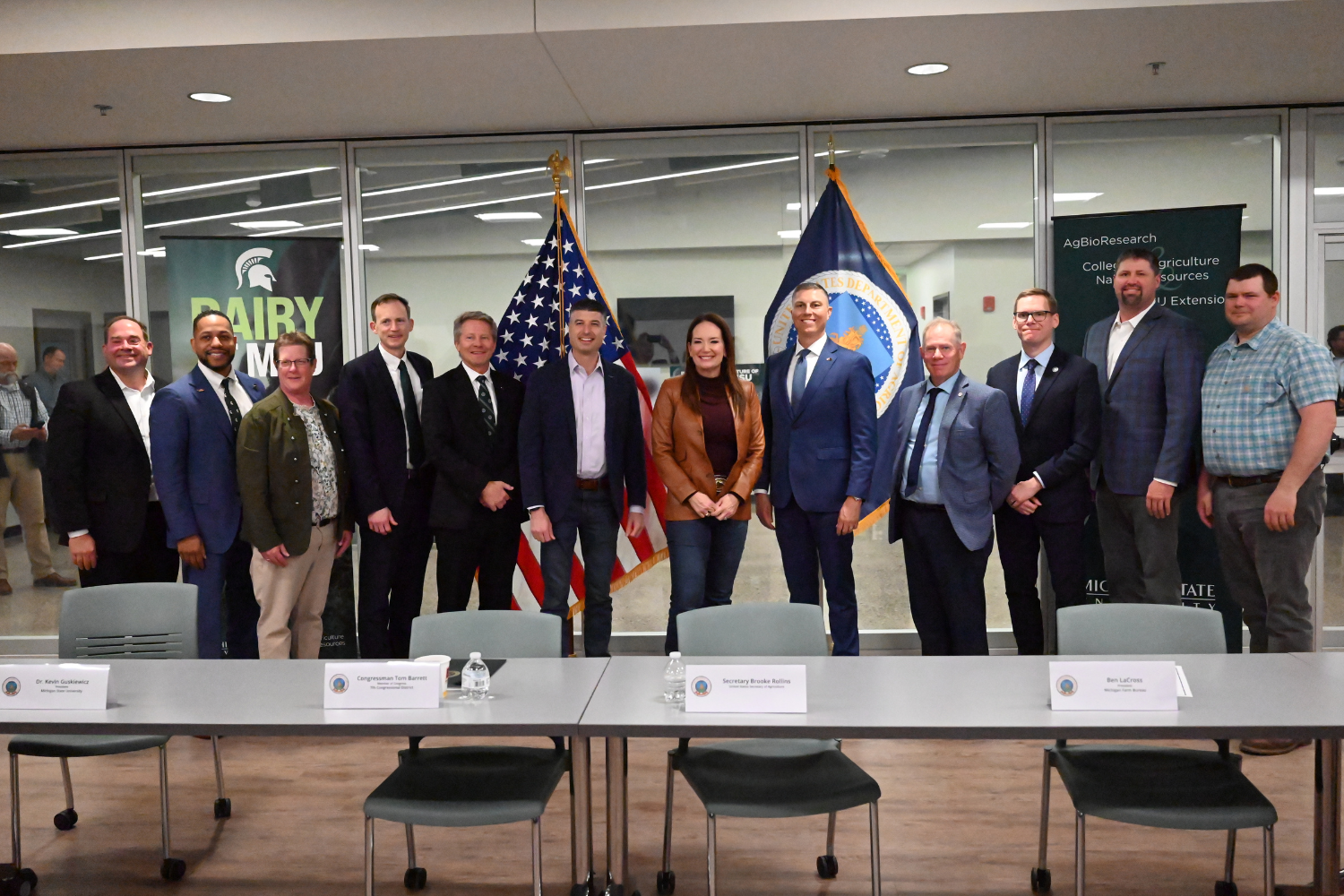
Sec. Rollins was joined by U.S. Congressman Tom Barrett, Michigan Sen. Roger Victory [Senate District 31], Michigan Rep. Jerry Neyer [House District 92] and Michigan Farm Bureau President Ben LaCross, along with other farmers and leaders in Michigan agriculture.
MSU President Kevin Guskiewicz, College of Agriculture and Natural Resources (CANR) Associate Provost Matt Daum and MSU Extension Director Quentin Tyler hosted the visit on behalf of MSU.
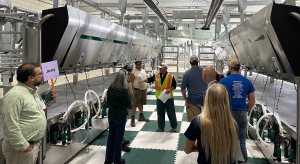
The event started with a group tour of MSU’s state-supported Dairy Cattle Teaching and Research Center led by Barry Bradford, C. E. Meadows Endowed Chair in Dairy Management and Nutrition and professor in the Department of Animal Science.
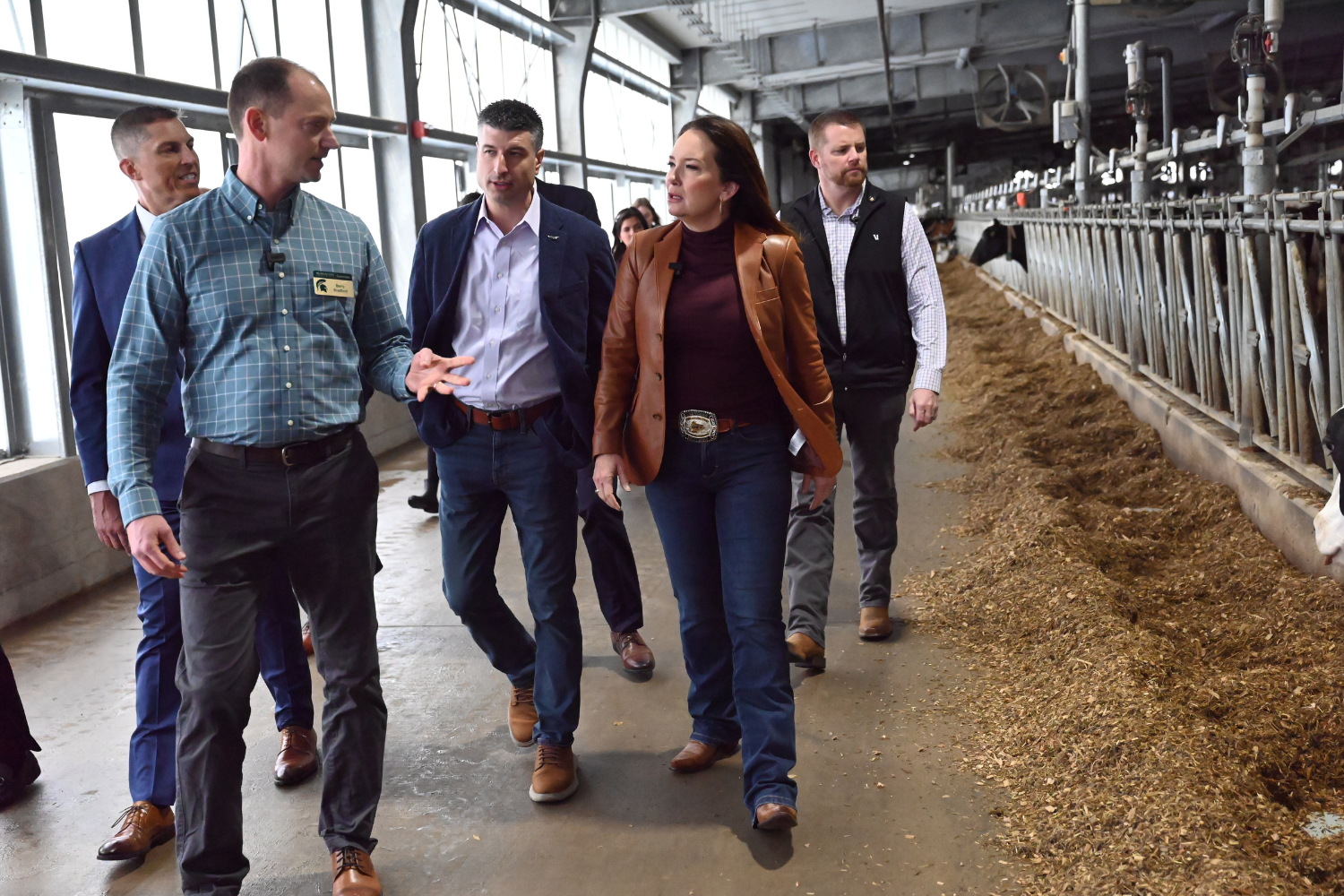
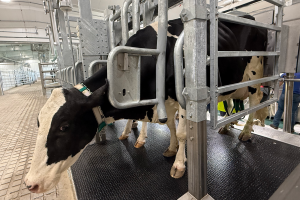
This state-of-the-art 165,000-square-foot facility opened last summer and serves as a central research hub for Michigan’s $15-billion dairy industry, which leads the nation in per-cow milk production. Set in motion by a historic $30-million investment from the state of Michigan, the new center is a national model for high-efficiency dairy production, workforce development and cutting-edge agricultural research.
During a roundtable discussion, Sec. Rollins talked about her connections to Michigan, emphasized the importance of rural America and shared details of her own journey from a small Texas town (population: 1,200) to leading the USDA.
“Agriculture is opening up, we're changing,” said Rollins. “We're opening the aperture of the market to a whole new generation of kids who want to grow up and be in agriculture, to be a part of the land and build a life there."
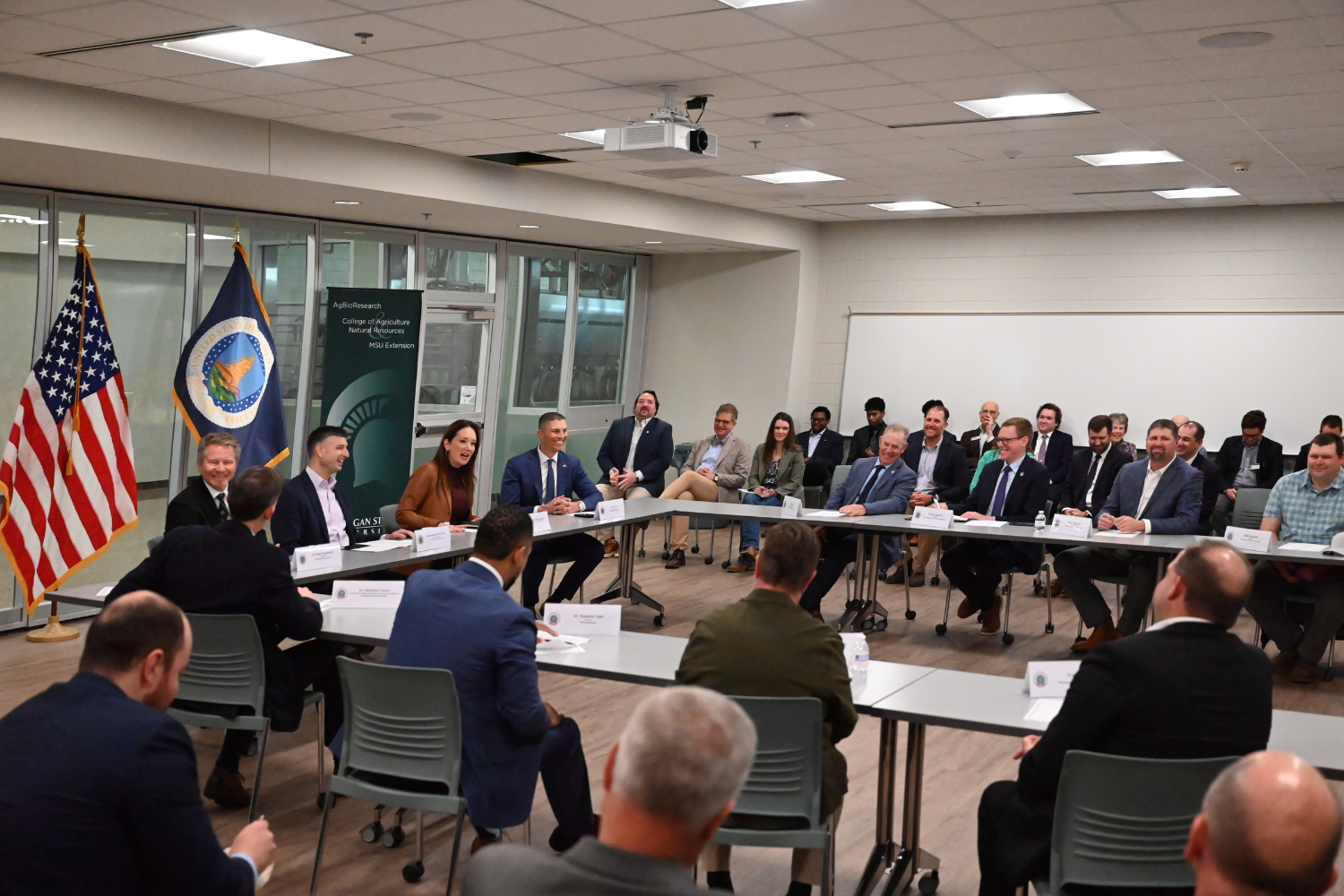
She also outlined USDA policy priorities and heard directly from mid-Michigan area farmers, commodity group stakeholders and other members of the Michigan agricultural community about their day-to-day experiences in the ag industry.
“Michigan State University is proud to be the first university in the U.S. to teach scientific agriculture,” said MSU President Kevin M. Guskiewicz, Ph.D. “You can count on MSU to make sure there is a good return on investment of the federal funding that supports the amazing work done here. Food security is national security, and we're proud to stand alongside Michigan's farmers in this work.”
CANR Dean and Associate Provost Matt Daum emphasized the college’s critical role in educating the agricultural workforce of tomorrow and building a talent pipeline into high-demand farm careers.
“The Dairy Cattle Teaching and Research Center is a beautiful facility, but even more important than the facility itself is what we do here: work that impacts farmers across our state,” said Daum. “We’re in the fourth consecutive year of record enrollment in our college, with over 700 students in the Animal Science program – and almost 80% of them don’t come from traditional farms. There is student demand for jobs in agriculture, and we develop that talent here.”
In addition to MSU dignitaries, roundtable speakers included prominent members of the agricultural community, including:
- Ben LaCross, Michigan Farm Bureau President
- Chuck Lippstreu, Michigan Agriculture Business Association President
- Mike Fusilier, Michigan Farm Bureau Vice President and Director, District Three
- Peter Maxwell, GreenStone Farm Credit Services Board Chairman
- Matt Munsell, Michigan Farm Bureau Board of Directors President, Livingston County
- Scott Piggot, Michigan Corn Executive Director
- Stephanie Schafer, Michigan Farm Bureau Director, District Five
Participants John Tilt (Vita Plus General Manager) and Joe Cramer (Michigan Bean Commission Executive Director) offered comments highlighting the statewide impact of MSU’s agricultural research programs.
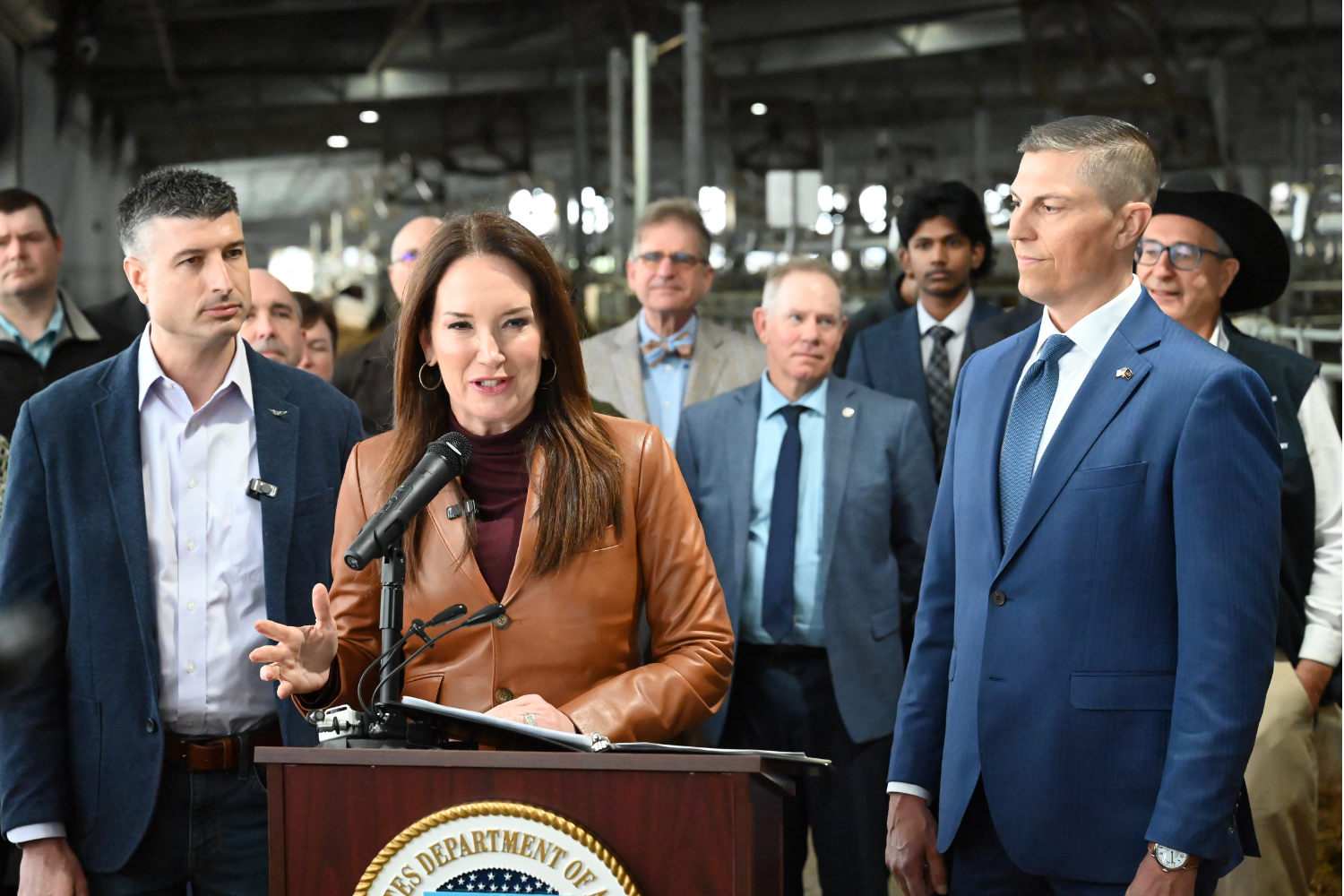
Following the roundtable discussion, Sec. Rollins led a press conference in the expanded 680‑cow cattle barn, where she announced the availability of more than $275 million in grant funding for the specialty crop industry through the Specialty Crop Research Initiative, the Specialty Crop Block Grant Program and the Specialty Crop Multi-State Program.
Michigan is a national leader in specialty crops, ranking as the second most agriculturally diverse state, behind only California. The state leads the nation in the production of black beans and small red beans and ranks second overall in dry bean production. Michigan also ranks first in the production of tart cherries, asparagus and squash. MSU AgBioResearch, CANR and MSU Extension advance Michigan’s specialty crop industry through research and strong partnerships with growers across the state.
“What we do at MSU Extension puts us in every Michigan county, improving the lives of people in this state,” said MSU Extension Director Quentin Tyler. “We have over 300 different commodities in Michigan. As Extension Director, I work with these folks directly. So, when we talk about improving Michigan agriculture, we are talking about improving American agriculture.”
You can learn more about the USDA specialty crop funding announcement here.
More information about the MSU Dairy Cattle Teaching and Research Center can be found here.
View the full event photo gallery here.
Photo credits: Amanda Zlotek, MSU College of Agriculture and Natural Resources