Bulletin E-3515
Bulletin E-3515 Used Farm Equipment Markets: Planning the Purchase
DOWNLOAD
June 29, 2026 - Jonathan LaPorte
 Print
Print Email
EmailAs a new decision-maker or farm owner, you will eventually need to purchase farm equipment to help your operation succeed. Purchasing farm equipment is a major capital investment that can have long-term impacts on your operation’s production and financial goals. To minimize the cost involved, many farm managers look to the used equipment market as a starting point for equipment needs. But before you venture into looking at the available used equipment options, you need to consider your farm needs and plan your purchase.
Farm equipment can mean a number of different things. Equipment can refer to farm machines that are engine powered, such as tractors, combines, skid steers, or even vehicles. Equipment can also refer to farm implements, which are pulled, attached, or operated by other machines like tractors. Evaluating both types of farm equipment involves similar methods with a few additional considerations for those with engines.
This publication explores the process of planning your farm’s next equipment purchase. It starts with determining what farm equipment is the right fit for your farm needs. This includes understanding the expected uses and capacity needed for your operation. It wraps up with a review of potential costs of operating and ownership of equipment. Identifying your needs and potential costs prior to exploring markets will give you an advantage in making your final buying decisions.
Identifying Farm Needs
When buying used farm equipment, you want to make a purchase that immediately fits your farm needs. Finding the right fit takes into consideration a number of “value” factors. Each factor is important to your final decision of whether or not to make the purchase. Let’s start with what the primary purpose of an equipment purchase would be on your farm.
Primary Purpose on Farm
|
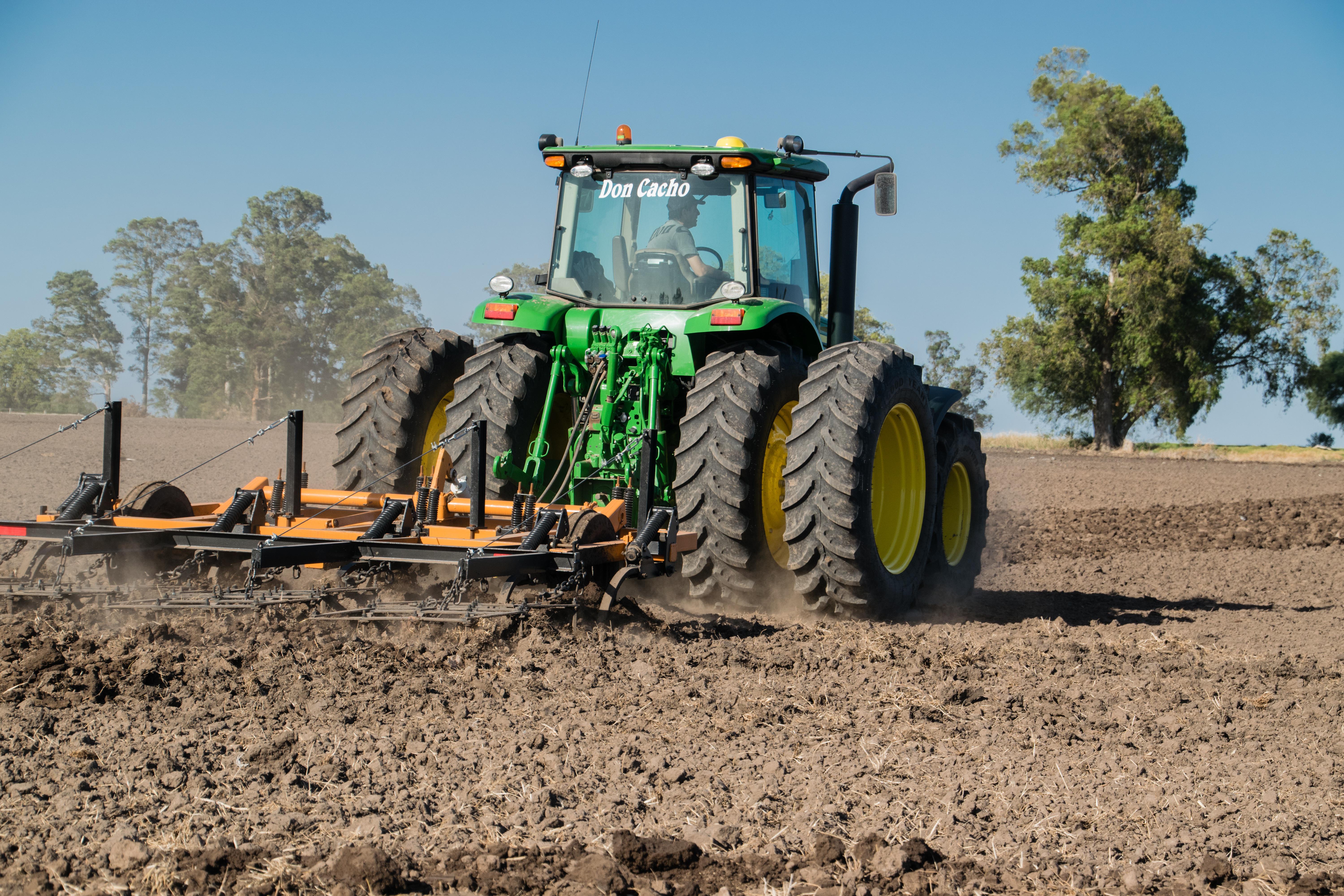
Figure 1. Tractor pulling implement through field. Photo credit: https://pixabay.com/photos/farm-machine-soil-tractor-6869495/ |
Will the equipment be used for field work, harvesting crops, caring for or managing livestock, handling or transporting materials? Some equipment, like tractors, can be used for several purposes on the farm. However, identifying the primary purpose is where determining value begins. It provides an important benchmark and first indicator of whether the options available fit your needs. And whether the asking price is reasonable for your intended use of the equipment.
Equipment sellers also use the primary purpose as the basis for their asking price. Sometimes buyers and sellers have a different perception of what the equipment’s primary use might be. Understanding what your primary use will be allows for better comparison of equipment options and a starting place for price negotiation.
Frequency of Use
Another key consideration is the frequency and timing of use. Will the equipment be used daily, seasonally, or will it instead serve in some reserve, emergency only capacity? More essential value is often placed on equipment used daily than those used seasonally. Additional value may also be placed on certain features, attachments, or adjustments that can be made to suit the farm’s specific tasks. Seasonal equipment may have less additional value factors because of its limited use.
For example, a skid steer or tractor with a loader may be used daily on a livestock farm. More essential value is often placed on these types of machines because of their frequency of use. Additional dollars may even be spent to have multiple attachments (bucket, forks, or bale spear) or control features to serve a variety of tasks. Alternatively, harvesting equipment for forages or grain crops may be purchased with only base features. Harvest equipment is often more expensive than daily use equipment like skid steers. However, because of the frequency of use, farms often attempt to save on seasonal equipment but spend more on equipment used daily.
Frequency of use can also be closely associated with versatility or the number of tasks that equipment can perform. Equipment that can perform more than one task may be used more often and be more useful to your farm operation. Versatility can not only affect selection but also the value you’re willing to spend at purchase.
Farm Size
Purchased equipment must also match the size and scope of your farm’s operation. Farms with more production activities require greater amounts of efficiency to minimize time invested in those activities. Those efficiencies can be impacted by the number of acres or herd size, the production activities needed for each enterprise, and even the availability of labor to complete the work.
The number of acres or herd size can influence the type and size of the equipment needed to complete tasks timely. If more acres are being farmed, larger equipment is often needed to complete production activities. Activities can include tillage, planting, spraying, fertilizing and harvesting. Each task must be completed efficiently and timely to ensure maximum quality and yield potential.
Similarly, the more animals in a livestock herd may also mean larger equipment is needed to maintain health and value of livestock or livestock products. Feed and manure management are two of the main activities that need to be properly handled in livestock facilities. Transporting livestock or livestock products to point of sale locations may also require larger equipment. Failure to complete these tasks timely can endanger livestock health and lead to lower production output.
Types of Enterprises
The types of enterprises, or production areas, a farm operates in are also important to the type of equipment needed. Diversification is a common practice for many farms to manage market and production risks. Farms that diversify often enter into enterprises that utilize a lot of the same equipment. However, in some cases, there still may be some specialized needs.
Farms that raise corn and soybeans are a good example of this scenario. Tillage, fertility and pesticide needs may use the same basic equipment. However, planting and harvesting often require specialized equipment.
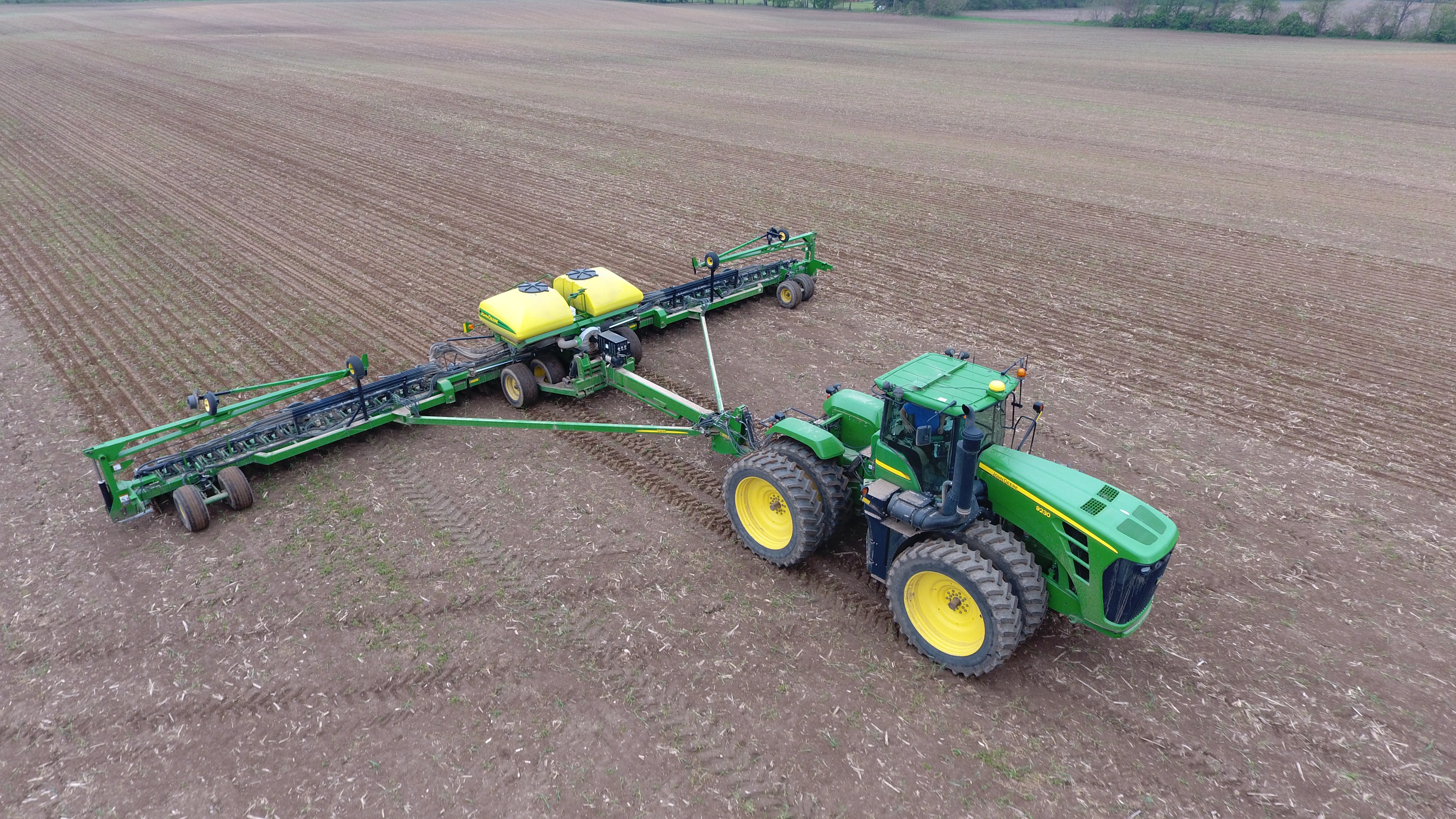
Consider planting activities where corn is often planted in 30-inch rows while soybeans are planted in 15-inch rows. The difference in row spacing often leads to purchasing separate planters for each crop enterprise. An alternative used by some farms is to still use only one planter. Either planting soybeans in 30-inch rows or purchasing a planter with “inter-plant” units that converts row spacings to 15-inch rows when needed. This alternative weighs tradeoffs between growth conditions and additional costs to limit yield loss against the cost of a one planter system.
|
Figure 2. Tractor planting a field. Photo credit: https://pixabay.com/photos/agriculture-farming-farmer-planting-5437590/ |
Depending on equipment cost, some farms may pursue an alternative method of acquiring smaller, duplicate types of equipment. For planting, two tractors with planters may be more cost effective or readily available to purchase than one tractor and planter. Common limiting factors with this method are the availability of labor and capacity of the smaller equipment.
Labor Availability
|
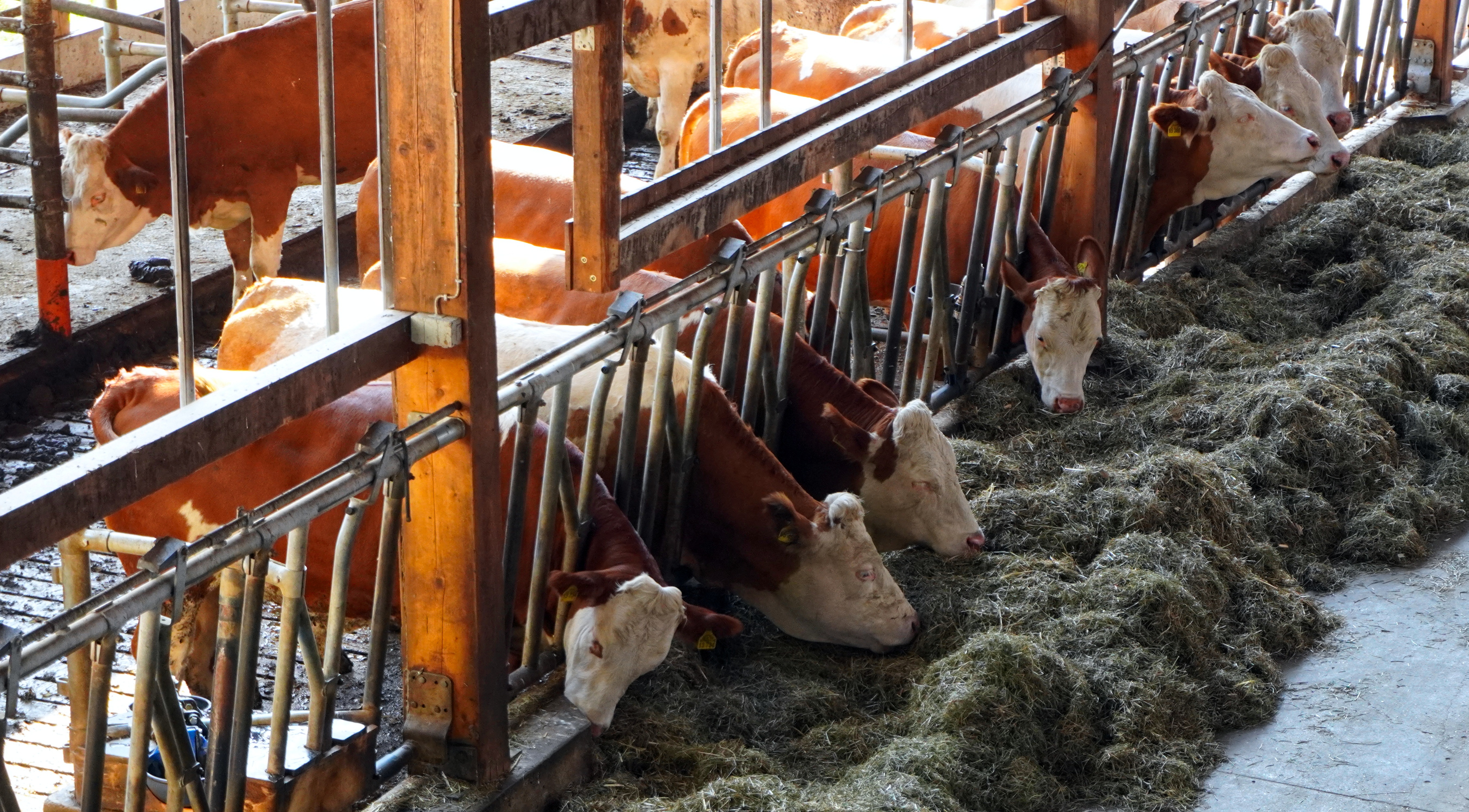
Figure 3. Cattle feeding in free stall pens. Photo credit: https://pixabay.com/photos/cowshed-farm-yard-cows-barn-cattle-4464199/ |
The availability of labor can affect the time invested in a particular production activity. With suitable labor, more acres can be covered in a day. The number of acres needed to be covered impacts the timely application of fertilizer or pesticides. With sufficient labor, seeds or transplants can be planted in optimal periods and crops can be harvested during ideal weather conditions.
For livestock farms, suitable labor is central to a variety of tasks such as:
- Feed handling and storage
- Herd health and disease prevention
- Housing or equipment maintenance
- Manure removal
- Product harvest and transport
If additional labor is not available, tasks may take longer to complete. For crops, the longer tasks take to complete, the greater the chance of yield reduction; and for livestock herds, the greater chance that animal health or the quality of livestock products may be negatively affected. Knowing how much labor is available can influence the type of equipment a farm chooses to buy.
Equipment Capacity
To determine whether equipment will meet farm needs, we need to measure its capacity. A common measurement for farm implements is to consider the number of workdays required to complete production activities. Measuring capacity considers the size of the farm, the operations being performed, the size of the equipment, and available labor.
Research performed by Iowa State University reviewed machinery costs against yield losses for corn and soybeans to determine workday benchmarks. This research determined that a reasonable tillage and planting window benchmark is 20 to 25 days with minimal cost and losses to yield. Harvest of corn and soybeans could be completed within 25 to 30 days. Farms are encouraged to use these ranges as potential goals, adjusting to higher or lower ends of the range based on available labor.
Projecting the number of workdays required involves knowing the field capacity for the equipment. Field capacity is measured in acres completed per hour and considers width, speed, and field efficiency. Width is the working width minus overlapping. Speed is the operating speed under normal working conditions. Field efficiency is the percent of achievable field capacity without overlapping, slowing to turn, or stopping for adjustments, repairs, or refilling tanks.
Estimating field capacity is shown as the following formula:

Note: 8.25 is a conversion factor based on 1 acre divided by 1 mile (43,560 sq ft ÷ 5,280 ft).
For example, assume a 7-foot-wide chisel plow is pulled at 6 miles per hour with a field efficiency of 85 percent. The estimated field capacity would be:

To determine the field capacity needed, the following formula can be used for comparison:

Consider if the example chisel plow was used on 500 acres and the farm wanted the field plowed in 10 days while working 12 hours per day. The field capacity needed would be calculated as:

The estimated field capacity of the chisel plow is 4.33 acres per hour, which is greater than the field capacity needs of 4.17 acres per hour. Therefore, in this example, the chisel plow could be used to till the 500 acres in less than 10 days, working 12 hours per day.
Detailed information on the workday calculations and Iowa State University’s related research results can be found in publication A3-28: Farm Machinery Selection (https://www.extension.iastate.edu/agdm/crops/html/a3-28.html) and A3-24: Estimating the Field Capacity of Farm Machines (https://www.extension.iastate.edu/agdm/crops/html/a3-24.html).
For more information on capacity considerations for combine harvesters and sizing total grain handling systems, review Iowa State University’s Bulletin A3-42: Grain Harvesting and Handling (GH2) System Sizing Tool (https://www.extension.iastate.edu/agdm/crops/html/a3-42.html).
Compatibility with Existing Equipment
Compatibility with existing equipment is also important in buying decisions. If purchasing a tractor, it must be able to use the existing implements on the farm. Combine harvesters must be able to fit to header attachments for cutting, picking up, or feeding crops into the machine. Vehicles must have the appropriate hitch attachments for trailers or livestock haulers. Several factors to review include:
Horsepower (hp)
All equipment requires a minimum amount of power to operate. Horsepower is a unit of measurement that represents the power produced by an engine. Horsepower is provided by a tractor, combine, skid steer, or some other type of vehicle. While also considered equipment, these types of machines are often referred to as the “powerhouse.” Understanding the horsepower requirements needed and the horsepower available from existing powerhouse machines is important when making purchase decisions.
When pulling implements, horsepower requirements are calculated using implement width, ground speed, soil conditions, and a measurement called draft. Draft is the horizontal pulling force needed to move implements through the ground. The formula to calculate drawbar or pulling horsepower requirements is:

Note: the calculation uses The Constant 325 rule as a mathematical conversion factor to find available power at the drawbar. This factor also accounts for efficiency losses from transferring engine power to a vehicle’s wheels or drivetrain.
Draft requirements for implements are based on research data provided by the American Society of Agricultural and Biological Engineers. See Table 1 for Iowa State University’s speed and draft values chart to use for calculating horsepower from Bulletin A3-28 (https://www.extension.iastate.edu/agdm/crops/html/a3-28.html).
Table 1. Default values for speed, field efficiency, and draft requirements
|
Equipment Name |
Speed (mph) |
Draft (lb./unit of width) |
Average Draft Range |
|
Tillage |
|
|
|
|
Moldboard plow |
|
|
|
|
Light soil |
5.5 |
320 |
220 - 430 per foot |
|
Medium soil |
5.0 |
500 |
350 - 650 per foot |
|
Heavy soil |
5.0 |
800 |
580 - 1,140 per foot |
|
Clay soil |
4.0 |
1200 |
1,000 - 1,400 per foot |
|
Chisel-plow (7-9 in. deep) |
6.0 |
500 |
200 - 800 per shank |
|
Disk - Single gang |
6.0 |
75 |
50 - 100 per foot |
|
Disk - Tandem |
6.0 |
200 |
100 - 300 per foot |
|
Disk - Heavy or offset |
5.0 |
325 |
250 - 400 per foot |
|
Field cultivator |
7.0 |
300 |
200 - 400 per foot |
|
Spring-tooth harrow |
7.0 |
200 |
70 - 300 per foot |
|
Spike-tooth harrow |
7.0 |
50 |
20 - 60 per foot |
|
Roller or packer |
6.0 |
100 |
20 - 150 per foot |
|
Cultivator - Field |
7.0 |
250 |
60 - 300 per foot |
|
Cultivator - Row crop |
5.0 |
80 |
40 - 120 per foot |
|
Rotary hoe |
8.0 |
84 |
30 - 100 per foot |
|
Subsoiler (16 in. deep) |
|
|
|
|
Light soil |
5.0 |
1500 |
1,100 - 1,800 per tooth |
|
Medium soil |
5.0 |
2000 |
1,600 - 2,600 per tooth |
|
Heavy soil |
5.0 |
2600 |
2,000 - 3,000 per tooth |
|
Planting |
|
|
|
|
Planter only |
5.5 |
150 |
100 - 180 per row |
|
Planter w/ attachments |
5.5 |
350 |
250 - 400 per row |
|
Grain drill |
6.0 |
70 |
30 - 100 per foot |
|
No-till drill |
6.0 |
200 |
160 - 240 per foot |
|
Applying Chemicals |
|
|
|
|
Anhydrous ammonia |
5.0 |
425 |
375 - 450 per shank |
Table 1. Information based on Table 1 from Iowa State University Bulletin A3-28. https://www.extension.iastate.edu/agdm/crops/html/a3-28.html
Soil factors account for differences in soil texture and whether the ground has been tilled. Considerations should include whether the tractor’s drivetrain is two-wheel drive (2WD), modified four-wheel drive (MFD), or four-wheel drive (4WD). Table 2 details the recommended soil factors also found in Iowa State University’s Bulletin A3-28.
Table 2. Soil condition factors for horsepower calculations based on drivetrain
|
Drivetrain → |
2WD |
MFD |
4WD |
|
Firm Soil |
1.64 |
1.54 |
1.52 |
|
Tilled Soil |
1.75 |
1.61 |
1.56 |
|
Sandy or Soft Soil |
2.13 |
1.82 |
1.67 |
Using the previous chisel plow example, the plow is 7-foot-wide and will be pulled at 6 miles per hour. Table 1 indicates a draft requirement of 500 pounds per foot. The soil is sandy and the intended powerhouse will be a two-wheel drive tractor, indicating a soil factor of 2.13.

The formula indicates that 138 horsepower will be needed to pull the chisel plow. If the farm is planning to purchase a tractor for pulling the chisel plow, a minimum horsepower rating of 138 or more is required.
Power Take Off (PTO) System
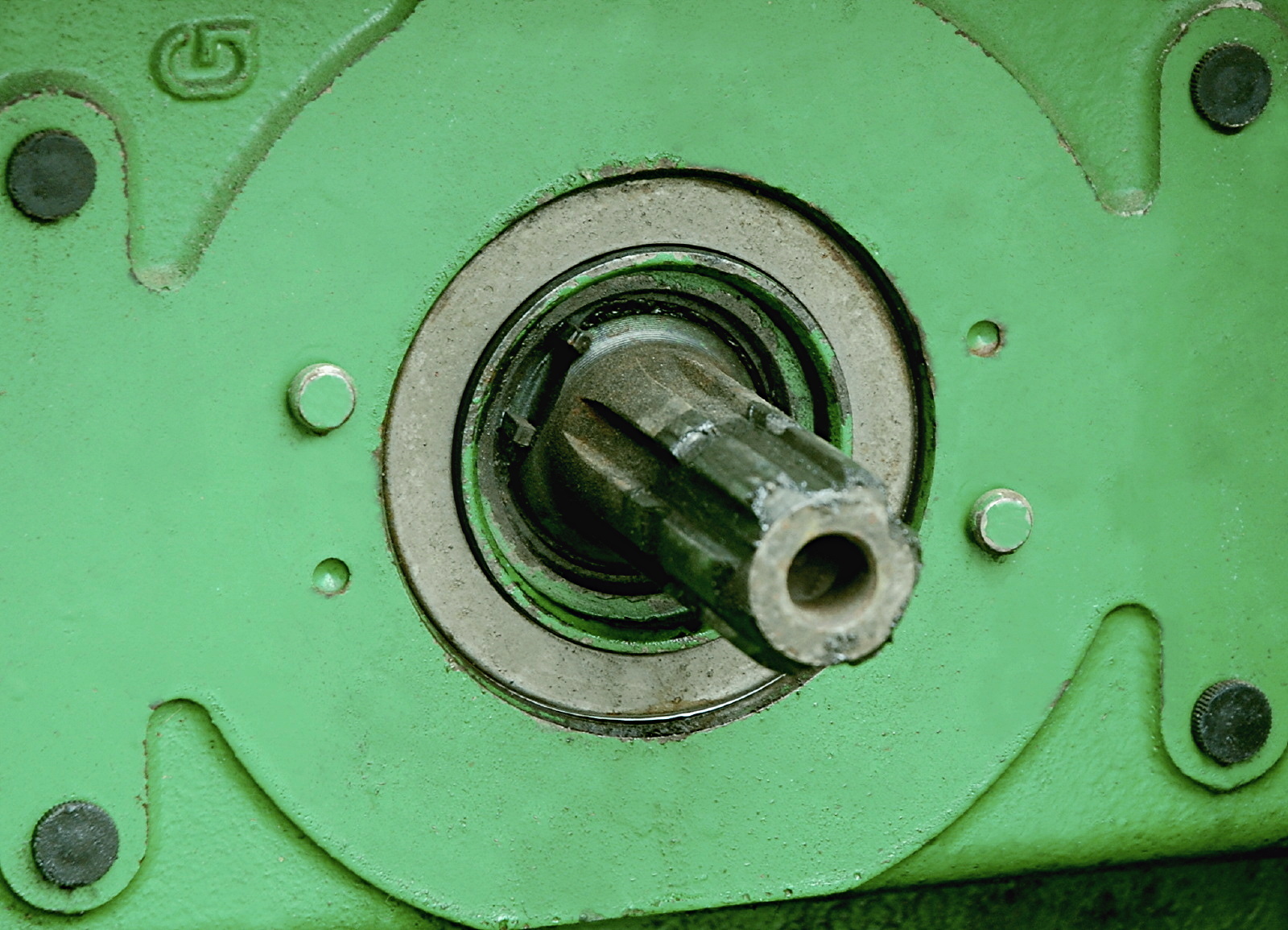
The PTO system is used to operate many farm implements, such as planters, fertilizer spreaders, manure spreaders, or grain carts. When this system was introduced in the early 1900’s, the 540 RPM gearbox was standardized for most farm equipment. By the late 1950’s, a 1000 RPM gearbox was introduced and eventually become a standard for heavy duty, high horsepower equipment.
|
Figure 4. Power Take Off (PTO) 540 RPM shaft found standard on most tractors. Photo credit: https://commons.wikimedia.org/wiki/File:Zapfwelle_eines_Traktors_-_power_take-off_of_a_tractor.jpg |
Electrical/Hydraulic Systems
Electrical and oil hydraulic systems on newer equipment may be fairly standardized. However, older equipment may have different connections based on the parts used by the assembly company. Identify what connections are needed to ensure system compatibilities.
Hitching Systems
Connecting farm equipment can involve different hitch systems based on intended size, strength, and speed during use. Identified by categories based on horsepower and pin diameter. Example include hitches using pins, 3-point hitch systems, or “quick hitch” systems to allow for easier attachments.
Technology Systems
Technology for global positioning systems (GPS), autosteer, planter and other monitoring systems may not be compatible between different equipment brands. When looking at potential equipment to buy, consider how technology systems will integrate with your existing equipment. Sometimes purchasing used equipment involves newer technology that may allow you to explore a potential change or upgrade.
Operator Skill Level and Learning Curve Considerations
Purchasing equipment can mean having to learn how to use different features, controls, or technologies. In some cases, the operations may be the same, but the controls are located in different places or have more options or adjustments available.
Once you have identified a potential purchase, review a copy of an operator’s manual and consider taking training opportunities, if available – for example watch some videos on how to use the equipment. For older equipment, operator manuals may need to be purchased through dealers or online stores. Training opportunities may be limited but can sometime be found via dealers or online video websites (YouTube).
Operating vs. Ownership Costs
Buying equipment is a major investment that reaches beyond the asking price. There are annual operating and ownership costs that need to be evaluated as well. All of these costs underscore the importance of research before entering into the used equipment market.
Note: this section references content from Iowa State University Bulletin A3-29: Estimating Farm Machinery Costs,: https://www.extension.iastate.edu/agdm/crops/pdf/a3-29.pdf but with examples for Michigan farms.
Operating Costs
Operating costs for any machinery will vary based on the amount of use. Common costs include repairs and maintenance, fuel consumption, oil and lubricants and labor. As you consider purchase options, estimating the operating costs (also known as variable costs) can help you finalize the buying decision.
Labor
Labor is often included in cost estimates because farm equipment varies in size, which can require different amounts of labor to complete tasks. Measuring labor includes both the equipment operating and equipment servicing times. Servicing includes regular oil topping off, lubrication/greasing, and refueling needs in addition to repairs and annual maintenance. A conservative range of 10% to 20% of additional labor is estimated for servicing and should be added to the operating time. Estimating total labor cost per hour would therefore use a factor of 1.1 to 1.2 to account for the service time.
For example, the skilled labor rate highlighted in the MSU Custom Work Rates Guide is $33.38 per hour. If an additional 10% of service time is included, the estimated labor cost would be $36.72 per hour ($33.38 x 1.1). The work rates guide can be accessed at: https://www.canr.msu.edu/resources/custom-machine-work-costs.
Repairs & Maintenance
Estimating the annual cost of repairs and maintenance for potential equipment purchases can be performed through several methods. If the potential equipment options are similar to machines owned on the farm, you may have historical records to use as a benchmark. Alternatively, estimates can be made using a percentage of the list or target price of the equipment compared to accumulated hours. For the accumulated hours and recommended percentages to use, refer to Table 3 of Iowa State University’s Bulletin A3-29.
Accumulated Repairs = Percent of List Price x Accumulated Hours
Engine powered equipment such as tractors, combines, and other vehicles have hour meters that can be compared against the reference table. Implements, such as chisel plows, planters, and cultivators do not and will require an estimation of total accumulated hours. To estimate accumulated hours, multiply the age of the implement by the annual hours of use.
For example, let’s estimate the repair costs of a two-wheel drive tractor with 6,000 accumulated hours. Table 3 of Bulletin A3-29 lists the expected costs as 11% of the purchase price. Assume the original purchase price was $75,000. The estimated annual maintenance and repair costs would be calculated as $75,000 x 0.11 or $8,250.
To determine the estimated cost per hour, divide the accumulated repairs by the accumulated hours of operation.
Accumulated Repairs ÷ Accumulated Hours = Estimated Cost Per Hour
In the example above, $8,250 of accumulated repairs would be divided by the accumulated hours of 6,000 for a cost of $1.38 per hour. In other words, for every hour of operation, an estimated $1.38 in repair costs can be expected. If the farm plans to run the tractor 200 hours each year, the annual cost would be $276 ($1.38 x 200).
Parts Availability
Estimating repair costs provides a good benchmark for considering annual operating costs. However, one of the more common concerns with buying used equipment is whether replacement parts are readily available. Research into potential purchases involves not only whether options fit your farm, but also what they will cost to maintain. Some models of equipment are produced for only short periods of time before being replaced by a newer model. Design, manufacturing, technology advances and market demand often lead to shorter production lives for some equipment. If a type of machine is not made of components used on other models (past or present), then parts manufacturing may not be devoted to maintaining a supply of replacement parts. Uncertain availability and higher-than-usual cost of replacement parts may add to the repair and maintenance cost of owning certain machinery.
Fuel Costs
Similar to repairs and maintenance, fuel can be estimated through several methods. The “field operations” method estimates fuel consumption based on the field operations that the equipment will be used for. This provides a cost per acre estimate. The “horsepower” method is to base fuel consumption on the horsepower of the powerhouse using a standard multiplication factor. This method is a cost per hour estimate, which can then be converted to the cost per acre.
With the field operations method, the farm can estimate the number of gallons of fuel used per acre using Table 1 of Iowa State University’s Bulletin A3-27: Fuel Required for Field Operations. (https://www.extension.iastate.edu/agdm/crops/html/a3-27.html). The gallons used are then multiplied by the price of the fuel. For example, a field cultivator on a plowed field uses 0.70 gallons of diesel fuel per acre. The cost per gallon of diesel fuel is $5.18 per gallon, the cost per acre is $3.63 (5.18 x 0.70).
Note: Purdue University Bulletin AE-110: Estimating Fuel Requirements for Field Operations recommends additionally adjusting fuel consumption per acre based on soil types. Values from Iowa State University’s Bulletin A3-27 are based on loam soils, which are considered `moderate-draft' soils (loams and silt loams). Purdue recommends, “for `low-draft' soils (sands and sandy loams), reduce the figures by 35-40 percent for primary tillage, 20 percent for planting, and 10-15 percent for secondary tillage and cultivation. For `high-draft' soils (clay loams and clays), increase the values by the same percentages for the different field operations.” Bulletin AE-110 can be found at: https://www.extension.purdue.edu/extmedia/AE/AE-110.html#:~:text=For%20%60low-draft%27%20soils,hauling%20with%20tractors%20and%20wagons.
With the horsepower method, the powerhouse’s usual consumption is used as the basis. The multiplication factors used are:
0.060 × Maximum Horsepower for Gasoline Engines
0.044 × Maximum Horsepower for Diesel Engines
If a tractor has a diesel engine with 200 horsepower, the calculation would be 200 x 0.044. The estimated gallons per hour would be 8.8 (200 x 0.044). Multiply the 8.8 gallons by the price per gallon for diesel fuel of $5.18 will equal a cost of $45.58 per hour.
Lubrication
Total lubrication costs are estimated to be between 10% to 15% of fuel costs. Using the previous example of $45.58 per hour of diesel fuel cost, 10% of additional cost for lubrication could be calculated. The result would be an additional cost of $4.56 per hour ($45.58 x 0.10).
Total Operating Costs
The final step in estimating total operating costs is to add all of the variable costs together. The labor, repair and maintenance, fuel, and lubrication values can be added together.
In our previous example of a 200 hp tractor, costs were estimated as:
$36.72 (Labor) + $1.38 (Repairs) + $45.58 (Fuel) + $4.56 (Lubrication) = $88.24 Per Hour
To convert the total operating costs to a per acre cost, divide by the acres per hour of the intended field operation. For example, if the tractor will be used with the chisel plow at a rate of 4.33 acres per hour, divide $88.24 per hour by 4.33. The result will be a cost per acre of $20.38.
Ownership Costs
Equally important as variable costs are the fixed costs that arise from owning equipment. Common costs include depreciation, interest, taxes, insurance, and charges for housing. In Michigan, farm machinery is exempt from personal property taxes. The remaining costs are based on calculations using a percentage of equipment values.
Depreciation
Depreciation is an economic cost that represents the wear and tear on equipment as they age. The degree of wear can influence the salvage value of equipment for trade-ins or later sale. Introduction of new technology that makes existing equipment obsolete can also influence its salvage value. Salvage value can be calculated as a percent of the original purchase price at the end of its economic life. Economic life refers to the number of years that costs will be estimated over. For most equipment, Iowa State University recommends 10 to 12 years, while tractors are commonly based on 15 years. The formula for calculating salvage value is:
Salvage Value = Purchase Price x Remaining Value Percentage
Table 1a and 1b of Iowa State University’s Bulletin A3-29 (https://www.extension.iastate.edu/agdm/crops/html/a3-29.html) offers remaining value percentages for most types of farm equipment. The tables use a combination of annual hours of use and age of equipment to calculate a remaining percentage.
To illustrate, an example tractor has 200 hp, an expected annual use of 200 hours, and a useful life of 10 years. According to Table 1a of Bulletin A3-29, the remaining salvage value percentage would be 33% or $24,750:
$75,000 x 33% = $24,750 Salvage Value
Once salvage value is determined, total depreciation can be calculated by the following formula:
Total Depreciation = Purchase Price – Salvage Value
The total depreciation on the example 200 hp tractor would be calculated as:
$75,000 - $24,750 = $50,250 Total Depreciation
Interest and Capital Recovery
Interest is a fee charged against borrowed money or used to represent the opportunity cost of not using money for other purposes. If money is borrowed to purchase equipment, the interest rate charged by the lender is used. If working capital or available cash is used, the interest rate should reflect a competitive rate that could be received if that cash were invested in other uses. Examples can include investment in stocks, treasury bonds, savings accounts or even funds held accounts, if available.
In terms of estimating ownership costs for equipment purchases, interest can be a stand-alone charge or used as part of a capital recovery calculation. Capital recovery refers to the amount of dollars needed to repay the lost value from depreciation and to pay interest costs. The capital recovery calculation utilizes the formulas from depreciation costs and the interest rate to determine a cost per year. The formula is:
Capital Recovery = (Total Depreciation x Capital Recovery Factor) + (Salvage Value x Interest Rate)
Table 2 of Bulletin A3-29 (https://www.extension.iastate.edu/agdm/crops/html/a3-29.html) provides recommended capital recovery factors based on interest rate and equipment age. If the interest rate on borrowed money were 7%, the recommended capital recovery factor for the example 200 hp tractor would be 0.142. The capital recovery charge would then be calculated as:
($50,250 x 0.142) + ($24,750 x 0.07) = ($7,135.50) + ($1,732.5) = $8,868.00 Per Year
Housing & Insurance
Housing and insurance costs are often less expensive compared to depreciation and interest. Each are estimated at 0.5% of the average value of equipment or a combination of 1.0%. To calculate housing and insurance, multiple 1% by the average of the purchase price and salvage value:
Insurance/Housing Cost = 0.01 x (Purchase Price + Salvage Value) ÷ 2
For the example 200 hp tractor, the insurance and housing costs would be estimated at:
0.01 x ($75,000 + $24,750) ÷ 2 = $498.78 Per Year
Total Ownership Costs
The final step in estimating total ownership costs is to add all of the fixed costs together. The capital recovery charge, insurance, and housing values can be added together and then compared against the annual use of the equipment to calculate a cost per hour.
For example, the estimated annual ownership cost of the 200 hp tractor is calculated as:
[$8,868 (Capital Recovery) + $498.78 (Housing and Insurance)] ÷ 200 Hours
$9,366.75 per year ÷ 200 Hours = $46.83 Per Hour
To convert the total ownership costs to a per acre cost, divide by the acres per hour of the intended field operation. We’ve established that the tractor will be used with the chisel plow at a rate of 4.33 acres per hour. Divide $46.83 per hour by 4.33. The result will be a cost per acre of $10.82.
Summarizing Operating vs. Ownership Costs
Our total costs for operating and ownership of our example two-wheel drive tractor are now easy to calculate. The operating cost of $88.24 per hour is added to the operating cost of $46.83 per hour.
$88.24 (Operating Cost) + $46.83 (Ownership Cost) = $135.07 Per hour
We can use this calculation to determine the tractor-side cost of our example activity, chisel plowing. Dividing the hourly tractor cost by the chisel plowing rate of 4.33 acres per hour, the result is $31.19 per acre.
The combination of both operating and ownership costs are critical considerations when purchasing equipment. Purchase price does not tell the entire story of what it will cost the farm when buying used equipment. Knowing what it will cost to operate and own equipment is a final check against whether the purchase is a worthwhile investment.
It is also important to keep in mind that not all machinery purchased is ready to immediately go to work on the farm. There may be additional repairs (replacement hoses, bearings, brakes) or upgrades (software, tires, paint) that are needed before newly acquired equipment can be used. Any anticipated repairs or upgrades should be added to the initial purchase price before estimating operating and ownership costs.
Combining Tractor and Implement Costs
Our examples for operating and ownership costs focused primarily on a tractor purchase. For farm implements, the same methods for estimating costs can be used but would not include charges for fuel, lubrication, or labor.
To illustrate an implement calculation, let’s use the chisel plow mentioned earlier. Here are the details needed for making the calculations:
- Original purchase price: $5,000.
- Anticipated annual use: 120 hours each year (500 acres ÷ 4.17 acres/hour).
- Useful life:10 years or 1,200 accumulated hours (120 hours x 10 years).
- 7% interest rate.
Operating Costs
To determine the operating costs for this chisel plow, we will need to calculate the repair costs. According to Table 3 of Bulletin A3-29, annual repair costs would be 36% of the purchase price.
$5,000 (Original Purchase Price) x 36% (Repair Cost Factor) = $1,800 (Annual Operating Costs)
Dividing $1,800 by 120 hours per year, the operating cost per hour would be $15.00.
Ownership Costs
To determine the ownership costs of the chisel plow, we will use the same process as with the tractor. This entails calculating the salvage value, then the annual capital recovery for the plow.
For salvage value, refer to Table 1b of bulletin A3-29. After 10 years, the salvage factor is 33%.
$5,000 (Original Purchase Price) x 33% (Salvage Factor) = $1,650 (Salvage Value)
The capital recovery formula is as follows:
Capital Recovery = (Total Depreciation x Capital Recovery Factor) + (Salvage Value x Interest Rate)
First, we calculate total depreciation, which is the $5,000 purchase price minus $1,650 of salvage value. This results in $3,350 total depreciation. Next, we refer to Table 2 of A3-29 to find our capital recovery factor. Assuming the 7% interest rate as with the tractor, at 10 years the capital recovery factor is 0.142. The resulting calculation:
Capital Recovery = ($3,350 x .142) + ($1,650 x .07) = $475.70 + $115.50 = $591.20
Next, we determine the additional costs for housing and insurance if we are planning to hold the chisel plow inside and insure it. As with the tractor example, these costs are calculated using 1% of the average of the total purchase price and salvage value;
Insurance/Housing Cost = 0.01 x (Purchase Price + Salvage Value) ÷ 2
In this case, 0.01 x ($5,000 + $1,650) ÷ 2 = $33.25. The total ownership costs would be $591.20 (Capital Recovery) + $33.25 (Insurance and Housing) = $624.45 (Ownership costs). Dividing by 120 hours results in a cost per hour of $5.20.
Total Implement Costs (Operating plus Ownership)
Our total annual costs for the chisel plow are the operating costs ($1,800 per year) plus the ownership costs ($624.45 per year) totaling $2424.45 per year. Divided by 120 hours of use, this yields $20.20 per hour.
Grand Total Cost of Tractor and Implement
The final step would be to combine the tractor and chisel plow costs. The tractor had a combined cost of $135.07 per ($88.24 of operating and $46.83 of ownership costs). The plow had a combined cost of $20.20 per hour ($15 of operating and $5.20 of ownership costs). The total costs for tractor and chisel plow would be $155.27 ($135.07 + $20.20). Divided by 4.33 acres per hour of chisel plow work would result in a grand total cost of $35.86 per acre. This number represents the all-in cost for chisel plowing, including labor.
Closing Thoughts
Used equipment purchases are most effective when grounded in planning rather than simply price. The objective is not simply to spend the least amount of money but to ensure that each machinery investment supports the farm’s operational, financial and long-term business goals.
Before looking at potential market options, start with a focus on farm needs. What job does the equipment need to accomplish? How often will it be used? And how does that use align with acreage, labor availability, and timing of critical operations? Equipment that is poorly matched to the operation can create inefficiencies that outweigh any initial benefits.
As you start to look at purchase options that fit your needs, remember to look beyond the point of purchase. Repairs, fuel, labor, interest, and depreciation all contribute to the total cost of ownership.
Finally, used equipment decisions should always be approached as part of a broader farm management strategy. Taking time to evaluate the need, fit, and total cost can help ensure that purchases contribute to long-term efficiency and profitability.